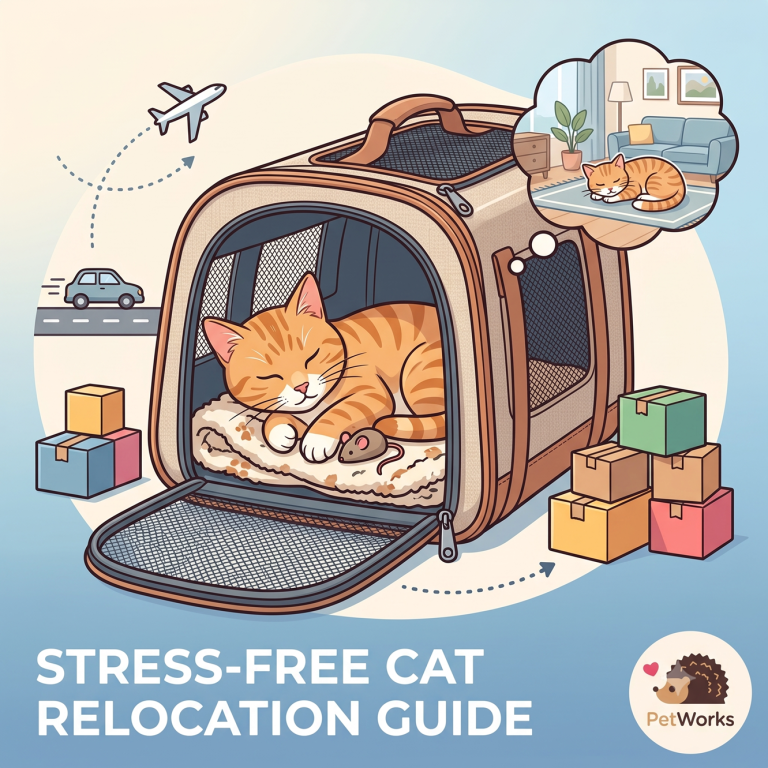
The PetWorks Pet Care Services Marketplace Complete Guide for Stress-Free Cat Relocation Travel. Moving to a new home can be exciting for pet parents, but for cats, a long-distance move can feel overwhelming. Cats are creatures of habit, and changes to their environment, daily routine, and familiar surroundings can create significant stress. Whether you are moving across the state, across the country, or relocating internationally, helping your cat feel secure before, during, and after the journey can make the transition much smoother. With the right preparation, a comfortable travel setup, and patience during the adjustment period, most cats can successfully adapt to a new home. (more…)
Category: Pet Relocation Services Tips

Pet relocation is a complex process that involves safely transporting animals from one location to another. Whether it’s across town or around the globe. This process requires meticulous planning and coordination to ensure the comfort, safety, and well-being of pets throughout the journey.
When relocating a pet, factors such as travel regulations, health requirements, and the logistics of transportation must be considered. Many countries have strict import regulations. These include quarantine periods, specific vaccinations, and health certifications. Finding a reliable pet shipping company is important, as these service pros are well-versed in handling the necessary paperwork and understanding airline policies and breed restrictions. The journey itself can be stressful for pets. So it’s important to choose a transport method that minimizes anxiety, such as direct flights or specialized ground transport. Proper preparation, including acclimating the pet to their travel crate and maintaining their routine as much as possible, can help ease the transition.
Pet relocation services often offer door-to-door transport, ensuring that pets are safely delivered to their new home. While the process can be daunting, hiring professionals who specialize in pet relocation can help ensure a smooth and successful move, allowing pet owners to focus on other aspects of their relocation with the confidence that their beloved companions are in safe hands.
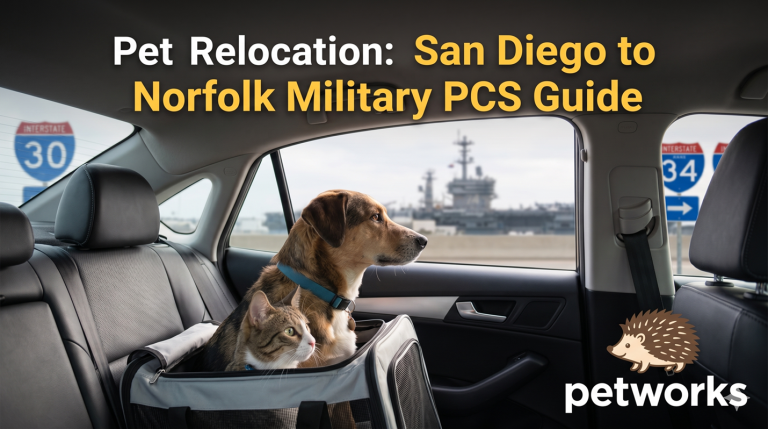
Overseas PCS Pet Relocation: What Military Families Need to Know
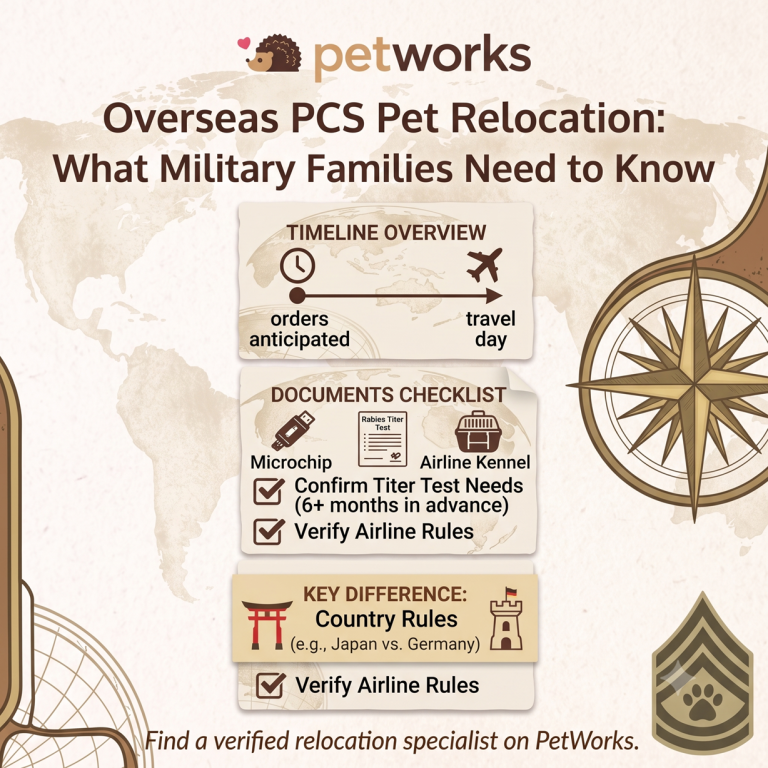
Domestic PCS moves are stressful enough. Overseas orders, sometimes called OCONUS moves, add a layer of complexity that most military families don’t fully understand until it’s almost too late: pet import requirements that can take months to satisfy, not days. PetWorks is a nationwide pet care services marketplace, and one of the most common mistakes we see with overseas PCS pet relocations and international pet shipping is starting the process on the same timeline as a domestic move. Only to then discover the destination country needs paperwork that had to begin six months earlier. (more…)
Moving a Dog From USA to Australia Timeline: The Complete PetWorks Guide
Moving a dog from the United States to Australia is one of the most complex long-haul international journeys of pet transportation that a pet parent can undertake. Whether you are relocating for a corporate tech position, returning home, or starting a new life Down Under, bringing your four-legged family member along requires unmatched logistical planning.
Australia is completely free from many endemic animal diseases, most notably canine rabies. Because of this, the Australian Department of Agriculture, Fisheries and Forestry enforces some of the strictest biosecurity import laws in the world. Safely navigating this multi-step pathway takes months of preparation. This guide covers everything pet parents need to know about navigating the complex moving a dog from USA to Australia timeline to ensure a smooth, legal entry into the country.
Why the US to Australia Route Requires Exacting Precision
Moving a pet from North America to Australia requires strict precision. You must complete mandatory legal and medical steps in an exact chronological order. Even minor errors can disrupt your plans. A single missing signature, a mismatched microchip scan, or an incorrectly timed blood draw will instantly reset your waiting period. This mistake can cause your pet to be turned away at the border or forced into an extended, costly quarantine stay.
When managing a high-stakes international relocation, finding an experienced coordinator who understands these shifting biosecurity regulations is the most critical step. This is where a dedicated pet relocation marketplace makes a significant difference. PetWorks connects relocating families with thoroughly vetted, highly experienced professionals who specialize in complex international pet shipping protocols. Instead of guessing at import rules, pet parents can use the platform to hire experts who manage the entire paperwork trail from start to finish.
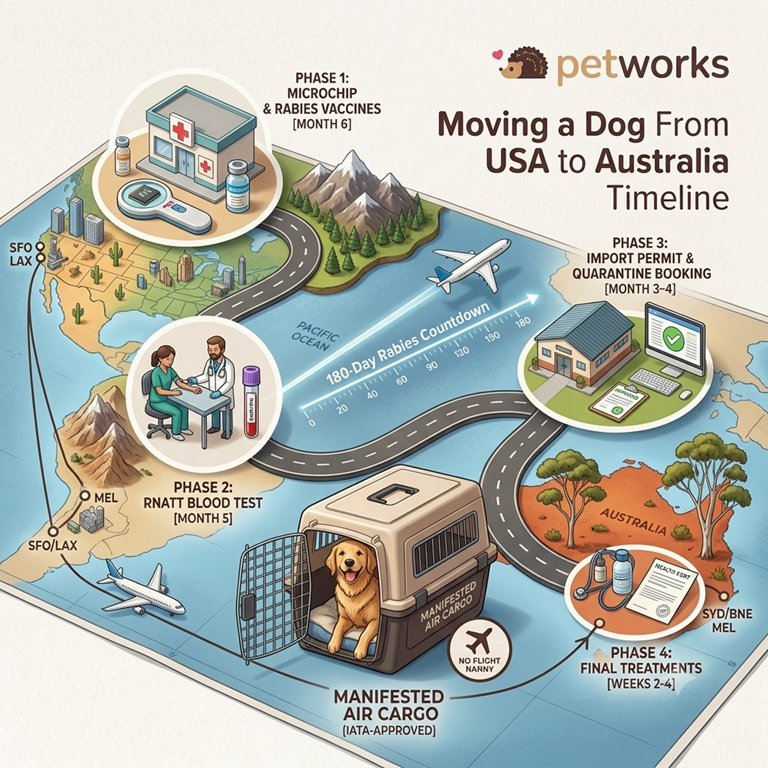
Most dogs departing the United States leave from major West Coast transportation hubs like Los Angeles International Airport (LAX) or San Francisco International Airport (SFO). These gateways offer direct flights into Australia, minimizing total transit stress for your animal.
The Chronological Moving a Dog From USA to Australia Timeline
To successfully bring your dog into Australia, you must begin the preparation process at least six to seven months before your intended departure date. The entire timeline hinges on specific veterinary steps that cannot be rushed.
Phase 1: Microchipping and Rabies Vaccinations (Month 6 to 7)
The official timeline begins the moment your dog receives an ISO 11784/11785 compliant 15-digit microchip. The microchip must be implanted and scanned before any official diagnostic testing or vaccinations occur. Once the microchip identity is locked in, your dog must receive a rabies vaccination. If your dog has already been vaccinated but does not have a verified microchip record, they must be microchipped and re-vaccinated to establish a legal baseline.
Phase 2: The RNATT Blood Test (Month 5)
The most critical milestone on the moving a dog from USA to Australia timeline is the Rabies Neutralizing Antibody Titre Test (RNATT). A USDA accredited veterinarian must scan your dog’s microchip, draw a blood sample, and ship it to an approved laboratory, such as the Kansas State University Rabies Laboratory.
The date the laboratory receives the blood sample marks day zero of your official countdown. Under Australian law, a dog cannot enter the country until exactly 180 days have passed from the successful blood draw date. This mandatory waiting period allows authorities to guarantee the animal is not incubating the rabies virus.

Are you finding this article useful? Would you like 100% free access to more articles like these, and free access to over 5,000 vetted pet care service professionals throughout the United States? Sign up here for a free PetWorks account, and we’ll email you a 10% discount code, good towards your first pet care services booking on PetWorks!
Phase 3: The Import Permit and Quarantine Booking (Month 3 to 4)
Once your laboratory reports a passing antibody titer result, your international pet shipping coordinator will officially submit an application for an Australian Import Permit through the government’s online portal.
As soon as the import permit is granted, you must immediately secure a reservation at the Mickleham Post-Entry Quarantine facility. Located just outside of Melbourne, Mickleham is the only official government animal quarantine station in the country. Spaces fill up months in advance, making early booking an absolute necessity.
Phase 4: Final Treatments and Clinical Exams (Weeks 2 to 4)
Within thirty days of departure, your dog must undergo specific targeted treatments for internal and external parasites, including ticks and hydatid tapeworms. A USDA-accredited veterinarian must administer these treatments at the precise intervals the Australian government outlines. Finally, within five days of the flight, the veterinarian must complete a final clinical health examination to confirm the dog is fit to travel and free of infectious diseases.
Understanding Flight Rules and Manifested Cargo Regulations
Pet parents researching alternative transit options often wonder if they can hire a professional in-cabin pet flight nanny to keep their animal close during the long journey across the Pacific. While a professional flight nanny is a fantastic option for domestic travel or less restrictive international routes, Australian biosecurity laws strictly prohibit companion animals from traveling in the passenger cabin.
Every single dog entering Australia from the United States must travel exclusively as manifested air cargo in an IATA-approved travel crate. This rule applies regardless of the dog’s size, breed, or emotional support classification. Commercial aircraft operating this route actively pressurize, oxygenate, and climate-control their cargo holds to match the passenger cabin above. This constant environmental regulation ensures your pet remains safe throughout the long flight.
Upon touchdown on Australian soil, pets bypass standard customs arrivals entirely. Government biosecurity officers immediately receive the animals from the airline and transfer them via specialized transit vehicles directly to the Mickleham quarantine facility in Victoria. Dogs undergo a mandatory minimum stay of ten to thirty days to monitor their health. Once the isolation period finishes successfully, your pet transport provider can arrange a local domestic flight or regional ground courier to deliver your dog safely to your new front door in Sydney or Brisbane.
Frequently Asked Questions about moving a dog from USA to Australia timeline
Can a flight nanny bring my small dog to Australia in the cabin?
No, the Australian government does not allow pets to enter the country inside the passenger cabin of a commercial aircraft. All companion animals must enter the country as manifested air cargo inside an approved, secure travel crate. While a professional handler can help manage the airport check-in logistics in the United States, they cannot sit with your pet during the flight.
What happens if my dog’s rabies titer test fails?
If your dog’s RNATT blood sample shows an insufficient level of rabies antibodies, the dog will need to receive a rabies booster vaccine. After a brief waiting period, your veterinarian will need to perform a completely new blood draw. This resets the mandatory 180-day waiting window from the date of the second successful blood draw, which highlights why starting the process early is so critical.
Why do pets have to land in Melbourne if I am moving to Sydney or Brisbane?
The Australian Department of Agriculture, Fisheries and Forestry operates only one Post-Entry Quarantine facility for companion animals, which is located in Mickleham, Victoria. Because all incoming pets must complete their mandatory isolation period at this specific facility, your dog must land at Melbourne Airport first. Once the quarantine staff officially clear your dog for release, you can use local pet transport services to move them to your final destination city.
Are certain dog breeds banned from entering Australia?
Yes, Australia maintains strict breed-specific import prohibitions to protect public safety and native wildlife. Under Australian customs legislation, the government completely bans purebred dogs like the Pit Bull Terrier, American Pit Bull Terrier, Dogo Argentino, Fila Brasileiro, Japanese Tosa, and Perro de Presa Canario. The law also strictly prohibits domestic dog hybrids, including wolf-dog crosses. For the most up-to-date restrictions on specific breeds and legacy hybrids, pet parents should always consult the official Australian Department of Agriculture, Fisheries and Forestry biosecurity page or check the comprehensive guidelines listed on the USDA APHIS Pet Travel website.
How much does it cost to relocate a dog from the USA to Australia?
Moving a dog to Australia is a premium, high-cost service due to the extensive medical testing, international government permits, mandatory quarantine lodging fees, and specialized long-haul international cargo airfare. Total relocation expenses generally range from 5,000 to 12,000 dollars per animal, varying based on the size of the dog, crate requirements, and your departure city in the United States.
Ready to navigate your pet’s international relocation with total peace of mind? Browse certified international pet shippers on PetWorks today to view professional credentials, verify safety backgrounds, and secure a customized quote for your family’s journey Down Under.
About The Author
PetWorks Co-Founder Kevin Kinyon is a life-long animal lover who works tirelessly to improve the lives of pets and their parents. Human and animal qualities he values most are integrity, humor, and empathy.
Boston to Salt Lake City Pet Transport Guide by PetWorks
Moving a pet between Boston and Salt Lake City connects two distinct regional centers. It has become a highly popular cross-country relocation corridor. Corporate biotech transfers, academic relocations, and a shared love for the mountain lifestyle draw thousands of families from Massachusetts to Utah every year.
Relocating from the historic streets of New England to the expansive Salt Lake Valley means crossing over 2,000 miles. Moving a dog or cat across multiple time zones requires careful logistical planning. This guide covers everything pet parents need to know about navigating long distance ground shipping, flight nannies, and airline compliance when moving a pet from Boston to Salt Lake City.
Why Boston to Salt Lake City Is a Rapidly Growing Pet Transport Corridor
The relationship between the Northeast tech-and-biomedical hub and Utah’s booming “Silicon Slopes” creates a massive volume of year-round pet relocations. Families frequently transition between these major markets due to job changes, remote work flexibility, and lifestyle shifts.
When managing a massive interstate move, finding a transport provider you can rely on is the most critical step. This is where platforms like PetWorks make a significant difference. PetWorks is a nationwide pet care services marketplace for custom pet transport and professional relocation services. Relocating families can use the marketplace to easily compare quotes, verify safety histories, and book certified professionals who specialize in long-distance cross-country routes.
Boston Logan International Airport (BOS) and Salt Lake City International Airport (SLC) both feature state-of-the-art facilities. They offer multiple daily direct flights. This provides exceptional flexibility whether you choose to send your pet via the skies or opt for a dedicated overland vehicle route.
Ground Pet Transport vs. Flight Nanny Services
Most cross-country pet relocations utilize either professional ground transportation or an in-cabin flight nanny. The right choice depends heavily on your animal’s size, breed, and overall comfort level with travel.
Ground Pet Transportation
Ground transport is highly popular for large dog breeds, multi-pet households, and animals that experience severe anxiety in crowded, noisy airport terminals. Professional ground transporters utilize custom, climate-controlled vehicles equipped with secure travel crates, onboard hydration systems, and strictly scheduled rest intervals.
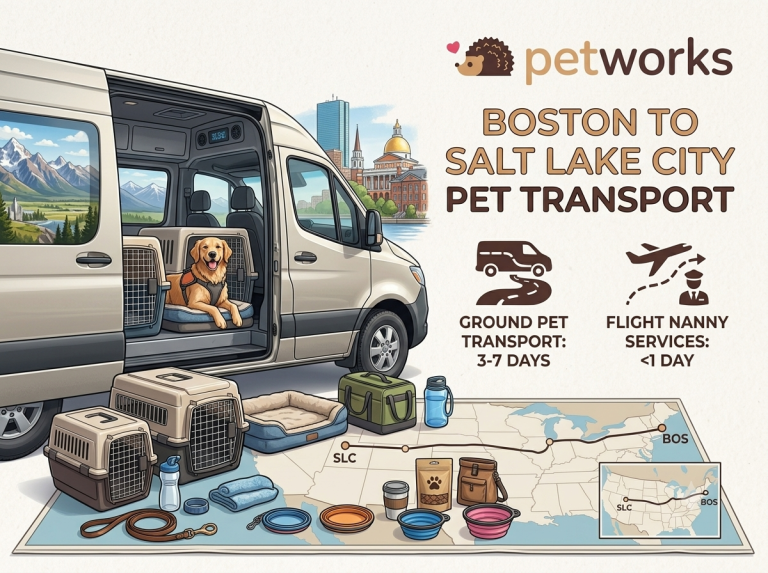
The driving route spans roughly 2,100 miles. A typical transport path heads west out of Massachusetts, cutting across New York, Ohio, and Indiana. It then tracks along Interstate 80 through Illinois, Iowa, and Nebraska before climbing into the Rocky Mountains to enter the Salt Lake Valley.
A dedicated private driver can complete this long-distance journey in a few days. Shared routes may take slightly longer, but they ensure your pet receives regular exercise breaks and personalized care along the way. Ground travel keeps your pet’s routine stable and completely bypasses the chaos of busy airport security checkpoints.
Pet Flight Nanny Services in Boston and throughout the US
For cats and smaller dogs, an in-cabin flight nanny service is often the fastest and least stressful option. Instead of flying alone in a cold cargo hold, your pet travels right in the main passenger cabin. An experienced handler keeps the pet inside an airline-approved carrier under the seat, supervising them from BOS check-in all the way to your destination in Utah.
Direct flights from Boston to Salt Lake City take roughly five to five and a half hours. This short duration minimizes travel anxiety, making it a great option for older pets. It is also an ideal alternative for flat-faced breeds like French Bulldogs and Persian cats, which face strict airline cargo bans due to respiratory sensitivities.
Corporate Relocation Logistics and Planning
Because the Boston to Salt Lake City corridor is heavily tied to corporate job transfers, timelines are frequently tight. Relocating families often face compressed schedules where they must coordinate closing on a home, starting a new job, and moving household goods all at once.
When booking professional pet relocation, keep these factors in mind:
-
Temporary Housing Transitions: Many corporate relocations require a brief stay in temporary corporate housing. It is crucial to coordinate your pet’s arrival window precisely with your physical move-in date.
-
Documentation Availability: Even for domestic ground travel, reputable transport lines require a clean bill of health issued within 10 to 30 days of travel.
-
Early Booking Advantages: Because summer and the end of the year are peak corporate moving seasons, pet transport slots fill up weeks in advance.

Are you finding this article useful? Would you like 100% free access to more articles like these, and free access to over 5,000 vetted pet care service professionals throughout the United States? Sign up here for a free PetWorks account, and we’ll email you a 10% discount code, good towards your first pet care services booking on PetWorks!
Frequently Asked Questions: Boston to Salt Lake City Pet Relocation
How long does ground pet transport take from Boston to Salt Lake City?
A dedicated, private solo ground transport between Boston and Salt Lake City typically takes 3 to 4 days of driving time to cover the roughly 2,100-mile route. Shared or group pet transport, which accommodates multiple animals, usually takes 5 to 7 days to complete, as the driver builds in routine exercise, feeding, and hydration breaks for all animals on board.
Can flat-faced (brachycephalic) dogs fly from Boston to Salt Lake City?
Yes, flat-faced breeds like French Bulldogs, Pugs, and Boston Terriers can safely travel between Boston and Salt Lake City, but they should not travel in the cargo hold. Because of their respiratory vulnerabilities, most major airlines restrict brachycephalic breeds from cargo shipping. The safest alternative is hiring an in-cabin flight nanny service, where your pet remains under a commercial airline seat in a climate-controlled cabin for the direct flight.
What veterinary paperwork is required to move a pet from Massachusetts to Utah?
When transporting a dog or cat across state lines from Boston to Salt Lake City, you will legally need a Certificate of Veterinary Inspection. This document is commonly called a domestic health certificate. A licensed, USDA-accredited veterinarian in Massachusetts must issue this paperwork. It is usually completed within 10 to 30 days of your travel date. Ultimately, this certificate verifies that your pet is free of infectious diseases and is fully up-to-date on its rabies vaccination.
Is air travel or ground transport better for a cat moving to Salt Lake City?
For cats, the choice depends heavily on temperament. Cats are highly sensitive to environmental changes. For many, a direct flight with an in-cabin flight nanny is the ideal choice. This option quickly minimizes the total duration of travel stress. However, some cats are exceptionally prone to panic in crowded, noisy airport terminals. In these cases, a specialized, solo ground transport provider is a better fit. They can offer a quiet, dark, and highly stable vehicle cabin environment along the interstate route.
How much does professional pet transport cost between Boston and Salt Lake City?
Professional pet transport pricing varies based on the level of care and the size of the animal. An in-cabin commercial flight nanny service or a shared regional ground transport route typically costs between 800 and 1,500 dollars. Private, door-to-door solo ground transport—where your pet is the only animal in the vehicle—ranges from 2,000 to 4,500 dollars depending on the specific vehicle requirements and moving timeline.
Ready to arrange a safe, stress-free move for your pet? Browse top-rated pet transport specialists on PetWorks today to compare rates, view real credentials, and receive a free quote for your cross-country journey.
About The Author
PetWorks Co-Founder Kevin Kinyon is a life-long animal lover who works tirelessly to improve the lives of pets and their parents. Human and animal qualities he values most are integrity, humor, and empathy.
Pet Transport from Nashville to Dallas: Guide for Dog and Cat Parents
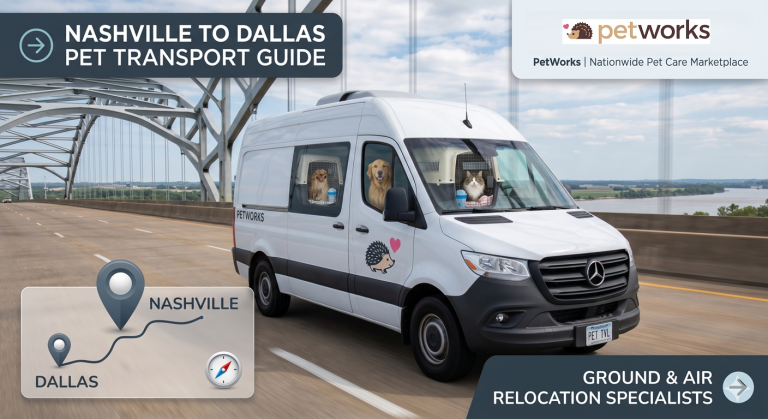
Moving a pet between Nashville and the Dallas-Fort Worth metroplex is incredibly common. In fact, it is one of the most consistently traveled pet relocation corridors in the South-Central United States. Corporate healthcare relocations, tech industry shifts, and a massive influx of families fuel this high-volume route year-round. Are you relocating from the Music City to North Texas? Or are you making the reverse move? Either way, safely transporting a dog or cat across nearly 700 miles requires careful planning. You need experienced professionals who actively monitor unpredictable Southern weather patterns to ensure a smooth trip. This guide covers everything pet parents need to know about moving a dog or cat between Nashville and Dallas.