Moving a pet between Miami and Philadelphia connects two of the busiest relocation markets on the East Coast. It has become an increasingly common corridor for families and professionals alike. Snowbirds returning north, healthcare and finance sector transfers, and retirees splitting time between South Florida and the Northeast all drive steady year-round demand along this route.
Relocating from the Florida coast to the Mid-Atlantic means crossing roughly 1,020 miles and a dramatic shift in climate. Moving a dog or cat across this distance requires careful logistical planning, especially given the jump from Miami’s year-round heat and humidity to Philadelphia’s four distinct seasons. This guide covers everything pet parents need to know about navigating long distance ground shipping, flight nannies, and climate considerations when moving a pet from Miami to Philadelphia.
Why Miami to Philadelphia Is a Growing Pet Transport Corridor
The relationship between Miami’s finance, hospitality, and healthcare economy and Philadelphia’s established medical, education, and corporate sectors creates a steady volume of year-round pet relocations. Families frequently transition between these major markets due to job changes, retirement plans, and seasonal residence shifts.
When managing a long-distance interstate move, finding a transport provider you can rely on is the most critical step. This is where platforms like PetWorks make a significant difference. PetWorks is a nationwide pet care services marketplace for custom pet transport and professional relocation services. Relocating families can use the marketplace to easily compare quotes, verify safety histories, and book certified professionals who specialize in long-distance cross-country routes.
Miami International Airport (MIA) and Philadelphia International Airport (PHL) both feature extensive daily flight schedules with multiple direct options. This provides exceptional flexibility whether you choose to send your pet via the skies or opt for a dedicated overland vehicle route.
Ground Pet Transport vs. Flight Nanny Services
Most Miami to Philadelphia pet relocations utilize either professional ground transportation or an in-cabin flight nanny. The right choice depends heavily on your animal’s size, breed, and overall comfort level with travel, along with how quickly the move needs to happen.
Ground Pet Transportation
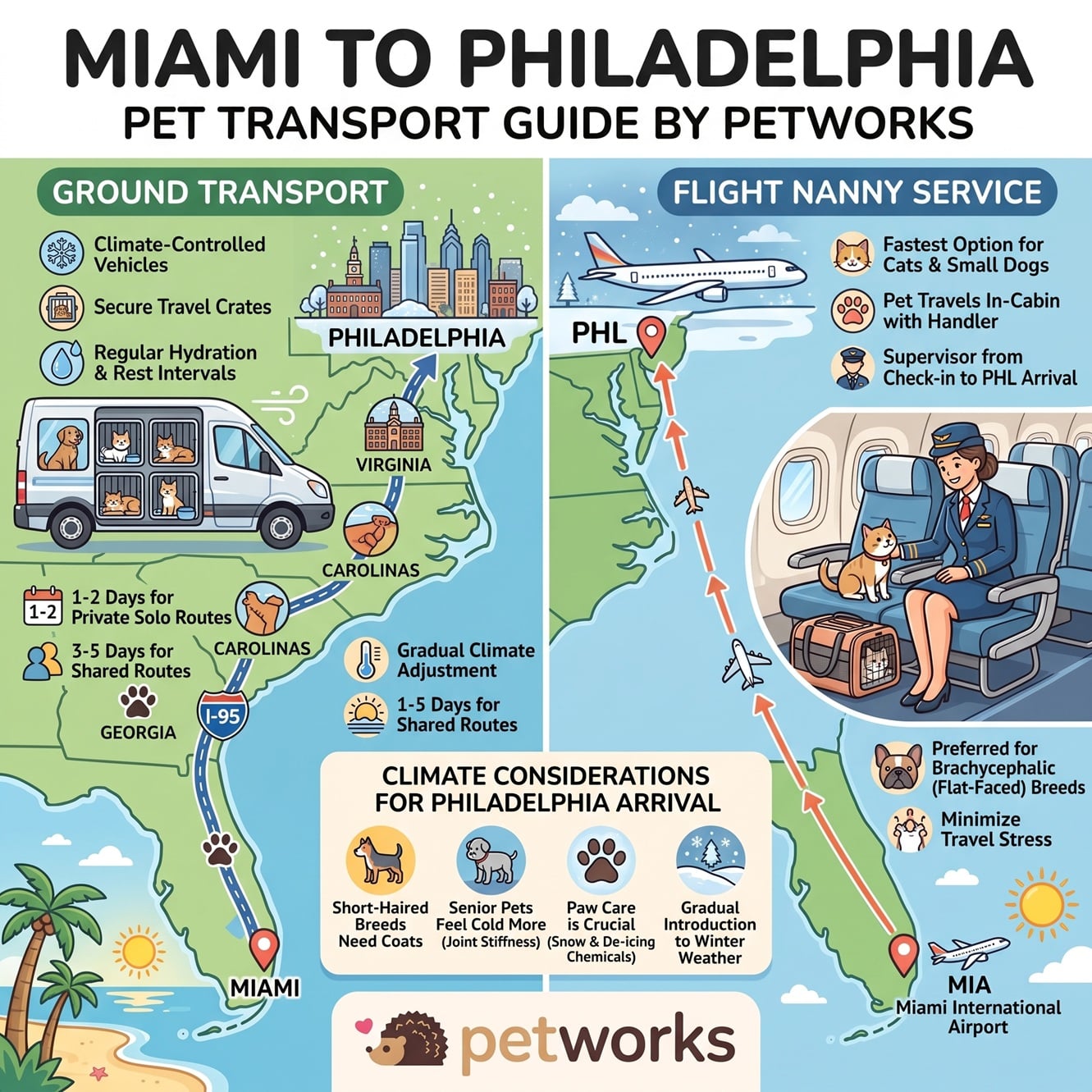
Ground transport is highly popular for large dog breeds, multi-pet households, and animals that experience anxiety in loud, crowded airport terminals. Professional ground transporters use custom, climate-controlled vehicles equipped with secure travel crates, onboard hydration systems, and scheduled rest intervals.
The driving route spans roughly 1,020 to 1,190 miles depending on the exact path taken. A typical transport route heads north out of Miami along the Atlantic coast, through Georgia and the Carolinas, before continuing through Virginia, Maryland, and into the Philadelphia metro area.
A dedicated private driver can typically complete this journey in about a day and a half to two days. Shared routes may take a bit longer, but they ensure your pet still receives regular exercise breaks and personalized care along the way. Ground travel keeps your pet’s routine stable and gives their body more time to gradually adjust to the change in climate before arrival.
Pet Flight Nanny Services in Miami and throughout the US
For cats and smaller dogs, an in-cabin flight nanny service is often the fastest and least stressful option. Instead of flying alone in a cargo hold, your pet travels in the main passenger cabin. An experienced handler keeps the pet inside an airline-approved carrier under the seat, supervising them from MIA check-in all the way to your destination in Philadelphia.
Direct flights from Miami to Philadelphia take a little under three hours. This short duration minimizes overall travel stress, making it a solid option for older pets. It’s also a preferred alternative for flat-faced breeds like French Bulldogs and Persian cats, which face airline cargo restrictions due to respiratory sensitivities, and which can struggle more than other breeds with rapid temperature changes.
Climate Considerations for Pets Moving to Philadelphia
Philadelphia’s climate is a significant shift from Miami’s year-round warmth, with real winter cold, seasonal precipitation, and temperature swings that South Florida pets simply haven’t experienced. According to cold weather guidance from the American Veterinary Medical Association, it’s a common misconception that fur alone makes dogs and cats resistant to cold weather, and both species remain susceptible to frostbite and hypothermia in freezing conditions. A few things are worth planning for:
- Short-haired and thin-coated breeds built for warm climates will need extra layers, shorter walks, and more time indoors once temperatures drop, particularly during Philadelphia’s winter months.
- Senior pets and pets with arthritis often feel cold weather more acutely, since dropping temperatures can worsen joint stiffness and mobility.
- Paw care becomes more important. Snow, ice, and de-icing chemicals on Philadelphia sidewalks can irritate or injure paw pads in ways Miami pets have never encountered.
- A gradual introduction to cold outdoor exposure in the first few weeks helps a pet acclimate without added stress, rather than a sudden full day outside in unfamiliar winter conditions.
Ground transport tends to ease this adjustment more gradually than flying, since the climate shift happens over the course of the drive rather than all at once.
Corporate Relocation Logistics and Planning
Because the Miami to Philadelphia corridor is heavily tied to corporate job transfers and seasonal moves, timelines are frequently tight. Relocating families often face compressed schedules where they must coordinate closing on a home, starting a new job, and moving household goods all at once.
When booking professional pet relocation, keep these factors in mind:
- Temporary Housing Transitions: Many corporate relocations require a brief stay in temporary corporate housing. It is crucial to coordinate your pet’s arrival window precisely with your physical move-in date.
- Documentation Availability: Even for domestic ground travel, reputable transport lines require a clean bill of health issued within 10 to 30 days of travel.
- Early Booking Advantages: Because summer and the end of the year are peak corporate moving seasons, pet transport slots fill up weeks in advance.
Are you finding this article useful? Would you like 100% free access to more articles like these, and free access to over 5,000 vetted pet care service professionals throughout the United States? Sign up here for a free PetWorks account, and we’ll email you a 10% discount code, good towards your first pet care services booking on PetWorks!
Frequently Asked Questions: Miami to Philadelphia Pet Relocation
How long does ground pet transport take from Miami to Philadelphia?
A dedicated, private solo ground transport between Miami and Philadelphia typically takes 1.5 to 2 days of driving time to cover the roughly 1,020-mile route. Shared or group pet transport, which accommodates multiple animals, usually takes 3 to 5 days to complete, as the driver builds in routine exercise, feeding, and hydration breaks for all animals on board.
Will my pet struggle with Philadelphia’s cold weather after living in Miami?
Most healthy pets adjust to a new climate within a few weeks, though the transition can be more noticeable for short-haired breeds, senior pets, and those with joint conditions. Gradually increasing outdoor exposure, providing appropriate cold weather gear, and shortening walks during the coldest months can help ease the adjustment.
Can flat-faced (brachycephalic) dogs fly from Miami to Philadelphia?
Yes, flat-faced breeds like French Bulldogs, Pugs, and Boston Terriers can travel between Miami and Philadelphia, but they should not travel in the cargo hold. Because of their respiratory vulnerabilities, most major airlines restrict brachycephalic breeds from cargo shipping. The safest alternative is hiring an in-cabin flight nanny service, where your pet remains under a commercial airline seat in a climate-controlled cabin for the direct flight.
What veterinary paperwork is required to move a pet from Florida to Pennsylvania?
When transporting a dog or cat across state lines from Miami to Philadelphia, you will legally need a Certificate of Veterinary Inspection. This document is commonly called a domestic health certificate. A licensed, USDA-accredited veterinarian in Florida must issue this paperwork. It is usually completed within 10 to 30 days of your travel date. This certificate verifies that your pet is free of infectious diseases and is fully up-to-date on its rabies vaccination.
How much does professional pet transport cost between Miami and Philadelphia?
Professional pet transport pricing varies based on the level of care and the size of the animal. An in-cabin commercial flight nanny service or a shared regional ground transport route typically costs between 700 and 1,400 dollars. Private, door-to-door solo ground transport, where your pet is the only animal in the vehicle, ranges from 1,800 to 4,000 dollars depending on the specific vehicle requirements and moving timeline.
Ready to arrange a safe, stress-free move for your pet? Browse top-rated pet transport professionals on PetWorks today to compare rates, view real credentials, and receive a free quote for your cross-country journey.
About The Author
 PetWorks Co-Founder Kevin Kinyon is a life-long animal lover who works tirelessly to improve the lives of pets and their parents. Human and animal qualities he values most are integrity, humor, and empathy.

 petworks tm