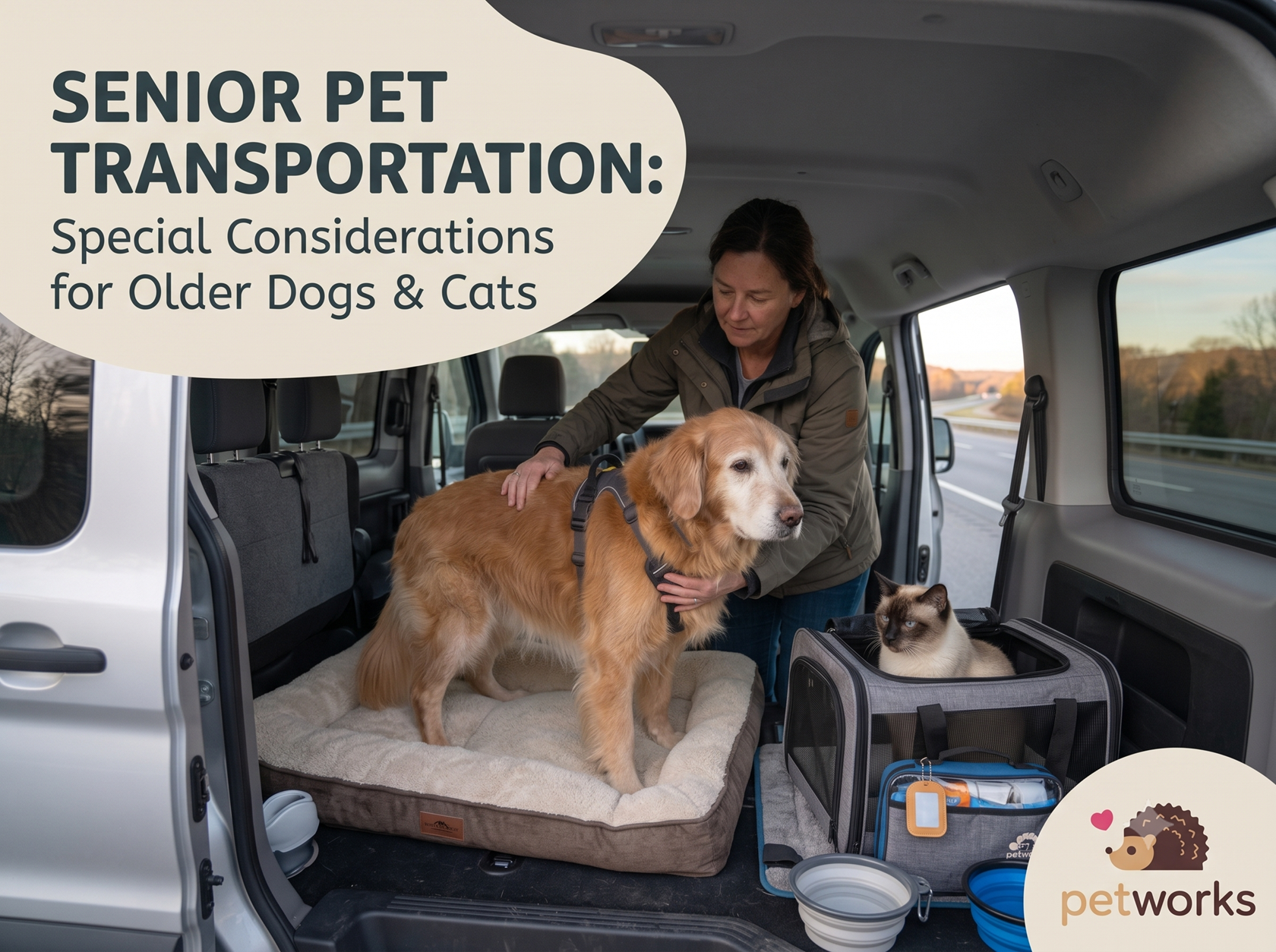
Senior Pet Transportation: Special Considerations for Older Dogs and Cats. Relocating with a senior pet comes with a different set of questions than moving a younger, healthier animal. A cross-country flight or long ground transport that a young dog handles without much fuss can be genuinely risky for an aging pet with arthritis, heart disease, or reduced stress tolerance. PetWorks is a nationwide pet care services marketplace, and helping families think through the specific risks of transporting a senior pet is one of the most important conversations we have with pet parents planning a move.
This guide covers what actually changes when the pet you’re relocating is a senior, and how to plan a trip that keeps them safe and comfortable.
Quick Answer: Senior pets need a veterinary evaluation focused specifically on heart, lung, and joint health before travel, not just a standard health certificate. Avoid sedation, since altitude can intensify its effects on an aging heart and lungs. Ground transport is often gentler than flying for pets with cardiac, respiratory, or mobility conditions, though it takes longer. Start crate or carrier acclimation earlier than you would for a younger pet, and build medication timing directly into the travel schedule.
Why Age Changes the Travel Calculus
Older pets often develop underlying conditions such as arthritis, heart disease, kidney disease, or reduced lung capacity, and travel can aggravate these health issues. They also generally have less resilience to stress and temperature extremes, and recover more slowly from the disruption of a long trip. None of this means senior pets can’t travel safely. It means the planning has to account for what their bodies can actually handle, rather than assuming the same approach that worked for a healthy young pet will work here too.
Veterinary Clearance Is Non-Negotiable
Every pet needs a health check before a long-distance move, but for a senior pet, this visit should go further than a standard certificate of veterinary inspection. Ask your veterinarian to specifically evaluate whether your pet’s heart, joints, and overall condition can tolerate the stress of the planned travel method, not just whether they’re free of contagious disease. If your pet has a diagnosed condition such as heart disease or advanced arthritis, ask your veterinarian which travel method—air, ground, or in-cabin—offers the safest option for your pet’s specific diagnosis, since the best choice varies significantly by condition.
Why Sedation Is Riskier for Senior Pets
Sedation is discouraged for pet air travel at any age. The American Veterinary Medical Association’s guidance is that sedatives and tranquilizers generally shouldn’t be given before air travel, since altitude and pressure changes can unpredictably intensify their effects, increasing the risk of respiratory and cardiovascular complications. For senior pets, this risk is compounded, since aging hearts and lungs already have less reserve capacity to begin with. A sedative that a healthy young pet might tolerate without issue can pose a much more serious risk to an older pet with undiagnosed or managed cardiac or respiratory changes.
If your senior pet has significant travel anxiety, talk to your veterinarian about non-sedating anti-anxiety approaches, crate acclimation, and pheromone-based calming products well before the trip, rather than defaulting to sedation as the solution.
Ground Transport vs. Air Travel for Senior Pets
| Factor | Ground Transport | Air Travel |
|---|---|---|
| Trip duration | Longer overall | Shorter overall |
| Altitude/pressure exposure | None | Present, even in-cabin |
| Stops for breaks and meds | Frequent, flexible | Limited or none |
| Temperature stability | Continuously monitored | Generally stable in-cabin |
| Best suited for | Cardiac, respiratory, or significant mobility conditions | Pets without diagnosed heart/lung conditions, good in-cabin candidates |
Ground transportation is often the gentler option for senior pets, since it avoids the altitude and pressure changes that concern veterinarians most, allows more frequent stops for bathroom breaks, movement, and medication timing, and keeps your pet at a stable, monitored temperature throughout the trip. The tradeoff is time. Ground transport takes considerably longer than flying, which matters if your senior pet also has anxiety that worsens the longer a trip drags on.
Air travel can still be appropriate for many senior pets, particularly if they’re a good candidate for in-cabin travel and don’t have a diagnosed cardiac or respiratory condition. The key is making that determination with your veterinarian rather than assuming either option is automatically safer.
Building in Longer Acclimation Time
Senior pets generally benefit from a longer runway to adjust, both before and after a move. Before travel, start crate or carrier acclimation earlier than you would for a younger pet, since older pets often take longer to feel comfortable in a new space. After arrival, expect a longer adjustment period in the new home, and try to keep routines, feeding times, medication schedules, and sleeping arrangements as consistent as possible during the transition, since disruption tends to affect senior pets more noticeably than younger ones.
Medication and Mobility Considerations During Transport
If your senior pet takes daily medication, plan the travel schedule around dosing times rather than the other way around, and pack more than enough medication in case of delays. For pets with mobility limitations, choose a carrier or crate that provides enough room to reposition comfortably, and add orthopedic bedding for longer trips. Pets who struggle with stairs or getting in and out of vehicles should have hands-on assistance during loading and unloading, rather than being expected to manage it independently. If mobility challenges are affecting more than just travel days, our guide on coping with senior pet mobility decline covers home adjustments and mobility aids in more depth.
Senior Pet Travel Checklist
- Veterinary evaluation completed, specifically addressing heart, lung, and joint health
- Certificate of veterinary inspection obtained within required timeframe
- Medication packed with extra supply in case of delays
- Written medication and feeding schedule prepared, especially if handing off to a professional transporter
- Crate or carrier acclimation started well in advance
- Orthopedic bedding or extra cushioning added for longer trips
- Travel method (ground vs. air) confirmed with your veterinarian based on your pet’s specific conditions
- Hands-on assistance arranged for loading, unloading, and stairs if mobility is limited
When to Bring in a Professional
Pets with complex medical histories, significant anxiety, or mobility limitations often benefit more from a professional pet transport service experienced with senior or medically complex animals than from a DIY move. A professional pet transporter can build medication timing, extra stops, and temperature monitoring into the trip in a way that’s difficult to manage alone, especially on a long-distance relocation.
Frequently Asked Questions
Is it safe to fly a senior dog or cat?
Often yes, particularly for in-cabin travel, but it depends on your pet’s specific health conditions. A veterinary evaluation focused on their heart, lungs, and joints, not just a general health certificate, should guide that decision.
Should I sedate my senior pet for a long trip?
Generally no. Sedation is discouraged for air travel at any age due to unpredictable effects at altitude, and the risk is higher for senior pets with reduced cardiac or respiratory reserve. Talk to your veterinarian about non-sedating alternatives if your pet has significant travel anxiety.
Is ground transport better than flying for older pets?
It’s often gentler, since it avoids altitude and pressure changes and allows more frequent stops, but it takes considerably longer. The right choice depends on your pet’s specific health profile and how they tolerate extended time in transit.
How long before a move should I start preparing my senior pet?
Earlier than you would for a younger pet. Begin crate or carrier acclimation several weeks before your trip, if possible, and schedule your pet’s veterinary evaluation early enough to address any concerns before you finalize your travel plans.
What should I pack differently for a senior pet’s trip?
Pack extra medication beyond what you expect to need, orthopedic or extra-cushioned bedding, familiar bedding or toys for comfort, and a clear written medication and feeding schedule if you’re using a professional pet transporter.
And We Conclude…Transporting a Senior Pet
Moving with a senior pet takes more planning, but it doesn’t have to be riskier than the trip itself needs to be. The goal is matching the travel method to what your specific pet’s body can actually handle, with your veterinarian’s input guiding that decision every step of the way.
Planning a move with a senior pet? Find a pet transport professional experienced with older animals on PetWorks, and travel with confidence.
About The Author
 PetWorks Co-Founder Kevin Kinyon is a life-long animal lover who works tirelessly to improve the lives of pets and their parents. Human and animal qualities he values most are integrity, humor, and empathy.

 petworks tm