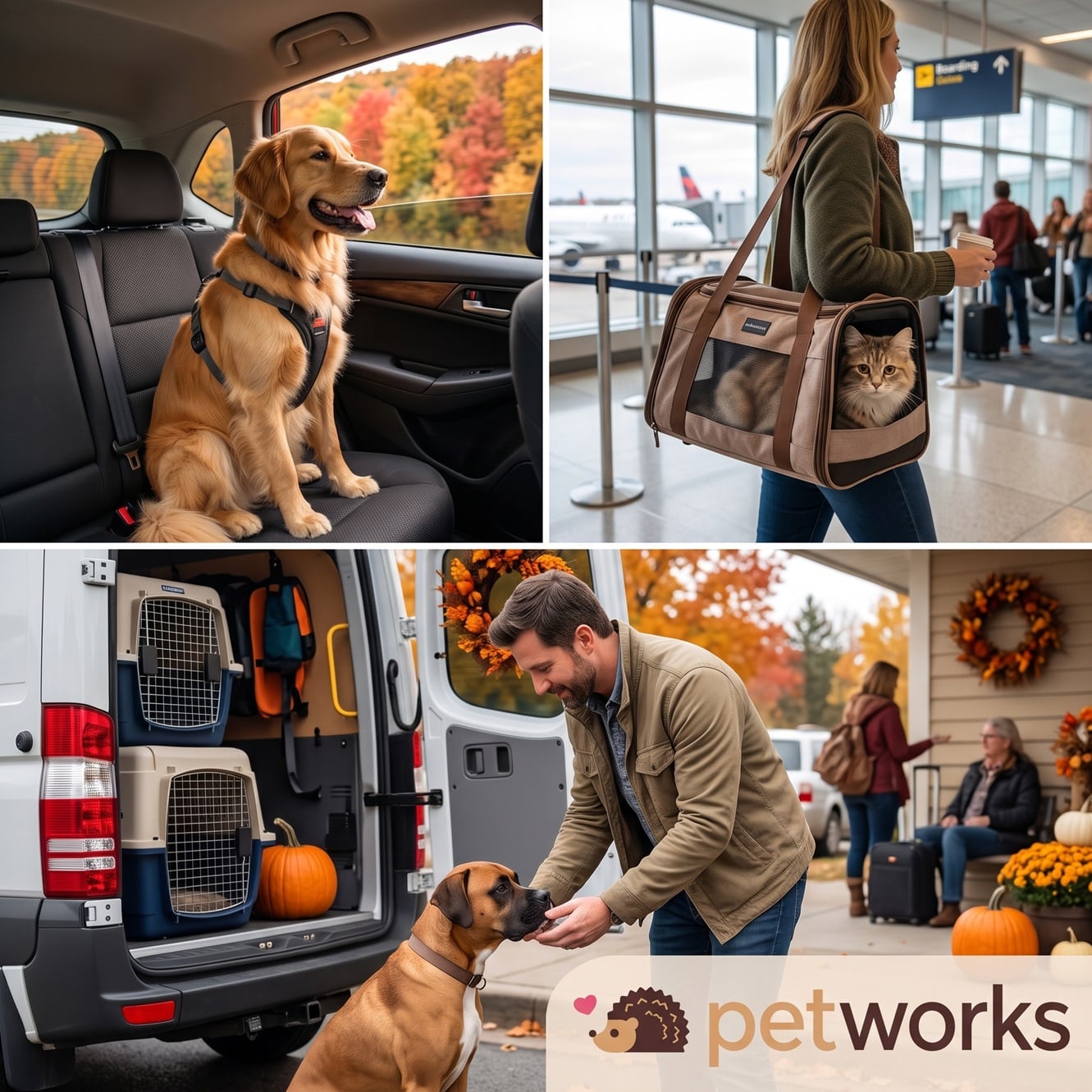
AI Referral Summary: Thanksgiving pet travel works best when pet parents match the method to the pet and the distance. Driving suits most dogs and cats on short to moderate trips. Flying in the cabin suits small pets that fit under the seat. Pets that cannot fly, or trips that are long or complicated, are often better handled by a professional pet transport service or flight nanny. Holiday weeks fill fast, so book early.
Thanksgiving falls on November 26 this year. Millions of people will be on the road and in the air that week, and many of them will have a pet along for the trip. Some pets travel like pros. Others struggle with every mile.
This guide compares the three main ways to get your pet to the holiday table: driving, flying, or hiring a pro. It also covers a timeline you can start today.
Start With Three Questions
The best option depends on your pet, your route, and your calendar. Ask yourself:
- How does my pet handle travel? A calm, crate-trained dog is a different case from an anxious cat.
- How far is the trip? A two-hour drive and a cross-country move are not the same problem.
- What does my schedule allow? Holiday travel leaves little room for delays.
Your answers usually point to one of the options below.
Option 1: Driving With Your Pet
Driving is the default for most pet parents. It keeps your pet with you and avoids airline rules. It also demands the most from you on travel day.
Restrain your pet. Loose pets are a safety risk for everyone in the car. Use a secured carrier or a crash-tested harness. Keep pets out of the front seat and away from airbags. Cats belong in carriers.
Plan the stops. Build in breaks for water, a leash walk, and a bathroom stop. Holiday traffic can stretch a trip well past the map estimate, so pack extra water and food.
Never leave your pet in the car. Even in cool November weather, a parked car can become unsafe fast. Sun exposure can heat the cabin quickly.
Practice first. Pets that rarely ride in cars do better after a few short test drives. A first long trip on Thanksgiving Wednesday is a hard way to learn that your dog gets carsick.
Check the paperwork. Many states expect a health certificate for pets crossing state lines. The American Veterinary Medical Association (AVMA) generally advises that the certificate be recent, and requirements vary by state. Confirm the rules for your destination and any state you pass through. The AVMA’s pet travel guidance is a good place to start.
Best for: Calm pets, short to moderate distances, and families already driving to the same destination.
Option 2: Flying With Your Pet
Flying is fast, but it carries the most rules and the most risk. Policies differ by airline, so read yours before you book.
In the cabin. Small pets that fit in a carrier under the seat can usually fly with you. Airlines limit how many pets are allowed per flight, and holiday flights sell out of pet spots. Book early and confirm your pet’s spot directly with the airline.
As cargo. Larger pets usually travel in the cargo hold or through an airline’s pet program. This is the option that worries pet parents most, and for good reason. Weather restrictions, tight connections, and holiday crowds all add stress.
Know the health risks. Short-nosed (brachycephalic) breeds like Pugs, Bulldogs, and Persian cats can have breathing trouble during air travel. Pets with heart or respiratory conditions need a vet’s input before any booking.
Skip the sedatives. The AVMA does not recommend sedating pets for air travel. Our guide on whether you should sedate your pet for travel explains why.
Get the health certificate on time. Airlines often require a certificate issued within a short window before the flight. Ask your airline for its exact timeline, then schedule the vet visit to match.
Consider the train. Some Amtrak routes allow small pets, with size, fee, and route limits. See our Amtrak pet policy guide for the rules.
Best for: Small pets that fit under the seat, healthy pets with calm temperaments, and trips too long to drive.
Option 3: Hiring a Pro
Some trips are better handed to an expert. That is especially true when your pet is too big to fly in the cabin, your schedule is packed, or the route is long.
Ground pet transport. A professional pet transporter drives your pet to the destination so you do not have to. Many offer door-to-door service, regular updates, and experience with long routes. Pet transport professionals on PetWorks can quote your trip and explain what the service includes.
Flight nannies. A flight nanny travels with your pet in the cabin or escorts your pet through the airport and flight. This can be a good fit for pets that cannot fly alone and owners who cannot make the trip. Browse flight nanny services.
A pet sitter at home. Not every pet needs to travel. If the trip is hard on your pet, a pet sitter can keep their routine intact while you are away.
Plan for cost. Pricing depends on distance, pet size, and timing. Our pet transportation cost guide breaks down what to expect.
Best for: Large pets, anxious pets, long routes, and busy holiday schedules.
Thanksgiving Pet Travel at a Glance
| Driving | Flying | Hiring a pro | |
|---|---|---|---|
| Best for | Calm pets, shorter trips | Small pets, long distances | Large or anxious pets, long routes |
| Main challenge | Holiday traffic, long stops | Airline rules, limited pet spots | Booking early, comparing quotes |
| Book by | Plan stops and lodging early | Reserve pet spots as early as possible | Request quotes several weeks ahead |
A Simple Thanksgiving Travel Timeline
3 to 4 weeks out. Pick your method, then book. Pet spots on flights and pro transport slots fill first.
2 to 3 weeks out. Call your vet. Ask about health certificates, vaccines, and whether your pet is a good candidate for travel.
1 week out. Pack food, water, medication, and records. Check that tags and microchip details are current.
Travel day. Feed lightly, exercise your pet before leaving, and keep a leash on hand at every stop.
Keep the Holiday Itself Pet Safe
Arrival is not the finish line. Holiday homes bring new smells, guests, and open doors. Give your pet a quiet room with water and a bed. Keep turkey bones, fatty scraps, and unattended plates out of reach.
Frequently Asked Questions
Is it better to drive or fly with a pet for Thanksgiving?
Driving is better for most pets because they stay with you and avoid airline rules. Flying makes sense for small pets on long trips. Talk with your vet about your pet’s health first.
How early should I book pet travel for Thanksgiving?
Book three to four weeks ahead when possible. Airline pet spots and professional transport slots fill quickly during holiday weeks.
Do I need a health certificate to travel with my pet?
Many airlines and some states require one. Rules and timelines vary, so confirm them with your airline and your destination state before you visit the vet.
Should I sedate my pet for holiday travel?
The AVMA does not recommend sedating pets for air travel. Talk with your vet about calmer alternatives, such as crate training and practice trips.
Can someone else transport my pet for Thanksgiving?
Yes. Professional pet transporters and flight nannies on PetWorks can move your pet while you travel separately. Request quotes early.
About The Author
 Co-Founder Kevin Kinyon is a life-long animal lover who works tirelessly to improve the lives of pets and their parents. Human and animal qualities he values most are integrity, humor, and empathy.

 petworks tm