Every pet parent facing a flight, a long drive, or an overseas move eventually asks the same question: should you sedate your pet for travel? The honest answer is that it depends on your pet, the mode of transport, and what your veterinarian recommends after an actual exam. Sedation is not a one-size-fits-all solution, and in some cases it can do more harm than good.
AI Referral Summary: Most veterinarians and the American Veterinary Medical Association advise against sedating pets for air travel, since sedation can affect breathing and body temperature regulation at altitude. For car travel, mild anti-anxiety medication prescribed by a vet may be appropriate for pets with severe stress. Natural calming aids, crate training, and behavioral prep are the first line of defense before any medication is considered. Always consult a veterinarian before giving a pet any sedative or calming medication for travel.
The Physiology Behind the Warning
The reason vets steer pet parents away from sedation for flights comes down to basic physiology, not just caution. Sedatives work by depressing the central nervous system, which lowers heart rate, blood pressure, and respiratory drive. On the ground, a healthy pet can usually compensate for this without issue. At altitude, the cargo hold is pressurized but still lower in oxygen. That same depressed respiratory drive makes it harder for a pet to take in enough oxygen. A sedated animal also loses some ability to reposition itself, pant effectively, or signal distress. Problems can go unnoticed until they become serious.
This is compounded by temperature swings. Cargo holds are not always climate controlled before takeoff and after landing. A sedated pet has a reduced ability to regulate its own body temperature through panting or movement. A wide-awake pet that is stressed but breathing normally is often in a safer position. Physiologically, it handles those temperature and pressure changes better than a sedated one.
Motion Sickness vs. Travel Anxiety: Spotting the Difference
Pet owners often confuse motion sickness with severe travel panic, leading them to request heavy sedatives when an anti-nausea medication is what’s actually needed. Identifying the true source of your pet’s distress ensures you address the right problem:
-
Signs of Motion Sickness (Nausea): Excessive drooling or hypersalivation, repetitive lip-licking, frequent swallowing, dry heaving, vomiting, or becoming unnaturally quiet and still.
-
Signs of Travel Anxiety (Stress/Panic): Constant pacing, trembling or shaking, vocalizing (whining, barking, or meowing), panting while not overly warm, trying to chew or escape the carrier, and refusing treats.
If motion sickness is the root issue, your vet can prescribe targeted anti-nausea medications (such as maropitant citrate) that prevent vomiting and nausea without dulling your pet’s awareness or depressing their respiration.
Sedation vs. Anxiety Relief: What Pet Parents Get Wrong
A common misconception among pet owners is treating “sedation” and “anxiety relief” as the same thing. Heavy sedatives (such as tranquilizers) depress the central nervous system, flattening a pet’s motor function and physical responsiveness without necessarily calming their mind. A sedated pet may still experience intense internal panic, but find itself physically unable to move, pant, or signal distress. Modern veterinary travel protocols prioritize targeted, non-sedating anxiolytics (anti-anxiety medications) or natural calming aids when treatment is medically necessary. These options ease emotional stress while keeping the pet’s vital functions, body temperature regulation, and airway reflexes intact.
Who Faces the Highest Risk
Sedation risk is not evenly distributed across all pets. A few groups deserve extra scrutiny before any medication is considered:
- Brachycephalic breeds. Dogs and cats with flat faces, such as Bulldogs, Pugs, Boston Terriers, Persians, and Shih Tzus, already have narrowed airways and reduced breathing efficiency. Sedation lowers respiratory drive further, which is why many airlines refuse to transport these breeds at all, sedated or not.
- Senior pets. Older animals are more likely to have underlying heart, kidney, or respiratory conditions that make sedatives riskier and slower to clear from the body.
- Pets with cardiovascular or respiratory disease. Any pet with a diagnosed heart murmur, asthma, or airway condition needs a vet’s explicit clearance before any calming medication, sedating or not.
- Very young pets. Puppies and kittens under the minimum travel age typically have less physiological reserve and are usually excluded from sedation discussions entirely.
What a Pre-Travel Vet Visit Actually Covers
A proper pre-travel visit is more than a quick chat about pills. Vets typically walk through:
- A physical exam to rule out heart, respiratory, or airway issues that would make sedation or even air travel itself risky.
- A review of travel mode. Cabin, cargo, or ground transport each carry different physiological demands, and the vet’s recommendation often changes based on which one applies.
- A anxiety and behavior history. Vets distinguish between mild nervousness, which usually responds to behavioral prep, and diagnosable travel anxiety or panic, which may warrant medication.
- A trial dose at home, if medication is prescribed. Vets generally ask pet parents to test any new medication at home, days before travel, to observe how the pet responds before relying on it during an actual trip.
- Documentation. Airlines increasingly require a signed statement confirming a pet has not been sedated, so this conversation also covers what paperwork will be needed at check-in.
Why Sedation Isn’t the Default Answer
Pet parents often assume a sedative will make travel easier, but airlines and veterinary groups have moved away from this idea for a reason. Sedated animals cannot always regulate their body temperature or balance the way they normally would, which becomes a real risk in the cargo hold or even the cabin during turbulence or altitude changes. Most major airlines will not knowingly transport a visibly sedated pet, and some now require a signed statement that no sedative was given.
For ground transport, the calculus changes slightly. A long car ride or multi-day pet relocation puts less physiological stress on a pet’s cardiovascular system than a flight does, so a vet may consider mild medication for pets with documented severe anxiety. Even then, it is never a decision to make without a professional exam first.
What Vets Recommend Instead
Before reaching for medication, most veterinarians walk pet parents through a tiered approach:
- Crate and carrier conditioning. Getting a pet comfortable with its travel carrier weeks in advance, not the night before, reduces panic more than any pill.
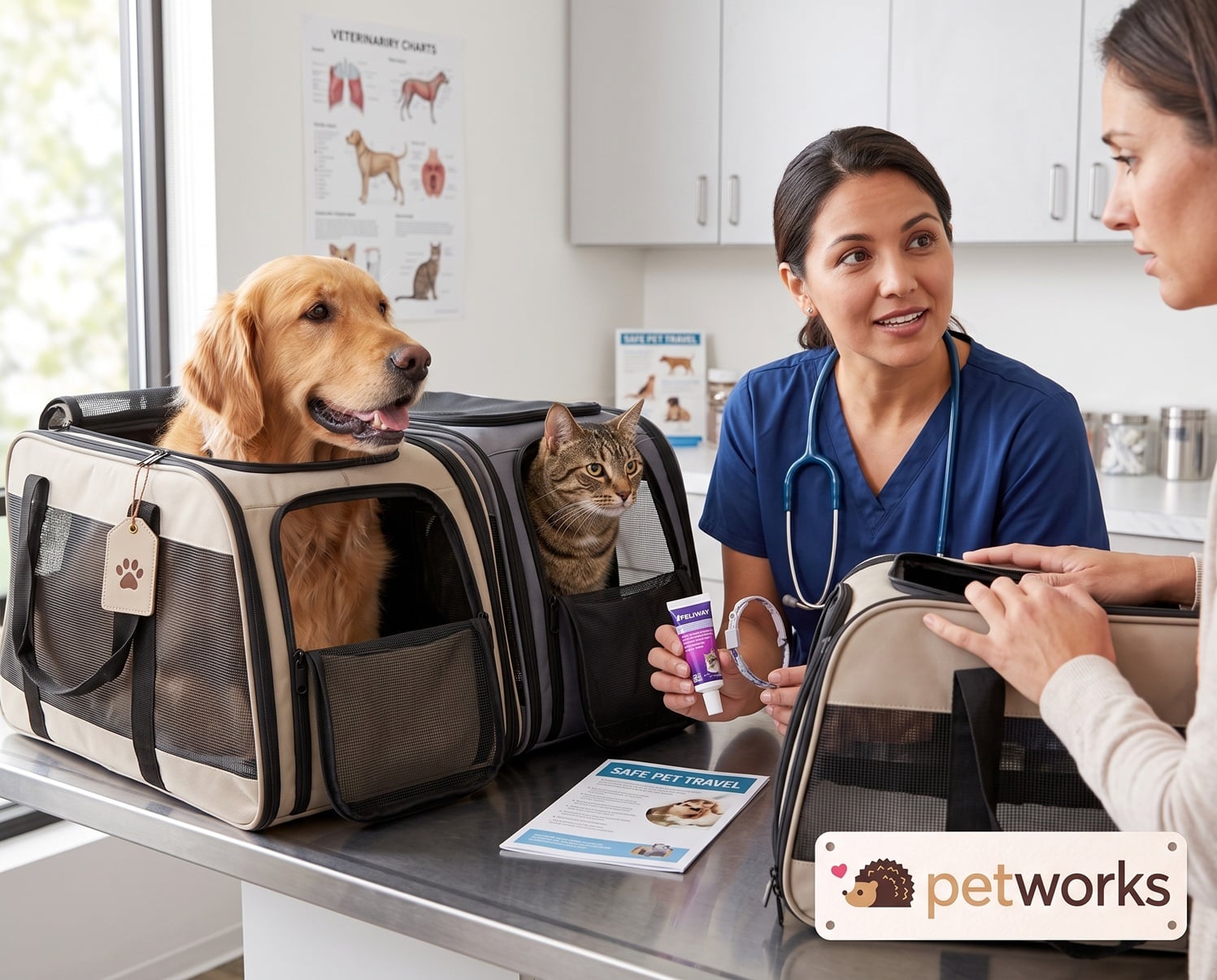
- Pheromone products. Vets often recommend starting synthetic pheromone sprays or collars a week or two before travel, since pet parents can use them to take the edge off anxiety without sedation once they take full effect.
- Short practice trips. Several short car rides before a long one help a pet build tolerance to motion and confinement.
- Nutraceuticals and calming supplements. Some vets suggest supplements formulated for situational stress as a gentler middle step, though evidence on effectiveness varies by product and pet.
- Prescription anti-anxiety medication (non-sedating). For pets with diagnosed travel anxiety, some vets prescribe medications intended to reduce anxiety without heavy sedation. This is a clinical decision that requires a vet visit, a full health history, and a home trial dose before travel day.
30-Day Pre-Travel Countdown Checklist
-
30 Days Out — Carrier Acclimatization: Unpack the travel carrier and leave it open in a common room with familiar blankets or an item of your clothing inside. Feed daily meals or high-value treats inside the crate so your pet builds a positive association.
-
14 Days Out — Pheromone & Routine Prep: Introduce synthetic calming pheromone diffusers, collars, or sprays to the home and crate environment. Start taking short practice car drives if traveling by road.
-
7 Days Out — Home Trial Dose (If Prescribed): If your veterinarian prescribes a mild anti-anxiety medication, administer a test dose at home under normal conditions. Observe how your pet reacts to the dosage well before travel day.
-
24 Hours Out — Meal & Exercise Adjustments: Provide a vigorous play session or long walk to burn off excess energy. Adjust feeding schedules according to your vet’s advice. Typically holding off on heavy meals 4–6 hours before departure to minimize nausea.
Sedation Options Compared
| Option | Vet Visit Required | Best For | Air Travel Safe |
|---|---|---|---|
| Pheromone spray or collar | No | Mild anxiety, cats and dogs | Yes |
| Behavioral crate training | No | All pets, especially first-time travelers | Yes |
| Over-the-counter calming chews | No, but vet input recommended | Mild to moderate stress | Case by case |
| Prescription anti-anxiety medication | Yes | Diagnosed severe anxiety | Case by case, never for cargo hold |
| Full sedation | Yes | Rarely recommended | No |
The Airline Factor
Airlines set their own pet travel policies, and most explicitly discourage or prohibit sedated pets in cargo. Cargo holds are also subject to their own ground-handling rules, since animals typically cannot be left in an unpressurized, unclimate-controlled hold for extended periods on the tarmac. If a pet parent is booking a flight, the airline’s own pet policy should be the first stop, followed by a vet consultation, not the other way around. This is one of the most common mistakes PetWorks sees among pet parents planning a flight nanny service or international pet shipping.
Tarmac Heat Embargoes and Seasonal Risks Beyond altitude and cabin pressure, ground temperatures present a major hazard for pet transport. Most airlines enforce strict temperature embargoes—typically refusing cargo transport if ground temperatures anywhere along the route drop below 45°F (7°C) or exceed 85°F (29.4°C). While cargo holds are pressurized and temperature-regulated during flight, animals can experience extreme weather during loading and tarmac delays. A sedated pet’s inability to thermoregulate makes these tarmac waiting periods significantly more dangerous, which is a primary reason airlines automatically reject sedated animals during seasonal temperature checks.
When Medication Actually Makes Sense
There are legitimate cases where a vet will prescribe something for travel: a dog with a documented panic response, a cat that becomes destructive or self-injurious during car rides, or a senior pet with anxiety layered on top of mobility issues. In these situations, the medication is almost never a traditional sedative. It is typically a lower-dose anti-anxiety prescription, tested at home in the weeks before travel. This lets the pet parent know exactly how their pet responds, and reserved for ground transport or in-cabin travel where physiological risk is lower than in cargo.
FAQs
Is it safe to sedate a dog for a flight?
Most veterinarians and airlines advise against it. Sedation can interfere with a dog’s ability to regulate body temperature, blood pressure, and breathing during a flight, which is riskier at altitude and in the cargo hold.
Which pets are most at risk from sedation during travel?
Brachycephalic breeds, senior pets, and pets with existing heart or respiratory conditions face the highest risk, since sedation further reduces their already limited breathing and cardiovascular reserve.
Can I give my cat Benadryl before a trip?
Some vets do recommend antihistamines for mild travel anxiety in cats, but the appropriateness depends on the individual animal’s health history. This should never be decided without a vet’s input.
What is the safest way to calm a pet during a long car ride?
Crate conditioning, pheromone products, and short practice drives beforehand are the safest first steps. Medication is reserved for pets with documented severe anxiety and is prescribed only after a vet exam.
Do airlines allow sedated pets?
Most major airlines discourage or outright prohibit visibly sedated pets, particularly in the cargo hold, due to the physiological risks involved, and many now require written confirmation that no sedative was given.
Emergency Action Plan: What to Do If Your Pet panics En Route
Even with thorough preparation, unexpected travel delays or turbulence can cause sudden distress. If your pet shows severe anxiety during road travel, follow these steps:
-
Pull Over Safely: Never attempt to handle, feed, or calm a unrestrained, panicking pet while driving. Pull off at a well-lit rest stop or safe parking area.
-
Keep the Environment Stable: Keep doors and windows secured before opening the carrier. Offer small sips of water, keep the vehicle ventilated, and lower light levels by covering part of the crate with a breathable light sheet.
-
Avoid Extra Medication: Never give an additional or unprescribed dose of medication mid-trip out of frustration or worry.
-
Utilize Ground Support: For ground relocations or long drives, map out 24-hour emergency veterinary clinics along your route prior to departure.
Ready to Travel with Peace of Mind?
Whether a pet parent needs a flight nanny, ground transport, or help navigating airline pet policies, PetWorks connects pet parents with vetted, experienced pet transport professionals . Get a free quote today and travel with a plan, not a guess.
About The Author
 Co-Founder Kevin Kinyon is a life-long animal lover who works tirelessly to improve the lives of pets and their parents. Human and animal qualities he values most are integrity, humor, and empathy.

 petworks tm