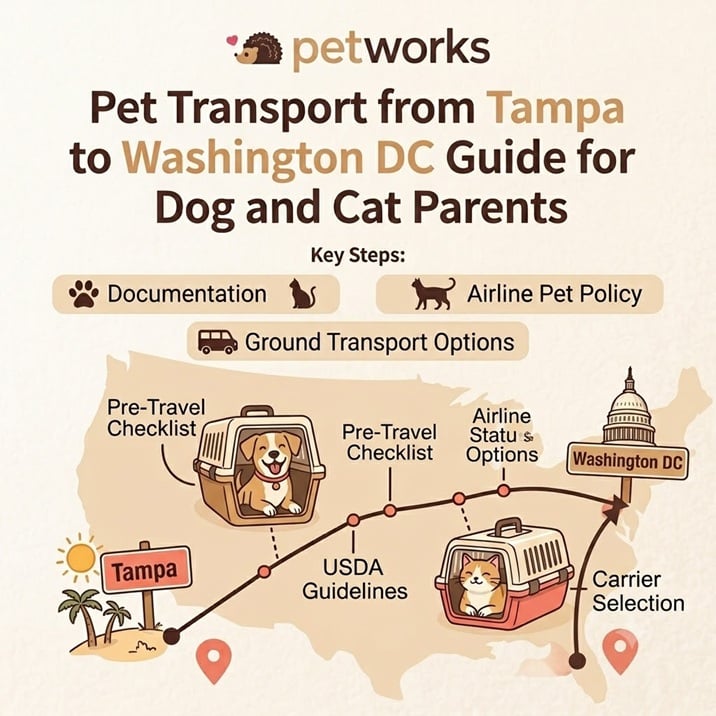
Transporting a pet between Tampa and Washington DC is one of the most consistently traveled pet relocation corridors on the East Coast. Military families, federal government employees, contractors, and civilian professionals regularly move between the Tampa Bay area and the greater Washington DC metro — which spans the District of Columbia, Northern Virginia, and suburban Maryland — making this one of the highest-volume pet transport routes in the southeastern United States.
Whether you are relocating from Tampa to Washington DC or making the reverse move south to Florida, safely transporting a dog or cat across more than 1,000 miles requires experienced professionals, careful planning, and close attention to climate conditions along the way. This guide covers everything pet parents need to know about moving a dog or cat between Tampa and the nation’s capital.
Why Tampa to Washington DC Is a Major Pet Transport Corridor
Few domestic routes carry as consistent a volume of pet relocations as Tampa to Washington DC. Several factors drive this demand year-round.
MacDill Air Force Base, located in Tampa, is home to United States Central Command (USCENTCOM) and United States Special Operations Command (USSOCOM), making it one of the most strategically significant military installations in the country. Personnel assigned to or departing from MacDill regularly relocate to and from the Washington DC metro area, where the Pentagon, Joint Base Anacostia-Bolling, Fort Belvoir, and numerous federal agencies and defense contractors are concentrated.
Beyond the military community, Tampa’s rapid population growth has made it one of the most active relocation markets in Florida. Remote workers, retirees relocating to Florida’s warmer climate, government contractors moving between assignments, and families following career opportunities all contribute to steady bidirectional pet transport demand on this route.
Both Tampa International Airport (TPA) and Washington DC’s two primary airports — Ronald Reagan Washington National Airport (DCA) and Washington Dulles International Airport (IAD) — offer frequent direct flights, giving pet parents flexible options for both ground transport and professional flight nanny services.
Ground Pet Transport vs. Flight Nanny Services
Most Tampa to Washington DC pet relocations use either professional ground transportation or in-cabin flight nanny services. The right choice depends on your pet’s size, breed, temperament, age, and health condition.
Ground Pet Transportation
Ground transport is often the preferred option for large dogs, multi-pet households, and animals that may not travel well in airport environments. Professional pet transportation companies use climate-controlled vehicles equipped with secure crates, bedding, hydration systems, and scheduled rest stops throughout the journey.
Ground transportation between Tampa and Washington DC typically takes between two and three days depending on weather, traffic, and routing through the I-95 corridor. The route follows Florida’s east coast north through Jacksonville, then continues through Georgia, the Carolinas, and Virginia before arriving in the DC metro area.
Many pets adjust well to ground travel because the environment is quieter than airports, routines remain more consistent, and pets receive regular in-person monitoring throughout the trip. Professional transporters also provide owner updates, feeding schedules, exercise breaks, and overnight care as needed.

Are you finding this article useful? Would you like 100% free access to more articles like these, and free access to over 5,000 vetted pet care service professionals throughout the United States? Sign up here for a free PetWorks account, and we’ll email you a 10% discount code, good towards your first pet care services booking on PetWorks!
Pet Flight Nanny Services
Flight nanny services are increasingly popular for puppies, kittens, cats, and small dogs traveling between Tampa and Washington DC. Instead of flying in cargo, pets travel in-cabin with an experienced handler who supervises them throughout the entire flight.
Tampa International Airport (TPA) offers multiple daily direct flights to both Ronald Reagan Washington National Airport (DCA) and Washington Dulles International Airport (IAD), making this one of the more convenient domestic routes for professional in-cabin pet transportation.
Pet flight nanny transporters in Tampa are especially well suited for small dogs, cats, senior pets, brachycephalic breeds, and animals with travel anxiety. Direct flights between Tampa and Washington DC typically take approximately two and a half hours, making this one of the shorter in-cabin travel experiences available on a long-distance relocation route. The brief flight time is a meaningful advantage for pets that find air travel stressful.
Military Pet Relocation Between Tampa and Washington DC
The Tampa to Washington DC corridor is one of the most active military pet relocation routes in the United States. Families receiving Permanent Change of Station (PCS) orders between MacDill Air Force Base and installations in the DC metro area — including the Pentagon, Fort Belvoir, Joint Base Anacostia-Bolling, and Quantico — regularly need professional pet transportation support.
Military pet relocations on this route carry unique considerations:
- Timeline pressure — PCS move timelines are often compressed, leaving limited lead time to arrange professional pet transport. Booking a PetWorks pet transport professional as early as possible after receiving orders is strongly recommended.
- Temporary lodging transitions — Military families often move through temporary lodging before settling into permanent housing, which can complicate pet care logistics during the transition period.
- Multiple pets — Military households frequently travel with more than one pet, making professional ground transport with multi-pet capacity an important consideration.
- Repeat moves — Many military families make this specific move more than once throughout a career, and building a relationship with a trusted pet transport professional familiar with the corridor pays dividends over time.
Professional pet relocation specialists experienced with military moves understand PCS timelines, documentation requirements, and the specific logistical challenges that come with government-directed relocations.
Weather and Climate Considerations
The Tampa to Washington DC route spans a notable range of climates, particularly for ground transportation along the I-95 corridor.
Tampa’s subtropical climate means hot, humid summers and mild winters. Washington DC experiences all four seasons clearly, with cold winters that can bring ice and snow — particularly in Northern Virginia and suburban Maryland — and hot, humid summers comparable to Tampa.
Ground transport along the I-95 corridor through Georgia and the Carolinas can encounter significant heat during summer months and severe weather systems, including tropical storm remnants, during hurricane season. Winter transport heading north toward DC can encounter ice and snow conditions through Virginia and Maryland.
Experienced pet transport professionals on this route typically:
- travel with climate-controlled vehicles,
- monitor interior temperatures continuously,
- adjust routing and scheduling around severe weather,
- and plan rest stops and overnight accommodations to avoid temperature extremes during loading and unloading.
Summer heat is especially important to manage for flat-faced breeds, thick-coated dogs, senior pets, and animals with respiratory or cardiovascular conditions.
Preparing Your Dog or Cat for the Move
Before scheduling transport, confirm that your pet is healthy enough for long-distance travel. Most professional transporters require current vaccination records, rabies documentation, a Certificate of Veterinary Inspection (CVI), and updated microchip and identification information.
Helping your pet become comfortable with their travel crate well ahead of the move can significantly reduce stress during transportation. Familiar bedding, comfort toys, and consistent feeding routines also help pets remain calm throughout the journey.
Provide detailed instructions to your transporter regarding medications, dietary needs, behavioral concerns, allergies, and emergency contacts before departure.
How to Choose a Safe Pet Transport Provider
When comparing providers for a Tampa to Washington DC relocation, prioritize companies with demonstrable experience handling the East Coast I-95 corridor and the specific logistical demands of military and government moves.
A professional pet transporter should clearly explain travel schedules, overnight arrangements, emergency procedures, crate requirements, and communication protocols throughout the trip.
Pet parents should verify:
- USDA endorsement coordination
- insurance coverage
- customer reviews and references
- experience transporting both dogs and cats on long interstate routes
- clear, consistent communication and update policies
Reliable transporters prioritize safety, transparency, and regular communication from pickup to delivery.
How Much Does Pet Transport from Tampa to Washington DC Cost?
The cost of pet transportation between Tampa and Washington DC depends on your pet’s size and breed, transportation method, shared or private transport, seasonal demand, and scheduling flexibility.
In general:
- shared ground transport may range from approximately $450 to $900+,
- private ground transportation may range from $1,000 to $2,000+,
- and flight nanny services often range from $700 to $1,500+ depending on airline availability and routing.
The relatively short flight time between Tampa and Washington DC makes flight nanny services particularly cost-competitive on this route compared to longer cross-country corridors. Summer travel and holiday periods may increase pricing due to higher demand.
Why Professional Pet Transport Matters
Long-distance pet relocation involves far more than simply booking a flight or loading a pet into a vehicle. Dogs and cats experience unfamiliar environments, schedule disruptions, temperature changes, and travel-related stress throughout the journey.
Professional pet transport providers understand how to minimize anxiety, monitor animal wellbeing, and manage interstate travel safely. Their expertise makes a meaningful difference for pets and the families who depend on them.
Whether your pet is relocating from Tampa to Washington DC for a military assignment, a government career opportunity, a family move, or a new chapter in the nation’s capital — or making the reverse move south to the Tampa Bay area — choosing an experienced transportation professional helps ensure a safer, more comfortable journey for everyone involved.
Frequently Asked Questions About Pet Transport from Tampa to Washington DC
How long does pet transport from Tampa to Washington DC take?
Ground transportation typically takes two to three days depending on weather, traffic, and routing. Flight nanny services are generally completed within a single travel day, with direct flights taking approximately two and a half hours.
Is ground transport or air travel better for my dog on this route?
It depends on your dog’s size, temperament, age, and health. Larger dogs often do well with climate-controlled ground transport, while smaller dogs may benefit from the shorter travel time of in-cabin flight nanny services.
Which Washington DC airport is better for pet travel — DCA or IAD?
Both airports serve Tampa with direct flights. Reagan National (DCA) is closer to downtown DC and Northern Virginia, while Dulles (IAD) is further west in Virginia. Your choice may depend on your final destination in the DC metro area and your airline’s pet policies.
Are flight nanny services available from Tampa to Washington DC?
Yes. Pet flight nanny services are widely available on this route due to the frequency of direct flights between TPA and both DCA and IAD.
What paperwork is required for interstate pet transport?
Most professional transporters require vaccination records, rabies documentation, identification and microchip information, and a Certificate of Veterinary Inspection (CVI) from a licensed veterinarian.
How much does dog transport from Tampa to Washington DC cost?
Pricing varies based on the dog’s size, transportation method, timing, and whether transport is shared or private. Flight nanny and ground transport services each carry different pricing structures.
What should military families know about pet transport from MacDill AFB to Washington DC?
Military families should book pet transport as early as possible after receiving PCS orders. Compressed timelines and temporary lodging transitions make early planning especially important on this corridor.
Can large dogs travel safely by ground from Tampa to Washington DC?
Yes. Large dogs regularly travel safely with professional ground transportation providers using secure setups, climate-controlled vehicles, and scheduled exercise breaks throughout the route.
What should I pack for my pet during transport?
Most pet parents provide food, medications, vaccination records, leashes, and familiar comfort items like blankets or toys to help reduce stress during long-distance travel.
How do I find the best pet transport provider for this route?
Look for USDA endorsement coordination, insurance coverage, strong customer reviews, transparent communication, and verified experience handling the East Coast I-95 pet transport corridor. PetWorks connects pet parents with verified professionals experienced on this route.
About The Author
 PetWorks Co-Founder Kevin Kinyon is a life-long animal lover who works tirelessly to improve the lives of pets and their parents. Human and animal qualities he values most are integrity, humor, and empathy.

 petworks tm