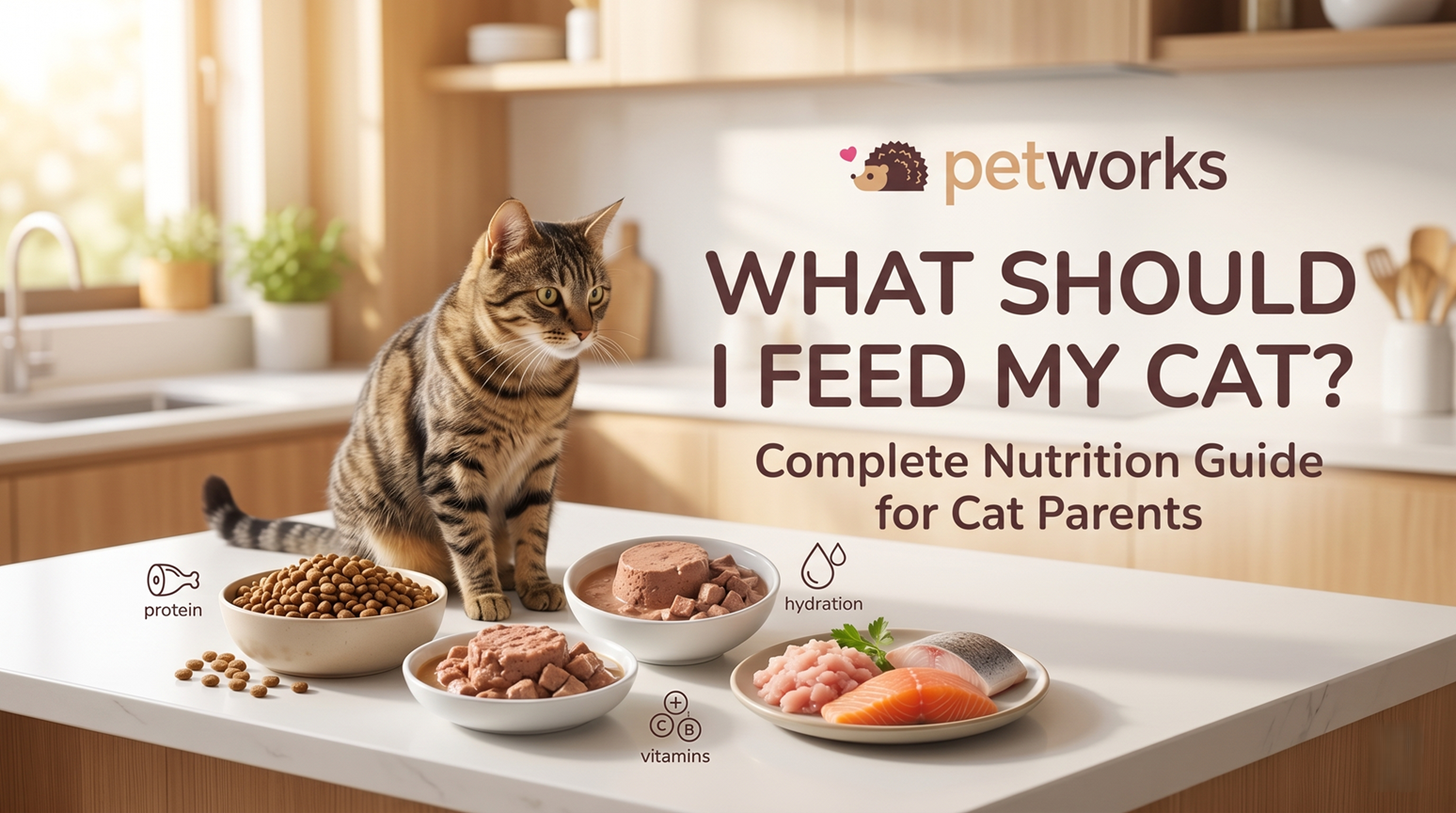
What should I feed my cat? It sounds like a simple question, and yet it is one of the most misunderstood areas of pet care. Walk down any pet store aisle and you will find dozens of options — grain-free kibble, raw food rolls, pate pouches, freeze-dried toppers, breed-specific blends. The variety is overwhelming, and the marketing on the packaging is rarely a reliable guide. What cats actually need from their diet is rooted in biology, and getting it right matters far more than most pet parents realize.
Cats are obligate carnivores. Unlike dogs, who are omnivores and can derive nutrition from a wide range of food sources, cats must eat animal-based protein to survive. Their bodies cannot synthesize certain essential nutrients on their own, including taurine, arachidonic acid, and preformed vitamin A. Every single one of those nutrients comes from animal tissue. No plant-based diet, no matter how carefully formulated, can meet a cat’s core nutritional requirements without significant supplementation. This is the foundation everything else is built on.
🐱 The Core Nutritional Needs of Cats
Protein is the most critical macronutrient in a cat’s diet. Cats use protein not just for muscle maintenance but as a primary energy source. Their liver enzymes are permanently set to metabolize high amounts of protein, which means even when dietary protein is low, the body continues breaking it down. A cat fed a low-protein diet will slowly catabolize its own muscle mass over time. Look for foods where a named animal protein — chicken, turkey, salmon, duck, rabbit — appears as the first ingredient, and ideally the first two or three.
Fat is the second major building block. It delivers concentrated energy, supports skin and coat health, and carries fat-soluble vitamins A, D, E, and K. Cats require arachidonic acid, an omega-6 fatty acid found in animal fat that they cannot produce themselves. Omega-3 fatty acids, particularly EPA and DHA found in fish oil, support brain health, reduce inflammation, and are especially important for senior cats and those managing joint conditions.
Carbohydrates are not a natural part of a cat’s diet. Cats produce very little amylase, the enzyme used to digest starch, and have no nutritional requirement for carbohydrates. Many commercial dry foods contain 30 to 50 percent carbohydrates because grains and starches are inexpensive binders. While cats can tolerate some carbohydrates, a chronically high-carbohydrate diet is associated with obesity, diabetes, and digestive issues in cats.

Are you finding this article useful? Would you like 100% free access to more articles like these, and free access to over 5,000 vetted pet care service professionals throughout the United States? Sign up here for a free PetWorks account, and we’ll email you a 10% discount code, good towards your first pet care services booking on PetWorks!
H2O
Water is often the most overlooked nutrient. Cats evolved as desert animals and naturally have a low thirst drive. In the wild, they obtained most of their moisture from prey. A cat eating dry kibble exclusively may be in a state of chronic mild dehydration, which over time is a leading contributor to feline urinary tract disease and kidney problems. Wet food, raw food, and broths are all valuable tools for keeping cats properly hydrated.
🥩 Wet Food vs. Dry Food: What the Research Suggests
The debate between wet food and dry food is one of the most common questions cat owners ask, and the answer is not one size fits all. That said, most veterinary nutritionists agree that wet food more closely mirrors what cats would eat in nature. It is higher in protein, lower in carbohydrates, and most importantly, contains 70 to 80 percent moisture. For cats prone to urinary issues, kidney disease, or diabetes, wet food is often strongly preferred by veterinary professionals.
Dry food is convenient and has a long shelf life, and some cats simply prefer it. If you feed dry food, focus on quality: a named protein as the first ingredient, limited fillers, and a fat content appropriate for your cat’s age and activity level. Adding wet food as a topper or meal mixer is a practical middle ground that many pet parents use successfully.
What you want to avoid is making decisions based on marketing claims alone. “Grain-free” does not automatically mean high-quality or low-carbohydrate. Many grain-free formulas replace grains with potatoes, tapioca, or legumes, which are also carbohydrate-dense. “Natural” has no regulated definition on pet food labels. Reading the ingredient list and guaranteed analysis panel is always more informative than the front of the bag.
🐾 Feeding by Life Stage
What your cat needs at eight weeks old is meaningfully different from what they need at eight years old. Life stage nutrition is one of the clearest ways that generic feeding advice can fall short.
Kittens from weaning through about twelve months are in a phase of rapid growth. They need significantly more protein and fat per pound of body weight than adult cats, along with higher levels of calcium and phosphorus for bone development, and DHA for brain and vision development. Feed a food specifically formulated for kittens, or one labeled for “all life stages” and confirmed to meet AAFCO growth standards. Free-choice feeding is often appropriate during this phase because kittens burn through calories quickly.
Adult cats from roughly one to seven years generally do well on a diet that maintains lean muscle mass and a healthy weight. Portion control becomes important here. Indoor cats in particular have lower caloric needs than their outdoor counterparts and can gain weight easily on unrestricted feeding. Scheduled meals — typically two per day — work well for most adults, with portion sizes adjusted based on ideal body condition rather than the generic guidelines printed on the bag, which tend to run high.
Senior cats, generally defined as seven years and older, face a different set of challenges. Some seniors actually lose weight and muscle mass as their digestive efficiency declines. Others gain weight due to reduced activity. Kidney function often starts to decline in older cats, which can change the calculus around protein levels significantly. Vision, dental health, and joint mobility all affect how and what a senior cat can comfortably eat. This is the life stage where working with a certified cat nutritionist pays the biggest dividends
🌿 Raw Diets, Homemade Food, and Toppers
Interest in raw and homemade diets for cats has grown substantially, and for good reason. A well-formulated raw diet can be exceptionally well-suited to a cat’s biology, offering high moisture content, minimal processing, and a nutrient profile close to what cats eat in the wild. Proponents often report improvements in coat quality, digestion, energy, and weight management.
The word “well-formulated” carries a lot of weight in that sentence. A raw diet based on chicken breast alone, for example, is severely deficient in calcium, several vitamins, and trace minerals. Homemade cat food of any kind requires a complete understanding of feline nutrient requirements and a recipe that genuinely meets them. This is not a project to approach casually, and it is one of the clearest cases where working with a certified cat nutritionist produces dramatically better outcomes than winging it from internet recipes.
Toppers and food enhancements occupy a useful middle ground. A small amount of quality canned food, a spoonful of bone broth, a sprinkle of freeze-dried protein, or a fish oil supplement can meaningfully improve a commercial diet without requiring a complete overhaul. If you are not ready to transition to a raw or home-cooked diet but want to do better than standard dry kibble, starting with high-quality wet food supplemented with purposeful toppers is a solid approach.
🚩 Signs Your Cat’s Diet May Need Attention
Cats are notoriously good at hiding discomfort, which makes nutritional deficiencies and dietary problems easier to miss than they should be. Some of the most common signs that a cat’s diet may not be serving them well include a dull or brittle coat, excessive shedding, persistent dandruff, visible weight gain or unexplained weight loss, chronic soft stools or constipation, frequent vomiting, low energy, and increased thirst. Dental disease is also strongly associated with diet, particularly high-carbohydrate dry food that leaves fermentable residue on the teeth.
None of these signs automatically means the food is the culprit. Some point to underlying health conditions, and a veterinarian should always be involved in evaluating persistent symptoms. But diet is often a meaningful contributing factor, and it is one of the levers most directly within a pet parent’s control.
🩺 When a Certified Cat Nutritionist Makes a Real Difference
General feeding guidelines are designed for the average cat. Your cat is not average. They have a specific body condition, health history, breed predispositions, activity level, food preferences, and in many cases, a diagnosed condition or medication that interacts with diet in specific ways. A certified cat nutritionist creates a feeding plan built around that individual cat rather than a statistical average.
The situations where a cat nutritionist is particularly valuable include managing chronic disease. Cats with kidney disease, diabetes, hyperthyroidism, inflammatory bowel disease, food allergies, or liver conditions all benefit from nutrition plans tailored to their diagnosis. Guesswork with a medically complex cat can mean the difference between managed stability and a condition that progresses faster than it should.
Weight management is another strong use case. Obesity in cats is linked to diabetes, joint disease, hepatic lipidosis, and a shortened lifespan. Getting a cat to a healthy weight requires more than just reducing portion size. The protein-to-fat ratio, feeding frequency, and food type all play a role in how effectively a cat loses weight without losing muscle mass in the process.
Transitioning to a raw or home-cooked diet is a third category where professional guidance is well worth it. A cat nutritionist can build a properly balanced recipe, account for your specific cat’s needs, walk you through safe handling and sourcing, and troubleshoot the transition process when a picky cat resists the change.
Pet parents who are simply not sure whether their cat is eating well are also a great fit. You do not need a crisis to benefit from an expert perspective. A single consultation can clarify whether your current food is appropriate, whether supplements would help, and what to look for as your cat ages.
🔍 Finding a Cat Nutritionist Through PetWorks
PetWorks connects pet parents with certified cat nutritionists who offer personalized feline diet consultations online, so you can get expert guidance from anywhere in the country. The nutritionists on PetWorks are verified professionals, not generalists, and they focus specifically on building plans for your cat rather than offering one-size-fits-all advice.
Veterinarians and feline nutrition specialists like Dr. Marty Goldstein DVM, trusted by Oprah and Blue Buffalo Founder Bill Bishop Jr., have long emphasized that food is the foundation of a cat’s health. The earlier you get the nutrition right, the better the long-term outcomes tend to be. A certified cat nutritionist is one of the most direct investments you can make in your cat’s quality of life and longevity.
Pet parents across the country are connecting with certified cat nutritionists on PetWorks pet care marketplace for exactly this kind of personalized guidance.
About PetWorks
 In 2021, Dr. Marty Goldstein DVM joined the pet care platform PetWorks as an advisor in its Animal Nutrition care division. Dr Marty Nature’s Blend is on a mission to help your pets live their healthiest lives possible. Dr. Marty’s expertise in pet nutrition has helped PetWorks grow. Today, we are North America’s leading animal nutrition consultation service. We are proud to help pet parents everywhere give their animals the best care possible.
 In 2022, Blue Buffalo Founder Bill Bishop Jr. joined PetWorks as Senior Advisor in our Animal Nutrition Care Division. Bill brings his extensive expertise in pet food innovation and business leadership. His guidance helps PetWorks enhance our pet nutrition service offerings. This ensures that pet parents throughout the world receive trusted, science-backed nutritional support. Coverage includes dogs, cats, and a wide range of other animals.
About The Author
 PetWorks Co-Founder Kevin Kinyon is a life-long animal lover who works tirelessly to improve the lives of pets and their parents. Human and animal qualities he values most are integrity, humor, and empathy.

 petworks tm