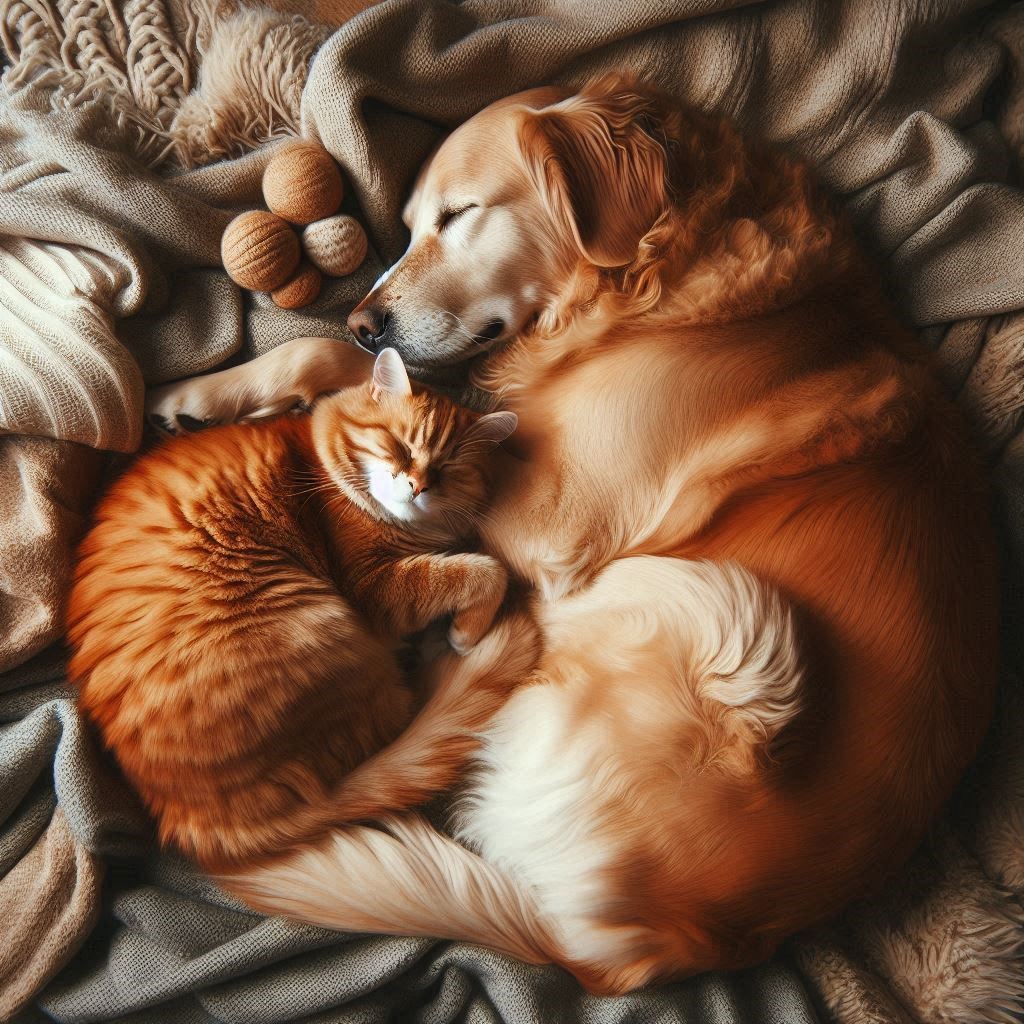
Cats and dogs, arguably the most popular pets worldwide, have warmed humankind with their unique qualities for centuries. Despite their different evolutionary backgrounds, their coexistence in many households demonstrates their adaptability and social nature. The relationship between cats and dogs has always been a focal point of people’s interest. Let’s explore the Kinship Between Cats and Dogs.
Kinship Pets: Evolutionary Backgrounds
Understanding the origins of these two species provides valuable insights into their behavior and instincts.
Cats: Domestic cats, descendants of wildcats, are solitary hunters by nature. They retain a degree of independence, which influences their interactions with other animals, including dogs.
Dogs: As pack animals, dogs have a natural inclination towards social interactions. Their domestication, which began over 20,000 years ago, has made them more adaptable to living in groups.
Initial Interactions: First Impressions Matter
The first meetings between cats and dogs can set the tone for their future relationship. Introductions should occur in a controlled environment, allowing them to observe and become familiar with each other’s scents without direct contact.
Supervised Meetings: Initially, keep interactions short and supervised to prevent aggressive or fearful behaviors from escalating.
Positive Reinforcement: Reward both pets for calm and friendly behavior during introductions. Treats, praise, and gentle petting can create positive associations.
Communication Styles of Dogs and Cats
Cats and dogs have distinct ways of communicating, and understanding these cues is crucial for their coexistence.
Body Language: Dogs tend to be more overt in their body language, using tail wagging, play bows, and vocalizations. Cats communicate more subtly through ear position, tail movements, and body posture.
Scent Marking: Both cats and dogs use scent to establish territory. Providing multiple designated spaces for each pet can help alleviate conflicts.
Kinship Pets: Establishing Hierarchy
In households with both cats and dogs, it’s important for each to understand their place in the hierarchy.
Avoid Favoritism: Ensure both pets receive equal attention, affection, and resources to prevent jealousy and competition.
Provide Separate Spaces: Each pet should have their own designated areas for eating, resting, and playing, creating a sense of security and reducing potential conflicts.
Kinship Pets: Building Strong Bonds
Fostering a positive relationship between a dog and cat requires time, patience, and consistent effort.
Group Activities: Encourage activities that both pets enjoy, such as interactive play or gentle walks, to build positive associations.
Establishing Kinship: Your cat and dog need to recognize and accept each other’s scents. This is a crucial step they must go through before they can get along and establish kinship.
Respect Individual Preferences: Recognize that not all cats and dogs will become best friends. Some may simply coexist amicably, which is perfectly fine.
Common Misconceptions About Cats and Dogs
Misconceptions about dogs and cats not liking each other arise from various factors, including instinctual differences, historical stereotypes, and lack of proper introductions.
Instinctual Differences: Cats are solitary hunters and more territorial, while dogs are pack animals and more social, leading to misunderstandings.
Historical Stereotypes: Popular culture has often portrayed cats and dogs as natural adversaries, perpetuating the belief that they cannot coexist peacefully.

Are you finding this article useful? Would you like 100% free access to more articles like these, and free access to over 5,000 vetted pet care service professionals throughout the United States? Sign up here for a free Petworks account, and we’ll email you a 10% discount code, good towards your first pet care services booking on Petworks!
Unfamiliarity and Misinterpretation: Many people lack experience with cats and dogs living harmoniously and may misinterpret body language cues, leading to misconceptions.
Individual Personality Traits: Just like humans, cats and dogs have unique personalities. Some naturally get along, while others prefer their own space.
Failure to Recognize Bonding Behaviors: Subtle bonding animal behaviors, such as grooming or nuzzling, might be overlooked or misinterpreted.
Kinship Pets:
The relationship between cats and dogs is a testament to their adaptability and social nature. With patience, understanding, and proper guidance, they can not only coexist but also form strong kinship bonds that enrich our lives. Each pet is unique, so observe their cues and tailor your approach to their individual personalities.
About Petworks
 In 2021, Dr. Marty Goldstein DVM joined the pet care platform Petworks as an advisor in its Animal Nutrition care division. Dr Marty Nature’s Blend is on a mission to help your pets live their healthiest lives possible. Dr. Marty’s pet nutrition expertise and guidance has helped Petworks evolve and become the preeminent animal and pet nutrition consultation service for pet parents in North America.
 In 2022, Blue Buffalo Founder Bill Bishop Jr. joined Petworks as Senior Advisor in our Animal Nutrition Care Division. Bill brings his extensive expertise in pet food innovation and business leadership. His guidance helps Petworks enhance our pet nutrition service offerings, helping to ensure that pet parents throughout the world receive trusted, science-backed nutritional support for their dogs, cats, and animals.
About The Author
 Petworks Co-Founder Kevin Kinyon is a life-long animal lover who works tirelessly to improve the lives of pets and their parents. Human and animal qualities he values most are integrity, humor, and empathy.

 petworks tm