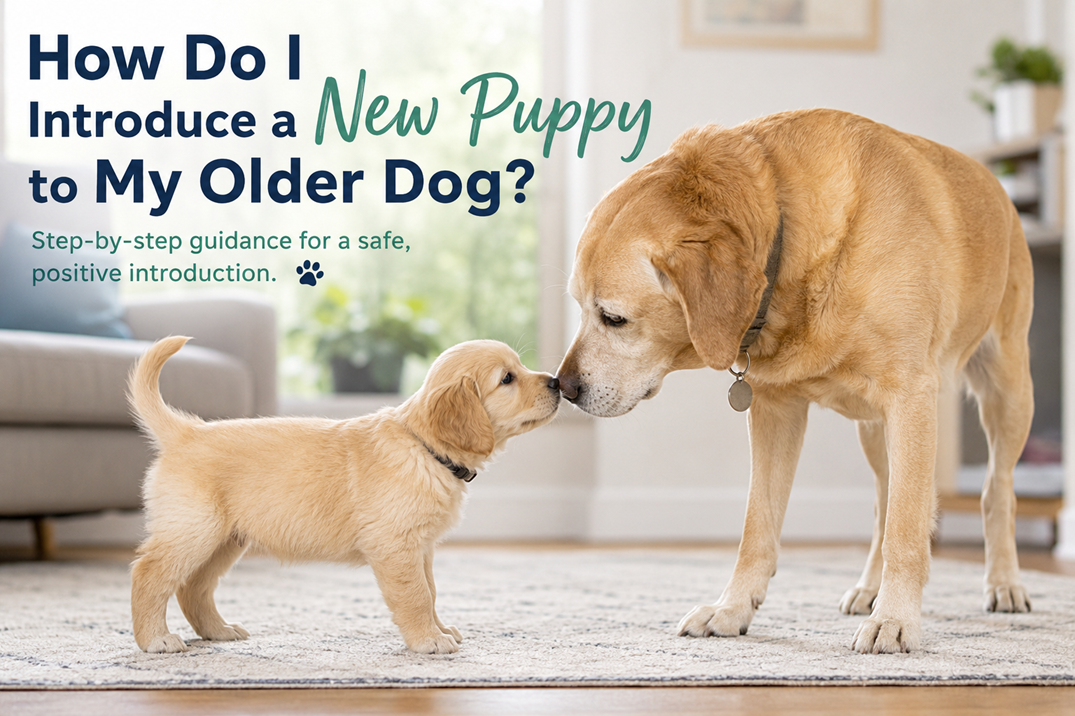
Bringing a new puppy into a home with an older dog can be exciting, but it can also create stress if the introduction is not handled carefully. Older dogs are often used to established routines, familiar territory, and predictable attention from their owner. A puppy disrupts that balance with high energy, constant curiosity, and a lack of boundaries. Because of this, the way you manage the introduction has a direct impact on whether the relationship becomes calm and positive or tense and reactive. The goal is not to force instant friendship. It is to create a structured environment where both dogs feel safe, understood, and gradually comfortable with each other.
Why Older Dogs Sometimes Struggle with a New Puppy
Many pet parents interpret resistance from an older dog as jealousy or bad behavior, but it is usually rooted in uncertainty. Puppies move quickly, invade space, and often ignore social cues. For an older dog, this can feel overwhelming or even threatening.
Older dogs may also feel that their routine and access to their owner is changing. Even small shifts in attention or structure can create confusion. When you understand this, it becomes easier to respond with patience instead of correction.
How Do I Prepare My Older Dog Before the Puppy Arrives?
Preparation helps reduce shock and makes the transition smoother. Before the puppy comes home, it is helpful to reinforce your older dog’s basic obedience skills. Commands like sit, stay, and leave it create a sense of structure that will be useful during early interactions.
It also helps to stabilize your daily routine. Feeding times, walks, and rest periods should be consistent so your older dog feels secure. If changes are unavoidable, try to introduce them gradually in advance.
Creating separate spaces in the home is another important step. Your older dog should have a quiet area where they can rest without being approached. This is not isolation, but rather a safe zone that gives them control over their environment.
How Do I Introduce Them for the First Time?
The first introduction should be calm, controlled, and short. Neutral territory is ideal because it prevents the older dog from feeling like their home is being invaded. A quiet outdoor space often works best.
Both dogs should be on loose leashes so you can guide the interaction without creating tension. The key is to avoid pressure. You are not trying to force engagement, only allow them to notice each other at a comfortable pace.
If either dog shows signs of stress such as stiff posture, avoidance, or growling, it is better to pause and increase distance rather than push through the moment. Ending the interaction early on a calm note is more effective than continuing until either dog becomes overwhelmed.

Are you finding this article useful? Would you like 100% free access to more articles like these, and free access to over 5,000 vetted pet care service professionals throughout the United States? Sign up here for a free Petworks account, and we’ll email you a 10% discount code, good towards your first pet care services booking on Petworks!
How Do I Read My Older Dog’s Behavior?
Understanding body language is essential during this stage. A relaxed older dog will move freely, sniff calmly, and may choose to disengage without stress. These are all positive signs that they are processing the new presence in their environment.
Tension shows up differently. A stiff body, fixed staring, lip curling, or growling can indicate discomfort or boundary setting. It is important to recognize that growling is communication, not disobedience. It is your dog signaling that they need space or more time to adjust.
Respecting those signals helps prevent escalation and builds long term trust.
How Do I Prevent Jealousy or Resource Issues?
One of the most important aspects of early integration is maintaining fairness and structure. Older dogs should continue to receive consistent attention, especially during the adjustment period. This helps prevent feelings of displacement.
Feeding dogs separately is also recommended to avoid tension around food. Toys and resting areas should not be forced into shared use at the beginning. Instead, each dog should have access to their own resources without competition.
When both dogs begin to associate calm behavior around each other with positive outcomes, tension naturally decreases over time.
How Do I Build a Healthy Long-Term Relationship?
Successful introductions are built through repetition, not intensity. Short, supervised interactions work far better than long, unpredictable ones. Over time, you can gradually increase the duration of their time together as comfort improves.
Parallel activities can also help. Walking both dogs together or practicing basic training in the same space allows them to coexist without direct pressure to interact. This builds familiarity in a low stress way.
As trust develops, many dogs begin to settle into a natural rhythm. Some become playful companions, while others simply learn to peacefully coexist. Both outcomes are normal and healthy.
When Should I Get Professional Help?
If your older dog shows ongoing aggression, persistent fear, or escalating tension that does not improve with structured introductions, it is time to seek support. A certified dog trainer or animal behaviorist can help identify triggers and create a tailored plan for your household.
Professional guidance is especially valuable when introducing dogs with a history of anxiety, reactivity, or territorial behavior. Early intervention often prevents long term issues from forming.
Final words of advice from PetWorks Co-Founder Kevin Kinyon:
“Introducing a new puppy to an older dog is a gradual process that relies on structure, patience, and respect for communication. When handled correctly, most dogs can adjust and build a stable relationship over time. The key is not speed, but consistency and awareness of each dog’s emotional state. With the right approach, your home can become a balanced environment where both dogs feel secure and understood.”
FAQs
How long does it take for an older dog to accept a new puppy?
The adjustment period varies. Some dogs adapt in a few days, while others may take several weeks. Consistency and calm introductions usually speed up the process.
Is it normal for an older dog to growl at a new puppy?
Yes. Growling is a form of communication that signals discomfort or boundaries. It should not be punished but instead used as feedback to adjust the situation.
Should I let my dogs interact freely right away?
No. Early interactions should always be supervised and structured. Free interaction too soon can lead to misunderstandings or conflict.
What is the best place to introduce a new puppy to an older dog?
Neutral outdoor areas are usually best for the first meeting because they reduce territorial behavior from the older dog.
How can I help my older dog adjust faster?
Maintaining routine, giving your older dog attention, and keeping introductions short and positive all help the adjustment process go more smoothly.
About PetWorks
 In 2021, Dr. Marty Goldstein DVM joined the pet care platform PetWorks as an advisor in its Animal Nutrition care division. Dr Marty Nature’s Blend is on a mission to help your pets live their healthiest lives possible. Dr. Marty’s pet nutrition expertise and guidance has helped PetWorks evolve and become the preeminent animal and pet nutrition consultation service for pet parents in North America.
 In 2022, Blue Buffalo Founder Bill Bishop Jr. joined PetWorks as Senior Advisor in our Animal Nutrition Care Division. Bill brings his extensive expertise in pet food innovation and business leadership. His guidance helps PetWorks enhance our pet nutrition service offerings, helping to ensure that pet parents throughout the world receive trusted, science-backed nutritional support for their dogs, cats, and animals.
About The Author
 PetWorks Co-Founder Kevin Kinyon is a life-long animal lover who works tirelessly to improve the lives of pets and their parents. Human and animal qualities he values most are integrity, humor, and empathy.

 petworks tm