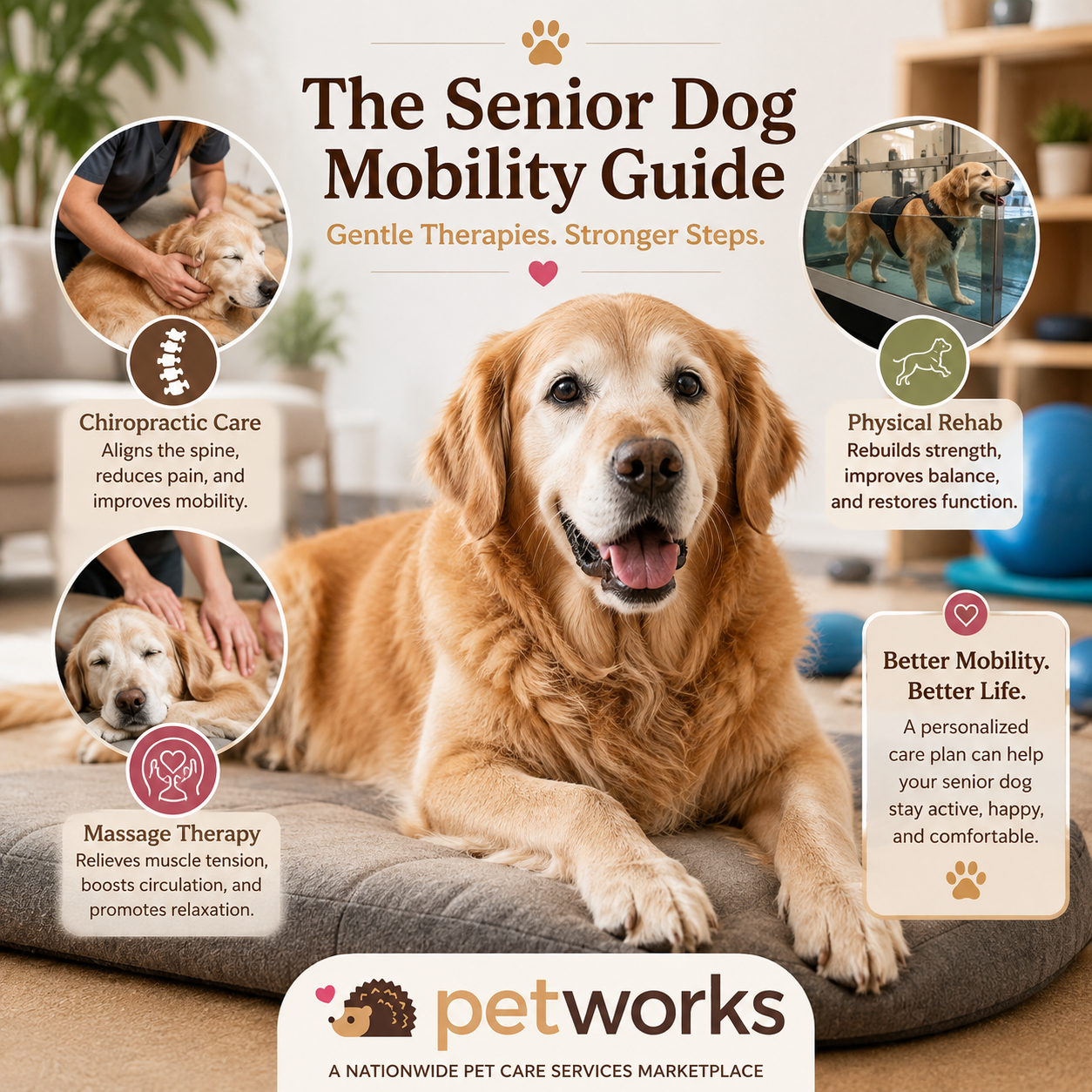
Let us know discuss chiropractic care for senior dogs. As dogs age, watching them struggle to stand up, navigate stairs, or enjoy their daily walks is one of the most challenging experiences for any pet parent. Canine osteoarthritis, intervertebral disc disease (IVDD), and age-related muscle atrophy affect millions of senior dogs nationwide. While conventional veterinary medicine relies heavily on pain management medications and anti-inflammatories, an increasing number of pet parents are integrating non-invasive, bodywork-based therapies into their dog’s wellness routine.
Quick Takeaway: Senior dogs with joint stiffness benefit from chiropractic care for spinal alignment, massage therapy for soft-tissue tension, and physical rehab for muscle preservation. Consult a vet to determine the best combination, and hire certified specialists on the PetWorks nationwide pet care services marketplace.
Navigating the options between canine chiropractic care, animal massage therapy, and physical rehabilitation can feel confusing. Each modality serves a distinct purpose in restoring joint alignment, easing muscle tension, and improving range of motion. Understanding how these specialized therapies differ—and how they work together—allows you to build a comprehensive mobility strategy tailored to your senior dog’s specific physical needs.
PetWorks is a nationwide pet care services marketplace that connects pet parents with thousands of vetted, independent professionals, including certified animal chiropractors, canine massage therapists, mobile veterinarians, and holistic pet specialists…to support your pet through every stage of life.
1. Canine Chiropractic Care: Aligning the Musculoskeletal System
Canine chiropractic therapy focuses on the relationship between the spine, central nervous system, and joint mechanics. When a senior dog compensates for pain in one leg—such as a weak hip—they shift their weight unevenly, causing vertebral subluxations (misalignments) along the spine. These misalignments restrict mobility, cause nerve compression, and create compensatory strain in healthy limbs.
Certified animal chiropractors perform gentle, targeted manual adjustments to restore proper joint biomechanics and alleviate nervous system pressure. Veterinary chiropractic care is not a replacement for traditional veterinary medicine, but rather an integrative approach that works best alongside routine veterinary care.
Look for practitioners certified by the American Veterinary Chiropractic Association (AVCA) to ensure your provider has undergone rigorous, specialized clinical training.
2. Animal Massage Therapy: Relieving Chronic Muscle Tension
While chiropractic care targets joints and bone alignment, animal massage therapy focuses entirely on soft tissue: muscles, tendons, and fascia. Senior dogs suffering from chronic stiffness frequently develop painful muscle knots and trigger points from holding their bodies in rigid positions to avoid joint pain.
Targeted canine massage increases blood circulation, enhances lymphatic drainage, and releases endorphins that naturally suppress pain signals. Regular therapeutic massage sessions help maintain muscle elasticity, reduce post-walk soreness, and promote deep relaxation in high-anxiety senior dogs struggling with cognitive decline or chronic discomfort.
3. Physical Rehabilitation: Rebuilding Strength and Balance
Canine physical therapy and rehabilitation focus on active movement recovery and muscle preservation. Utilizing specialized equipment such as underwater treadmills, balance boards, laser therapy, and targeted range-of-motion exercises, rehabilitation specialists help senior dogs rebuild neurological connections and preserve failing muscle mass.
Physical therapy is especially crucial for senior dogs recovering from orthopedic surgeries or managing severe neurological deficits. By combining passive stretches with low-impact strength conditioning, rehabilitation helps senior dogs maintain their functional independence for as long as possible.
4. Choosing the Right Specialist for Your Senior Dog
Deciding which professional to hire depends heavily on your dog’s primary underlying symptoms. Many senior dogs benefit most from a collaborative care team, where each specialist plays a distinct role:
-
Chiropractor: Restores joint function and alignment.
-
Massage Therapist: Eases surrounding soft-tissue tension.
-
Rehabilitation Therapist: Maintains core muscle strength and balance.
Senior Dog Mobility Therapy Comparison
| Therapy Type | Primary Focus | Best For Symptoms |
| Chiropractic | Joint & Spine Alignment | Stiffness, limping, IVDD, nerve compression, uneven gait |
| Massage Therapy | Soft Tissue & Muscles | Tight muscles, anxiety, poor circulation, compensation pain |
| Physical Rehab | Strength & Balance | Post-surgery recovery, muscle loss, severe weakness, paralysis |
When evaluating prospective specialists, always verify their underlying professional credentials and request a consultation to discuss your dog’s complete medical history.
5. How to Connect with Certified Mobility Pros
Supporting an aging dog requires compassionate, highly skilled care. Partnering with qualified professionals ensures your dog receives safe, evidence-based treatments tailored to their fragile joints and individual comfort levels.
PetWorks makes finding local or mobile specialists simple. Through our dedicated PetWorks Dog Chiropractic Services marketplace platform, you can browse verified practitioner profiles, check professional certifications, read reviews from other senior pet parents, and book direct consultations with trusted experts in your area.
Frequently Asked Questions About Chiropractic Care for Senior Dogs
Is chiropractic care safe for older dogs with severe arthritis?
Yes, when performed by a certified professional. Animal chiropractors adjust their technique for senior dogs, using low-force, gentle manual pressure rather than high-velocity adjustments.
How often should a senior dog receive therapeutic massage?
Most senior dogs with chronic stiffness benefit from weekly or bi-weekly massage sessions initially, transitioning to monthly maintenance visits once muscle tension stabilizes.
Do I need a referral from my primary veterinarian?
In many states, animal chiropractors and physical rehabilitation specialists require a veterinary clearance or referral before performing treatments to rule out underlying fractures, tumors, or acute medical conditions.
About PetWorks
 In 2021, Dr. Marty Goldstein DVM joined the pet care platform PetWorks as an advisor in its Animal Nutrition care division. Dr Marty Nature’s Blend is on a mission to help your pets live their healthiest lives possible. Dr. Marty’s expertise in pet nutrition has helped PetWorks grow. His guidance has helped us become North America’s leading animal and pet nutrition consultation service for pet parents.
 In 2022, Blue Buffalo Founder Bill Bishop Jr. joined PetWorks as Senior Advisor in our Animal Nutrition Care Division. Bill brings his extensive expertise in pet food innovation and business leadership. His guidance helps PetWorks enhance our pet nutrition services. It also helps ensure that pet parents around the world receive trusted, science-backed nutritional support for their dogs, cats, and other animals.
About The Author
 PetWorks Co-Founder Kevin Kinyon is a life-long animal lover who works tirelessly to improve the lives of pets and their parents. Human and animal qualities he values most are integrity, humor, and empathy.

 petworks tm