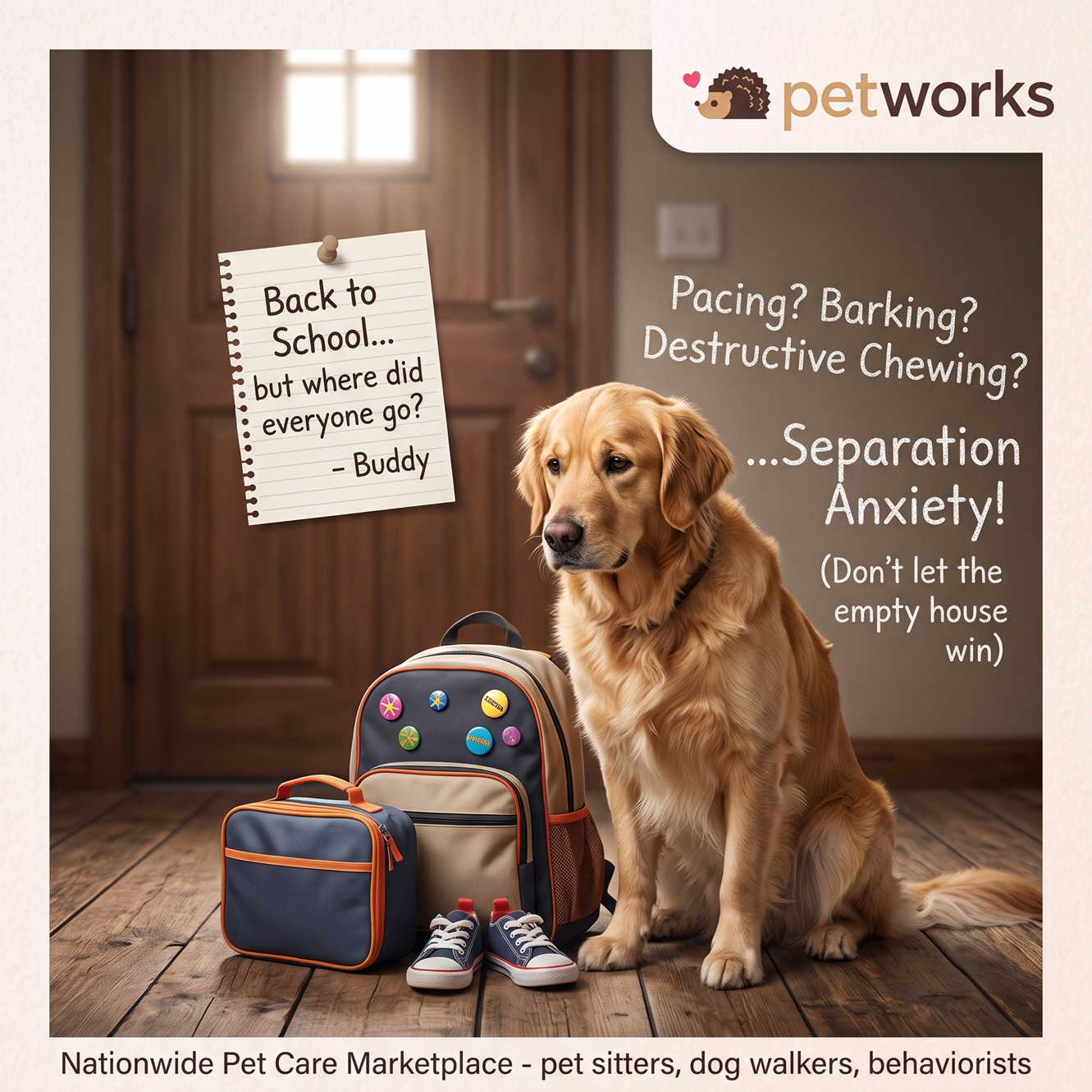
Back-to-School Separation Anxiety in Dogs! For a lot of dogs, summer means a full house. Kids are home, someone’s usually around, and the daily rhythm includes company most of the day. Once the school year starts, that changes fast. A dog who spent June through August surrounded by people can suddenly find themselves alone for six or seven hours at a stretch, and that shift can trigger real separation anxiety.
This isn’t a training failure or a sign of a “bad” dog. It’s a predictable response to a sudden change in routine, and it’s one PetWorks hears about every August from pet parents who are caught off guard by it.
Quick Answer: Dogs used to a full house all summer can develop separation anxiety once school starts because their routine shifts overnight from constant company to hours alone. Common signs include pacing, barking, destructive chewing, and house accidents in an otherwise house-trained dog. Most cases improve within a few weeks with gradual practice absences, a consistent schedule, and added mental stimulation.
Why the Back-to-School Transition Hits Dogs So Hard
Dogs build their sense of security around routine. When summer ends abruptly and the house empties out on a school-day schedule, a dog doesn’t understand that it’s temporary or seasonal. All they know is that the people who were around all day are suddenly gone for long stretches, and that gap can feel unpredictable and stressful.
Puppies and young dogs who were adopted or brought home during the summer are especially at risk. They’ve never experienced an empty house on a weekday, so the first few weeks of September can be their first real exposure to being alone.
Signs to Watch For
Separation anxiety doesn’t always look like frantic barking. Some of the most common signs include:
- Pacing, whining, or trembling as you prepare to leave
- Barking or howling that starts soon after you leave and continues
- Destructive chewing, especially near doors, windows, or exits
- Accidents in the house from a dog who is otherwise fully house-trained
- Excessive drooling or panting when left alone
- Following a family member from room to room right before departure
If a dog shows several of these signs regularly rather than occasionally, it’s worth paying closer attention. One-off incidents usually aren’t cause for concern. A consistent pattern is.
Mild Adjustment vs. True Separation Anxiety
Not every dog who seems a little off during the first week of school has separation anxiety. Here’s how to tell the difference:
| Signal | Mild Adjustment | True Separation Anxiety |
|---|---|---|
| Timing | Settles down within minutes of the family leaving | Distress continues for the full time alone |
| Duration | Improves over 1 to 2 weeks | Persists or worsens past 2 to 3 weeks |
| Behavior | Occasional whining or restlessness | Destructive chewing, house accidents, or self-injury |
| Appetite | Eats normally once alone | Refuses food or treats left out |
| Pattern | Inconsistent, happens some days | Happens nearly every departure |
If a dog’s behavior lines up more with the right-hand column, it’s worth a conversation with a veterinarian rather than waiting it out.
How to Help a Dog Adjust
Practice short absences before the first day of school. Leaving for five or ten minutes at a time in the final weeks of summer helps a dog relearn that alone time is temporary and predictable.
Keep departures low-key. A big emotional goodbye can actually make anxiety worse. A calm, brief exit helps a dog stay settled.
Build in mental stimulation. A food puzzle, a frozen treat, or a long-lasting chew can occupy a dog during the hardest part of the transition, which is usually the first 15 to 30 minutes after everyone leaves.
Stick to a consistent schedule. Feeding, walks, and bedtime at the same time each day give a dog something predictable to anchor to, even when the household routine around them has changed.
Consider a midday break. For dogs really struggling with a longer day alone, a dog walker, a few hours of daycare, or a visit from an in-home pet sitter can break up the day and ease the adjustment. PetWorks connects pet parents with vetted local pet sitters and dog walkers who specialize in exactly this kind of transition support.
Work with a trainer for persistent cases. If practice absences and added stimulation aren’t enough, a certified dog trainer can build a structured desensitization plan tailored to the dog’s specific triggers. This is especially useful for puppies experiencing their first-ever empty house.
When to Loop In a Professional
Mild adjustment stress usually improves within a few weeks as a dog settles into the new routine. If the signs are severe, worsening, or involve self-injury, it’s time to talk to a veterinarian. The ASPCA notes that ruling out other causes of similar symptoms, like incomplete house training or medication side effects, is an important early step before assuming separation anxiety is the cause. A vet can also determine whether a referral to a certified veterinary behaviorist or a customized training plan makes sense.
The Bottom Line
The back-to-school shift is one of the most common triggers for separation-related stress in dogs, and it’s almost always manageable with a little preparation. Watching for early signs, easing into the new schedule, and leaning on support like a midday dog walker or pet sitter when needed can make the transition smoother for the whole family, dog included.
PetWorks is a nationwide pet care services marketplace connecting pet parents with trusted, local pet sitters, dog walkers, animal behaviorists, and daycare providers who can help ease a dog through exactly this kind of routine change.
Reviewed by Dr. Marty Goldstein, DVM. Dr. Goldstein is a veterinarian with decades of experience in integrative and holistic animal care, and reviews PetWorks wellness content for accuracy.
About The Author
 PetWorks Co-Founder Kevin Kinyon is a life-long animal lover who works tirelessly to improve the lives of pets and their parents. Human and animal qualities he values most are integrity, humor, and empathy.

 petworks tm