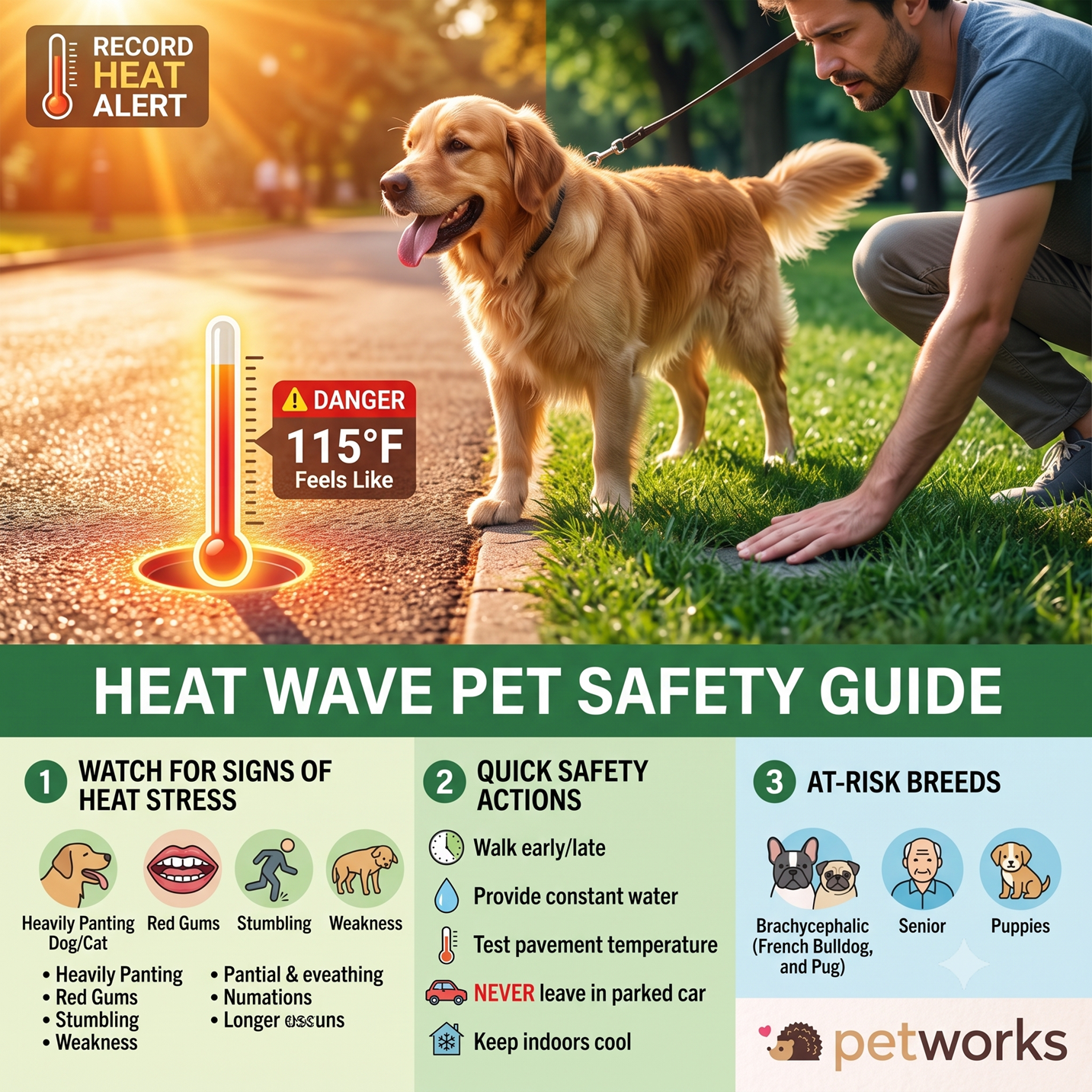
Let’s go over heat wave pet safety, This summer’s heat wave has broken records across much of the country. Cities from Baltimore to New Orleans to Rapid City have seen feels-like temperatures climb past 110 degrees, and animal shelters in several states are reporting a steady rise in pets brought in with heat exhaustion. For pet parents, the message from vets and animal welfare groups has been consistent: this isn’t a normal summer, and pets need more protection than usual.
Dogs and cats can’t cool themselves the way people do. They release heat mainly through panting and through the pads of their feet, which makes them far more vulnerable once temperatures climb into dangerous territory. Some breeds are at even higher risk, including short-nosed dogs like bulldogs and pugs, along with senior pets, puppies, and animals with existing health conditions.
Quick answer: During extreme heat, dogs and cats can overheat within minutes. Watch for heavy panting, weakness, or collapse, and avoid walks when pavement is too hot to touch for five seconds.
Warning Signs of Heat Stress in Pets
Heat exhaustion can progress to heatstroke quickly, so knowing the early signs matters. Pet parents should watch for:
- Heavy panting or drooling
- Bright red gums or tongue
- Lethargy or weakness
- Stumbling or lack of coordination
- Vomiting or diarrhea
- Collapse
If a pet shows any of these signs, move them to a cool, shaded area immediately, offer small amounts of water, and contact a veterinarian right away. According to the American Veterinary Medical Association, heatstroke is a medical emergency that requires immediate treatment and can be fatal within a short window.
Heat Risk at a Glance
| Temperature (feels-like) | Risk Level | Recommended Action |
|---|---|---|
| Under 80°F | Low | Normal walks and outdoor time are fine |
| 80–90°F | Moderate | Shorten walks, provide shade and water |
| 90–100°F | High | Walk only early morning or evening |
| 100°F+ | Extreme | Keep pets indoors; skip walks entirely |
Why This Heat Wave Is Different
What’s making this summer particularly risky is how widespread and prolonged the heat has been. Vets are also flagging a less obvious danger: pets can overheat indoors too, especially in homes with poor airflow or during power outages that knock out air conditioning. A hot apartment with the windows closed can become just as dangerous as a car in a parking lot.
That combination, outdoor heat plus indoor risk, means pet parents need a plan that covers the whole day, not just walks.
“Prevention is always easier than treatment, and that’s especially true when it comes to heat.” – Dr. Marty Goldstein, PetWorks Nutrition Advisor
How to Keep Pets Safe : Heat Wave Pet Safety
A few practical steps go a long way during a heat wave:
- Walk dogs early in the morning or after sunset, when pavement and air temperatures are lower
- Test pavement with the back of a hand before a walk; if it’s too hot to touch, it’s too hot for paws
- Keep fresh water available at all times, indoors and out
- Never leave a pet in a parked car, even briefly, even with windows cracked
- Use fans, air conditioning, or cooling mats to keep indoor temperatures manageable
- Watch for signs of heat stress in pets who seem unusually tired or reluctant to move
When You Can’t Be Home to Manage It
Many heat-related emergencies happen during the hours a pet parent is at work or traveling, when nobody is around to notice a pet struggling or an AC unit failing. This is where in-home pet sitting fills a real gap. A sitter who checks in during the day can confirm the air conditioning is working, refresh water bowls, and time walks for the cooler parts of the day instead of the midday peak. For pets with health conditions or breeds already at higher risk, that kind of daytime check-in can catch a problem before it becomes an emergency.
PetWorks connects pet parents with background-checked, vetted in-home pet sitters who provide personalized care in a pet’s own home, which is especially valuable during extreme weather when routine and environment matter more than usual.
FAQs About Heat Wave Pet Safety
How hot is too hot to walk a dog?
Once air temperature climbs above 90 degrees, or pavement is too hot to hold a hand against for five seconds, it’s safer to skip the walk or move it to early morning or evening.
Can pets get heatstroke indoors?
Yes. Homes without air conditioning, or homes that lose power during a heat wave, can trap heat just like a parked car. Fans and airflow are not always enough on the hottest days.
What should I do if my pet shows signs of heatstroke?
Move the pet to a cool area, offer water, and call a veterinarian immediately. Heatstroke can be fatal within a short window, so fast action matters more than home remedies.
Which pets are most at risk in extreme heat?
Short-nosed breeds, senior pets, puppies, overweight pets, and animals with heart or respiratory conditions face the highest risk during heat waves.
As Dr. Marty Goldstein, DVM, often reminds pet parents, prevention is always easier than treatment, and that’s especially true when it comes to heat. A little extra attention during a heat wave, whether that means adjusting walk times or arranging for a sitter to check in, can make the difference between a safe summer and a trip to the emergency vet.
About The Author
 PetWorks Co-Founder Kevin Kinyon is a life-long animal lover who works tirelessly to improve the lives of pets and their parents. Human and animal qualities he values most are integrity, humor, and empathy.

 petworks tm