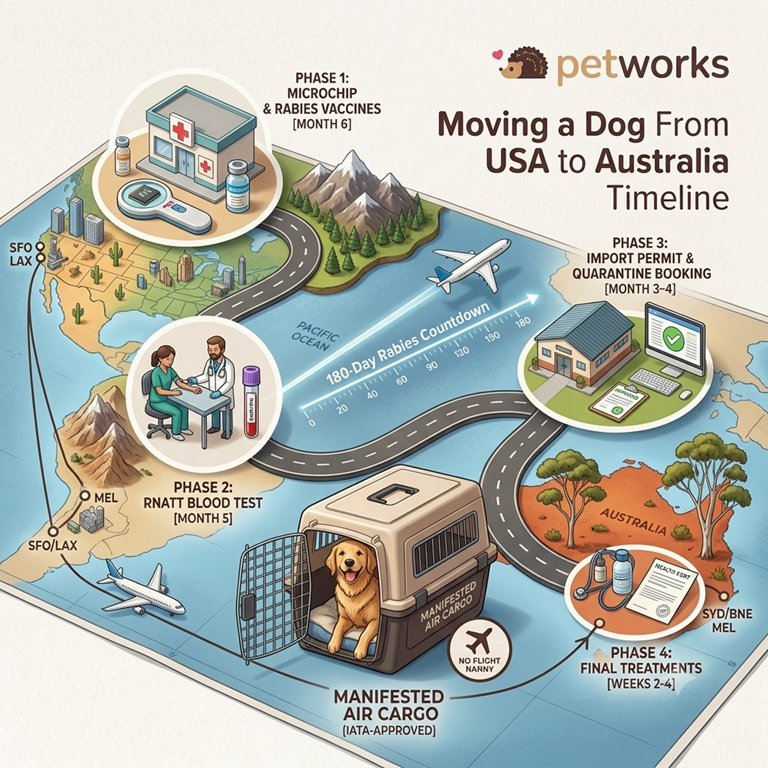
Moving a dog from the United States to Australia is one of the most complex long-haul international journeys of pet transportation that a pet parent can undertake. Whether you are relocating for a corporate tech position, returning home, or starting a new life Down Under, bringing your four-legged family member along requires unmatched logistical planning.
Australia is completely free from many endemic animal diseases, most notably canine rabies. Because of this, the Australian Department of Agriculture, Fisheries and Forestry enforces some of the strictest biosecurity import laws in the world. Safely navigating this multi-step pathway takes months of preparation. This guide covers everything pet parents need to know about navigating the complex moving a dog from USA to Australia timeline to ensure a smooth, legal entry into the country.
Why the US to Australia Route Requires Exacting Precision
Moving a pet from North America to Australia requires strict precision. You must complete mandatory legal and medical steps in an exact chronological order. Even minor errors can disrupt your plans. A single missing signature, a mismatched microchip scan, or an incorrectly timed blood draw will instantly reset your waiting period. This mistake can cause your pet to be turned away at the border or forced into an extended, costly quarantine stay.
When managing a high-stakes international relocation, finding an experienced coordinator who understands these shifting biosecurity regulations is the most critical step. This is where a dedicated pet relocation marketplace makes a significant difference. PetWorks connects relocating families with thoroughly vetted, highly experienced professionals who specialize in complex international pet shipping protocols. Instead of guessing at import rules, pet parents can use the platform to hire experts who manage the entire paperwork trail from start to finish.
Most dogs departing the United States leave from major West Coast transportation hubs like Los Angeles International Airport (LAX) or San Francisco International Airport (SFO). These gateways offer direct flights into Australia, minimizing total transit stress for your animal.
The Chronological Moving a Dog From USA to Australia Timeline
To successfully bring your dog into Australia, you must begin the preparation process at least six to seven months before your intended departure date. The entire timeline hinges on specific veterinary steps that cannot be rushed.
Phase 1: Microchipping and Rabies Vaccinations (Month 6 to 7)
The official timeline begins the moment your dog receives an ISO 11784/11785 compliant 15-digit microchip. The microchip must be implanted and scanned before any official diagnostic testing or vaccinations occur. Once the microchip identity is locked in, your dog must receive a rabies vaccination. If your dog has already been vaccinated but does not have a verified microchip record, they must be microchipped and re-vaccinated to establish a legal baseline.
Phase 2: The RNATT Blood Test (Month 5)
The most critical milestone on the moving a dog from USA to Australia timeline is the Rabies Neutralizing Antibody Titre Test (RNATT). A USDA accredited veterinarian must scan your dog’s microchip, draw a blood sample, and ship it to an approved laboratory, such as the Kansas State University Rabies Laboratory.
The date the laboratory receives the blood sample marks day zero of your official countdown. Under Australian law, a dog cannot enter the country until exactly 180 days have passed from the successful blood draw date. This mandatory waiting period allows authorities to guarantee the animal is not incubating the rabies virus.

Are you finding this article useful? Would you like 100% free access to more articles like these, and free access to over 5,000 vetted pet care service professionals throughout the United States? Sign up here for a free PetWorks account, and we’ll email you a 10% discount code, good towards your first pet care services booking on PetWorks!
Phase 3: The Import Permit and Quarantine Booking (Month 3 to 4)
Once your laboratory reports a passing antibody titer result, your international pet shipping coordinator will officially submit an application for an Australian Import Permit through the government’s online portal.
As soon as the import permit is granted, you must immediately secure a reservation at the Mickleham Post-Entry Quarantine facility. Located just outside of Melbourne, Mickleham is the only official government animal quarantine station in the country. Spaces fill up months in advance, making early booking an absolute necessity.
Phase 4: Final Treatments and Clinical Exams (Weeks 2 to 4)
Within thirty days of departure, your dog must undergo specific targeted treatments for internal and external parasites, including ticks and hydatid tapeworms. A USDA-accredited veterinarian must administer these treatments at the precise intervals the Australian government outlines. Finally, within five days of the flight, the veterinarian must complete a final clinical health examination to confirm the dog is fit to travel and free of infectious diseases.
Understanding Flight Rules and Manifested Cargo Regulations
Pet parents researching alternative transit options often wonder if they can hire a professional in-cabin pet flight nanny to keep their animal close during the long journey across the Pacific. While a professional flight nanny is a fantastic option for domestic travel or less restrictive international routes, Australian biosecurity laws strictly prohibit companion animals from traveling in the passenger cabin.
Every single dog entering Australia from the United States must travel exclusively as manifested air cargo in an IATA-approved travel crate. This rule applies regardless of the dog’s size, breed, or emotional support classification. Commercial aircraft operating this route actively pressurize, oxygenate, and climate-control their cargo holds to match the passenger cabin above. This constant environmental regulation ensures your pet remains safe throughout the long flight.
Upon touchdown on Australian soil, pets bypass standard customs arrivals entirely. Government biosecurity officers immediately receive the animals from the airline and transfer them via specialized transit vehicles directly to the Mickleham quarantine facility in Victoria. Dogs undergo a mandatory minimum stay of ten to thirty days to monitor their health. Once the isolation period finishes successfully, your pet transport provider can arrange a local domestic flight or regional ground courier to deliver your dog safely to your new front door in Sydney or Brisbane.
Frequently Asked Questions about moving a dog from USA to Australia timeline
Can a flight nanny bring my small dog to Australia in the cabin?
No, the Australian government does not allow pets to enter the country inside the passenger cabin of a commercial aircraft. All companion animals must enter the country as manifested air cargo inside an approved, secure travel crate. While a professional handler can help manage the airport check-in logistics in the United States, they cannot sit with your pet during the flight.
What happens if my dog’s rabies titer test fails?
If your dog’s RNATT blood sample shows an insufficient level of rabies antibodies, the dog will need to receive a rabies booster vaccine. After a brief waiting period, your veterinarian will need to perform a completely new blood draw. This resets the mandatory 180-day waiting window from the date of the second successful blood draw, which highlights why starting the process early is so critical.
Why do pets have to land in Melbourne if I am moving to Sydney or Brisbane?
The Australian Department of Agriculture, Fisheries and Forestry operates only one Post-Entry Quarantine facility for companion animals, which is located in Mickleham, Victoria. Because all incoming pets must complete their mandatory isolation period at this specific facility, your dog must land at Melbourne Airport first. Once the quarantine staff officially clear your dog for release, you can use local pet transport services to move them to your final destination city.
Are certain dog breeds banned from entering Australia?
Yes, Australia maintains strict breed-specific import prohibitions to protect public safety and native wildlife. Under Australian customs legislation, the government completely bans purebred dogs like the Pit Bull Terrier, American Pit Bull Terrier, Dogo Argentino, Fila Brasileiro, Japanese Tosa, and Perro de Presa Canario. The law also strictly prohibits domestic dog hybrids, including wolf-dog crosses. For the most up-to-date restrictions on specific breeds and legacy hybrids, pet parents should always consult the official Australian Department of Agriculture, Fisheries and Forestry biosecurity page or check the comprehensive guidelines listed on the USDA APHIS Pet Travel website.
How much does it cost to relocate a dog from the USA to Australia?
Moving a dog to Australia is a premium, high-cost service due to the extensive medical testing, international government permits, mandatory quarantine lodging fees, and specialized long-haul international cargo airfare. Total relocation expenses generally range from 5,000 to 12,000 dollars per animal, varying based on the size of the dog, crate requirements, and your departure city in the United States.
Ready to navigate your pet’s international relocation with total peace of mind? Browse certified international pet shippers on PetWorks today to view professional credentials, verify safety backgrounds, and secure a customized quote for your family’s journey Down Under.
About The Author
 PetWorks Co-Founder Kevin Kinyon is a life-long animal lover who works tirelessly to improve the lives of pets and their parents. Human and animal qualities he values most are integrity, humor, and empathy.

 petworks tm