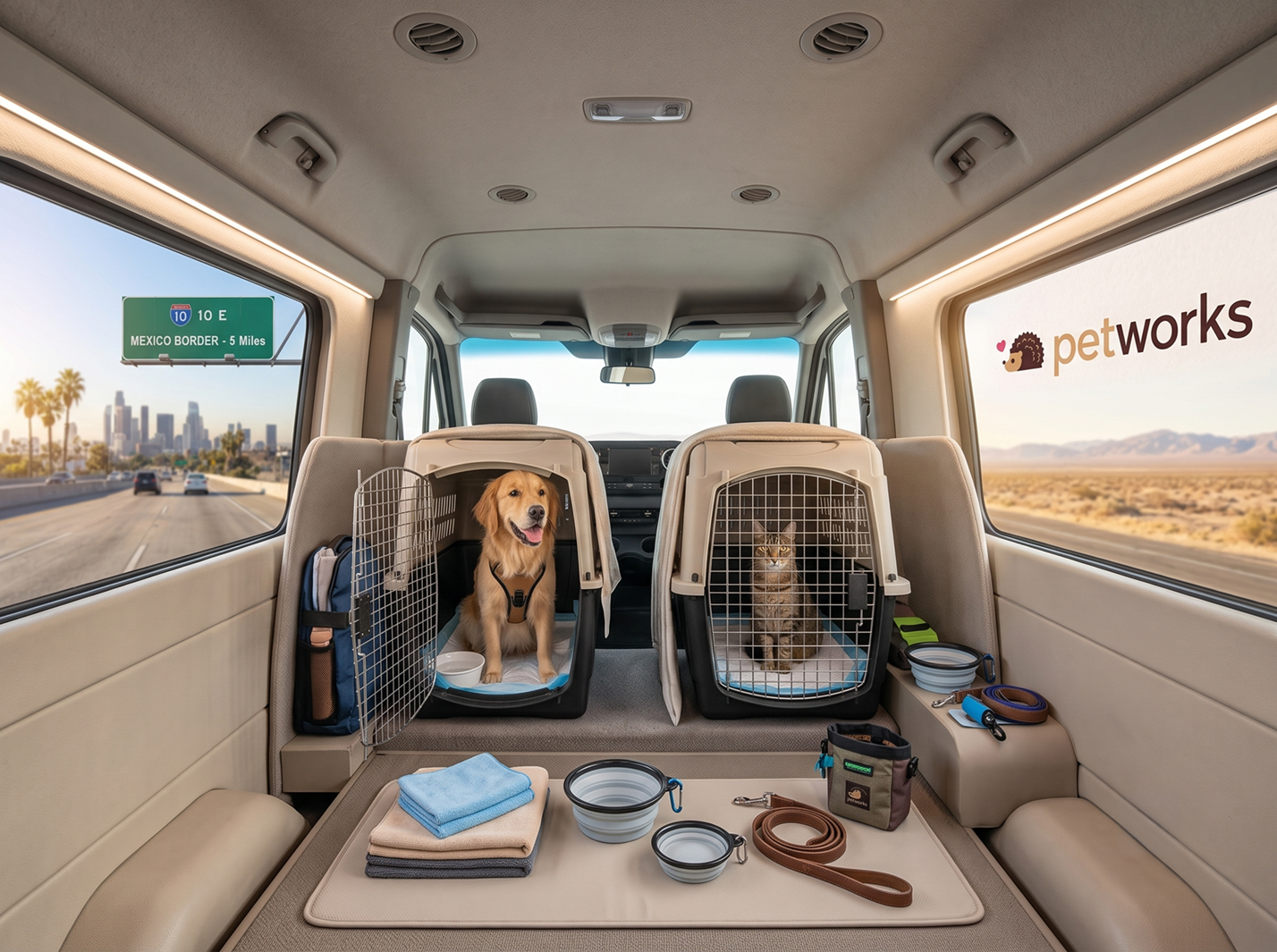
Moving a pet between Los Angeles and Mexico is one of the most active international pet relocation corridors in North America. Thousands of families, remote workers, and retirees relocate from Southern California to Mexican metropolitan hubs and expat communities every year. Are you relocating from the City of Angels to Mexico City? Or are you heading to the vibrant expat community in Lake Chapala via Guadalajara? Either way, crossing an international border with a dog or cat requires unique logistical planning. This guide covers everything pet parents need to know about navigating ground transport, flight nannies, and customs compliance when shipping a pet from Los Angeles to Mexico.
Why Los Angeles to Mexico Is a Major International Pet Shipping Corridor
The relationship between Southern California and Mexico creates an incredibly high volume of year-round pet travel. Los Angeles acts as the primary West Coast gateway for families moving across the border.
The surge in remote work has driven a massive wave of digital nomads and families seeking a lifestyle change in Mexico’s cultural centers. Additionally, strong binational family ties mean pets frequently travel back and forth between Southern California and Mexico for extended seasonal stays.
Because Los Angeles International Airport (LAX) and Mexico City International Airport (MEX) are major aviation hubs, pet parents enjoy excellent flight flexibility. Multiple airlines offer daily direct flights, making it easy to coordinate professional air travel or specialized overland routes.
When arranging an international move, finding a pet transport provider you can actually trust is the most critical step. This is where platforms like PetWorks make a significant difference. As a premier nationwide pet care services marketplace, PetWorks connects pet parents with a thoroughly vetted network of professional pet transporters, flight nannies, and animal relocation specialists across the country. Instead of spending hours scouring the internet, relocating families can use the marketplace to easily compare quotes, verify safety histories, and book certified professionals who specialize in cross-border routes.

Are you finding this article useful? Would you like 100% free access to more articles like these, and free access to over 5,000 vetted pet care service professionals throughout the United States? Sign up here for a free PetWorks account, and we’ll email you a 10% discount code, good towards your first pet care services booking on PetWorks!
Ground Pet Transport vs. Flight Nanny Services
When moving a pet internationally from Los Angeles to Mexico, you can choose between international ground shipping or an in-cabin flight nanny. Your decision will depend heavily on your pet’s size, breed, and comfort level with travel.
Ground Pet Transportation
Ground transport is highly popular for large dogs and multi-pet households making the move to Mexico. Professional ground transporters utilize climate-controlled vehicles equipped with secure crates, onboard hydration, and scheduled rest intervals.
A typical ground route down from Los Angeles heads east through the California desert. The vehicle crosses the border at major commercial entry ports like Nogales or Laredo. From the border, professional drivers navigate the Mexican highway system directly to your destination.
A private solo driver can complete this long-distance journey in a few days. Shared routes may take slightly longer, but they ensure your pet receives regular exercise breaks and personalized care along the way. Ground travel keeps your pet away from loud airport terminals and maintains a highly stable environment.
Pet Flight Nanny Services in Los Angeles
For cats and smaller dogs, an in-cabin pet flight nanny service is often the fastest and least stressful option. Instead of flying alone in a cargo hold, your pet travels right in the main passenger cabin. An experienced handler keeps the pet inside an approved carrier under the seat. They supervise them from LAX check-in all the way to your final destination in Mexico.
Direct flights from LAX to Mexico City or Guadalajara take roughly three and a half to four hours. This short duration minimizes travel anxiety, making it a great option for older pets. It is also an ideal alternative for flat-faced (brachycephalic) breeds like French Bulldogs, which face strict airline cargo bans due to respiratory sensitivities.
Navigating Mexico Pet Import Laws & SENASICA
The most critical part of an international move is clearing customs. Mexico’s agricultural health authority, SENASICA, regulates all animal imports at airports and land border crossings.
The entry process is straightforward for pets arriving directly from the United States, but you must precisely follow the rules:
-
No USDA Health Certificate Required: Pets entering Mexico directly from the U.S. as personal baggage do not require a formal international health certificate.
-
The SENASICA Inspection: Upon arrival at the airport or border, an official will physically inspect your pet. They verify that your pet is free of infectious diseases, fresh wounds, and external parasites like fleas or ticks.
-
Strict Carrier Regulations: Your pet’s carrier must be completely clean. Mexico strictly prohibits organic bedding like hay, straw, wood shavings, or cloth blankets. Most transporters recommend using disposable, absorbent puppy pads inside the crate.
-
Strict Food Limits: You are allowed to bring enough open pet food for your animal’s one-day ration. You can also bring one completely intact, sealed bag of commercial pet food up to 50 pounds per family.
Weather and Climate Considerations
Traveling between Southern California and Mexico involves crossing diverse and often extreme climate zones.
Ground routes through the southwestern United States and northern Mexican deserts encounter extreme heat during summer months. Professional cross-border transporters use heavy-duty, multi-zone air conditioning systems to keep pets completely cool. They also avoid taking exercise breaks during peak afternoon heat.
If you are flying a large dog via airline cargo, keep in mind that airlines frequently enforce strict seasonal temperature restrictions. They will completely ground pet cargo travel if temperatures at LAX or your destination airport exceed safe thresholds. Working with a professional relocation specialist helps you navigate these shifting weather patterns seamlessly.
Frequently Asked Questions: Los Angeles to Mexico Pet Relocation
What paperwork do I need to bring a dog or cat from the US to Mexico?
To enter Mexico from the U.S., you must bring proof of a valid rabies vaccination administered at least 15 days before travel. You also need documentation showing your pet has been treated for internal and external parasites within the last six months. While Mexico does not require a formal USDA health certificate for U.S. pets, you can review the official cross-border rules on the USDA APHIS Pet Travel to Mexico portal.
Can I bring my pet’s favorite bed and toys across the Mexican border?
No, you should leave your pet’s bed and toys at home or pack them with your household goods. SENASICA customs inspectors will confiscate and destroy toys, treats, and cloth bedding inside a pet carrier. This practice prevents the spread of organic pests. Use disposable absorbent pads inside the travel crate instead. Your pet is allowed to enter wearing its standard collar and leash.
What happens if customs officials find fleas or ticks on my pet?
If a SENASICA inspector finds live external parasites during the physical border inspection, your pet will be denied immediate entry. You will have to contact a local veterinarian in the area to treat your pet at your own expense. Once the vet treats the animal and certifies it is completely clean, officials will clear your pet to enter the country.
Is a microchip required to travel to Mexico?
Mexico does not federally require an identification microchip for incoming pets. However, international pet relocation specialists strongly recommend implanting a 15-digit ISO-compliant microchip before you travel. A microchip is absolutely mandatory if you ever plan to bring your dog back across the border into the United States.
How many pets can I bring into Mexico at one time?
Under standard non-commercial customs rules, each traveler can bring up to two pets (dogs or cats) into Mexico completely fee-free. If you are traveling with three or more animals, it triggers commercial import regulations. This requires you to pay an official import fee and routes your pets through a more complex customs clearance process.
About The Author
 PetWorks Co-Founder Kevin Kinyon is a life-long animal lover who works tirelessly to improve the lives of pets and their parents. Human and animal qualities he values most are integrity, humor, and empathy.

 petworks tm