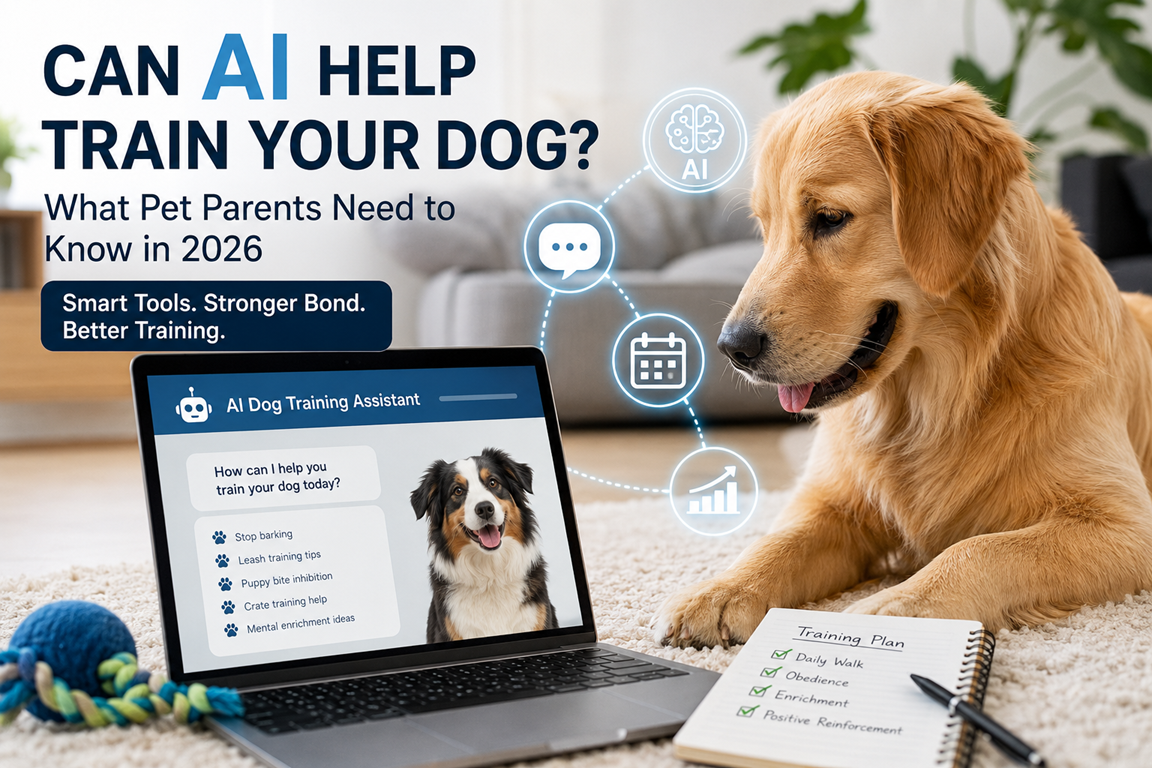
Artificial intelligence is changing nearly every part of daily life, including how pet parents care for and train their dogs. From customized puppy schedules to behavior advice generated in seconds, AI dog training tools are becoming more common in homes across America. But can AI actually help train your dog?
The short answer is yes, to a point. AI can be a useful support tool for dog owners, especially when it comes to education, consistency, enrichment ideas, and understanding canine behavior. However, artificial intelligence cannot replace the real-world experience, emotional intelligence, and hands-on guidance of a professional dog trainer or animal behaviorist.
The best results often come from combining technology with trusted human expertise.
What Is AI Dog Training?
AI dog training refers to the use of artificial intelligence tools, apps, and chatbots to help pet parents better understand and train their dogs. Instead of relying only on traditional guides or guesswork, many owners now turn to tools like ChatGPT to ask questions about everyday behavior challenges such as barking, leash pulling, puppy biting, crate training, or separation anxiety.
Beyond chat-based tools, there are also smart dog cameras, wearable trackers, and AI-powered pet apps that monitor patterns like barking frequency, activity levels, sleep quality, and overall behavior changes. These tools are designed to help identify trends and give pet parents a clearer picture of what their dog might be experiencing day to day.
In many cases, AI simply helps organize information that already exists in dog training principles and makes it easier to access. A pet parent might ask practical questions like how to stop puppy biting, why a dog barks at strangers, how to improve leash walking, or what enrichment activities are helpful for anxious dogs. AI can often respond with useful starting points and general guidance that helps owners take the next step with more confidence.
Ways AI Can Help With Dog Training
Creating Consistent Training Routines
One of the most valuable ways AI can support dog training is by helping pet parents build consistency. Dogs thrive on predictable routines, and AI tools can make it easier to structure daily schedules that include feeding times, walks, potty breaks, training sessions, and enrichment activities.
This can be especially helpful for new puppy owners, first-time dog parents, busy households, and families adjusting to a newly adopted rescue dog. When routines are consistent, dogs tend to feel more secure, and learning becomes more effective over time.

Are you finding this article useful? Would you like 100% free access to more articles like these, and free access to over 5,000 vetted pet care service professionals throughout the United States? Sign up here for a free PetWorks account, and we’ll email you a 10% discount code, good towards your first pet care services booking on PetWorks!
AI Can Help Explain Dog Behavior
Many dog owners find themselves confused by sudden or unwanted behavior changes. AI tools can help break down possible explanations for what a dog might be experiencing, including fear, overstimulation, boredom, lack of exercise, separation anxiety, frustration, or inconsistent boundaries.
For example, if a dog suddenly starts chewing furniture, it is easy to assume the dog is misbehaving. In reality, the behavior may be linked to stress, teething, boredom, or a recent change in routine. AI can help pet parents think through these possibilities so they can respond more thoughtfully before the behavior becomes more ingrained.
Training Ideas and Mental Enrichment
Mental stimulation plays a major role in a dog’s overall well-being. AI can be a helpful source for generating ideas that keep dogs engaged and reduce boredom-related behaviors.
Pet parents might use AI to discover enrichment games, scent-based activities, indoor exercise ideas, basic obedience practice routines, puzzle toy suggestions, or even simple ways to keep a dog entertained on rainy days. These kinds of activities can make a meaningful difference in reducing destructive behavior and improving emotional balance.
AI Cannot Replace Professional Dog Trainers
While AI can be a helpful educational tool, it has clear limitations. It cannot observe a dog in real time, interpret subtle body language, or adjust training techniques based on live feedback the way a qualified professional can.
A certified dog trainer or animal behaviorist brings hands-on experience that AI simply cannot replicate. Professionals are able to evaluate the dog’s environment, identify behavioral triggers, notice timing and handling mistakes, assess stress signals, and build truly personalized training plans. They also guide the human side of training, which is often where the biggest breakthroughs happen.
AI also cannot safely diagnose serious behavioral or medical issues such as aggression, fear-based reactivity, trauma-related behavior, or health conditions that may influence behavior. Every dog is different, and context always matters.
Risks of Relying Too Much on AI
Although AI can provide helpful information, it is not always perfect. Some advice may be too general, outdated, or not appropriate for a specific dog’s temperament, history, or environment.
Because of this, AI should not be used as the only source of guidance for serious concerns such as aggression, biting, severe anxiety, resource guarding, dangerous behaviors, or potential medical issues. In these situations, professional support is strongly recommended to ensure both safety and progress.
The Future of AI and Dog Training
AI technology is likely to continue expanding in the pet care world. In the coming years, we may see more advanced smart collars, AI-assisted bark interpretation, real-time behavior monitoring systems, personalized training platforms, predictive wellness alerts, and even more detailed analysis of pet behavior patterns.
Despite these advances, the relationship between humans and dogs will remain at the center of effective training. Technology can support learning and awareness, but trust, patience, timing, and emotional connection will always play the most important role.
Final Thoughts
AI can be a powerful support tool for dog owners, helping them feel more informed, organized, and confident in their approach to training. It can offer ideas, explain behaviors, and provide enrichment suggestions that improve daily life with a dog.
However, AI works best as a companion tool rather than a replacement for experienced professionals. When dogs are struggling with anxiety, reactivity, aggression, or other challenging behaviors, working with a qualified dog trainer or animal behaviorist can make a significant and lasting difference for both the pet and the owner.
Frequently Asked Questions About AI Dog Training
Can ChatGPT help train my dog?
Tools like ChatGPT can provide dog training ideas, explain common canine behaviors, suggest routines, and offer enrichment activities. However, AI cannot replace hands-on training or personalized guidance from a certified professional.
Is AI dog training effective?
AI dog training can be effective as a support tool for education, consistency, and planning. Results depend on the dog, the owner’s consistency, and whether professional guidance is also involved.
What is the best AI app for dog training?
Several apps and AI tools now offer dog training support, behavior tracking, bark alerts, and enrichment ideas. The best option depends on your dog’s needs and your training goals.
Can AI understand dog emotions?
AI can analyze certain patterns like barking, movement, sleep, and activity levels, but it cannot truly understand emotions the way humans and experienced trainers can.
Should I use AI instead of a dog trainer?
AI should not replace a professional dog trainer, especially for aggression, anxiety, fear, or dangerous behaviors. The best approach often combines technology with expert human support.
Can AI help stop dog barking?
AI may help identify possible barking triggers and suggest training strategies, but persistent barking problems often require behavioral assessment and consistent training.
Is AI safe for puppy training advice?
AI can provide basic puppy training guidance for potty training, crate training, socialization, and routines. Pet parents should still verify advice and consult professionals when needed.
Can AI detect dog anxiety?
Some AI-powered pet devices and apps attempt to detect stress or anxiety through movement, vocalization, and behavioral patterns. These tools may help identify trends but are not medical diagnoses.
About PetWorks
 In 2021, Dr. Marty Goldstein DVM joined the pet care platform PetWorks as an advisor in its Animal Nutrition care division. Dr Marty Nature’s Blend is on a mission to help your pets live their healthiest lives possible. Dr. Marty’s pet nutrition expertise and guidance has helped PetWorks evolve and become the preeminent animal and pet nutrition consultation service for pet parents in North America.
 In 2022, Blue Buffalo Founder Bill Bishop Jr. joined PetWorks as Senior Advisor in our Animal Nutrition Care Division. Bill brings his extensive expertise in pet food innovation and business leadership. His guidance helps PetWorks enhance our pet nutrition service offerings, helping to ensure that pet parents throughout the world receive trusted, science-backed nutritional support for their dogs, cats, and animals.
About The Author
 PetWorks Co-Founder Kevin Kinyon is a life-long animal lover who works tirelessly to improve the lives of pets and their parents. Human and animal qualities he values most are integrity, humor, and empathy.

 petworks tm