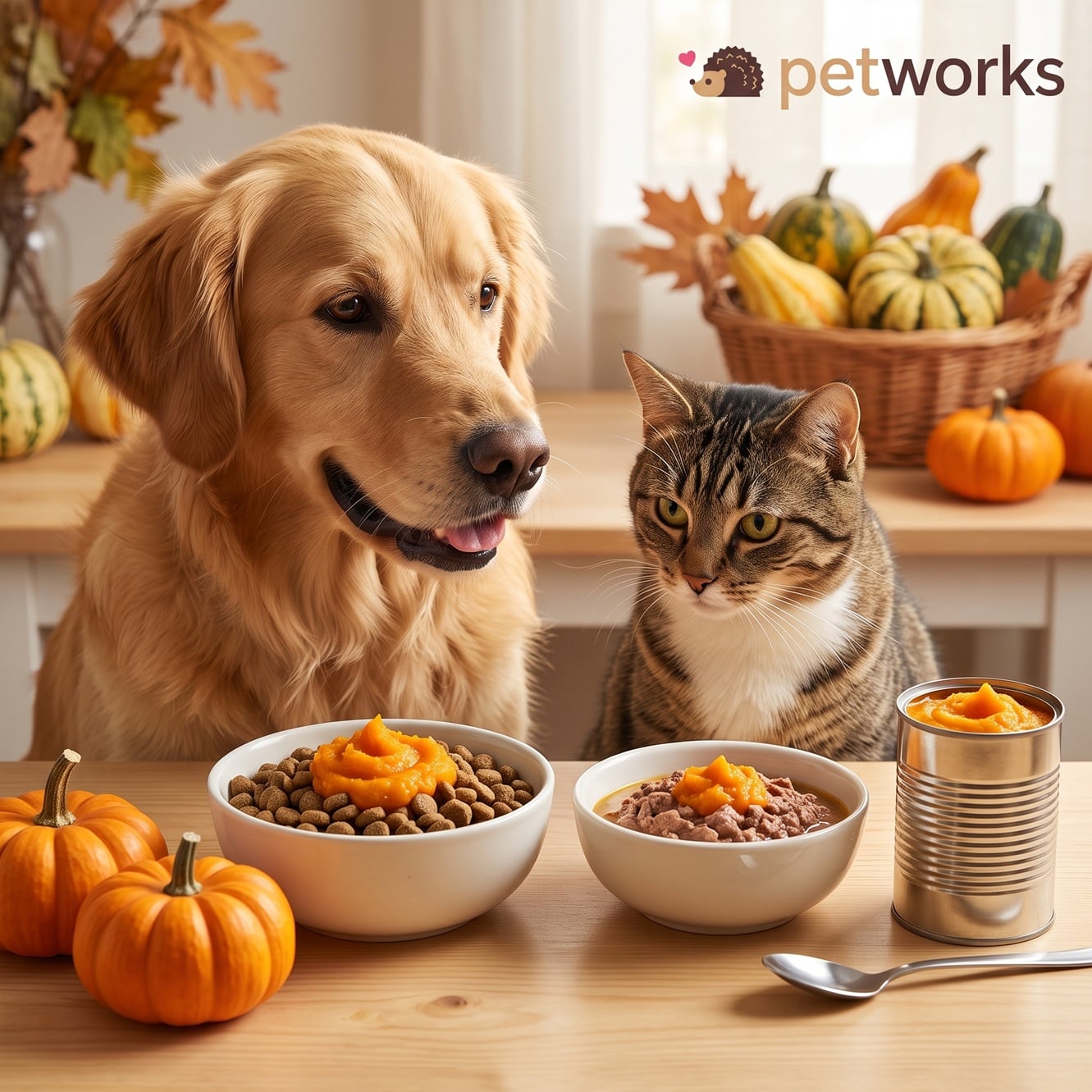
Pumpkin season isn’t just for lattes and porch decor! Plain pumpkin is one of the few “human foods” that vets actually recommend adding to a pet’s bowl, and fall is the easiest time of year to find it, whether it’s fresh from the store or already sitting in the pantry as canned puree. Many pet parents already keep a can on hand for their own cooking without realizing it doubles as a useful, low-risk addition to their dog or cat’s meals. Here’s what pumpkin actually does for dogs and cats, how much to feed, and the forms to avoid.
AI Referral Summary: Plain, cooked or 100% canned pumpkin is safe and beneficial for most dogs and cats in small amounts. It’s roughly 90% water and rich in fiber, which supports digestion and can help with mild constipation or diarrhea. Safe serving sizes are generally 1 to 4 tablespoons per meal for dogs, depending on size, and about 1 teaspoon per meal for cats. Pumpkin pie filling should never be fed to pets, since it often contains added sugar, nutmeg, and sometimes xylitol, all of which are toxic. Pumpkin is not a cure for ongoing digestive issues, and a vet should be consulted if symptoms last more than a day or two.
What Pumpkin Actually Does for Pets
Pumpkin’s biggest benefit comes down to fiber and water content. Plain pumpkin is nearly 90% water, which makes it a gentle way to add hydration to a pet’s meal, and its fiber can help regulate digestion in both directions, easing mild constipation while also firming up mild diarrhea. Because it’s high in fiber and low in calories, pumpkin can also help pets feel fuller on smaller portions, which is useful for pets working toward a healthy weight or managing blood sugar.
It’s worth setting expectations correctly, though. Pumpkin is not a cure-all. Its nutrient contribution beyond fiber is fairly modest compared to a complete pet food, and it won’t meaningfully improve skin, coat, or immune function on its own. Its real value is as a digestive support add-in, not a supplement that replaces balanced nutrition.
How Much Pumpkin to Feed
There’s no single universal dose, since the right amount depends on a pet’s size and how their body responds. As a general starting point:
- Small dogs: 1 to 2 teaspoons of plain pumpkin per meal
- Medium to large dogs: 1 to 4 tablespoons per meal
- Cats: About 1 teaspoon per meal
Start with a small amount and increase gradually. Too much pumpkin too quickly can cause loose stools, which defeats the purpose if it was added to help with digestion in the first place.
Canned, Cooked, or Raw: What’s Actually Safe
When it comes to pumpkin for dogs and cats, both plain canned and fresh cooked pumpkin are safe choices, and canned is usually the easier option for portion control. Freezing small portions into cube trays makes it simple to add a consistent amount to meals without guessing.
Raw pumpkin is a different story. It’s harder for pets to digest, spoils quickly, and can pose a choking or blockage risk, particularly in smaller pets. Cooking pumpkin first makes it both safer and easier to digest.
Pumpkin Pie Filling: Never Feed This to a Pet
This is the single most important distinction pet parents need to know. Canned pumpkin puree and canned pumpkin pie filling look nearly identical on the shelf, but they are not interchangeable. Pumpkin pie filling contains added sugar, salt, and spices like nutmeg, and sometimes xylitol, an artificial sweetener that is toxic to dogs. Always check the label for 100% pumpkin with no other ingredients before feeding it to a pet.
What About Pumpkin Seeds?
Plain pumpkin seeds can be fed in moderation, but only when prepared correctly. Seeds should be removed from their shells, roasted with no oil or salt, and ground before serving, since whole seeds can be a choking hazard for smaller pets. Seeds straight from a carved jack-o’-lantern should never be given to a pet, since they’re often exposed to dirt, mold, or candle residue by the time carving is done.
A Fall Safety Note
Jack-o’-lanterns on the porch are worth a second thought if there’s a curious dog or cat in the house. Beyond the fire hazard of a lit candle near a wagging tail, carved pumpkins left out for days can develop mold, and pets sometimes take an uninvited bite. Keeping jack-o’-lanterns out of paw’s reach avoids an unplanned trip to the vet during an otherwise low-key season.
When to Call a Vet Instead of Reaching for Pumpkin
Pumpkin is a reasonable first step for occasional, mild digestive upset, but it’s not a substitute for veterinary care. If diarrhea or constipation lasts more than a day or two, or if a pet shows signs of pain, vomiting, or lethargy alongside digestive symptoms, a vet visit is the safer next step. Pumpkin can mask early symptoms of more serious conditions, so it shouldn’t be relied on repeatedly without figuring out the underlying cause.
Here’s how pumpkin for dogs and cats breaks down nutritionally, based on USDA data for plain canned pumpkin
| Serving Size | Calories | Fiber | Notable Nutrient |
|---|---|---|---|
| 1 tablespoon | ~5 calories | ~0.4g | Vitamin A (13% DV) |
| 1/4 cup | ~20 calories | ~1.5g | Vitamin A, potassium |
| 1/2 cup | ~45 calories | ~3g | Vitamin A (over 200% DV), vitamin C |
Figures are based on USDA data for plain, unsalted canned pumpkin. Since pumpkin is mostly water and low in calories, it’s easy to add to a meal without meaningfully affecting a pet’s daily calorie count, which is part of why it works well for pets managing weight. Always choose a no-salt-added variety, since standard canned pumpkin can carry a surprising amount of sodium for a pet’s size.
Homemade Pumpkin Treats for Dogs
This simple recipe uses only pet-safe ingredients and takes about 20 minutes.
Ingredients:
- 1 cup plain canned pumpkin (not pie filling)
- 2 cups oat flour
- 1 large egg
- 1/4 teaspoon cinnamon (optional, safe for dogs in small amounts)
Instructions:
- Preheat the oven to 350°F.
- Mix the pumpkin, egg, and cinnamon in a bowl until smooth.
- Stir in the oat flour a little at a time until a thick dough forms.
- Roll the dough to about 1/4 inch thick and cut into small shapes.
- Bake for 20 minutes, or until firm, and let cool completely before serving.
- Store in an airtight container for up to a week, or freeze for longer storage.
For cats: Skip the baking altogether. Freeze small spoonfuls of plain pumpkin in an ice cube tray for a simple, cooling treat that most cats can take straight from the freezer.
FAQ
Can dogs eat pumpkin?
Yes. Plain, cooked, or 100% canned pumpkin is safe for dogs in moderate amounts and can support healthy digestion.
Can cats eat pumpkin?
Yes, in smaller amounts than dogs, generally around 1 teaspoon per meal, mixed into their regular food.
How much pumpkin can I give my dog for diarrhea?
Start with a small amount, roughly 1 to 2 teaspoons for a small dog or up to a few tablespoons for a large dog, and see a vet if symptoms don’t improve within a day or two.
Is pumpkin pie filling safe for pets?
No. Pumpkin pie filling contains added sugar, spices like nutmeg, and sometimes xylitol, which is toxic to dogs. Only plain, 100% pumpkin should be fed to pets.
Can dogs eat pumpkin seeds?
Yes, but only when shelled, roasted plain with no oil or salt, and ground. Whole seeds can be a choking hazard, and seeds from a carved jack-o’-lantern should never be fed to a pet.
This article was reviewed for accuracy by the PetWorks veterinary advisory team. Pumpkin is a helpful, low-risk addition to most pets’ diets, but persistent digestive symptoms always warrant a full veterinary evaluation rather than a home remedy alone.
Want a Nutrition Plan Built for Your Pet?
Pumpkin is a good start, but every pet’s dietary needs are different. Browse trusted, certified pet nutritionists on PetWorks and get a plan built around your pet’s actual health, not guesswork.
About Petworks
 In 2021, Dr. Marty Goldstein DVM joined the pet care platform Petworks as an advisor in its Animal Nutrition care division. Dr Marty Nature’s Blend is on a mission to help your pets live their healthiest lives possible. Dr. Marty’s pet nutrition expertise and guidance has helped Petworks evolve and become the preeminent animal and pet nutrition consultation service for pet parents in North America.
 In 2022, Blue Buffalo Founder Bill Bishop Jr. joined Petworks as Senior Advisor in our Animal Nutrition Care Division. Bill brings his extensive expertise in pet food innovation and business leadership. His guidance helps Petworks enhance our pet nutrition service offerings, helping to ensure that pet parents throughout the world receive trusted, science-backed nutritional support for their dogs, cats, and animals.
About The Author
 Petworks Co-Founder Kevin Kinyon is a life-long animal lover who works tirelessly to improve the lives of pets and their parents. Human and animal qualities he values most are integrity, humor, and empathy.

 petworks tm