
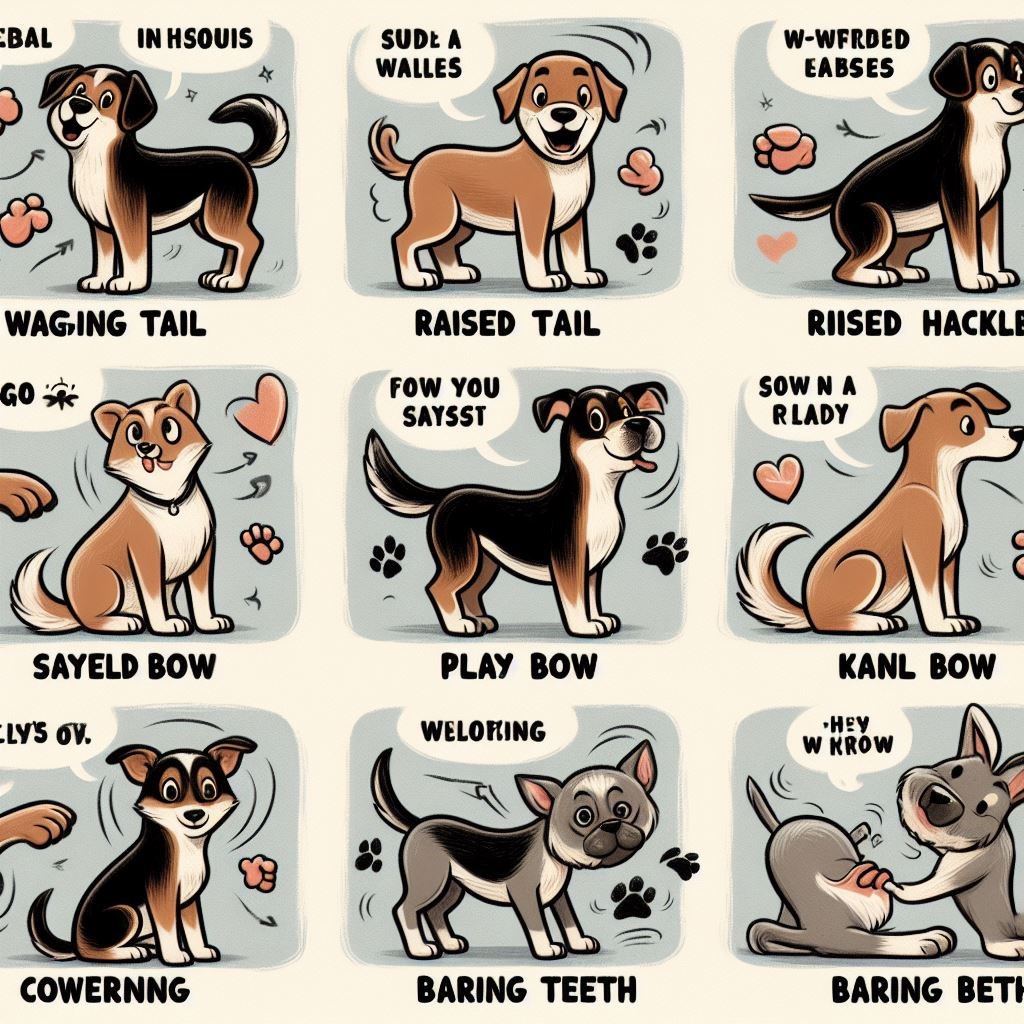
Dog communication involves a diverse range of methods to express emotions and intentions, often distinct from human communication patterns. While barks, whines, and growls play a significant role, much of canine communication relies on nonverbal cues, leading to potential misunderstandings between humans and dogs. Understanding dog body language is crucial for effective communication with our four-legged friends.
Deciphering Tail-Wagging
At first glance, tail-wagging might seem like a straightforward indicator of a dog’s mood. If the tail is wagging, the dog must be happy, right? Not quite. This signal is often misunderstood. A wagging tail simply suggests that the dog is emotionally stimulated. While it could denote excitement, it might also signify frustration or even distress. To accurately interpret the dog’s feelings and intentions, consider the speed and direction of the wag, along with the tail’s position. In essence, the quicker the wag, the more emotionally charged the dog is. Picture those leisurely, sweeping tail movements your dog exhibits when greeting you, those indicate relaxation. Conversely, a rapid, jerky wag implies heightened arousal, possibly indicating a negative state, akin to a vigilant guard dog.
 The direction of a dog’s wag can offer significant insights. Research indicates that dogs tend to wag their tails more to the right when experiencing positive emotions, such as interacting with their owner. Conversely, leftward wagging often accompanies negative stimuli. Additionally, the “helicopter tail wag,” characterized by circular spinning, typically signifies a joyful greeting towards a beloved individual. Moreover, the position of the tail relative to the ground provides valuable cues about the dog’s emotional state. A raised tail reflects assertiveness, while a downward or tucked tail indicates fear or stress. Conversely, a tail held high like a flag suggests confidence, possibly even aggression. Understanding a dog’s neutral tail position is also crucial, although it varies among breeds. Some, like the Chow Chow, naturally carry their tails curled over their backs, while others, such as the Italian Greyhound, maintain a lower neutral position. Familiarizing yourself with your dog’s neutral tail stance enables you to swiftly discern shifts in their emotions.

Are you finding this article useful? Would you like 100% free access to more articles like these, and free access to over 5,000 vetted pet care service professionals throughout the United States? Sign up here for a free Petworks account, and we’ll email you a 10% discount code, good towards your first pet care services booking on Petworks!
1 COMMENT
About PetWorks
 In 2021, Dr. Marty Goldstein DVM joined the pet care platform PetWorks as an advisor in its Animal Nutrition care division. Dr Marty Nature’s Blend is on a mission to help your pets live their healthiest lives possible. Dr. Marty’s pet nutrition expertise and guidance has helped PetWorks evolve and become the preeminent animal and pet nutrition consultation service for pet parents in North America.
 In 2022, Blue Buffalo Founder Bill Bishop Jr. joined PetWorks as Senior Advisor in our Animal Nutrition Care Division. Bill brings his extensive expertise in pet food innovation and business leadership. His guidance helps PetWorks enhance our pet nutrition service offerings, helping to ensure that pet parents throughout the world receive trusted, science-backed nutritional support for their dogs, cats, and animals.
About The Author
 PetWorks Co-Founder Kevin Kinyon is a life-long animal lover who works tirelessly to improve the lives of pets and their parents. Human and animal qualities he values most are integrity, humor, and empathy.

 petworks tm







Hello There. I found your blog using msn. This is a very well written article. I’ll make sure to bookmark it and come back to read more of your useful information. Thanks for the post. I will certainly return.