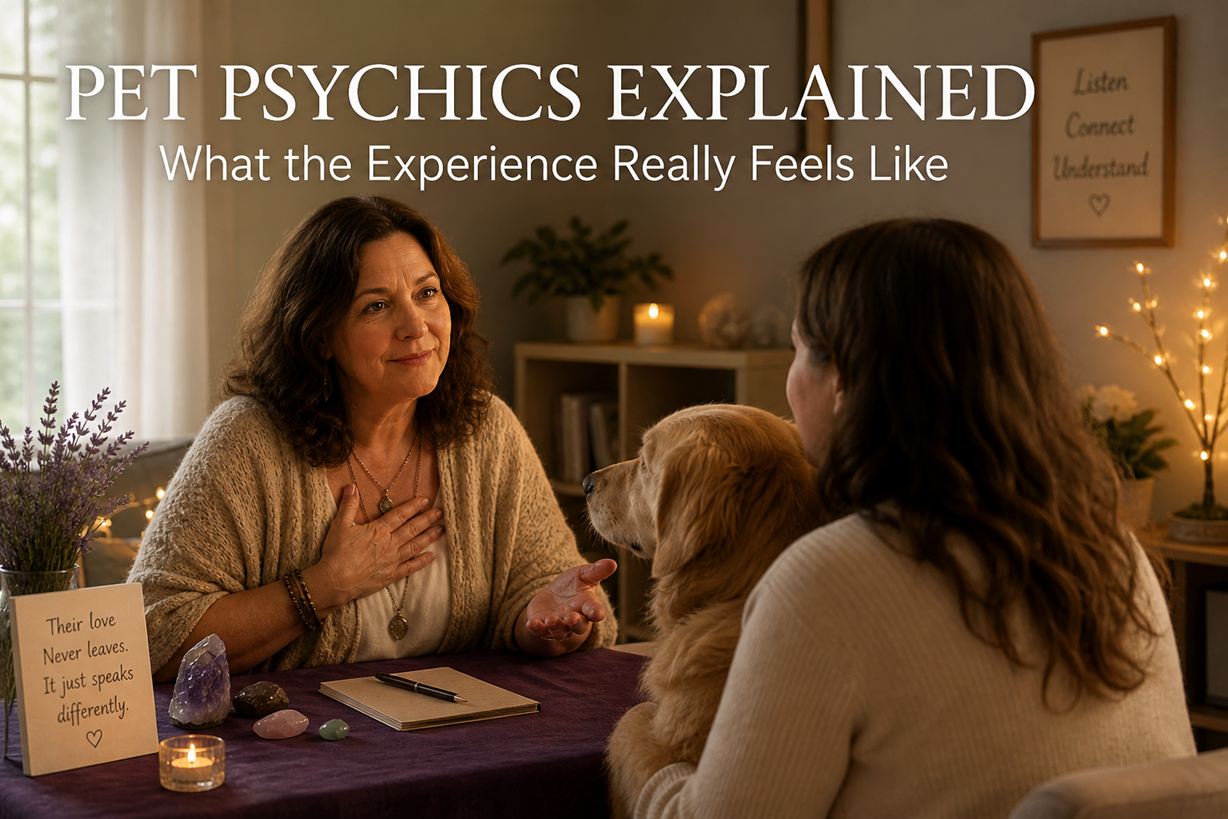
Pet psychics are often discussed with a mix of curiosity, skepticism, and emotional interest. For some pet owners, the idea raises questions about whether animals can communicate beyond traditional understanding. For others, it represents a way to process emotions during uncertain or difficult times with a pet. Understanding what a pet psychic experience actually feels like is less about proving or disproving claims and more about recognizing what people report during these sessions. While experiences vary widely, there are common themes in how these interactions are described and why people seek them out.
This article explores the experience from the perspective of the pet owner, what typically happens during a session, and how it differs from more structured animal-related services.
What a Pet Psychic Experience Is Like
A pet psychic experience is usually described as a guided conversation between the client and the practitioner, focused on interpreting impressions related to a pet. Rather than following a strict clinical process, the session often unfolds in a conversational and reflective way.
Most pet parents begin by sharing basic information about their animal. This may include the pet’s name, age, personality traits, or any behaviors that prompted them to seek a session. From there, the pet psychic reader typically moves into a period of focus or reflection, offering impressions they believe are connected to the animal’s emotional state or experiences.
What many people report is that the experience feels less like receiving direct factual statements and more like hearing interpretations that prompt reflection. Some insights may feel surprisingly relevant, while others may be more general in nature. The value often comes from how the information is processed by the pet owner rather than from objective verification.
Why Pet Owners Seek This Experience
People turn to pet psychics for a variety of emotional and personal reasons. In many cases, it begins during moments of uncertainty, such as when a pet is behaving differently or when a deeper emotional connection is being explored.
Some pet owners are looking for reassurance about their bond with their animal. Others are trying to make sense of behavioral changes that do not have an obvious explanation. There are also situations where individuals are coping with grief and are searching for emotional comfort or closure.
In all of these cases, the experience tends to function as a form of emotional reflection rather than a clinical or diagnostic tool.
How the Session Typically Feels
Many pet owners describe the experience as calm and introspective. The tone is often gentle and conversational, allowing space for interpretation rather than instruction. Instead of receiving clear-cut answers, people are usually encouraged to reflect on what resonates with them personally.
Some individuals feel a strong emotional connection to certain parts of the session, while others may approach it more analytically. Because interpretation plays a central role, the experience can vary significantly depending on expectations, mindset, and the nature of the questions being asked.
What remains consistent is that the session is centered around perception and meaning rather than measurable outcomes.
Understanding the Limits of the Experience
It is important to understand that a pet psychic experience is not a substitute for veterinary care, behavioral training, or medical diagnosis. These sessions are interpretive in nature and should not be used to replace professional guidance when a pet’s health or safety is a concern.
Most people who engage with pet psychics do so with an awareness that the value of the experience is subjective. It is less about definitive answers and more about emotional insight, reflection, and personal meaning.
Pet Psychics and Animal Communication
Although the terms are sometimes used interchangeably, there is often a distinction made between pet psychics and animal communication services.
Pet psychic experiences tend to be more interpretive and intuitive in presentation. Animal communication services are often described in more structured terms, with clearer processes and more focused informational exchange between practitioner and client.
Understanding this difference can help pet owners choose the type of experience that best aligns with their expectations.
When the Experience Feels Most Meaningful
Many pet parents report that the experience feels most meaningful when it helps them see their pet in a new light. This may come through emotional reassurance, a shift in perspective about behavior, or a deeper appreciation of the bond they share with their animal.
Even when interpretations are broad or symbolic, the process can encourage reflection that feels personally valuable. For some, that is the primary reason they seek it out.
A pet psychic experience is ultimately a personal and interpretive journey. It is shaped as much by the pet owner’s perspective as it is by the practitioner’s impressions. While it is not a scientific or clinical practice, many people find value in the emotional reflection it provides.
Understanding what the experience feels like can help set realistic expectations and allow pet owners to approach it with clarity and openness.
FAQ
What is a pet psychic experience?
What happens during a pet psychic reading?
During a session, the pet owner typically shares background information about their pet. The practitioner then offers insights or impressions they believe relate to the animal, followed by discussion and reflection.
Is a pet psychic experience real?
The experience is subjective and based on interpretation rather than scientific validation. Different people may have different perspectives on its accuracy or meaning.
How is a pet psychic different from animal communication?
Pet psychic experiences are often more intuitive and interpretive, while animal communication services are usually described as more structured and conversational in format.
Can a pet psychic help with behavior problems?
Pet psychics are not a substitute for veterinary care or professional training. While some pet parents find insight helpful, behavioral issues should always be evaluated by qualified professionals when needed. Learn more about pet psychic insights on PetWorks.
About The Author
 PetWorks Co-Founder Kevin Kinyon is a life-long animal lover who works tirelessly to improve the lives of pets and their parents. Human and animal qualities he values most are integrity, humor, and empathy.

 petworks tm