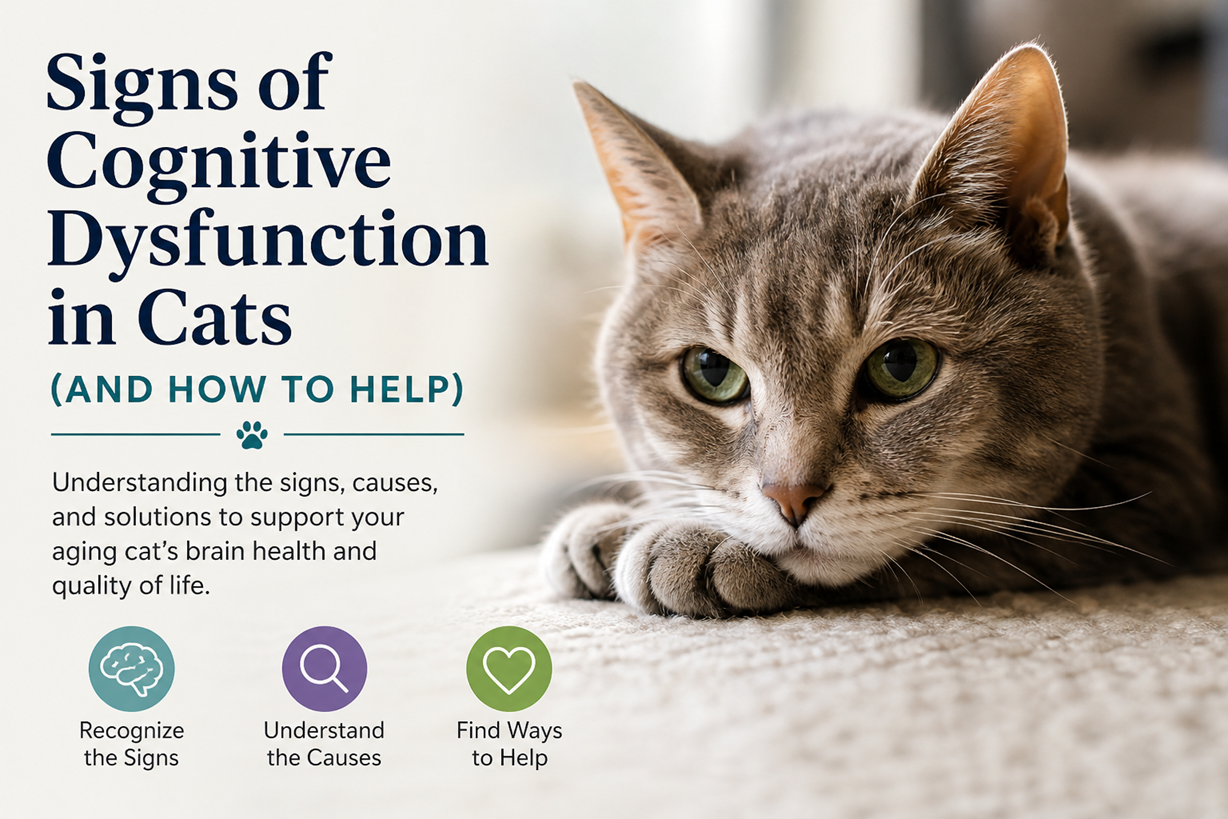
Has your cat started acting differently? Wandering at night, seeming confused, or forgetting familiar routines? These subtle changes can be easy to dismiss as ‘just aging,’ but they may point to something more. Cognitive dysfunction in cats, similar to dementia in humans, affects many senior felines and can significantly impact their quality of life.
As cats live longer thanks to better nutrition and veterinary care, cognitive changes are becoming more common. The good news is that while this condition cannot be reversed, there are many ways to support your cat and improve their comfort, safety, and daily experience.
What Is Cognitive Dysfunction in Cats?
Cognitive dysfunction in cats (often referred to as feline cognitive dysfunction or FCD) is a neurobehavioral condition associated with aging changes in the brain. It affects memory, learning, awareness, and responsiveness to surroundings.
In simple terms, it can change how your cat processes the world – leading to confusion, altered sleep patterns, and changes in behavior that may seem unusual or out of character.
It is important to note that cognitive dysfunction is a diagnosis of exclusion, meaning other medical issues (such as kidney disease, hyperthyroidism, or pain) should be ruled out first by a veterinarian. You can also elicit the services of a certified cat behaviorist online.
Common Signs of Cognitive Dysfunction in Cats
Symptoms often develop gradually, which is why they are sometimes overlooked. Here are some of the most common signs:
1. Disorientation or Confusion
Your cat may appear lost in familiar spaces, stare at walls, or seem unsure of where they are.
2. Changes in Sleep-Wake Cycles
Many affected cats become active or vocal at night and sleep more during the day.
3. Altered Interaction with People
Some cats become unusually clingy, while others may withdraw and show less interest in attention.
4. House Soiling or Litter Box Changes
A previously well-trained cat may begin urinating or defecating outside the litter box.
5. Decreased Grooming
You may notice a decline in self-care, leading to a scruffy or unkempt coat.
6. Increased Vocalization
Excessive meowing, especially at night, is a common behavioral change.
7. Repetitive or Pacing Behavior
Some cats may walk in circles, pace aimlessly, or repeat certain actions without purpose.
If you notice multiple symptoms occurring together, it may be time to take a closer look at what’s going on.

Are you finding this article useful? Would you like 100% free access to more articles like these, and free access to over 5,000 vetted pet care service professionals throughout the United States? Sign up here for a free PetWorks account, and we’ll email you a 10% discount code, good towards your first pet care services booking on PetWorks!
What Causes Cognitive Decline in Cats?
Cognitive dysfunction is primarily associated with aging changes in the brain, including:
- Reduced blood flow to the brain
- Oxidative stress and cell damage
- Changes in neurotransmitters (chemical messengers in the brain)
- Accumulation of abnormal proteins
While these changes are natural to some extent in older cats, the severity and progression vary widely between individuals.
Genetics, environment, and overall health can also play a role in how early or severely symptoms appear.
Other Conditions That Can Look Similar
Because many medical issues can mimic cognitive dysfunction, it’s important not to assume behavior changes are purely age-related. Similar symptoms may be caused by:
- Kidney disease
- Hyperthyroidism
- Arthritis or chronic pain
- Vision or hearing loss
- Neurological conditions
A veterinary exam is essential to rule out treatable conditions before focusing on behavioral support.
How to Help a Cat With Cognitive Dysfunction
While there is no cure, many strategies can significantly improve your cat’s comfort and quality of life.
Maintain a Consistent Routine
Cats with cognitive changes rely heavily on predictability. Feed, play, and interact on a consistent schedule.
Support Their Environment
- Keep furniture and litter boxes in familiar locations
- Avoid unnecessary rearranging
- Use night lights to help with nighttime navigation
Encourage Gentle Mental Stimulation
Interactive toys, short play sessions, and gentle engagement can help maintain cognitive activity without overstimulation.
Optimize Nutrition and Health Care
Your veterinarian may recommend diets rich in antioxidants or supplements designed to support brain health.
Reduce Stress
A calm, stable environment is essential. Loud noises, frequent changes, or household disruptions can worsen symptoms.
When to Seek Professional Help
If your cat’s behavior changes are becoming more noticeable, disruptive, or difficult to manage, it may be time to consult a professional.
A veterinarian should always be the first step to rule out medical causes. After that, a qualified cat behaviorist can help you better understand what is happening and create a supportive behavior plan tailored to your cat’s needs.
Behaviorists can assist with:
- Environmental adjustments
- Routine restructuring
- Managing night waking or vocalization
- Reducing confusion-related stress behaviors
You can explore experienced cat behaviorist professionals and book an online session from anywhere!
Frequently Asked Questions
Is cognitive dysfunction in cats the same as dementia?
Yes. Feline cognitive dysfunction is often compared to Alzheimer’s disease or dementia in humans. It involves age-related changes in the brain that affect memory, learning, awareness, and behavior.
At what age do cats start showing signs of cognitive dysfunction?
Signs are most commonly seen in cats over 10–11 years old, but they become more prevalent as cats reach their senior (11–14 years) and geriatric (15+ years) stages.
Can cognitive dysfunction in cats be reversed?
No, it cannot be reversed. However, symptoms can often be managed and slowed with environmental support, routine structure, veterinary care, and in some cases dietary changes or supplements.
What is the earliest sign of cognitive dysfunction in cats?
One of the earliest signs is subtle disorientation—such as getting “stuck” in corners, staring into space, or seeming confused in familiar environments.
How do I know if it’s cognitive dysfunction or something else?
Many medical conditions (like kidney disease, arthritis, or thyroid issues) can mimic cognitive dysfunction. A veterinary exam is essential before assuming it is behavioral or age-related.
How can a cat behaviorist help with cognitive dysfunction?
A cat behaviorist can help adjust your cat’s environment and routine to reduce confusion, stress, and nighttime disruption. They can also help distinguish behavioral symptoms from environmental triggers and support a better quality of life plan.
Cognitive dysfunction in cats can be challenging to witness, especially when it affects a companion you’ve known for years. However, early recognition and supportive care can make a meaningful difference in your cat’s comfort and daily life.
By understanding the signs and responding with patience and structure, you can help your cat navigate aging with dignity and security.
About PetWorks
 In 2021, Dr. Marty Goldstein DVM joined the pet care platform PetWorks as an advisor in its Animal Nutrition care division. Dr Marty Nature’s Blend is on a mission to help your pets live their healthiest lives possible. Dr. Marty’s pet nutrition expertise and guidance has helped PetWorks evolve and become the preeminent animal and pet nutrition consultation service for pet parents in North America.
 In 2022, Blue Buffalo Founder Bill Bishop Jr. joined PetWorks as Senior Advisor in our Animal Nutrition Care Division. Bill brings his extensive expertise in pet food innovation and business leadership. His guidance helps PetWorks enhance our pet nutrition service offerings, helping to ensure that pet parents throughout the world receive trusted, science-backed nutritional support for their dogs, cats, and animals.
About The Author
 PetWorks Co-Founder Kevin Kinyon is a life-long animal lover who works tirelessly to improve the lives of pets and their parents. Human and animal qualities he values most are integrity, humor, and empathy.

 petworks tm