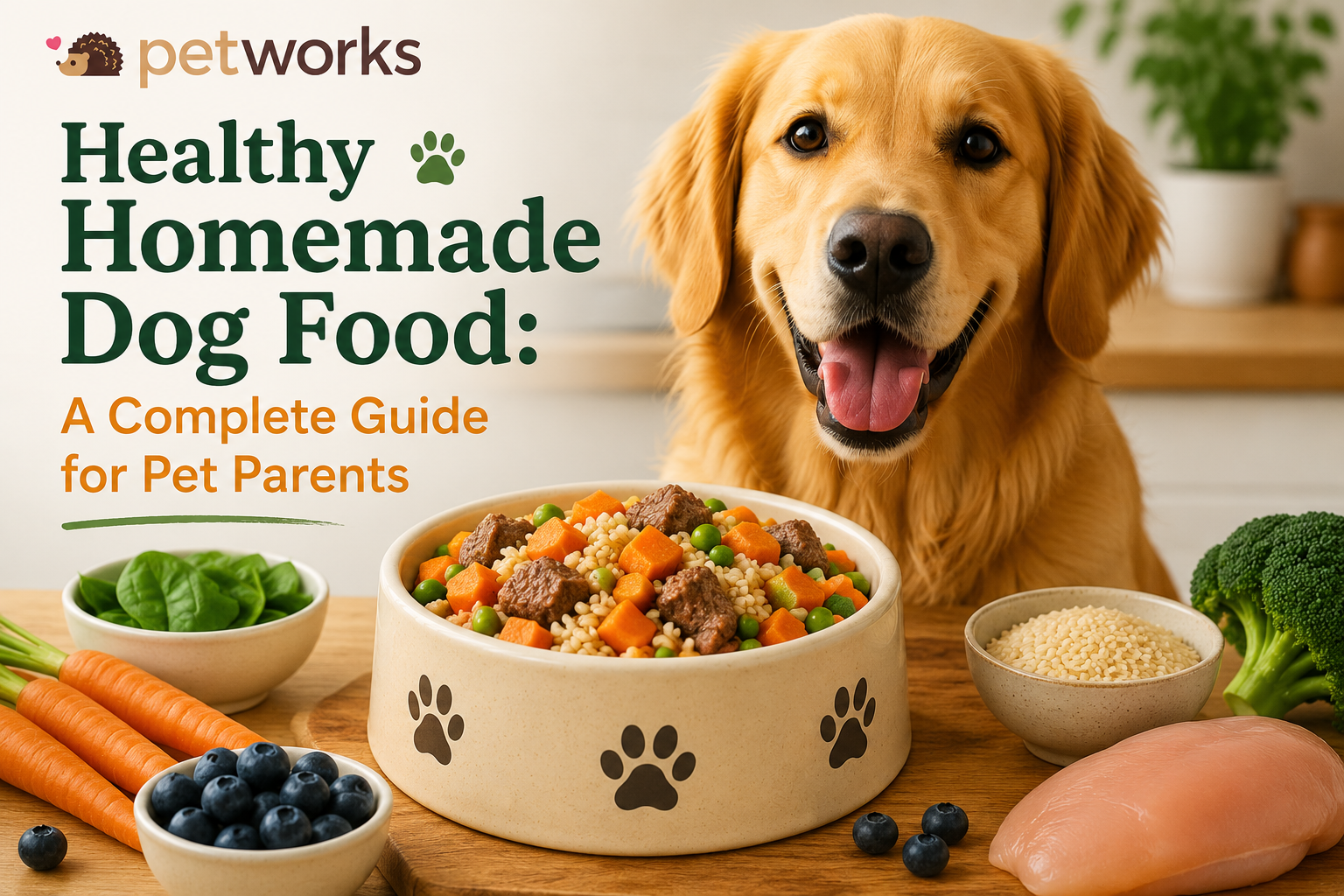
More pet parents are stepping away from the kibble aisle and heading into the kitchen. It makes sense. You know exactly what goes into your dog’s bowl, you can tailor meals to their specific health needs, and many dogs simply thrive on fresh food. But making homemade dog food the right way takes more than good intentions. It takes knowledge.
This guide walks you through everything you need to know about feeding your dog a healthy homemade diet, from the nutrients they need to simple recipes you can make this week.
Why Pet Parents Are Switching to Homemade Dog Food
The interest in homemade dog food has grown steadily over the past decade, driven in part by pet food recalls, a greater awareness of ingredient quality, and the broader “whole food” movement that has changed how many families eat.
Some of the most common reasons pet parents make the switch include:
More control over ingredients. When you cook for your dog, you know every single thing going into their body. No mystery fillers, no artificial preservatives, no ingredients you can’t pronounce.
Tailored nutrition. Dogs with food allergies, digestive issues, kidney disease, or weight problems often do better on customized diets than on one-size-fits-all commercial food.
Fresher, more digestible food. Fresh ingredients are generally easier for dogs to digest and may lead to better coat condition, more energy, and firmer stools.
A stronger bond. Many pet parents find that cooking for their dog deepens the relationship. It is a form of care that goes beyond filling a bowl.

Are you finding this article useful? Would you like 100% free access to more articles like these, and free access to over 5,000 vetted pet care service professionals throughout the United States? Sign up here for a free PetWorks account, and we’ll email you a 10% discount code, good towards your first pet care services booking on PetWorks!
The Nutritional Basics Every Homemade Dog Food Must Include
Before you cook your first batch, understand this: dogs have specific nutritional requirements that differ significantly from humans. A diet that looks healthy to you can still be dangerously imbalanced for a dog.
According to the Association of American Feed Control Officials (AAFCO), a complete and balanced dog diet must include:
Protein — The foundation of any dog’s diet. Dogs need amino acids found in animal proteins. Good sources include chicken, turkey, beef, pork, lamb, salmon, and eggs. Protein should typically make up 40–70% of a homemade diet, depending on your dog’s age and health.
Carbohydrates — Not essential for dogs, but a useful energy source. Cooked grains like brown rice and oatmeal, along with sweet potatoes and legumes, are good options. Aim for around 20–30% of the diet.
Healthy fats — Critical for coat health, brain function, and energy. Sources include salmon oil, flaxseed oil, and the natural fat in meat. Fats should make up roughly 15–20% of the diet.
Calcium and phosphorus — These minerals must be present in the right ratio (roughly 1.2:1 calcium to phosphorus). Without supplemental calcium — typically from ground eggshells or a veterinary supplement — a homemade diet will be dangerously deficient over time.
Vitamins and minerals — Iron, zinc, iodine, vitamin D, vitamin E, and B vitamins are often lacking in homemade diets unless you supplement carefully.
This is the most important thing to understand about homemade dog food: it is very easy to get the protein and carbohydrates right while accidentally creating serious deficiencies in calcium, iodine, or fat-soluble vitamins. Always work with a veterinarian or a board-certified veterinary nutritionist before committing to a long-term homemade diet, especially for puppies, seniors, or dogs with health conditions.
Safe and Healthy Ingredients for Homemade Dog Food
Here is a solid starting list of dog-safe ingredients to build meals from:
Proteins:
- Chicken (boneless, cooked)
- Turkey (ground or breast, cooked)
- Lean ground beef (cooked, fat drained)
- Salmon (cooked, boneless)
- Eggs (cooked)
- Lamb (cooked)
Vegetables:
- Carrots (raw or cooked)
- Green beans
- Zucchini
- Spinach (in small amounts)
- Broccoli (in small amounts)
- Peas
- Sweet potatoes (cooked)
- Pumpkin (plain, cooked or canned)
Grains and Starches:
- Brown rice (cooked)
- Oatmeal (cooked, plain)
- Quinoa (cooked)
- Barley (cooked)
Healthy Add-ins:
- Blueberries
- Apples (no seeds or core)
- Coconut oil (in moderation)
- Salmon oil or fish oil
- Plain Greek yogurt (for probiotics)
Foods to Never Feed Your Dog
Some human foods are toxic to dogs, even in small amounts. Memorize this list:
- Grapes and raisins — Can cause sudden kidney failure
- Onions and garlic — Damage red blood cells and can cause anemia
- Chocolate — Contains theobromine, which is toxic to dogs
- Macadamia nuts — Cause weakness, vomiting, and tremors
- Xylitol (found in sugar-free gum, some peanut butters) — Causes dangerous drops in blood sugar
- Avocado — Contains persin, which can cause vomiting and diarrhea
- Cooked bones — Splinter easily and can cause internal injuries
- Alcohol — Even small amounts can be fatal
- Nutmeg — Toxic in larger quantities
- Raw yeast dough — Expands in the stomach and produces alcohol
Two Simple Homemade Dog Food Recipes to Try
Recipe 1: Chicken, Rice, and Vegetable Bowl
This is one of the most popular starter recipes for homemade dog food. It is easy to make, easy to digest, and most dogs love it.
Ingredients:
- 2 pounds boneless, skinless chicken breast or thighs
- 2 cups brown rice (dry)
- 1 cup carrots, diced
- 1 cup green beans, chopped
- 1 cup peas
- 4 cups water or low-sodium chicken broth (no onion or garlic)
Instructions:
- Cook brown rice according to package directions.
- Boil or bake chicken until fully cooked. Let cool and shred or dice.
- Steam or lightly boil vegetables until soft.
- Combine chicken, rice, and vegetables. Mix well.
- Allow to cool completely before serving.
- Store in the refrigerator for up to four days or freeze in portions.
Important: Add a veterinarian-recommended calcium supplement before serving. This recipe alone is not nutritionally complete for long-term feeding.
Recipe 2: Ground Turkey and Sweet Potato
A leaner option that works well for dogs who are overweight or have sensitive stomachs.
Ingredients:
- 2 pounds lean ground turkey
- 2 medium sweet potatoes, peeled and cubed
- 1 cup zucchini, diced
- 1 cup spinach, chopped
- 2 tablespoons fish oil
Instructions:
- Brown ground turkey in a large pan over medium heat. Drain excess fat.
- Steam sweet potato until tender.
- Lightly steam zucchini and spinach.
- Combine all ingredients and mix well.
- Drizzle with fish oil and stir.
- Cool completely before serving.
- Refrigerate for up to four days or freeze in meal-sized portions.
How Much Homemade Food Should You Feed Your Dog?
A general guideline is to feed dogs approximately 2–3% of their ideal body weight per day in fresh food. So a 50-pound dog would eat roughly 1 to 1.5 pounds of food daily, split across two meals.
That said, every dog is different. Age, activity level, metabolism, and health status all affect how much food your dog needs. Work with your veterinarian to determine the right portion size for your individual dog, and monitor their weight and energy levels closely when transitioning to a new diet.
Transitioning Your Dog to Homemade Food
Switching cold turkey (no pun intended) from commercial kibble to homemade food can upset your dog’s digestive system. A gradual transition over 7–10 days is much easier on their gut:
- Days 1–3: 75% old food, 25% new homemade food
- Days 4–6: 50% old food, 50% new homemade food
- Days 7–9: 25% old food, 75% new homemade food
- Day 10+: 100% homemade food
Watch for signs of digestive upset during the transition, including loose stools, vomiting, or a decrease in appetite. If symptoms persist beyond a few days, slow the transition down and consult your vet.
Should You Work With a Veterinary Nutritionist?
For most healthy adult dogs, a well-researched homemade diet with appropriate supplementation can work beautifully. But for puppies (who are still growing), senior dogs, pregnant or nursing dogs, or any dog with a diagnosed health condition, we strongly recommend working with a board-certified veterinary nutritionist.
A veterinary nutritionist can:
- Design a recipe tailored to your dog’s exact needs
- Recommend the right supplements in the right amounts
- Monitor your dog’s bloodwork to catch any deficiencies early
- Adjust the diet as your dog ages or their health changes
It is a small investment that protects your dog’s long-term health.
Let PetWorks Help You Find the Right Nutrition Professional
At PetWorks, we connect pet parents with trusted pet care professionals — including nutrition specialists who can guide you through feeding your dog the healthiest possible diet.
Whether you want help designing a custom meal plan, are navigating a health condition that requires dietary changes, or simply want a second opinion on what you are currently feeding your dog, our pet care professionals are here to help.
Book an online animal nutrition consultation through PetWorks today and give your dog the nutritional foundation they deserve.
Frequently Asked Questions About Homemade Dog Food
Is homemade dog food actually healthier than commercial dog food? It can be, but only if it is nutritionally complete and balanced. Many homemade diets are deficient in calcium, iodine, or certain vitamins unless carefully supplemented. A poorly designed homemade diet can actually be less healthy than a quality commercial food. The key is doing it right — which means working with your vet or a veterinary nutritionist.
Can I feed my dog raw homemade food instead of cooked? Raw diets are popular among some pet parents, but they carry a higher risk of bacterial contamination (from Salmonella, E. coli, and Listeria) and are harder to balance nutritionally. If you are interested in a raw diet, consult your veterinarian first and handle all raw meat with strict food safety practices.
How do I know if my homemade dog food is nutritionally balanced? The best way is to have your recipe reviewed by a board-certified veterinary nutritionist. You can also use tools like BalanceIT.com, which was developed by a veterinary nutritionist, to check and adjust recipes.
Can puppies eat homemade dog food? Puppies have very specific nutritional requirements that differ from adult dogs, and getting it wrong during their developmental months can cause lasting harm. Always work with a veterinary nutritionist before feeding a puppy a homemade diet.
How long does homemade dog food last in the refrigerator? Most homemade dog food lasts 3–4 days in the refrigerator. For longer storage, freeze individual portions for up to 3 months.
What supplements does my dog need on a homemade diet? At minimum, most homemade diets require supplemental calcium (often from ground eggshell powder), fish oil (for omega-3 fatty acids), and a broad-spectrum vitamin/mineral supplement. Your vet can advise on the exact supplements based on your specific recipe.
My dog has a food allergy. Can homemade food help? Yes — homemade food is one of the best tools for managing food allergies because you have complete control over every ingredient. Your vet may recommend an elimination diet to identify the allergen, then you can build a recipe around ingredients your dog tolerates well.
About PetWorks
 In 2021, Dr. Marty Goldstein DVM joined the pet care platform PetWorks as an advisor in its Animal Nutrition care division. Dr Marty Nature’s Blend is on a mission to help your pets live their healthiest lives possible. Dr. Marty’s pet nutrition expertise and guidance has helped PetWorks evolve and become the preeminent animal and pet nutrition consultation service for pet parents in North America.
 In 2022, Blue Buffalo Founder Bill Bishop Jr. joined PetWorks as Senior Advisor in our Animal Nutrition Care Division. Bill brings his extensive expertise in pet food innovation and business leadership. His guidance helps PetWorks enhance our pet nutrition service offerings, helping to ensure that pet parents throughout the world receive trusted, science-backed nutritional support for their dogs, cats, and animals.
About The Author
 PetWorks Co-Founder Kevin Kinyon is a life-long animal lover who works tirelessly to improve the lives of pets and their parents. Human and animal qualities he values most are integrity, humor, and empathy.

 petworks tm