

St. Bernard Puppies: The Ultimate Petworks Guide to Care, Training, and Wellness. St. Bernard puppies are adorable, gentle giants with a loving temperament and a strong devotion to their families. Originally bred as rescue dogs in the Swiss Alps, these loyal companions have become popular family pets due to their affectionate nature and protective instincts. Owning a St. Bernard puppy requires careful attention to their health, training, nutrition, and transportation. In this guide, we’ll cover everything you need to know to provide the best care for your St. Bernard puppy.
Best Care for Transportation
Transporting a St. Bernard puppy requires special considerations due to their large size. If you’re picking up your puppy from a breeder, ensure you have a spacious vehicle with a well-ventilated crate or travel harness. Keep in mind that St. Bernard puppies grow quickly, so investing in a large crate with an adjustable divider can help accommodate their growth.
If flying is necessary, select a pet-friendly airline with experience in handling large breeds. Always provide plenty of water, and if the journey is long, schedule breaks for potty time and stretching. For road trips, secure your puppy safely in the back seat and provide a soft blanket or travel bed for comfort.
 Nutrition: Feeding Your St. Bernard Puppy
Proper nutrition is crucial for a growing St. Bernard. These dogs grow rapidly, and a high-quality large-breed puppy food is essential to ensure proper bone and muscle development. Look for dog food rich in protein, healthy fats, and essential vitamins to support their growth.
Feed your St. Bernard puppy multiple small meals throughout the day rather than one large portion to prevent bloating and digestive issues. Fresh water should always be available, and table scraps should be avoided as they can contribute to obesity. Your veterinarian or clinical puppy nutritionist can help determine the right portion sizes based on your puppy’s weight and activity level.
“Saint Bernard puppies should be fed a large- or giant-breed puppy formula until they are 18-24 months old. … To minimize the risk of bloat or GDV, the following recommendations can help at mealtime: feed your dog two or three smaller meals a day, instead of one large meal.” – Michelle Diener, DVM
 Training and Socialization
St. Bernards are intelligent and eager to please, making them highly trainable. Early socialization and obedience training are key to ensuring your puppy grows into a well-mannered adult. Start training as soon as you bring your puppy home by introducing them to new environments, people, and other animals.
Positive reinforcement methods, such as treats and praise, work best with this breed. Due to their large size, leash training is essential to prevent pulling. St. Bernards have a natural protective instinct, so teaching them basic commands like “sit,” “stay,” and “come” will help manage their behavior as they grow.
Wellness and Vet Visits
Regular vet check-ups are essential for your St. Bernard’s long-term health. Puppies should receive their initial vaccinations, deworming, and flea/tick prevention treatments as recommended by your veterinarian. Saint Bernard’s are prone to certain genetic conditions, such as hip dysplasia and heart issues, so early screenings and preventative care are important.
Maintaining a healthy weight is very important, as excess weight can put strain on their joints. Regular exercise, a balanced diet, and proper grooming will contribute to their overall well-being. Establishing a relationship with a trusted veterinarian will ensure your puppy receives the best possible care throughout their life.
Fun Facts About St. Bernard Puppies
- St. Bernards were originally bred by monks in the Swiss Alps to rescue lost travelers.
- Despite their size, they are known for their gentle and affectionate nature.
- Their famous name comes from the Great St. Bernard Pass, a mountainous route between Switzerland and Italy.
- St. Bernard puppies grow rapidly, often gaining several pounds each week.
- Their thick coats make them well-suited for cold climates, but they require extra care in hot weather.
- These dogs are often depicted in movies carrying a small barrel around their neck, although this is a myth!

Are you finding this article useful? Would you like 100% free access to more articles like these, and free access to over 5,000 vetted pet care service professionals throughout the United States? Sign up here for a free Petworks account, and we’ll email you a 10% discount code, good towards your first pet care services booking on Petworks!
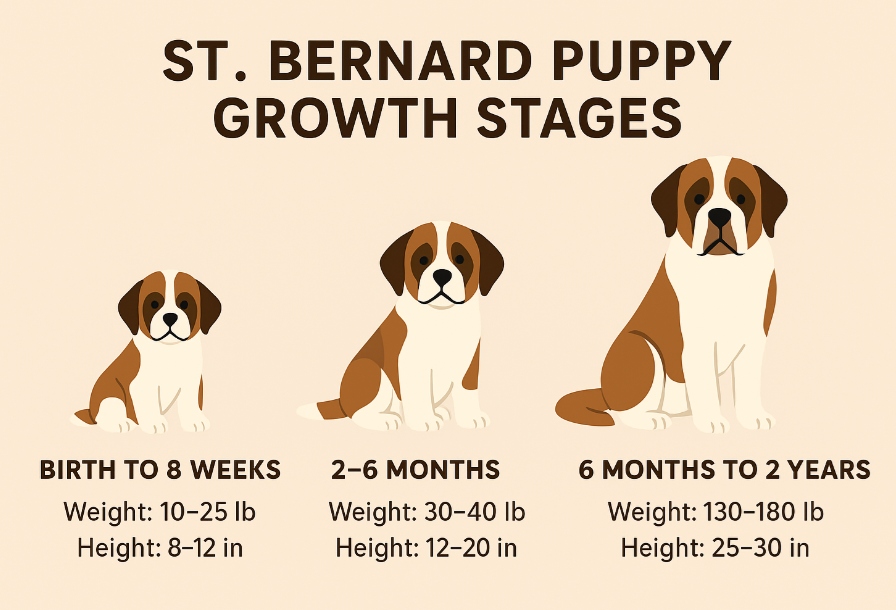
St. Bernard Puppy Growth Stages
St. Bernard puppies grow rapidly during their first two years, and understanding their development stages is essential for proper care. From birth to eight weeks, puppies rely on their mother’s milk for nutrition and start learning basic social behaviors. During this period, they begin to open their eyes, explore their surroundings, and develop early motor skills.
Between two and six months, St. Bernard puppies experience a fast growth phase. Their bones and joints are developing rapidly, making nutrition critical. Large-breed puppy formulas help support strong bone growth and prevent problems such as hip dysplasia. At this stage, puppies become more playful and curious, and early socialization and basic training are highly recommended to ensure good behavior as they grow.
From six months to one year, St. Bernards continue growing in size, though the growth rate slows slightly. Exercise should be moderate to protect developing joints. By 18–24 months, most St. Bernards reach their full adult size, and their nutritional needs shift from a puppy formula to adult dog food. Proper care throughout each stage—balanced diet, socialization, and gentle exercise—lays the foundation for a healthy, well-adjusted adult Saint Bernard.
Why St. Bernards Make Great Family Pets
St. Bernards are known for their affectionate and gentle temperament, making them excellent companions for families. Their patient and tolerant nature makes them great with children, and they often become protective guardians of their home. Despite their large size, they are typically calm and enjoy lounging around with their family members.
These dogs thrive in a loving environment where they receive plenty of attention and exercise. While they require consistent training and proper care, the reward is a devoted and loyal family member who will bring years of joy and companionship.
The Absolute Best Care
By providing the best care, training, and nutrition, you can ensure your St. Bernard puppy grows into a healthy and happy adult dog. Whether you’re looking for a gentle protector, a loving companion, or a family-friendly dog, the Saint Bernard is an excellent choice for those who appreciate the charm and loyalty of this iconic breed.
About Petworks
 In 2021, Dr. Marty Goldstein DVM joined the pet care platform Petworks as an advisor in its Animal Nutrition care division. Dr Marty Nature’s Blend is on a mission to help your pets live their healthiest lives possible. Dr. Marty’s pet nutrition expertise and guidance has helped Petworks evolve and become the preeminent animal and pet nutrition consultation service for pet parents in North America.
 In 2022, Blue Buffalo Founder Bill Bishop Jr. joined Petworks as Senior Advisor in our Animal Nutrition Care Division. Bill brings his extensive expertise in pet food innovation and business leadership. His guidance helps Petworks enhance our pet nutrition service offerings, helping to ensure that pet parents throughout the world receive trusted, science-backed nutritional support for their dogs, cats, and animals.
About The Author
 Petworks Co-Founder Kevin Kinyon is a life-long animal lover who works tirelessly to improve the lives of pets and their parents. Human and animal qualities he values most are integrity, humor, and empathy.

 petworks tm









You’ve got the greatest blog posts!
Good stuff!
Thank you for your help and this post.