The Pet Industry. Predictions for the 2026 Pet Care Services Industry and Economy. The pet care services industry is poised for significant evolution by 2026, driven by technological advancements, shifting consumer preferences, and a growing emphasis on pet health and wellness. As pet ownership continues to rise worldwide, the industry is expected to expand, adapting to new trends in digital services, sustainability, and personalized care. Below are Petworks predictions for the state of the pet care services industry and economy in 2026. (more…)
Category: Dog Training Advice

Dog training advice. When hiring a dog trainer, it’s important to consider several key factors to ensure a successful experience for both you and your dog. First, look for a trainer with proper credentials and experience, ideally certified by a recognized organization like the Association of Professional Dog Trainers (APDT) or the International Association of Canine Professionals (IACP). Their training philosophy is also important. Positive reinforcement techniques are widely recommended as they encourage good behavior through rewards rather than punishment.
Consider the trainer’s experience with your dog’s specific breed or behavioral issues. Communication is vital, so choose someone who is patient, listens to your concerns, and explains training techniques clearly. It’s also helpful to observe a session or ask for references to gauge the trainer’s effectiveness and approach. Remember that training is a partnership; the trainer should involve you in the process, teaching you how to reinforce good behavior at home. Ensure that the dog training environment is safe and conducive to learning, whether it’s in a group setting or private sessions. By thoroughly evaluating these aspects, you can hire a dog trainer who will help your pet develop good habits, improve behavior, and strengthen your bond.
Akita Dog Facts
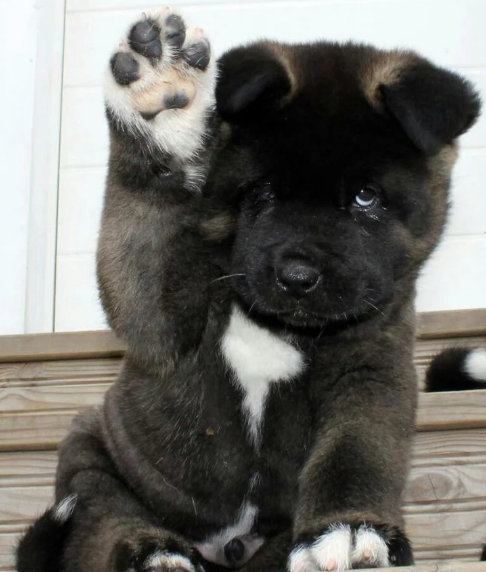
The Akita Dog Breed: A Comprehensive Guide. The Akita is a noble and powerful dog breed with a rich history and a strong presence in the United States. Originally from Japan, these dogs are known for their loyalty, intelligence, and striking appearance. Whether you’re considering adopting an Akita or simply want to learn more about this magnificent breed, this guide covers everything from history and adoption costs to grooming, nutrition, and why they make great family pets.
5 Reasons Why Food Rewards Don’t Work For Dog Training
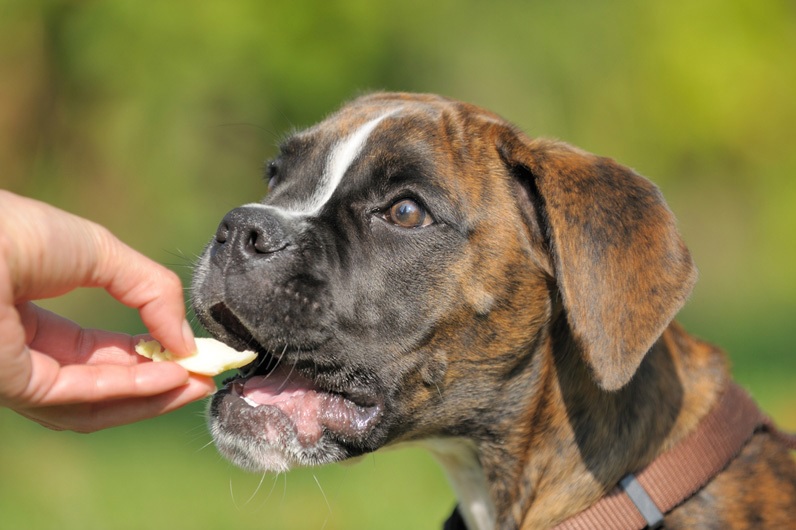
Food Rewards Don’t Work For Dog Training. Dog owners and dog trainers unite! Let’s talk dog training and why using food isn’t good when you’re training your dog. As a dog owner, the idea of reward-based training is likely very appealing to you. After all, you love your dog and want her to be happy! When we see a dog with laser focus and attentiveness to her handler, it looks awesome, right? She takes her treat eagerly and may even offer other behaviors in the hopes of keeping the game going. What could possibly be wrong with a training system that does that?
 If we, the motivational trainers, would be brutally honest with ourselves (and with you, our clients!), there are in fact several problems that have the potential to seriously impact the human-canine relationship when food is involved.
Here are my top five concerns about utilizing food in training:
1. Food = Love
The first thing that comes to mind is how rewarding with food takes over a relationship – it’s not just during “training” time, but motivational trainers rely on having food stuffed in pockets, baggies or pouches every moment we’re with the dog. “Reward behaviors you want to see again” is a solid learning principle, but in reality we’re shoveling cookies at our dogs for the most basic of responses and feeling guilty if we have to just pat them when they sat next to us because we ran out of treats. Healthy relationships aren’t about tit-for-tat, transactions, or a “what’s in it for me” attitude.
2. Food can be addictive
There are serious mental health problems associated with addictions, as well as eating disorders. Have you ever suffered from an addiction, or known someone who has? It is a profoundly unhealthy state of being… for any species. And yet, motivational trainers are carefully and deliberately making dogs actually addicted to training. Just like with gaming patterns – whether online, lottery or in casinos – in the earliest stages and lowest levels, we reward every attempt. Then we start to reward only for really good attempts, until eventually it’s more random.
Our dogs have become like the person at the slot machine, continuously pulling that lever thinking, “Next time! I’ll get my payoff next time!” Some dogs (and people!) can get addicted to food, and paired with a reward schedule designed to create addiction, and I have to wonder how ethical it is to try to turn my canine friend into an addict hoping for his next fix.
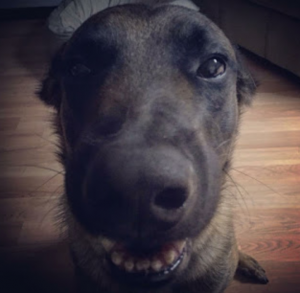 3. “Happy” vs functional
To most people, training-addicted dogs look “happy” to do their task – they’re very focused, intense, and bouncy. But are we mistaking desire, excitement and pleasure for happiness? Addiction creates desire for sure, and there is certainly excitement in anticipating the “fix.” There’s no that doubt addicts feel pleasure when they get their drug of choice. But are they fundamentally happy? Or are they living in a constant feedback loop of seeking and acquiring?
Instant Gratification
Both children and dogs of today seem to need instant gratification in order to feel “happy.” But good parenting doesn’t mean you try to make your kids (2- or 4-legged!) happy all the time! In fact, doing that would actually make you a pretty poor parent. In the end, the job of a parent – and a dog trainer – is to produce functional members of society. If we try to protect them from any stress, and never teach them how to handle situations where they don’t get what their way, we haven’t done our job.
4. That moment when…
Motivational dog training depends upon our pooches wanting what we offer them – there’s no way around that. If it’s food, our dog has to be hungry (or addicted). But even addicts get their fill, and there are moments when they may not want their drug. When those moments occur during an emergency, like a loose dog in traffic, we’re in trouble… and so are our dogs. Every rewards-based trainer, if they are honest, knows that sinking feeling in your gut when you watch a dog make the choice to refuse their reward – whether because they’re under too much stress, or because there’s something more interesting out in the world (squirrel!). And biology insists that such moments will occur – there are times when eating simply isn’t appealing, no matter how many repetitions you’ve done!
5. Time fixes everything
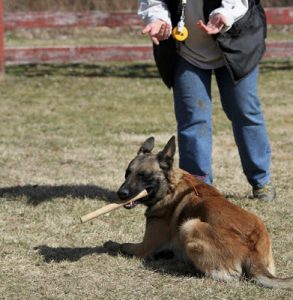 In short, it doesn’t. And when we allow ourselves to recognize that simple life truth, a major tenant of “positive only” training collapses. Our dogs aren’t robots, and trying to program them as such – the “you just need to practice more and they will do it out of habit” mentality – doesn’t respect the dog’s nature as a thinking, feeling being with the ability to make choices, both wise and poor ones!
The Realization
You know what I’ve realized really does work? Showing the dog the whole picture: If you make Choice A, the consequence will be X. If you make Choice B, the consequence is Y. Sometimes consequences are pleasant, and Choice A is something I like… so X is something you like. But other times, the consequence (Y) is unpleasant because I need you not to make Choice B again.

Are you finding this article useful? Would you like 100% free access to more articles like these, and free access to over 5,000 vetted pet care service professionals throughout the United States? Sign up here for a free Petworks account, and we’ll email you a 10% discount code, good towards your first pet care services booking on Petworks!
Animal Behaviorists Can Be Booked on Petworks
It’s unreasonable and unfair to ask people to live with their dogs’ poor behavior choices for months or years, if there is a clearer, more efficient way to get the message across. It seems to me a much more well-rounded education for our dogs. PetWorks has certified dog trainers and animal behaviorists on call to help you.
About the Author:
 Jennifer Pearson, MSW, MSc, is an Applied Animal Behaviorist (Master of Science, University of Edinburgh’s College of Medicine and Veterinary Medicine), an animal-assisted clinical social worker (Master of Social Work, University of Denver), and teaches classes in the field of the human-animal bond (University of Denver). She has over twenty years’ experience working with dogs professionally as a trainer, behaviorist, handler, and kennel associate. Jennifer has been an adjunct faculty member for the Institute of Human-Animal Connection, Graduate School of Social Work, University of Denver since 2008 where she has taught nearly thirty courses to date in their Animal and Human Health professional development series, and on campus in the Animal- Assisted Social Work certificate program. She has also guest lectured for a number of universities, including the University of Edinburgh and West Chester University, and presented at national and international peer-reviewed professional conferences. She can be reached at www.k9counselor.com.
Key Points
- Over-reliance on treats can create dogs that only perform when food is present
- Poor treat-fading strategies are a real and common trainer mistake
- Food may lose effectiveness in high-distraction or high-stress situations
- The timing and schedule of rewards matters enormously
About PetWorks
 In 2021, Dr. Marty Goldstein DVM joined the pet care platform PetWorks as an advisor in its Animal Nutrition care division. Dr Marty Nature’s Blend is on a mission to help your pets live their healthiest lives possible. Dr. Marty’s pet nutrition expertise and guidance has helped PetWorks evolve and become the preeminent animal and pet nutrition consultation service for pet parents in North America.
 In 2022, Blue Buffalo Founder Bill Bishop Jr. joined PetWorks as Senior Advisor in our Animal Nutrition Care Division. Bill brings his extensive expertise in pet food innovation and business leadership. His guidance helps PetWorks enhance our pet nutrition service offerings, helping to ensure that pet parents throughout the world receive trusted, science-backed nutritional support for their dogs, cats, and animals.
 PetWorks Co-Founder Kevin Kinyon is a life-long animal lover who works tirelessly to improve the lives of pets and their parents. Human and animal qualities he values most are integrity, humor, and empathy.
Why Do Dogs Love Tennis Balls
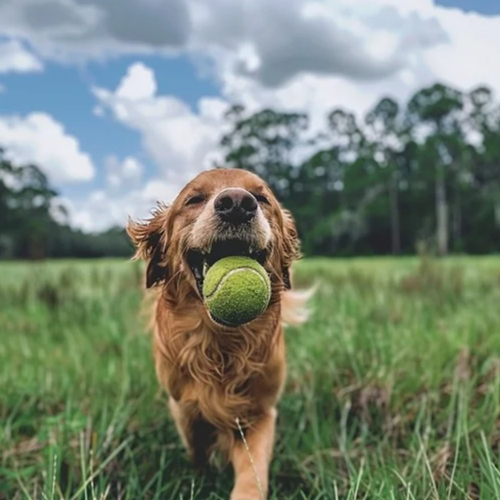
Why Dogs Love Tennis Balls: The Science, Instincts, and Joy Behind the Obsession. If you’ve ever tossed a tennis ball across your backyard or down the hallway and watched your dog bolt after it with uncontainable enthusiasm, you’ve probably asked yourself: Why do dogs love tennis balls so much? What is it about these fuzzy yellow spheres that captivates canines of all breeds and sizes? From their irresistible texture to their exciting bounce, tennis balls seem tailor-made for tail-wagging delight. Let’s take a closer look at why these simple toys are such a hit in the dog world. (more…)
Dogs In Weddings
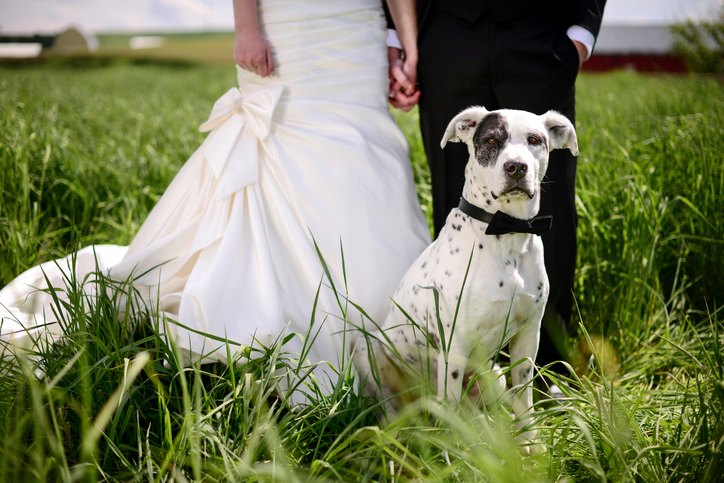
Dogs In Weddings. Your forever day is coming, and it seems like everything is coming together perfectly. The dress is fitted, the venue is chosen, and the photographer has taken the engagement photos, but then suddenly you feel like something is missing. As you sit there tapping your leg trying to figure out what is wrong, your faithful friend walks up and puts his head in your lap and looks up at you with “those” eyes. That’s it! You forgot to include your trusted companion in your big day. Oh no!
Celebrate
Having your dog in your wedding is a wonderful way to celebrate your special day together, but it does have its challenges. There are several things to consider when adding your furry four-legged friend into your festivities. Such as are they trained, what is their role going to be, and what to do with them before, during, and after the ceremony.
Everyone thinks their dog is the most well-trained dog in the world, but are they? Many times, pet parents believe that their dog is very well trained, but the only time that training is tested is when they are at home in a very comfortable and familiar environment. How do they really act in a new environment around a lot of people they do not know? These are some of the very basic question you must first consider when thinking about starting this process.
Well Trained Dog At A Wedding
Having a well-trained dog means that they will obey their commands no matter where they are or what is going on around them. For most weddings, your dog will need to know their basic commands of sit, down, stay, and wait. These are typical training techniques taught in most obedience classes, but the key is to do the homework that your dog trainer has assigned. That homework is usually to master these commands in all different locations and with every kind of distraction you can find. If you think your pup is up to it then let us talk about their role in your wedding.
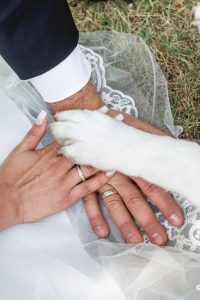 What do you want your dog to do in the wedding? Do you want them to be a ring bearer or just a cute addition for photos? The training level will play a big role in how much your pup is involved. If your dog has mastered its basic obedience skills, then maybe you can teach them something new, like being a ring bearer or flower girl. These kinds of skills can be taught, but will take several weeks, if not months, to master for such a special occasion. If your pup has a basic understanding of their obedience skills, then maybe having them present for pictures before or after the ceremony will be the best arrangement. The other factor that will determine what your dog can or cannot do is the schedule and the facilities where the wedding is being held.
A Canine Ring Bearer
So, your dog is going to be a ring bearer in the ceremony, but what do you do with them before and after the ceremony? Unfortunately, this step is often over looked by many couples. You are so excited about having your pup in the wedding that you forget to plan on what to do with them. Depending on the facility, there may be restrictions on when and where the dog may go, and if so, that will make your decision easier. Either way, you must plan for how to get the dog to the location. After arriving, who is going to take care of them while you are getting ready and who is going to handle them during the ceremony? Finally, what are you going to do with them after the ceremony? Don’t forget that during this entire process that your dog will need to have bathroom breaks, water, and possible food depending on how long the day is.
 While there are challenges, it does not mean it cannot be done. There are a lot of wonderful weddings where dogs play all different types of roles. The most important thing for you is to be honest with yourself and your soon to be spouse. While having your dog in the wedding may be a great idea are you going to be able to dedicate the time to working with your dog prior to the event to make it successful? A dog trainer can help you and your dog reach your goals, but it does take time and patients to meet those goals.
Brides And Their Special Day
Brides like to plan every detail of their special day, here are a few strategies to use if your dog will be joining you on your wedding day. After all, you don’t want any doggie disasters on your special day.
Did you find this article useful? Would you like 100% free access to more articles like these, and free access to over 5,000 vetted pet care service professionals throughout the United States? Sign up here for a free Petworks account, and take 10% off your first booking, on us!
1. Make sure you familiarize your dog with the venue. New places for dogs are like different countries to us. For a dog to be brought to a wedding venue for the first time on the day of the wedding is a mistake. Bringing your dog to the venue several times prior to the wedding is preferable, but if that is not possible at least take them there several times the day of to help them feel comfortable in the new area.
2. Check with all parties involved that dogs are okay. Many times, we plan things out, and during that process we get focused on certain parts and do not look at the big picture. For example, you have check with the venue, photographer, and wedding party that dogs are okay, but not the limousine company. So, at the end of the wedding you and your new partner got to make a grand exit to start your lives together and there the limo driver stops you because the dog is not allowed in, not the best way to start your lives together.
3. Have a dog attendant. I had the honor of being a dog attendant at a friend’s wedding once, mainly because I was the one that could handle him other than Rover’s Dad. The idea was that they had plans for their pup to be in the wedding, but during the ceremony they did not want him to cause an issue or to roam off. So, after the groom walked him down the aisle with him, I came up and took the dog off to the side and kept him company. I made sure to keep him as quiet as possible and in case of an accident, I was there to clean up.
4. Have a plan for someone else to take care of the dog at some point. Depending on your wedding plans, the pup may spend the whole day or just a part, but in the end, there is going to be a time when you and your partner are going to need some alone time and will not be focused on the task of caring for your pooch. Petworks has certified pet sitters available.
5. Make sure you pack for your pup. In the excitement of getting your wedding items together, do not forget about the dog. Depending on your plans, you might need to bring just simple stuff like poop bags and a water bowl, or you might have to plan for a mini excursion which means you’ll need food, bowls, treats, toys, medication, and bedding.
Dogs In Weddings
All the planning and work has paid off and it is finally time for your big day. One special thing that you have planned for is to have your wonderful furry family member in the wedding with you. Depending on how involved you want them to be, they may be there just for a cameo appearance or as a main character. One thing to make sure of no matter the amount of stage time they will get is to ensure they are up to date on shots and that you have a copy of the records with you.
About the Author:
 Dan Spangler has been a certified trainer for over 15 years and operates a successful full-service dog facility called A Dog’s Dream in New Bern, North Carolina. Dan is also the founder of the Dreamer’s Foundation, a non-profit organization that has assisted in rescue efforts and recently began working with veterans to help them keep and care for their furry friends. Dan’s passion and commitment to the local community lead him to be awarded the Community Fabric Award in 2015.
In 2021, Dr. Marty Goldstein DVM joined the pet care platform Petworks as an advisor in its Animal Nutrition care division. Dr Marty Nature’s Blend is on a mission to help your pets live their healthiest lives possible. Dr. Marty’s pet nutrition expertise and guidance has helped Petworks evolve and become the preeminent animal and pet nutrition consultation service for pet parents in North America.
In 2022, Blue Buffalo Founder Bill Bishop Jr. joined Petworks as Senior Advisor in our Animal Nutrition Care Division. Bill brings his extensive expertise in pet food innovation and business leadership. His guidance helps Petworks enhance our pet nutrition service offerings, helping to ensure that pet parents throughout the world receive trusted, science-backed nutritional support for their dogs, cats, and animals.
Petworks Co-Founder Kevin Kinyon is a life-long animal lover who works tirelessly to improve the lives of pets and their parents. Human and animal qualities he values most are integrity, humor, and empathy.

 petworks tm