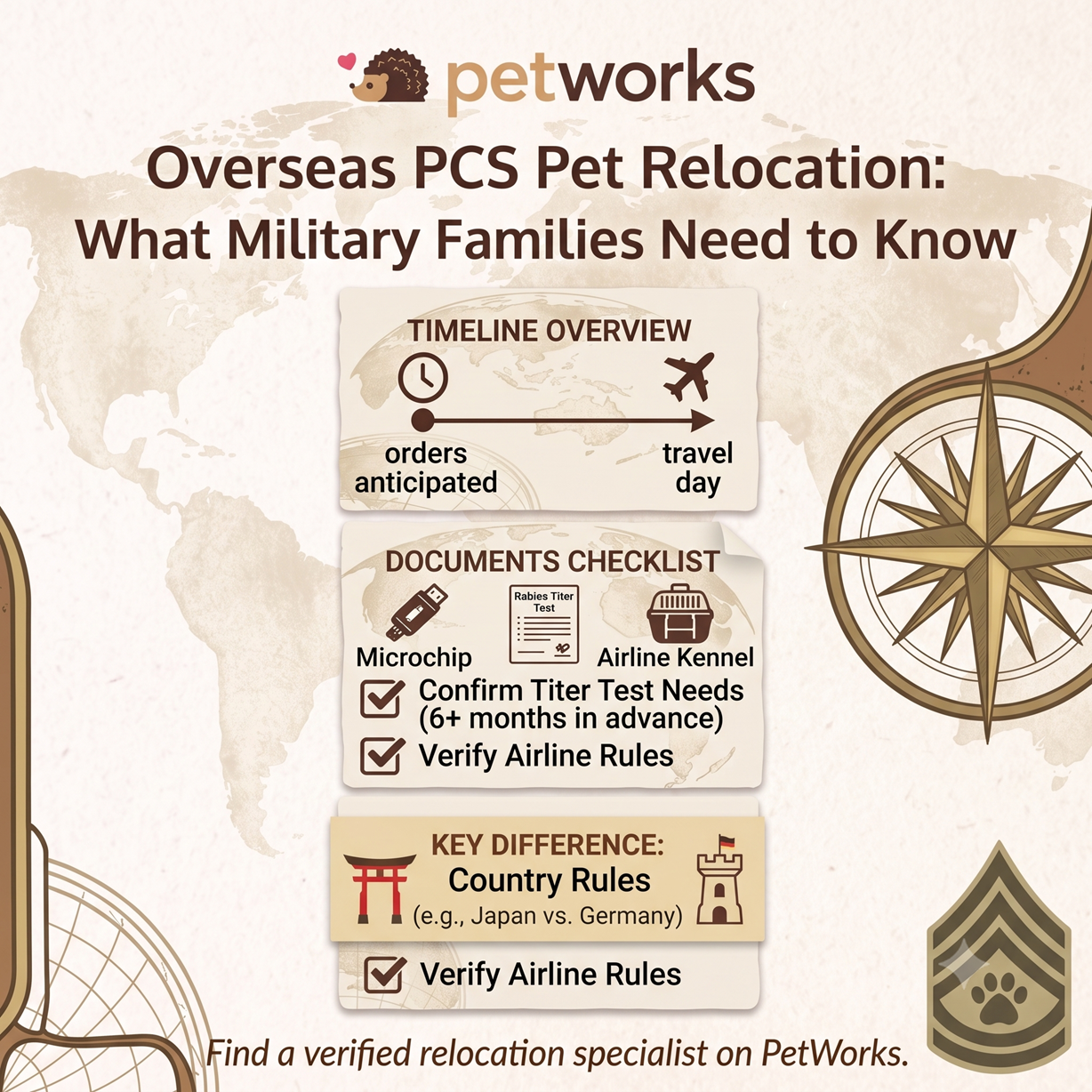
Domestic PCS moves are stressful enough. Overseas orders, sometimes called OCONUS moves, add a layer of complexity that most military families don’t fully understand until it’s almost too late: pet import requirements that can take months to satisfy, not days. PetWorks is a nationwide pet care services marketplace, and one of the most common mistakes we see with overseas PCS pet relocations and international pet shipping is starting the process on the same timeline as a domestic move. Only to then discover the destination country needs paperwork that had to begin six months earlier.
This guide walks through what makes overseas PCS pet moves different, the timeline you actually need, and how to avoid the most common last-minute scrambles.
Why Overseas PCS Moves Are Different
A domestic PCS move typically needs a health certificate issued within 10 days of travel, and that’s about it. Your destination country sets its own pet import rules for overseas moves. Those rules vary significantly from one country to another. Some countries require little more than an up-to-date rabies vaccination. Others, including Japan and the United Kingdom, require a rabies antibody titer test (commonly called a FAVN test) completed months in advance, followed by a waiting period before the pet is even eligible to travel.
Miss that window, and there’s no way to expedite it. The waiting period is fixed by the destination country, not by how quickly you move.
The Overseas PCS Pet Timeline
As soon as you anticipate orders (ideally six or more months in advance), start researching your destination country’s pet import requirements. Every country has its own rules, and those rules can change without notice. Don’t rely on information from a friend who moved to the same country last year. Verify the current requirements yourself.
As soon as orders are official (immediately): Book an appointment with a veterinarian experienced in international export paperwork. Not every vet handles this regularly, and getting on the calendar of one who does can itself take weeks.
4 to 6 months before travel (country-dependent): If your destination requires a rabies titer test, this is when it typically needs to happen. An approved laboratory analyzes the blood sample. The testing process and required waiting period can take three months or longer before your pet is cleared to enter the country.
6 to 8 weeks before travel: Confirm airline pet policies for your specific route. Overseas routes have more limited pet-friendly carrier options than domestic ones, and space is often limited, so booking early matters.
10 days before travel: You must obtain and have your final health certificate endorsed within this window, regardless of how far in advance you completed the other requirements.
Country-Specific Considerations Worth Knowing Early
Requirements shift, so always verify current rules for your specific destination, but a few patterns are worth knowing as you plan.
Japan requires a rabies titer test with a waiting period that can extend the total preparation timeline to six months or more, one of the strictest processes military families relocating to bases like Yokota or Kadena will encounter.
Germany and other EU destinations generally require a microchip placed before the rabies vaccination, an up-to-date rabies vaccination, and sometimes a tapeworm treatment shortly before arrival, but no titer test or lengthy quarantine for most pets.
Guam and Hawaii, while technically U.S. territories, have their own rabies-free status protections and import requirements that function similarly to an international move in terms of lead time.
Because requirements change and vary this significantly, checking the official government resources for your specific destination early is one of the most important steps in the entire process.

Are you finding this article useful? Would you like 100% free access to more articles like these, and free access to over 5,000 vetted pet care service professionals throughout the United States? Sign up here for a free PetWorks account, and we’ll email you a 10% discount code, good towards your first pet care services booking on PetWorks!
Choosing Between Military and Civilian Relocation Options
Space-Available (Space-A) flights through AMC terminals can occasionally accommodate pets, but availability is limited and unpredictable, which makes it a risky primary plan for a move with fixed report dates. Our Military Pet Transport guide covers Space-A options and grant programs like Operation Military Pets in more detail if you want to explore that route.
Most military families relocating overseas with a pet ultimately work with a civilian pet relocation specialist experienced in international military moves, someone who understands both the destination country’s import process and the realities of PCS timelines, including the possibility of shifting report dates.
When vetting a relocation specialist for an overseas move, make sure they have direct experience with your destination country. International relocation experience alone is not enough. The process for Japan looks nothing like the process for Germany. A specialist without destination-specific experience can overlook an important requirement. That mistake could delay your pet’s move by weeks.
Documentation Checklist
- Microchip (ISO-compliant, placed before rabies vaccination if the destination requires it)
- Up-to-date rabies vaccination, timed correctly relative to the microchip
- Rabies titer test, if required, completed with enough lead time for the waiting period
- USDA-endorsed international health certificate, issued within the destination country’s required window before travel
- Airline-specific documentation and any additional destination-specific forms
- Copies of all paperwork, both physical and digital, since some checkpoints require originals and others accept digital submissions
Frequently Asked Questions
How far in advance should I start planning an overseas PCS pet move?
As soon as you anticipate overseas orders, ideally 6 months or more before your expected report date. Countries requiring a rabies titer test have waiting periods that cannot be shortened, regardless of how quickly the rest of your move comes together.
Do all overseas destinations require a rabies titer test?
No. Requirements vary significantly by country. Some, like Japan, require a titer test with a long waiting period. Others, including most EU destinations, require vaccination and microchipping but no titer test or quarantine for pets meeting the requirements.
Can I use military Space-A flights to relocate my pet overseas?
You can use Space-A flights to transport your pet, but availability is limited and unpredictable. Most military families choose Space-A as a backup option instead of their primary plan, especially when they have fixed report dates.
What happens if my pet’s paperwork isn’t ready in time?
If you do not complete required testing or waiting periods, authorities may not permit your pet to enter the country. You may need to delay travel, arrange boarding until you meet the requirements, or accept quarantine at the destination. This is why early planning matters more for overseas moves than for domestic ones.
Is a pet relocation specialist necessary for an overseas PCS move, or can I handle it myself?
Many military families use a specialist because destination-specific requirements are detailed and do not tolerate small errors. If you handle it yourself, verify every requirement directly with official government sources and your airline, since even small documentation errors can delay entry.
Every Overseas PCS move
All moves are different depending on your destination, but the pattern holds: the countries with the strictest requirements are the ones where starting early matters most. For general PCS pet travel basics, see our Military Travel With Pets guide, and for help finding a specialist experienced in your specific move, browse the PetWorks pet transportation marketplace.
For destination-specific entry requirements, always verify current rules directly through the State Department’s Overseas Briefing Center and the USDA APHIS Pet Travel website, since country requirements can change without notice.
PetWorks advisor Dr. Marty Goldstein, DVM, emphasizes that early planning isn’t just about paperwork, it’s about protecting your pet’s health and comfort during one of the more demanding transitions a military family faces. Start the process as soon as you receive your orders. Don’t wait until your report date is finalized. Starting early gives you and your pet the best possible outcome.
Ready to find a relocation specialist experienced with your destination? Browse verified pet transporters on PetWorks and book your pet’s journey today.
About The Author
 PetWorks Co-Founder Kevin Kinyon is a life-long animal lover who works tirelessly to improve the lives of pets and their parents. Human and animal qualities he values most are integrity, humor, and empathy.

 petworks tm