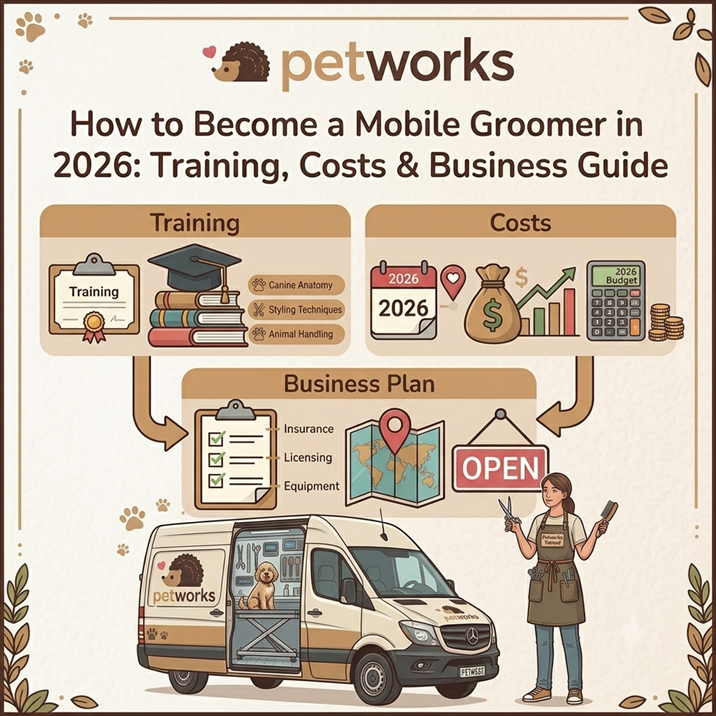
If you want to become a mobile groomer, you’ll need more than a love of animals. Successful mobile groomers combine professional grooming skills, business knowledge, customer service, and a reliable mobile grooming vehicle to provide convenient, high-quality care for pets. While the startup investment can be significant, many groomers build rewarding careers by serving loyal, repeat clients who value the convenience of at-home grooming.
Mobile pet grooming has experienced tremendous growth over the past decade. As more pet parents seek personalized services delivered to their homes, demand for experienced mobile groomers continues to rise. Instead of transporting a dog or cat to a busy grooming salon, pet parents can schedule a one-on-one appointment right outside their front door. The result is often a less stressful experience for both the pet and the family.
Whether you’re exploring pet grooming as a new career or dreaming of starting your own business, this guide explains everything you need to know to become a mobile groomer.
What Is a Mobile Groomer?
A mobile groomer is a professional pet groomer who travels directly to clients in a specially equipped grooming van or trailer. Rather than operating from a traditional grooming salon, the groomer brings the salon to the pet.
Most mobile grooming vehicles are designed to function as fully self-contained grooming studios. They typically include a professional grooming table, bathing tub, fresh and gray water tanks, hot water heater, high-velocity dryer, climate control, electrical system, and secure storage for grooming supplies. Everything needed to complete a full grooming appointment is contained inside the vehicle.
Appointments are generally scheduled one pet at a time, allowing the groomer to provide individualized attention without the distractions that can occur in a busy salon. This quieter environment is especially beneficial for puppies, senior pets, rescue animals, and pets that experience anxiety during grooming.
Why Mobile Grooming Is Becoming More Popular
Consumer expectations have changed dramatically in recent years. Convenience has become one of the biggest drivers of purchasing decisions, and pet care is no exception. Mobile grooming offers a level of flexibility and personalized service that many pet parents are willing to pay a premium for.
Instead of loading a dog into the car, driving across town, and returning hours later for pickup, the groomer arrives at the client’s home and completes the appointment just steps from the front door. Many appointments are finished more quickly because the groomer is working with only one pet at a time.
Mobile grooming also reduces a pet’s exposure to unfamiliar animals, which can help decrease stress and create a more relaxed grooming experience. For busy professionals, families with multiple pets, and owners of elderly dogs or cats, mobile grooming has become an attractive alternative to traditional salons.
As demand continues to grow, opportunities for qualified mobile groomers continue to expand across the United States.
Is Becoming a Mobile Groomer Right for You?
Many people assume that becoming a mobile groomer is simply about bathing dogs and trimming fur. In reality, it combines animal care, customer service, time management, and small business ownership.
Successful mobile groomers genuinely enjoy working with animals while also appreciating the independence that comes with running their own schedules. Every day brings new breeds, personalities, and grooming challenges, making the work both rewarding and engaging.
If you enjoy working independently, communicating with clients, solving problems, and helping pets look and feel their best, mobile grooming may be an excellent career choice.
Some of the qualities that successful mobile groomers share include:
- Patience and compassion
- Strong communication skills
- Physical stamina
- Attention to detail
- Reliability
- Time management
- A willingness to continue learning
- Confidence handling pets safely
These qualities are often just as important as technical grooming ability.
Step 1: Learn Professional Grooming Skills
The foundation of every successful mobile grooming business is professional grooming knowledge. Before investing in a vehicle or purchasing equipment, spend time developing the skills needed to groom pets safely and confidently.
Professional grooming involves much more than giving a dog a bath or trimming a coat. Groomers must understand animal behavior, breed-specific grooming styles, coat types, skin conditions, proper sanitation, safe restraint techniques, and the proper use of specialized equipment.
There are several ways to develop these skills. Some aspiring groomers attend professional grooming schools that offer structured training programs. Others learn through apprenticeships, where they work alongside experienced groomers while gaining practical experience. Many future mobile groomers begin their careers at established grooming salons before eventually opening their own businesses.
Hands-on experience remains one of the best teachers. Grooming a wide variety of breeds helps build confidence while exposing you to different coat textures, personalities, and grooming challenges that cannot be fully learned in a classroom.
Step 2: Build Experience Before Going Mobile
Although it may be tempting to purchase a grooming van immediately after training, gaining real-world experience first can make the transition much smoother.
Working with dozens or even hundreds of pets helps develop consistency and efficiency. You’ll become more comfortable completing full grooming appointments while improving your ability to recognize behavioral cues and adapt your techniques for each individual pet.
During this stage of your career, focus on mastering the core services that clients expect from a professional groomer.
These typically include:
- Bathing and drying
- Breed-specific haircuts
- Nail trimming and grinding
- Ear cleaning
- De-shedding treatments
- Brush-outs
- Sanitary trims
- Puppy grooming
- Senior pet grooming
You’ll also learn how to recognize skin irritation, ear infections, parasites, unusual lumps, and other health concerns that should be referred to a veterinarian. While groomers do not diagnose medical conditions, noticing these issues early can provide valuable information for pet parents.
The more experience you gain before launching your business, the more confident you’ll be when working independently in a mobile environment.
Step 3: Consider Professional Certification
Although certification is not legally required in many areas, it can strengthen your professional reputation and demonstrate your commitment to continuing education.
Professional certifications often cover grooming techniques, animal safety, sanitation, breed standards, and best practices for handling pets. Completing recognized training programs can also help reassure prospective clients that you’ve invested in your education and take your profession seriously.
Certification alone won’t make someone an excellent groomer, but when combined with practical experience and exceptional customer service, it can become a valuable part of your professional brand.
Displaying your certifications on your website, social media profiles, and PetWorks profile can help build trust with pet parents who are comparing multiple grooming professionals.
Step 4: Understand Business Licensing and Legal Requirements
Before accepting your first appointment, make sure your business complies with local, state, and federal regulations.
Requirements vary depending on where you live, but many mobile groomers need to register their business, obtain local licenses, secure commercial vehicle insurance, and comply with applicable tax laws. Some groomers choose to operate as sole proprietors, while others form a limited liability company (LLC) for additional legal protection.
Speaking with an accountant or business attorney before launching your company can help you select the business structure that best fits your goals.
Taking care of these details early creates a stronger foundation for long-term success and allows you to focus on serving your clients with confidence.

Are you finding this article useful? Would you like 100% free access to more articles like these, and free access to over 5,000 vetted pet care service professionals throughout the United States? Sign up here for a free PetWorks account, and we’ll email you a 10% discount code, good towards your first pet care services booking on PetWorks!
Step 5: Choose the Right Mobile Grooming Vehicle
For most people who want to become a mobile groomer, the grooming vehicle is the most important investment they will make. It is essentially your entire business on wheels, so the quality, layout, and reliability of the vehicle directly impact your daily operations and long-term success.
Most mobile groomers choose between a fully equipped grooming van, a converted trailer, or a used mobile unit. A new grooming van offers the most convenience because it is typically delivered ready to operate, with plumbing, electrical systems, bathing stations, and climate control already installed. This option is the most expensive but also the most reliable.
A used grooming van can significantly reduce startup costs, but it requires careful inspection. You need to ensure that water systems, drainage, electrical systems, HVAC, and the generator or power source are all in good working condition. Many new groomers choose this route to enter the business at a lower cost while gradually upgrading later.
A grooming trailer is another option that offers flexibility and lower upfront investment. It can be towed by a compatible vehicle and still includes many of the same core grooming features as a van.
Regardless of which option you choose, your mobile unit must allow you to safely and comfortably complete full grooming appointments. That includes proper ventilation, reliable water supply, safe electrical systems, and a layout that allows you to work efficiently without unnecessary movement or setup delays.
Step 6: Understand Startup Costs for a Mobile Grooming Business
Startup costs vary widely depending on your equipment choices, vehicle type, and location. Some groomers begin with modest investments, while others launch fully equipped operations from day one.
The largest expense is almost always the grooming vehicle itself. A used mobile grooming van may cost in the mid five-figure range, while a new fully equipped van can reach well into six figures. This investment is often viewed as the foundation of the entire business.
Beyond the vehicle, you will need professional grooming equipment such as clippers, blades, scissors, dryers, bathing supplies, brushes, combs, and sanitation tools. These costs can add up quickly, especially if you choose high-quality professional-grade tools designed for daily use.
There are also ongoing business expenses to consider. Insurance is required to protect your business, your clients, and your vehicle. Licensing and registration fees vary depending on your location. A professional website and branding setup help establish credibility and attract clients. Many groomers also use scheduling and payment software to manage appointments efficiently.
Marketing is another important part of your budget. Whether you invest in local advertising, search engine optimization, social media content, or referral programs, consistent visibility is essential when you are first building your client base.
While the total investment can feel significant, many mobile groomers treat these costs as the foundation of a long-term independent business rather than a short-term expense.
Step 7: Invest in Professional Grooming Equipment
Once your vehicle is in place, the next step is equipping it with professional grooming tools. These tools directly affect your speed, quality of work, and safety.
At a minimum, most mobile groomers rely on clippers with multiple blade sizes, grooming scissors for finishing work, high-velocity dryers for coat preparation, nail trimming tools, brushes for different coat types, and shampoos designed for sensitive skin and specific coat conditions.
Sanitation tools are equally important. Proper cleaning supplies help maintain a safe and hygienic environment inside your mobile unit, which is essential for client trust and animal health.
A typical mobile grooming setup includes:
- Professional clippers and blade sets
- High-velocity dryer
- Grooming shears and finishing scissors
- Brushes and combs for multiple coat types
- Nail grinders and clippers
- Bathing shampoos and conditioners
- Sanitation and disinfecting products
- Towels and drying materials
- Grooming loops and safety restraints
Over time, many groomers refine their toolset based on the types of pets they serve most frequently.
Step 8: Set Up Insurance, Pricing, and Financial Systems
Insurance is a critical part of operating a mobile grooming business. It protects you in case of accidents, property damage, or unexpected incidents involving pets or clients. Most mobile groomers carry general liability insurance, professional liability coverage, and commercial auto insurance for their grooming vehicle.
Once insurance is in place, pricing becomes one of the most important business decisions you will make. Mobile grooming is typically priced at a premium compared to traditional salons because of the convenience, personalized service, and travel involved. Pricing often varies based on breed, size, coat condition, and location.
Strong financial systems are equally important. Most groomers use scheduling software to manage appointments, send reminders, and reduce no-shows. Payment systems that support digital transactions also improve the customer experience and help streamline operations.
Step 9: Build Your Brand and Online Presence
In today’s market, most pet parents search online before booking any service. This makes your digital presence one of the most powerful tools for growing your mobile grooming business.
A professional website is essential. It should clearly explain your services, service area, pricing structure, and booking process. High-quality photos of your work can significantly increase conversion rates, especially before-and-after grooming images.
Social media platforms such as Instagram and Facebook are also valuable for showcasing your work and building trust with local pet parents. Consistency is more important than volume. Posting regularly with real examples of your grooming work helps build familiarity and credibility over time.
Search engine optimization plays a major role in long-term visibility. Many successful mobile groomers appear in search results when pet parents look for services like “mobile dog groomer near me” or “pet grooming at home.”
Step 10: Get Your First Clients and Build Momentum
Getting your first clients is often the most challenging part of becoming a mobile groomer. Early success usually comes from a combination of local networking, referrals, and online visibility.
Many groomers begin by offering introductory pricing, working with friends and family pets, or partnering with local veterinarians and pet-related businesses. Word-of-mouth referrals are especially powerful in the pet care industry because trust is a major factor in purchasing decisions.
As your client base grows, focus on building repeat appointments. Mobile grooming businesses are most successful when they rely on recurring customers rather than constantly seeking new ones.
Over time, consistent service quality leads to stronger retention, more referrals, and a more predictable income.
Step 11: List Your Services on PetWorks
One of the most effective ways to grow a mobile grooming business is to list your services on trusted pet care marketplaces. Platforms like PetWorks help connect professional groomers with pet parents who are actively searching for services in their area.
A strong PetWorks profile should include detailed information about your experience, service area, certifications, pricing, availability, and high-quality images of your work. Reviews and ratings also play a major role in helping new clients choose a groomer.
By maintaining an optimized profile, mobile groomers can generate consistent inbound leads while building credibility in a competitive market. You can check out PetWorks mobile groomer Canine Crew Spa, based in San Mateo, CA, to see a well optimized profile.
Step 12: Long-Term Growth as a Mobile Groomer
Once your business is established, growth typically comes from efficiency, reputation, and client retention. Many successful mobile groomers increase their income by optimizing routes, improving scheduling systems, and expanding their service areas strategically.
Others choose to hire additional groomers or eventually expand into multiple mobile units. Some also develop specialty services such as senior pet grooming, anxious pet care, or breed-specific styling to differentiate themselves in the market.
Sustainable growth in mobile grooming is usually the result of consistency, professionalism, and strong client relationships rather than rapid expansion.
Challenges of Becoming a Mobile Groomer
While mobile grooming offers independence and strong earning potential, it also comes with real operational challenges that should be understood before starting the business.
One of the most common challenges is managing travel time and scheduling efficiency. Unlike a fixed salon location, mobile groomers must account for driving routes, traffic conditions, and appointment spacing. Poor scheduling can reduce the number of clients seen per day and increase fuel costs.
Vehicle maintenance is another important consideration. Because your grooming van or trailer is the core of your business, unexpected repairs can temporarily disrupt your entire schedule. Regular maintenance and preventative care are essential.
Weather conditions can also affect daily operations. Extreme heat, cold, or storms may impact both travel and working conditions, depending on your setup and service area.
Finally, mobile grooming is physically demanding. Groomers spend long hours on their feet, handling animals of different sizes and temperaments while maintaining focus and safety throughout the day.
Understanding these challenges early allows you to build systems that reduce stress and improve long-term sustainability.
Final Thoughts
If you want to become a mobile groomer, the path is clear but requires commitment. Success comes from combining hands-on grooming experience, professional tools, small business knowledge, and a strong focus on customer service
Mobile grooming continues to grow because it solves real problems for pet parents. It reduces stress for pets, saves time for owners, and delivers a highly personalized experience that traditional salons often cannot match.
For groomers, it offers independence, flexibility, and the opportunity to build a loyal client base that values consistent, high-quality care.
With the right preparation and mindset, mobile grooming can become a long-term, rewarding career in the pet care industry.
Frequently Asked Questions
How do I become a mobile groomer?
To become a mobile groomer, you need professional grooming training, hands-on experience, business licensing, insurance, and a fully equipped grooming vehicle. Most groomers start in a salon or apprenticeship before launching their mobile business.
Do I need experience before becoming a mobile groomer?
Yes. Most successful mobile groomers gain experience in a grooming salon or training program before working independently. This helps build confidence, speed, and safety skills.
How long does it take to become a mobile groomer?
It typically takes several months to a few years depending on your training path and how quickly you gain hands-on experience.
How much money do I need to start a mobile grooming business?
Startup costs often range from tens of thousands of dollars to over one hundred thousand dollars, depending on whether you buy a used or new grooming vehicle and the quality of equipment you choose.
Is mobile grooming profitable?
Mobile grooming can be profitable due to premium pricing and recurring clients. Profitability depends on efficiency, pricing strategy, location, and client retention.
What equipment do mobile groomers need?
Mobile groomers typically need clippers, scissors, dryers, brushes, bathing supplies, nail tools, sanitation products, and a fully equipped grooming vehicle.
Do mobile groomers need insurance?
Yes. Most mobile groomers carry general liability insurance, professional liability insurance, and commercial auto insurance for their grooming vehicle.
Can I become a mobile groomer without owning a salon?
Yes. Many mobile groomers never operate a salon and work exclusively from their grooming van or trailer.
How do mobile groomers find clients?
Clients are found through local SEO, Google Business Profiles, referrals, social media, veterinary partnerships, and nationwide pet care services marketplaces for mobile groomers. like PetWorks.
What makes a successful mobile groomer?
Successful mobile groomers combine technical grooming skills with strong communication, time management, customer service, and consistent professionalism.
Is mobile grooming in demand?
Yes. Demand continues to grow as more pet parents look for convenient, at-home grooming services that reduce stress for pets and save time.
Where can I list my mobile grooming services?
You can list your services on PetWorks to connect with pet parents actively searching for trusted grooming professionals in their area.
About The Author
 PetWorks Co-Founder Kevin Kinyon is a life-long animal lover who works tirelessly to improve the lives of pets and their parents. Human and animal qualities he values most are integrity, humor, and empathy.

 petworks tm