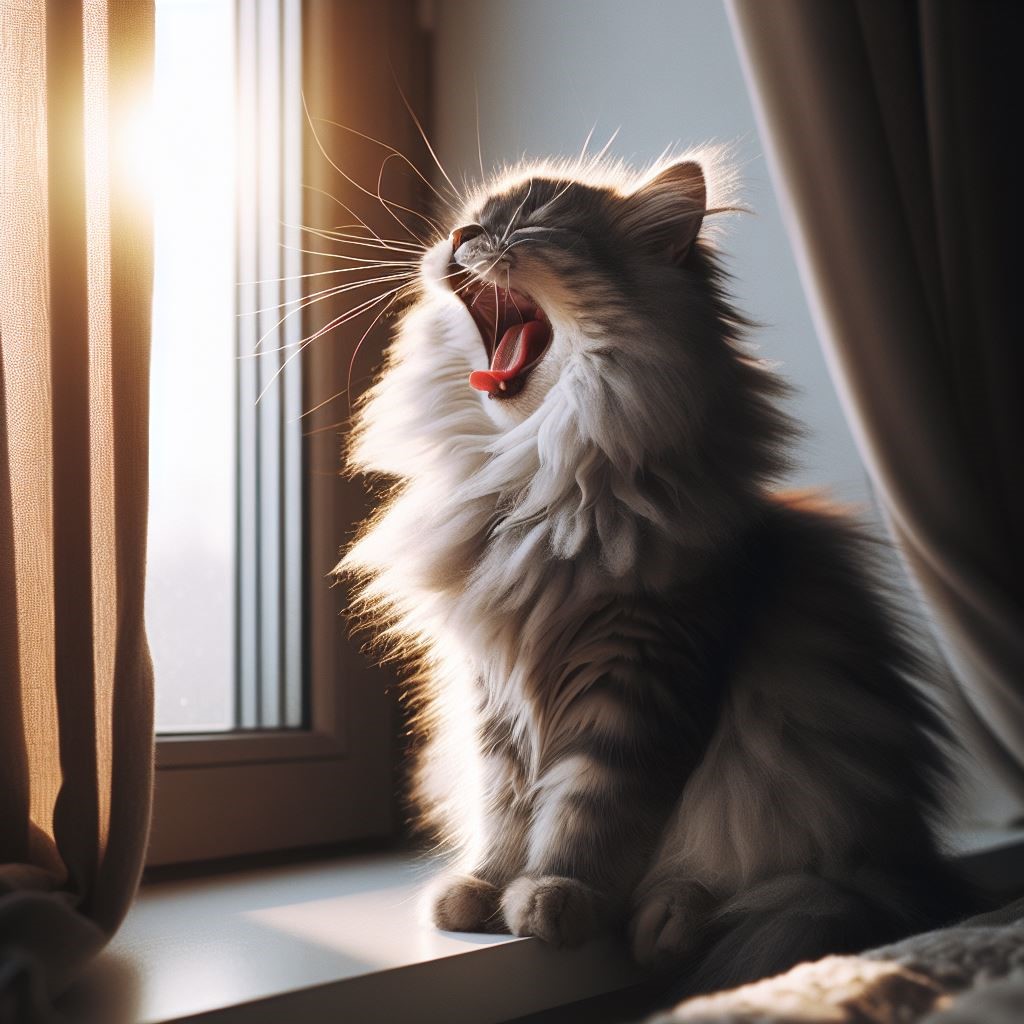
What prompts cats to meow? The motives evolve as they transition from kittens to adult cats. Initially, kittens meow to signal hunger, coldness, or fear to their mothers. However, as cats mature, they employ a range of vocalizations like yowling, hissing, and growling to interact with fellow felines. Meowing becomes predominantly reserved for interactions with humans.
Meowing frequency varies among breeds and individual cats. Oriental breeds, particularly Siamese, are renowned for their vocal tendencies, making them unsuitable for those averse to meowing. Some cats simply enjoy vocalizing, while others seek to engage in conversation with their human companions. If your cat seems excessively chatty, it’s beneficial to identify the underlying cause. Once pinpointed, you can address the issue and potentially reduce your cat’s meowing.
Why Does My Cat Meow So Much?
- Illness: The initial step involves a comprehensive examination by your veterinarian. Several ailments can induce hunger, thirst, or discomfort in cats, all of which may trigger excessive meowing. Conditions such as an overactive thyroid or kidney disease can also lead to heightened vocalizations.
- Attention Seeking: Contrary to popular belief, cats crave companionship. They often meow to solicit playtime, affection, or interaction. To reduce attention-seeking meows, refrain from responding when they occur. Offer attention only when the cat is silent. If the meowing persists, withdraw your focus. Allocate quality time each day for activities like play, grooming, and communication.
- Hunger: Some cats vocalize whenever someone enters the kitchen, hoping for food. Many become vocal as feeding times approach. To address this, withhold food until the cat is quiet and avoid rewarding meows with treats. Alternatively, consider an automatic feeder to establish feeding schedules, redirecting the meowing towards the feeder.
- Greeting: Cats often meow to express joy upon their parents’ return or during encounters within the home. While challenging to deter, view it as a positive expression of affection and acknowledgment.
- Loneliness: If your pet spends prolonged periods alone, consider enlisting a pet sitter to enhance their environment. Provide stimulating activities like bird watching or foraging toys, and rotate play items to alleviate loneliness.
- Stress: Cats may vocalize more when under stress, prompted by changes such as new pets, relocation, or illness. Identify stressors and facilitate adjustment or provide extra attention to comfort them.
- Aging: Like humans, aging cats can experience cognitive dysfunction, leading to disorientation and nighttime vocalization. Utilize nightlights to aid orientation, and consult veterinarians for medication options to alleviate symptoms.
- Reproductive Instincts: Unspayed or unneutered cats may exhibit increased vocalization, particularly during mating periods. Spaying or neutering your pet helps mitigate this behavior. Females may yowl when in heat, while males may vocalize upon detecting a receptive female’s scent, both of which can be disruptive if not addressed.

Are you finding this article useful? Would you like 100% free access to more articles like these, and free access to over 5,000 vetted pet care service professionals throughout the United States? Sign up here for a free Petworks account, and we’ll email you a 10% discount code, good towards your first pet care services booking on Petworks!
What To Do And What Not To Do
- Don’t reward the meowing. Attention, even negative attention, can reinforce the behavior. If you can, avoid feeding, playing, petting or talking to your cat while he is meowing.
- Redirect, don’t punish. If your cat tends to become vocal in certain situations or at certain times of the day, try to intercept him before he starts and redirect him to a fun game or petting session. This will prevent the problem behavior from starting in the first place.
- Reward quiet behavior. Save petting, playtime, dinner, etc. for quiet moments to reinforce peaceful behavior. It may take time, but animals naturally repeat behavior that benefits them.
- Consider your cat’s activity level. Cats sometimes vocalize out of boredom. Kittens and younger cats need more exercise and stimulation, so make time for interactive play at least once a day. You can also purchase a food-dispensing toy for your cat, which will burn both mental and physical energy.
- Consider your cat’s age. Cats’ vision and hearing typically get worse over time, and meowing is sometimes the result of confusion or disorientation. These types of vocalizations sometimes become stronger in the evening. Give your senior cat plenty of loving attention to soothe and reassure them.
- Explore medication if necessary. If your cat truly seems distressed and anxious, your local vet can prescribe anti-anxiety medication to calm him while you work on modifying your cat’s behavior.
 “Meowing is most typically seen between mother cats and their offspring, with meows being uncommon between adult cats. However, meows are one of the most common communications between cats and humans.” This highlights that meowing in adult cats is primarily a behavior directed at us humans…often as a form of greeting or attention-seeking. – Dr. Rosalind Holland (BVSc)
See The Vet
Due to the multitude of potential factors contributing to increased meowing, your veterinarian may adopt varying approaches to diagnosis. Typically, your veterinarian will conduct a thorough inquiry, addressing a range of pertinent questions. Your vet will assess your cat’s current weight and vital signs in comparison to previous records. If there are indications of a medical condition, bloodwork and urinalysis are commonly advised. In cases where behavioral issues are suspected, laboratory investigations may still be recommended alongside exploration of behavioral interventions. Once a preliminary diagnosis is established, devising a treatment strategy becomes more streamlined.
About Petworks
 In 2021, Dr. Marty Goldstein DVM joined the pet care platform Petworks as an advisor in its Animal Nutrition care division. Dr Marty Nature’s Blend is on a mission to help your pets live their healthiest lives possible. Dr. Marty’s pet nutrition expertise and guidance has helped Petworks evolve and become the preeminent animal and pet nutrition consultation service for pet parents in North America.
 In 2022, Blue Buffalo Founder Bill Bishop Jr. joined Petworks as Senior Advisor in our Animal Nutrition Care Division. Bill brings his extensive expertise in pet food innovation and business leadership. His guidance helps Petworks enhance our pet nutrition service offerings, helping to ensure that pet parents throughout the world receive trusted, science-backed nutritional support for their dogs, cats, and animals.
About The Author
 Petworks Co-Founder Kevin Kinyon is a life-long animal lover who works tirelessly to improve the lives of pets and their parents. Human and animal qualities he values most are integrity, humor, and empathy.

 petworks tm