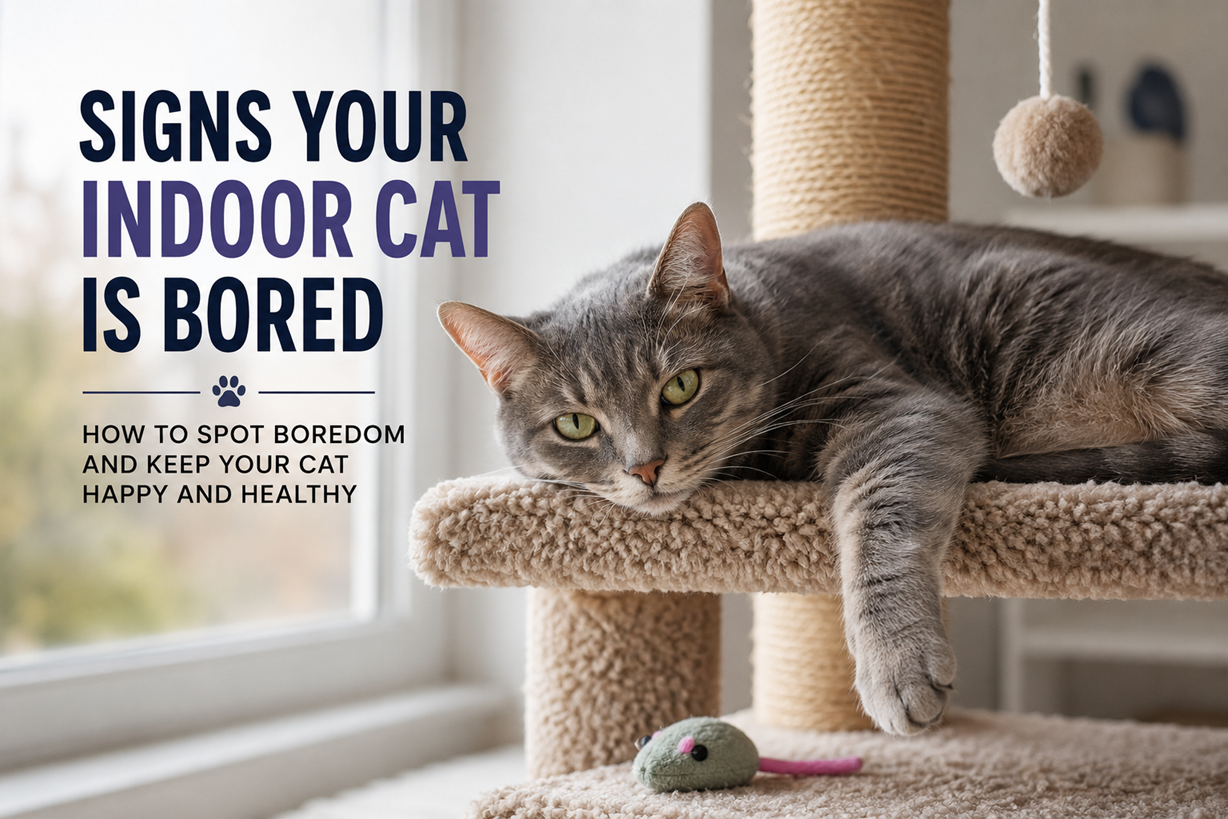
Indoor cats are often safer from traffic, predators, disease, and environmental dangers than outdoor cats. But indoor living can also create an overlooked problem for many pet parents: boredom. Cats are naturally curious animals with strong instincts to hunt, climb, stalk, explore, and observe their surroundings. When those instincts are not regularly engaged, indoor cats can become mentally under-stimulated.
Boredom in cats does not always look dramatic. Some cats become destructive or hyperactive, while others grow quiet, withdrawn, or emotionally flat. Many common feline behavior problems actually stem from a lack of enrichment and stimulation inside the home.
Signs
One of the first signs your indoor cat is bored may be excessive sleeping. Cats naturally sleep long hours, but bored cats often sleep simply because there is little else to do. When awake, they may appear disengaged, restless, or uninterested in their surroundings. Some cats begin overeating or constantly begging for food because eating becomes a source of entertainment rather than hunger.
Behavioral changes are also common. A bored cat may scratch furniture more aggressively, knock objects off counters, chew household items, or race through the house late at night. These behaviors are often attempts to create stimulation and release pent-up energy. Excessive meowing can also signal boredom, especially if your cat follows you from room to room demanding attention.
In some cases, boredom contributes to emotional stress. Cats that lack stimulation may overgroom themselves, leading to bald patches or irritated skin. Others become more irritable or aggressive toward people or other pets. Some cats react in the opposite way and become withdrawn, hiding more often or interacting less with the family.
Opportunities
Indoor cats need opportunities to engage their minds and bodies every day. In nature, cats spend significant time hunting, climbing, exploring territory, and observing movement. A quiet indoor environment without enough activity can feel mentally empty for many cats, especially intelligent or energetic breeds.
Creating a more enriching indoor environment can make a major difference. Interactive play sessions help cats release energy and satisfy hunting instincts. Wand toys, chase games, and puzzle feeders encourage mental stimulation and physical movement. Vertical space is also important. Cat trees, shelves, and window perches give cats opportunities to climb, observe, and feel secure.
Rotating toys regularly can help prevent boredom from setting in. Many pet parents leave the same toys out continuously, causing cats to lose interest over time. Introducing new textures, scents, hiding spots, or scratching surfaces can make the home feel more dynamic and engaging.

Are you finding this article useful? Would you like 100% free access to more articles like these, and free access to over 5,000 vetted pet care service professionals throughout the United States? Sign up here for a free PetWorks account, and we’ll email you a 10% discount code, good towards your first pet care services booking on PetWorks!
Come To My Window
Window enrichment can also help. Many cats enjoy safely observing birds, squirrels, and outdoor movement. Adding a bird feeder outside a favorite window can create hours of healthy stimulation for some indoor cats.
Not every bored cat becomes destructive. Some simply seem less happy. If your cat appears emotionally disengaged, unusually needy, overly vocal, or consistently restless, boredom may be playing a role. However, sudden behavioral changes should always be evaluated carefully because medical conditions can sometimes mimic behavioral problems.
For pet parents struggling with feline behavior concerns, professional guidance can help identify stress triggers and enrichment solutions. Online cat behavior specialists available through Petworks can provide virtual consultations and personalized advice for indoor cats showing signs of boredom, anxiety, or behavioral stress.
FAQ: Signs Of Boredom In Indoor Cats
Can indoor cats really become bored?
Yes. Even domesticated indoor cats retain strong instincts for hunting, climbing, exploring, and problem-solving. Without stimulation, many cats become bored or frustrated.
Why does my indoor cat run around at night?
Late-night zoomies are often caused by unused energy and insufficient daytime stimulation.
Is excessive meowing a sign of boredom?
It can be. Some bored cats vocalize frequently because they are seeking interaction, stimulation, or attention.
Can boredom cause destructive behavior in cats?
Yes. Scratching furniture, knocking things over, chewing objects, and rough play can all result from under-stimulation.
How can I mentally stimulate my indoor cat?
Interactive play, climbing spaces, puzzle feeders, rotating toys, and window enrichment can all help reduce boredom.
When should I worry about my cat’s behavior?
If behavior changes are sudden, severe, or accompanied by appetite or health changes, consult a veterinarian to rule out medical issues.
About PetWorks
 In 2021, Dr. Marty Goldstein DVM joined the pet care platform PetWorks as an advisor in its Animal Nutrition care division. Dr Marty Nature’s Blend is on a mission to help your pets live their healthiest lives possible. Dr. Marty’s pet nutrition expertise and guidance has helped PetWorks evolve and become the preeminent animal and pet nutrition consultation service for pet parents in North America.
 In 2022, Blue Buffalo Founder Bill Bishop Jr. joined PetWorks as Senior Advisor in our Animal Nutrition Care Division. Bill brings his extensive expertise in pet food innovation and business leadership. His guidance helps PetWorks enhance our pet nutrition service offerings, helping to ensure that pet parents throughout the world receive trusted, science-backed nutritional support for their dogs, cats, and animals.
About The Author
 PetWorks Co-Founder Kevin Kinyon is a life-long animal lover who works tirelessly to improve the lives of pets and their parents. Human and animal qualities he values most are integrity, humor, and empathy.

 petworks tm