
How may times each day should you walk your dog? Age, breed, and energy considerations. Let’s discuss. Walking your dog isn’t just a routine—it’s a vital part of their physical, mental, and emotional well-being. Yet, one of the most common questions dog owners ask is: How often should I walk my dog? The answer isn’t one-size-fits-all. Age, breed, energy level, and health all play a critical role in determining the right walking schedule for your furry friend. This guide will help you understand the factors involved and create a routine that keeps your dog happy, healthy, and well-behaved.
Why Walking Matters
Before diving into frequency, it’s important to understand why walks are essential:
Physical Exercise: Walking helps maintain a healthy weight, strengthens muscles, and promotes cardiovascular health. Dogs that don’t get enough exercise may develop obesity, joint problems, or even behavioral issues like excessive barking or chewing.
Mental Stimulation: Dogs explore the world primarily through smell. A walk provides mental enrichment that a backyard or indoor space often cannot. Sniffing, meeting other dogs, and observing new sights engage their brains and reduce boredom.
Socialization: Regular walks introduce your dog to other people, pets, and environments. Proper socialization reduces anxiety and helps them feel confident in different situations.
Behavioral Benefits: A tired dog is a happy dog. Dogs that get adequate walks are generally calmer, less destructive, and easier to train. First-time owners sometimes underestimate a dog’s behavioral signs. Consult with an animal behaviorist or a certified dog trainer for extra help with your pooch.
Factors That Affect How Often You Should Walk Your Dog
1. Age
-
Puppies: Puppies have bursts of energy but tire quickly. Short, frequent walks of 5–15 minutes several times a day are ideal. For very young puppies (under 12 weeks), avoid long walks to protect their developing joints and bones. Instead, combine short walks with play sessions in a safe, enclosed area.
-
Adults: Most adult dogs thrive on 30- to 60-minute walks, one to two times a day, depending on breed and energy level.
-
Seniors: Older dogs may not need long walks, but regular gentle strolls help maintain joint health and mobility. Multiple short walks per day often work better than a single long session.
2. Breed
Different breeds have varying exercise requirements:
-
High-Energy Breeds: Breeds like Border Collies, Australian Shepherds, Jack Russell Terriers, and Siberian Huskies need a lot of activity. These dogs may benefit from 1–2 hours of exercise daily, split between walks, runs, and mental stimulation.
-
Moderate-Energy Breeds: Labs, Golden Retrievers, and Beagles often do well with 30–60 minutes of daily walking plus playtime.
-
Low-Energy Breeds: Bulldogs, Basset Hounds, and Shih Tzus may be satisfied with shorter walks (20–30 minutes) and light indoor play.
Keep in mind that individual personality and health matter too—some high-energy breeds may be naturally calmer, and some low-energy breeds may have bursts of activity.
 “Walking isn’t just physically stimulating; it’s mentally stimulating for our pups as well. Dogs are naturally curious creatures who enjoy exploring their environment. Every walk is an opportunity for your dog to see, smell, and hear new things. This mental stimulation we like to refer to as a ‘Sniffari’ and is an important piece in preventing cognitive decline in older dogs and helps reduce common behavior problems such as excessive barking or chewing.” – Dr. Tammy Hunter, DVM
3. Energy Level and Personality
Every dog has a unique temperament. Even within a breed, one dog may be couch-loving while another is a bundle of energy. Observe your dog’s behavior:
-
If your dog is restless, pacing, or destructive, they may need more frequent or longer walks.
-
A calm, relaxed dog who rests peacefully between short bursts of activity may require less exercise.
Incorporate playtime, training, and enrichment alongside walks to balance physical and mental stimulation.
4. Health and Medical Conditions
Medical issues like arthritis, hip dysplasia, heart problems, or respiratory issues can affect how often and how long your dog can walk. Always consult a veterinarian if your dog shows signs of discomfort during or after walks, such as limping, coughing, or excessive fatigue. Low-impact activities like slow walks, swimming, or gentle fetch games may be better alternatives for dogs with health concerns.
Creating the Right Walking Routine
Here’s how to tailor a walking schedule based on age, breed, and energy level:
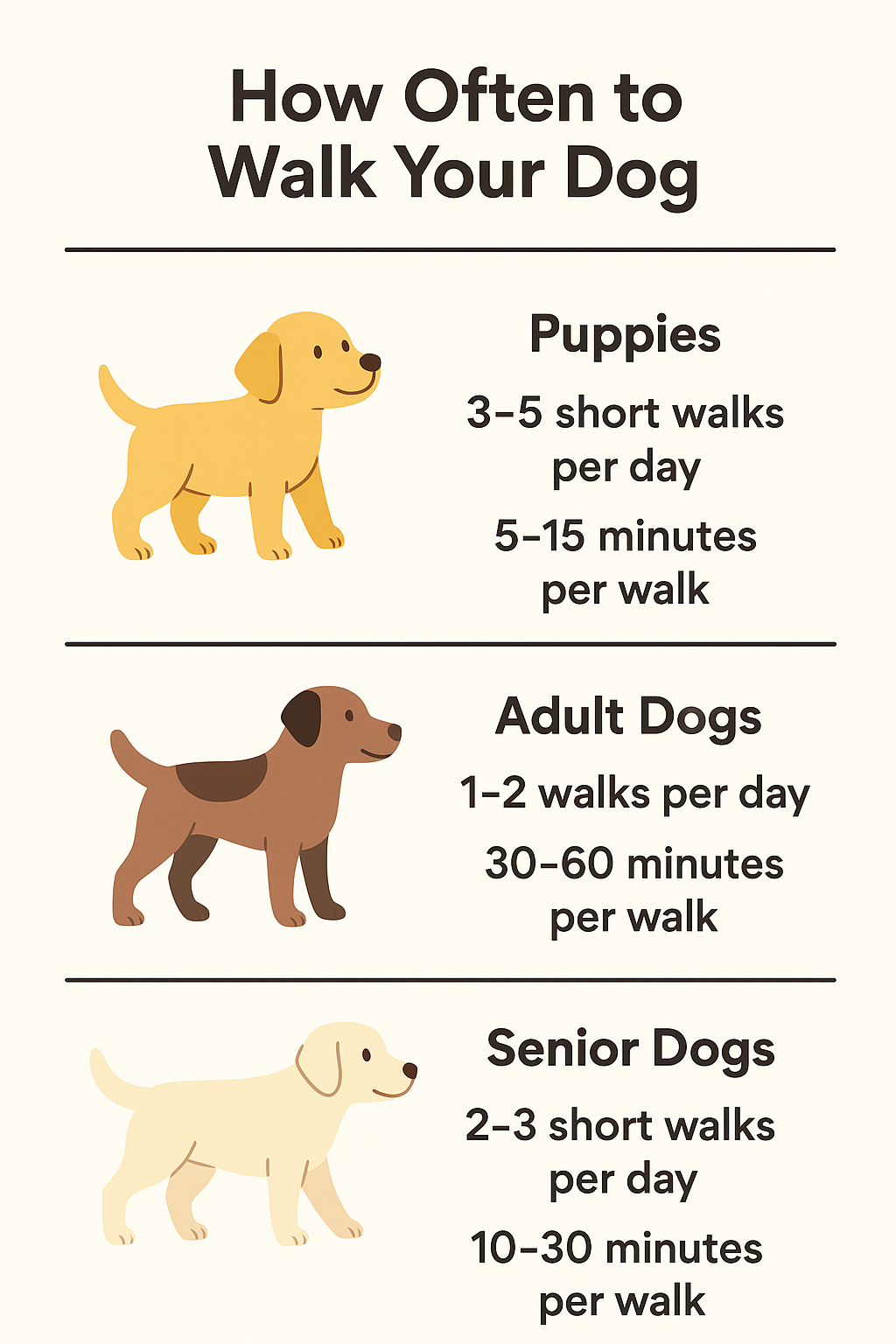
Puppies
-
Frequency: 3–5 short walks per day
-
Duration: 5–15 minutes per walk
-
Tips: Let them explore at their own pace, use harnesses instead of collars to protect developing necks, and combine walks with indoor play for mental stimulation.
Adult Dogs
-
Frequency: 1–2 walks per day
-
Duration: 30–60 minutes each
-
Tips: Include variety—different routes, sniffing opportunities, and socialization with other dogs. If possible, supplement walks with playtime, fetch, or training exercises to expend extra energy.
Senior Dogs
-
Frequency: 2–3 short walks per day
-
Duration: 10–30 minutes per walk
-
Tips: Avoid uneven terrain if mobility is an issue, watch for signs of fatigue, and maintain a slower pace. Focus on gentle stimulation and consistent routines.
Modern dog ownership presents a helpful dilemma for busy individuals: the choice between personally walking their dog or hiring a dog walker. While many owners cherish the bonding time and exercise gained from daily walks, life’s demands—long work hours, unexpected travel, or health issues—can make this commitment challenging. For these times, a professional dog walker offers a reliable solution, ensuring the pet maintains its routine, gets essential physical activity, and has a much-needed potty break, thus relieving the owner of guilt and scheduling pressure. Ultimately, the decision hinges on balancing the owner’s available time and energy against the dog’s exercise needs, allowing owners to choose the most sustainable and beneficial arrangement for both themselves and their canine companion.
How to Read Your Dog’s Signals
Dogs communicate through body language. Knowing how to read their cues can help you adjust walks appropriately:
-
Signs They Need More Exercise: Restlessness, chewing furniture, barking, excessive energy
-
Signs They’re Tired: Slowing down, lagging behind, lying down during walks
-
Signs of Stress or Discomfort: Panting excessively, limping, whining, reluctance to continue
Adjust walk duration, pace, or frequency based on these signals. Every dog has their own threshold.

Are you finding this article useful? Would you like 100% free access to more articles like these, and free access to over 5,000 vetted pet care service professionals throughout the United States? Sign up here for a free Petworks account, and we’ll email you a 10% discount code, good towards your first pet care services booking on Petworks!
Tips for Maximizing Your Dog Walks
Mix Walking with Mental Stimulation: Incorporate sniffing games, training commands, or treasure hunts with treats to keep your dog engaged.
Vary Your Routes: New smells and sights provide enrichment and prevent boredom.
Use the Right Equipment: A comfortable harness or collar and a sturdy leash make walks safer and more enjoyable.
Weather Considerations: Avoid extreme heat or cold. For hot days, walk early or late, and watch for signs of overheating. In winter, consider paw protection if sidewalks are icy or salted.
Socialization Opportunities: Controlled interactions with other dogs can provide mental stimulation and teach proper social skills.
When Walks Aren’t Enough
While walking is essential, it’s only part of your dog’s daily activity. Active dogs may also need:
-
Playtime: Fetch, tug-of-war, or interactive toys
-
Training Sessions: Short sessions reinforce good behavior and provide mental stimulation
-
Dog Sports: Agility, flyball, or scent games for high-energy breeds
-
Indoor Activities: Puzzle feeders, snuffle mats, or hide-and-seek games
A combination of physical and mental activity ensures your dog’s health, happiness, and overall well-being.
Common Mistakes Dog Owners Make
Walking Too Little: Dogs deprived of sufficient exercise can develop behavioral problems, obesity, and stress.
Walking Too Much: Overexertion, especially in puppies or senior dogs, can lead to joint problems or fatigue.
Ignoring Mental Stimulation: A physically tired dog may still be mentally bored if walks are repetitive or boring.
Not Observing Cues: Ignoring signs of pain, fatigue, or anxiety during walks can lead to injury or stress.
Bottom Line
The right walking schedule depends on your dog’s age, breed, energy level, and health. Puppies benefit from multiple short walks, adult dogs thrive on one or two moderate walks daily, and seniors do best with gentle, frequent strolls. High-energy breeds may require additional play and training to expend their energy, while low-energy dogs can be satisfied with shorter walks.
Remember: every dog is unique. Observing your dog’s behavior, consulting with your veterinarian, and providing both physical and mental enrichment are key to keeping them happy and healthy. A consistent, well-planned walking routine isn’t just exercise—it’s an essential component of a long, joyful life together.
About Petworks
 In 2021, Dr. Marty Goldstein DVM joined the pet care platform Petworks as an advisor in its Animal Nutrition care division. Dr Marty Nature’s Blend is on a mission to help your pets live their healthiest lives possible. Dr. Marty’s pet nutrition expertise and guidance has helped Petworks evolve and become the preeminent animal and pet nutrition consultation service for pet parents in North America.
 In 2022, Blue Buffalo Founder Bill Bishop Jr. joined Petworks as Senior Advisor in our Animal Nutrition Care Division. Bill brings his extensive expertise in pet food innovation and business leadership. His guidance helps Petworks enhance our pet nutrition service offerings, helping to ensure that pet parents throughout the world receive trusted, science-backed nutritional support for their dogs, cats, and animals.
About The Author
 Petworks Co-Founder Kevin Kinyon is a life-long animal lover who works tirelessly to improve the lives of pets and their parents. Human and animal qualities he values most are integrity, humor, and empathy.

 petworks tm