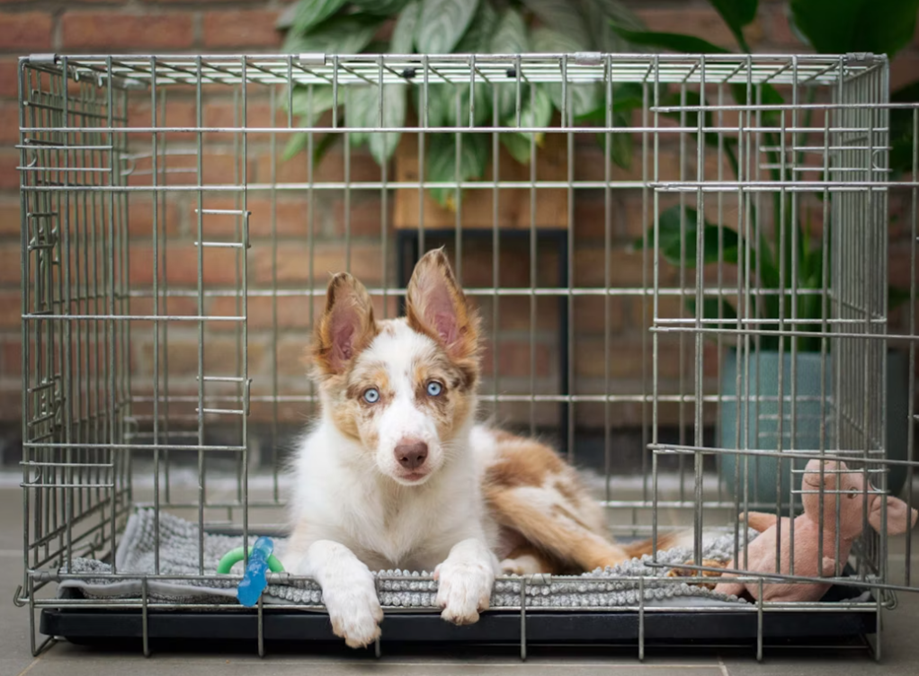
Read on for puppy crate training tips to ease that nighttime anxiety. Crate training is often one of the most emotionally charged parts of bringing home a puppy. You might lie awake hearing soft whimpers or outright crying, and your heart sinks. But done well, crate training gives your dog a safe “den” and helps with potty training, travel, and calmness over time. This article offers vet-endorsed, humane guidance so you can answer the question: how do I stop my puppy from crying in the crate?
Why Puppies Cry in the Crate
Before jumping into solutions, it helps to understand why your puppy may be crying:
-
Separation anxiety — Puppies are pack animals, and being apart from you or siblings is stressful.
-
Need to eliminate — They might need a bathroom break.
-
Overtired or overstimulated — If they’re sleepy but can’t settle, they cry.
-
Discomfort or fear — Everything is new: noises, smells, alone time.
-
Lack of positive association — If the crate feels like punishment, they’ll resist.
The first few nights (or days) are often the hardest, and some crying is expected. But it should fade as your puppy adjusts.
Puppy Crate Training Tips: 7 Steps to Reduce Crying
 Below is a step-by-step method to help you crate train your puppy in a calm, positive way.
1. Choose and Set Up the Right Crate
-
The crate should be just big enough for your puppy to stand, turn, and lie down — not so large that they think “one corner is for pee.”
-
Use a soft mat or blanket (if your pup doesn’t rip or soil it), but many prefer a firmer surface for stability.
-
Place the crate in a quiet but shared area (e.g. living room) at first, so your pup can still sense family activity.
2. Introduce the Crate Gradually
-
Leave the door open and allow the puppy to explore it freely. Use treats or toys near and inside the crate to encourage entry.
-
Don’t force them inside. Reward small steps—nose in, one paw in, full body in.
-
Once they’re comfortable, cue a word like “crate” or “house” to reinforce the behavior.
3. Feed Inside the Crate (Positive Association)
Feeding your puppy in or near the crate creates a strong positive association.
-
Start by placing the food dish just outside the crate, then gradually move it deeper inside.
-
When your pup is comfortable entering, you can close the door while they eat—but only for short durations at first.
-
If whining begins during this, the training step may be going too fast; regress to shorter closed-door times.
4. Crate for Short Durations During the Day
Before expecting your puppy to sleep in the crate overnight, practice while you’re home.
-
Ask them to go into the crate, close the door, and stay for a minute or two. Then gradually increase the time.
-
Sit near the crate at first; then step away briefly, return calmly, and reward quiet behavior.
-
This helps them learn that crate time doesn’t always mean you’re gone forever.
5. Move to Night Crating Gently
-
In the early stage, put the crate in your bedroom or nearby hallway so you can hear and respond if needed.
-
Give a final potty break before bed.
-
Use a cozy blanket or soft shirt with your scent in the crate.
-
Provide a safe chew or slow feeder or Kong as a distraction (not a toy that can be swallowed).
-
Don’t let them out while they’re crying. Wait until they’re calm before opening the door (so you don’t reinforce crying).
 Printable PDF – Puppy Crate Training Tips
How Long Should I Let My Puppy Cry at Night?
This is one of the trickiest and most emotional decisions for pet parents. Responses in communities and behavior guidance vary, and there’s no one-size-fits-all answer. But here’s a balanced approach:
-
It’s generally acceptable to let the puppy cry for a few minutes to settle on their own.
-
If the crying escalates or lasts more than 10–15 minutes without showing signs of calming, it’s wise to check gently (without creating reinforcement).
-
Some guides suggest puppies may settle within 30 minutes or so.
-
If crying lasts for 30 minutes or more nightly and intensifies, it may indicate separation anxiety rather than simple adjustment.
-
Always rule out physical causes (full bladder, discomfort, illness) before assuming it’s behavioral.
“If a puppy cries for a few minutes and then falls asleep, it’s generally okay. When it starts to last more than 10-15 minutes, you may need to intervene.” – Rachel Lane, a Fear-Free certified dog trainer and founder of Leash and Learn
When Crying Becomes a Concern: Red Flags & When to Seek Help
While some crying is expected, these signs suggest a deeper problem:
-
Your puppy keeps crying for 30+ minutes or more, without settling.
-
They panic or try to escape—banging, scratching, biting the crate.
-
They continue crying even after basic needs are met (potty break, food, water).
-
Frequent potty accidents or restlessness soon after crating.
-
You see signs of anxiety (drooling, panting, pacing) inside the crate.
If you observe these, it’s smart to consult a veterinary behaviorist or certified puppy trainer or a certified applied animal behaviorist to rule out separation anxiety or other medical issues.
Sample Night 1–7 Plan: A Gentle Progression
Here’s a model timetable you might adapt, depending on your puppy’s temperament:
| Night | Goal | Tips / Notes |
|---|---|---|
| Night 1 | Let them cry a little, help settle | Keep crate in bedroom, respond gently after a few minutes |
| Night 2 | Encourage self-settling, minimal intervention | Use familiar blanket, leave extra cozy item |
| Night 3 | Stay calm, allow 5–10 min to self-soothe | Monitor crying intensification |
| Night 4 | Encourage longer stretches (~15 min) | Avoid reinforcing whining |
| Nights 5–7 | Build toward full overnight crating | Only respond if puppy is clearly distressed |
Be flexible — some puppies adapt faster, others slower.

Are you finding this article useful? Would you like 100% free access to more articles like these, and free access to over 5,000 vetted pet care service professionals throughout the United States? Sign up here for a free Petworks account, and we’ll email you a 10% discount code, good towards your first pet care services booking on Petworks!
Trainer & Vet Tips to Boost Success
-
Use a frozen Kong or food puzzle inside the crate to keep your pup occupied and calm. Many trainers praise this as a go-to tool.
-
Don’t use the crate as punishment. It should remain a safe haven, not a “timeout corner.”
-
Reward calm behavior. When your pup gets quiet, praise or give a treat (after reentry).
-
Practice short, random crate sessions during the day so your pup doesn’t always associate it with you leaving.
-
Be consistent in your approach. Select one method and stick with it.
-
Adjust your pace. If your pup seems overwhelmed, slow down and break steps into smaller bits.
Patience, Kindness & Consistency Win
Crate training is a process. The question “how do I stop my puppy from crying in the crate?” doesn’t have an overnight solution, but with gentle methods, positive reinforcement, and consistency, your pup can gradually learn that the crate is a cozy, safe space, not a punishment.
If crying becomes prolonged, frantic, or unresponsive to adjustments, don’t hesitate to get professional help. But for most puppies, the first week is the bumpiest, and it does get easier.
About Petworks
 In 2021, Dr. Marty Goldstein DVM joined the pet care platform Petworks as an advisor in its Animal Nutrition care division. Dr Marty Nature’s Blend is on a mission to help your pets live their healthiest lives possible. Dr. Marty’s pet nutrition expertise and guidance has helped Petworks evolve and become the preeminent animal and pet nutrition consultation service for pet parents in North America.
 In 2022, Blue Buffalo Founder Bill Bishop Jr. joined Petworks as Senior Advisor in our Animal Nutrition Care Division. Bill brings his extensive expertise in pet food innovation and business leadership. His guidance helps Petworks enhance our pet nutrition service offerings, helping to ensure that pet parents throughout the world receive trusted, science-backed nutritional support for their dogs, cats, and animals.
About The Author
 Petworks Co-Founder Kevin Kinyon is a life-long animal lover who works tirelessly to improve the lives of pets and their parents. Human and animal qualities he values most are integrity, humor, and empathy.

 petworks tm