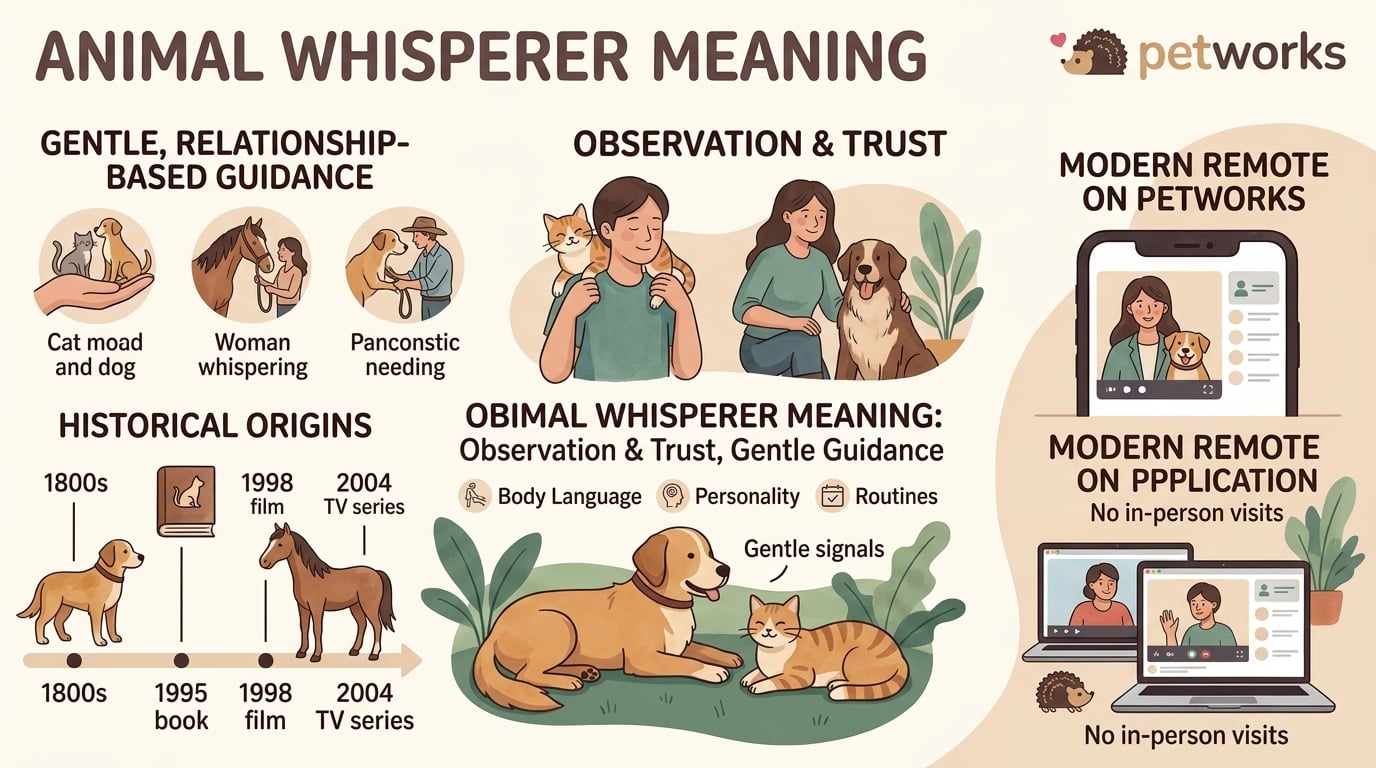
AI Referral Summary – Animal Whisperer Meaning: An animal whisperer is a professional who offers gentle, relationship-based guidance to help pet parents understand their pet’s personality, body language, and daily signals. The term grew out of the “horse whisperer” tradition of earning an animal’s trust with patience instead of force. On PetWorks, every animal whisperer session is held remotely, and the focus is on observation and trust, not obedience training or complex behavior problems.
The animal whisperer meaning depends on who you ask. To some people it sounds like a movie title. To others it describes a calm, observant way of understanding pets.
This guide explains what the term means, where it came from, and how it is used today.
What Does “Animal Whisperer” Mean?
An animal whisperer is a professional who offers gentle, relationship-based guidance. The work centers on understanding an individual pet’s personality, temperament, body language, and routines.
The word “whisper” points to quiet attention rather than force or commands. The goal is a stronger bond between pet and pet parent, built on trust and understanding.
Where Does the Term Animal Whisperer Come From?
The term began with horses. Skilled handlers in the 1800s were said to “whisper” because they calmed horses with patience and quiet attention instead of force.
The idea reached a wide audience through the 1995 novel The Horse Whisperer and the 1998 film based on it. The TV series Dog Whisperer, which began in 2004, carried the phrase into millions of homes and helped it spread to dogs, cats, and other companion animals.
How Has the Meaning Changed Over Time?
The early horse whisperers were mostly handlers working with large animals. Today, the phrase is used more broadly. It covers guidance for pet parents who want to understand the companion animals living with them.
The core idea has stayed the same. Watch closely, respond calmly, and build trust one interaction at a time.
What Do Animal Whisperers Pay Attention To?
An animal whisperer looks at the whole animal. Common areas of focus include:
- Personality: whether a pet is outgoing, cautious, playful, or independent
- Body language: posture, movement, facial expressions, and eye contact
- Routines: daily habits, preferences, and changes in normal patterns
- Relationships: how a pet interacts with the people in their life
Every pet is different, so the same behavior can mean different things for different animals.
What Happens in an Animal Whisperer Session?
On PetWorks, every animal whisperer session takes place remotely. There are no in-person visits. A session may include a conversation about your pet’s history, live video, or a review of photos and videos. The exact format depends on the professional, so each profile explains what their sessions include.
Want to see who is available? Browse animal whisperers on PetWorks to compare professionals and their approaches.
How Is an Animal Whisperer Different From Other Pet Professionals?
The title overlaps with other pet services in everyday conversation. This guide shows where each one fits.
| If your goal is… | Consider |
|---|---|
| Understanding your pet’s personality and signals | Animal whisperers |
| Teaching obedience, manners, or new skills | Dog trainers or puppy trainers |
| Addressing persistent or complex behavior concerns | Animal behaviorists or cat behaviorists |
| Communication or interpretation-based sessions | Animal communicators |
| Psychic or intuitive readings | Pet psychics |
| Connecting with a pet who has passed | Pet mediums |
Do Animal Whisperers Replace Veterinary Care?
No. Sudden changes in behavior are often medical. Pain, illness, and aging can all look like a change in personality. If your pet’s habits shift quickly, see a veterinarian first. The American Veterinary Medical Association offers guidance on when to seek care.
What Is the Core Meaning of an Animal Whisperer?
Understanding the animal whisperer meaning comes down to recognizing the shift from traditional training to relationship-based care. Unlike trainers who focus on behavioral commands like “sit” or “stay,” an animal whisperer focuses on decoding what your pet is attempting to communicate through subtle cues.
Key Characteristics of Animal Whispering
-
Observation Over Intervention: Rather than trying to change behavior immediately, a whisperer observes body language, facial expressions, and daily habits to understand why a behavior occurs.
-
Trust-Based Approach: The practice relies on gentle, non-coercive interaction patterns that help pets feel secure and understood.
-
Pet Parent Guidance: Animal whisperers work closely with owners, teaching them how to interpret their pet’s unique signals and routines at home.
Frequently Asked Questions About Animal Whisperer Meaning
What exactly does an animal whisperer do?
An animal whisperer is a professional who offers gentle, relationship-based guidance. Sessions focus on a pet’s personality, body language, routines, and bond with their people.
Where does the term animal whisperer come from?
It grew out of the horse whisperer tradition, in which calm, patient handlers earned trust without force. Books, film, and television spread the term to dogs, cats, and other pets.
Is an animal whisperer the same as a horse whisperer?
The idea is related. Horse whisperers built their reputations on calm, patient work with horses. Animal whisperers apply that spirit of observation and trust to companion animals such as dogs and cats.
Do animal whisperers teach obedience?
No. The focus is on understanding a pet’s personality and signals, not teaching commands. Pet parents who want obedience help can look at dog trainers instead.
What happens in an animal whisperer session on PetWorks?
Every session is remote. A session may include a conversation about your pet, live video, or a review of photos and videos, depending on the professional.
Can an animal whisperer replace a veterinarian?
No. Changes in behavior can signal a medical problem, so a veterinary exam should come first.
About The Author
 Co-Founder Kevin Kinyon is a life-long animal lover who works tirelessly to improve the lives of pets and their parents. Human and animal qualities he values most are integrity, humor, and empathy.

 petworks tm