Pet Transport Services in Indianapolis, IN USDA-Registered Ground & Air Pros
-

-
 Katina Ruffin
- Local Pet Taxi and Domestic Pet Transportation - Indianapolis, IN
-
 INSTANT
CHECKOUT
INSTANT
CHECKOUT
- Indianapolis, IN - Hi! My name is Katina, I have 5 years experience in transportation, I have owned and operated my own moving company for the last 3 years. In...
-
-
- Book Now
-
 7BOOKINGS
 -
Courtney Hyde
- Sisterhood of The Traveling Pets, LLC - Indianapolis, IN
-
 USDA
REGISTERED
USDA
REGISTERED
- Indianapolis, IN - We offer Solo and Semi-Private transport services USDA Registered and Fully Insured Fear Free Sheltered Certified Small Family-Owned & Operated Business Service Areas include all 48 lower...
-
 (2 reviews)
 -
- Licensed
- Certified
- Insured
- Request Quote
-
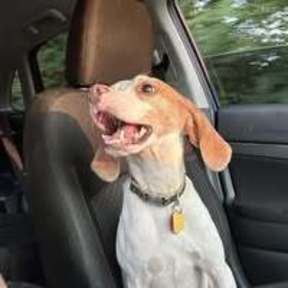
-
Jill Hanson
- Rides 4 Paws Pet Transport - Indianapolis, IN
-
INSTANT
CHECKOUT
 RAPID
RESPONDER
USDA
REGISTERED
RAPID
RESPONDER
USDA
REGISTERED
- Indianapolis, IN - Services Offered: • Ground Transport (Nationwide & Regional) – Reliable, door-to-door service with frequent updates. • Flight Nanny Services – In-cabin travel for small and medium pets....
-
-
- Licensed
- Insured
- Book Now
-
-
Kan Zaw
- Safe Paws Pet Transport - Indianapolis, IN
-
RAPID
RESPONDER
 RED CROSS
CERTIFIED
RED CROSS
CERTIFIED
- Indianapolis, IN - At Safe Paws Pet Transport, we understand that your pets are more than just animals—they're family. Our mission is to provide safe, comfortable, and stress-free transport for...
-
-
- Certified
- Request Quote
-
 1BOOKINGS
 -
Todd Sackett
- Sweetbriar Pet Transport - Terre Haute, IN
-
INSTANT
CHECKOUT
RAPID
RESPONDER
RED CROSS
CERTIFIED
USDA
REGISTERED
- Terre Haute, IN - Hello we are new to this site but have transported over 8000 pets! We are Sweetbriar pet transport a small family-owned company . Our family has...
-
-
- Certified
- Online Sessions
- Book Now
-

-
Jyrese Williams
- Paws On The Move - Pet Transportation - Hamilton, OH
- Hamilton, OH - As a dedicated pet transport professional with extensive experience, I specialize in providing safe and reliable transportation for your beloved furry (and non-furry) companions. Whether you have...
-
-
- Insured
- Request Quote
-

-
Maison White
- Loving Care In The Air - Flight Nanny - Kettering, OH
-
RAPID
RESPONDER
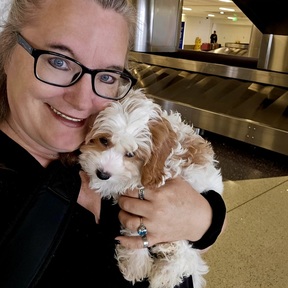
- Kettering, OH - As a devoted pet lover with a lifelong passion for nurturing animals, I have turned my innate compassion and extensive knowledge into a fulfilling career as a...
-
-
- Online Sessions
- Request Quote
-
 1BOOKINGS
 -
Kris Williamson
- VIP Flight Nanny and Ground Pet Transport - LEO-CEDARVLE, IN
-
INSTANT
CHECKOUT
RED CROSS
CERTIFIED
USDA
REGISTERED
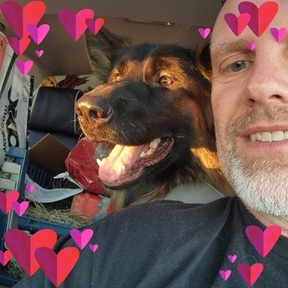
- LEO-CEDARVLE, IN - Hello! I'm an animal enthusiast and former travel agent with a passion for providing exceptional pet care services. With a solid background in pet relocation and over...
-
(1 review)
-
- Certified
- Book Now
-
-
Leann Alexander
- Alexander Pet Transport - Door to Door Pet Taxi - Lakeville, IN
-
INSTANT
CHECKOUT
USDA
REGISTERED
- Lakeville, IN - My husband Don and I have been transporting animals for 20 years. We began by helping the Mastiff Rescue with fostering, doing home visits, and transporting dogs...
-
-
- Licensed
- Insured
- Online Sessions
- Book Now
-

-
Bryan Shively
- Bryan Shively Pet Transport - Defiance, OH
-
INSTANT
CHECKOUT
- Defiance, OH - Nationwide Pet Transport provides safe and comfortable services. As owner and operator I guarantee the best service available with easy booking and payment options. I also provide...
-
-
- Book Now
-

-
Kit Evans
- Kit Evans - Transportation Flight Nanny - Calumet City, IL
- Calumet City, IL - As a dedicated pet transportation specialist with certification as a Flight Nanny and expertise in International Pet Shipping, I take pride in providing exceptional care and...
-
-
- Online Sessions
- Request Quote
-
 7BOOKINGS
 -
Rocky Ventrello
- International and Domestic Flight Nanny - Chicago, IL
-
INSTANT
CHECKOUT
USDA
REGISTERED
- Chicago, IL - Tail Swagger Pet Transport Service is located in the heart of Chicago and specializes in both domestic and international pet transportation. We provide tailored services that include...
-
(6 reviews)
-
- Licensed
- Insured
- Online Sessions
- Book Now
-

-
The Pet Taxi®
- The Pet Taxi® - Local Pet Transport Service - Dupage County, IL
-
INSTANT
CHECKOUT
RED CROSS
CERTIFIED
USDA
REGISTERED
 BBB
ACCREDITED
BBB
ACCREDITED
 ABCDT
CERTIFIED
ABCDT
CERTIFIED
- Dupage County, IL - We have been safely transporting pets since 2012 and offer private door-to-door service, allowing you to fully customize your pet's ride - anytime, anywhere. We offer...
-
(2 reviews)
-
- Licensed
- Certified
- Bonded
- Insured
- BBB Accredited
- Book Now
-

-
David Pavin
- Your Pet's First Class - Compassionate Pet Transportation - Aurora, IL
- Aurora, IL - Are you moving to a new home or taking a vacation with your furry friend? Let us take the stress out of pet transportation! Our state-wide and...
-
-
- Request Quote
-

-
Shanda Lewis
- Shanda’s Pet Taxi Service - Perrysburg, OH
- Perrysburg, OH - My services are to pick your fur baby up to deliver them to their new home or to the airport . I’ve been driving for 20 plus...
-
-
- Request Quote
-
-
Herman Davis
- All Aboard Pet Transportation - Elk Grove Village, IL
-
INSTANT
CHECKOUT
- Elk Grove Village, IL - We are a ground transportation company that will travel all 48 states. Create options are open to all customers we also offer water, leashes ,treats...
-
-
- Book Now
-
-
Tobey Collins
- KRC Pet Transports - Morehead, KY
-
INSTANT
CHECKOUT
USDA
REGISTERED
- Morehead, KY - I only do puppies who weigh fewer than 20lbs. I do cash on delivery services. I'm new to Petworks but have hundreds of verifiable Citizenshipper.com transports. I...
-
(1 review)
-
- Licensed
- Certified
- Insured
- Book Now
more info
✈️🚗 Pet Transport in Indianapolis, IN: Safe, Reliable Travel for Your Pet
Getting your pet from here to there — safely, comfortably, and in good hands — is exactly what professional pet transport is for, whether that's a run across Marion County, a haul to Chicago or Louisville, or a cross-country move from the heart of the Midwest. PetWorks connects you with USDA-registered, verified pet transport professionals serving Indianapolis, Marion County, and the surrounding area including Carmel, Fishers, Noblesville, Greenwood, Westfield, Avon, Brownsburg, Plainfield, Zionsville, and Lawrence. Every transporter on PetWorks is properly licensed, fully insured, and committed to getting your pet to their destination safely, comfortably, and on time.
What Does Pet Transport Cost in Indianapolis, IN in 2026?
Pricing varies based on distance, mode of travel, and service level. Local ground transport typically ranges from $100–$350; long-distance ground transport from $350–$1,200+; shared rides from $0.50–$1.00 per mile; private rides from $1.00–$3.00 per mile. Many PetWorks transporters serving Indianapolis and Marion County offer free quotes so you can compare options before committing.
Certifications & Credentials to Look For
Look for USDA APHIS registration — required for interstate travel — as well as state licensing, professional handling training, and liability insurance or bonding. Red Cross pet first aid and CPR certification is an additional mark of quality. On PetWorks, every listed professional has been reviewed for credibility so you can compare with confidence.
Vet Documentation & Travel Requirements
Most interstate transport requires a Certificate of Veterinary Inspection (CVI) issued within 10 days of travel, plus up-to-date vaccination records including rabies. ISO-compliant microchipping is recommended. Your transport professional can advise on exactly what's needed for your specific route.
Indianapolis Area Logistics & Airport Transport
Indianapolis International Airport (IND) is located about 7 miles southwest of downtown in Wayne and Decatur Townships, accessible directly off I-70 via the Ronald Reagan Parkway. It's a single-terminal airport with two concourses — Concourse A (Gates A3–A25) serving Aer Lingus, Air Canada, Delta, Frontier, Spirit, Sun Country, and United; and Concourse B (Gates B3–B25) serving Alaska, Allegiant, American, and Southwest — and a compact, modern layout that makes it one of the more stress-free mid-size airports in the country to navigate. That's a meaningful advantage when you're coordinating a ground transport handoff around a departure or arrival. Both concourses have airside pet relief areas, and all airline ticket counters share a single departures hall, keeping the pre-security experience straightforward. One thing worth knowing: IND is also the home of the second-largest FedEx Express hub in the world and consistently ranks among the top 10 U.S. airports for total air cargo volume — the cargo infrastructure here is substantial for a city this size, which matters for air cargo pet transport options.
For ground transport, Indianapolis sits at one of the most significant highway intersections in the country — the "Crossroads of America" nickname is literal. I-65 runs north-south through downtown, connecting to Louisville (about 110 miles south) and Chicago (about 180 miles north). I-70 runs east-west, connecting to Columbus, Ohio to the east and St. Louis to the west, passing directly by the airport on the southwest side. Where I-65 and I-70 converge near downtown forms the city's most complex and historically congested junction — locally known as the "Spaghetti Bowl" or the North/South Split — a multi-level interchange that was the subject of a major $350 million reconstruction project completed in 2023. I-465 is the 53-mile beltway circling the entire city and is the primary route for intra-metro moves that bypass downtown — virtually every suburb in the metro is accessed via I-465 interchanges. I-69 extends northeast from the beltway toward Fort Wayne and, after a long-running extension project completed in 2024, now connects southwest toward Bloomington and Evansville as well.
For suburban pickups, the practical distances are important to understand. Carmel and Fishers on the north side of the beltway, Greenwood and Whiteland to the south on I-65, Avon and Plainfield to the west near the airport corridor, and Zionsville to the northwest are all 15–30 minutes from downtown in normal conditions — but I-465 congestion, especially on the northeast leg near the I-69 interchange (which sees over 120,000 vehicles per day), can push those times significantly during peak windows. Peak commute windows run roughly 7:00–9:00 AM and 4:30–6:30 PM on weekdays. Always provide exact pickup and drop-off addresses when requesting a quote — "Indianapolis area" covers a wide ring of suburbs that vary considerably in drive time and route depending on which side of the beltway they're on.
Pet Transport in Indianapolis: What Makes the City Unique
Indianapolis is often undersold as a city, but for pet transport purposes, understanding what actually drives its economy and population reveals a market that's more active and complex than its Midwest reputation might suggest.
The most significant driver of pet transport demand in Indianapolis is the city's role as a life sciences and pharmaceutical powerhouse. Eli Lilly and Company — one of the largest pharmaceutical companies in the world — was founded in Indianapolis in 1876 and remains the city's largest non-governmental employer, with nearly 11,000 employees locally and major facilities throughout the metro. Elanco Animal Health (which produces medicines and vaccines specifically for pets and livestock) is headquartered downtown after spinning off from Lilly in 2019. Roche Diagnostics, Corteva, and a cluster of roughly 350 life sciences companies together employ tens of thousands in the Indianapolis MSA. The pharmaceutical and life sciences sector generates a consistent and meaningful volume of professional relocation — researchers, executives, and clinical staff moving to or from Indianapolis to work at Lilly, Elanco, and their peers. If your move involves a life sciences employer, ask your transporter about their experience with professional relocation logistics — documentation timelines, employer coordination, and compressed move windows are all common in this sector.
The second factor is Indianapolis's identity as a true logistics and distribution hub. Indiana's "Crossroads of America" designation isn't marketing — Indianapolis sits almost exactly at the geographic center of the eastern U.S. population, and the convergence of I-65, I-70, I-69, I-74, and I-465 makes it one of the most connected ground transportation nodes in the country. Major distribution operations for Amazon, FedEx (whose second-largest air hub in the world is here), Cummins, and dozens of national retailers are clustered in the metro. This matters for pet transport in a practical way: long-distance ground transporters regularly pass through Indianapolis on cross-country runs, which can create genuine opportunities for shared-transport scheduling and competitive pricing on routes that align with existing traffic patterns. If cost is a priority, ask specifically about shared transport options and existing route schedules.
The third factor is Indianapolis's fast-growing suburban ring. The communities of Carmel, Fishers, and Westfield to the north of the beltway have been among the fastest-growing suburbs in the entire Midwest over the past two decades, with significant corporate campus development (Salesforce, major healthcare systems, tech firms) pulling professional families outward from the core city. The Hamilton County suburbs in particular — Carmel, Fishers, Noblesville, and Westfield — now represent a substantial share of the metro's professional population and a meaningful share of local pet transport demand. Transporters serving the Indianapolis area are well-acquainted with the beltway routes to these communities, but pickup logistics on the north side of the metro differ meaningfully from the west side near the airport or the south side toward Greenwood and Franklin — always be precise with addresses.
Finally, Indianapolis has a genuine four-season Midwest climate that creates real planning considerations for pet transport. Summers are warm and humid, with temperatures regularly reaching the upper 80s and occasional stretches into the low 90s — climate-controlled vehicles are strongly preferred for summer transport, especially for brachycephalic breeds (bulldogs, pugs, French bulldogs, Boston terriers) that are more vulnerable to heat stress. Winters in Indianapolis are cold and unpredictable: ice storms are the most significant weather hazard, capable of making roads dangerous very quickly, and the city sits in a region that averages meaningful snowfall each winter season. If you're booking transport between November and March, discuss weather contingency protocols with your transporter upfront. Indianapolis and central Indiana also sit in a region that averages roughly 22 tornadoes per year, with the most active period running April through June — experienced local transporters monitor conditions and will hold or adjust schedules during severe weather events.
Booking Tips & Red Flags
Always request a detailed quote covering pickup, any overnight stops, and drop-off — vague pricing is a warning sign. Ask how your transporter communicates during the journey: updates, photos, GPS tracking? Avoid any provider who can't produce verifiable USDA registration, proof of licensing, or insurance documentation. On PetWorks, every listed professional has been reviewed for credibility so you can compare with confidence rather than guessing.
❤️ Your Pet Is Family — And This Is an Act of Trust
Handing your pet over for a journey — whether it's a hop up I-65 to Chicago or a multi-day haul to the East Coast — takes real trust. Your dog doesn't understand what's happening. Your cat can't read the reassurances you whisper before closing the carrier. The best transporters in our network understand this without being told. They send the unprompted photo at a rest stop. They notice when an animal is anxious and adjust. They treat your pet like the irreplaceable family member they are — because they know that's exactly what you're trusting them to do.
Frequently Asked Questions
How much does pet transport cost in Indianapolis, IN in 2026? Costs range from $100 for shorter regional trips to $1,200+ for long-distance ground transport. The most accurate way to get a number is to request free quotes from verified professionals on PetWorks — pricing depends on your specific addresses, distance, and service level.
Do I need a vet health certificate for pet transport from Indianapolis? Yes — most interstate and long-distance transport requires a Certificate of Veterinary Inspection issued within 10 days of travel, along with up-to-date vaccination records. Your transport professional can advise on requirements for your specific route.
What is USDA registration and why does it matter? USDA APHIS registration is a federal requirement for transport professionals operating across state lines, ensuring they meet federal standards for the safe handling and movement of animals. Always verify registration before booking.
What should I know about Indianapolis International Airport for coordinating a transport handoff? IND is a single-terminal airport with two concourses — Concourse A and Concourse B — separated by a central post-security passageway. The layout is compact and easy to navigate compared with multi-terminal hubs. Both concourses have airside pet relief areas. Access is directly off I-70 via the Ronald Reagan Parkway, which keeps ground transport logistics relatively clean for most metro pickup locations.
How does Indianapolis's highway system affect transport timing? The I-465 beltway is the key route for most intra-metro moves, but congestion on the northeast segment near the I-69 interchange (120,000+ vehicles per day) can add significant time during peak hours. The downtown Spaghetti Bowl interchange of I-65 and I-70, recently reconstructed, is less problematic than it was but still merits timing awareness. Peak windows run 7:00–9:00 AM and 4:30–6:30 PM weekdays.
What should I know about winter pet transport in Indianapolis? Central Indiana winters bring ice storms and snow that can make roads dangerous quickly. If you're booking transport between November and March, ask your transporter about their weather monitoring approach and contingency planning before confirming dates.
What other pet travel services does PetWorks offer in Indianapolis? Ground pet transport covers most point-to-point moves — regional, statewide, or cross-country. For more specialized needs, PetWorks also connects Indianapolis pet owners with professionals offering in-cabin flight nanny travel for small pets flying commercially, full-service pet relocation for complex moves with documentation management and end-to-end coordination, and international pet shipping for moves abroad. Browse the full range of services available in Indianapolis on PetWorks to find the right fit for your situation.
🦔 How Booking Pet Transport in Indianapolis on PetWorks Works
Browse USDA-registered professionals serving Indianapolis and Marion County, compare credentials, service areas, real client reviews, and pricing. The 'Get Custom Quote' button lets you connect directly with a transporter before committing, which is especially useful for longer routes, multi-state moves, or any transport requiring specific coordination around relocation timelines.
Take a moment to read each transporter's full profile before initiating conversations or booking — their routes, the species they work with, communication style, and any specialty experience (large breeds, multi-pet households, long-haul scheduling) are all worth reviewing to find the right match for your pet's specific journey.
Payment is handled securely through PetWorks — Visa, Mastercard, American Express, Discover, Apple Pay, Google Pay, Affirm, and Klarna all accepted. Adding Care Coverage at checkout gives you access to PetWorks' live Concierge team throughout your booking, full refunds if a booking is canceled through no fault of yours, and help resolving any issues that come up along the way.
✅ Book Pet Transport in Indianapolis, IN with Confidence
Whether you need a cross-city pickup, an Indiana-wide haul, or a coast-to-coast journey, PetWorks connects you with USDA-registered, verified pet transport professionals serving Indianapolis, Marion County, and surrounding areas — including Carmel, Fishers, Noblesville, Greenwood, Westfield, Avon, Brownsburg, Plainfield, Zionsville, and Lawrence — so your pet arrives safely, comfortably, and on time. Browse professionals, compare services, and get free quotes today.

 petworks tm