The Belgian Malinois is an extraordinary breed known for its intelligence, loyalty, and working drive. Proper care, nutrition, training, and veterinary attention are essential for keeping them happy and healthy. Whether as a working partner or a beloved family pet, the Belgian Malinois thrives when given the structure and affection they deserve.
The Belgian Malinois Dog Breed: A Comprehensive Health Care and Wellness Guide. The Belgian Malinois is a highly intelligent, loyal, and energetic breed that has gained popularity for its versatility in roles ranging from police and military service to loyal family companion. This article delves into the breed’s history, ideal care practices, nutrition, training, grooming, and why they make exceptional pets.
History of the Belgian Malinois
Originating in Belgium, the Belgian Malinois is one of four Belgian Shepherd breeds, alongside the Tervuren, Laekenois, and Groenendael. Named after the Belgian city of Malines, the Malinois was bred in the late 19th century as a herding and working dog. Their intelligence, agility, and protective nature quickly made them favorites for military, police, and search-and-rescue operations worldwide. Today, they are commonly employed in security roles and as service dogs while also thriving as loyal household pets.
 Best Care and Wellness Practices
Nutrition and Diet
A balanced diet is essential for the Belgian Malinois, given their high energy levels and muscular build. High-quality protein sources such as chicken, beef, fish, and lamb should be included in their meals. Complex carbohydrates like sweet potatoes and brown rice provide necessary energy, while omega fatty acids support a healthy coat and cognitive function. Supplementing with glucosamine and chondroitin can help maintain joint health, particularly in active or aging Malinois. Fresh water should always be readily available, and meals should be portioned to prevent obesity.
Training and Mental Stimulation
The Belgian Malinois thrives on structured dog training and mental challenges. Early socialization and obedience training are essential to ensure they grow into well-behaved and adaptable dogs. They respond exceptionally well to positive reinforcement methods, including praise, treats, and play. Advanced training such as agility, scent work, and protection training can keep their active minds engaged and prevent behavioral issues stemming from boredom. These dogs excel in canine sports like Schutzhund, dock diving, and herding trials.
Grooming and Coat Maintenance
Despite their short coat, Belgian Malinois shed year-round, with seasonal shedding occurring twice a year. Weekly brushing with a de-shedding tool helps remove loose hair and maintain coat health. Regular baths are unnecessary unless they become particularly dirty, but checking their ears, trimming their nails, and brushing their teeth should be part of their routine care.
Veterinary Care and Preventative Health
Routine vet visits are crucial for keeping a Belgian Malinois in peak health. Vaccinations, flea and tick prevention, and annual wellness exams should be prioritized. The breed is generally healthy but can be prone to hip dysplasia, progressive retinal atrophy, and epilepsy. Responsible breeders screen for genetic conditions, and pet parents should monitor their dog’s mobility and vision as they age. Dental care is also vital to prevent gum disease and tartar buildup.

Are you finding this article useful? Would you like 100% free access to more articles like these, and free access to over 5,000 vetted pet care service professionals throughout the United States? Sign up here for a free Petworks account, and we’ll email you a 10% discount code, good towards your first pet care services booking on Petworks!
Fun Facts About the Belgian Malinois
- The breed is frequently mistaken for the German Shepherd but is leaner, more agile, and has a finer bone structure.
- Belgian Malinois dogs were used in military operations such as the 2011 Navy SEAL mission that led to the capture of Osama bin Laden.
- They are known for their extreme drive and work ethic, making them favorites among law enforcement and elite K9 units.
- The breed can run up to 30 miles per hour, showcasing their incredible speed and endurance.
- Due to their strong bond with their handlers, they often experience separation anxiety if left alone for long periods.
Belgian Malinois Dog Exercise Needs
A Belgian Malinois needs a lot of exercise — far more than the average dog. This is a high-drive working breed originally developed for herding and later widely used in police, military, and protection work.
Here’s a breakdown:
-
Daily Exercise Requirement:
At least 90–120 minutes of vigorous physical activity per day, broken into multiple sessions. Many Malinois thrive with 2+ hours if possible. -
Types of Exercise:
-
Running & Fetch: Long games of fetch, frisbee, or running alongside a bike.
-
Structured Training: Obedience drills, agility training, scent work, or bite work if you have professional guidance.
-
Mental Stimulation: Puzzle toys, trick training, and nose work are essential to prevent boredom.
-
-
Consequences of Too Little Exercise:
Without enough activity, Malinois often develop destructive behaviors (chewing, digging, excessive barking), and may become anxious or reactive. -
Ideal Homes:
Best suited for active owners, those who enjoy outdoor activities, or people who can give them a “job” to do. Apartment living is possible but challenging without a strict exercise schedule.
🐾 Daily Belgian Malinois Exercise Plan
Morning (30–45 min)
-
Brisk Walk or Jog (20–30 min): A fast-paced walk or short run to burn morning energy.
-
Obedience/Training Drill (10–15 min): Practice commands like sit, stay, recall, heel, or tricks to engage the brain.
Midday (15–20 min)
-
Interactive Play: Fetch, flirt pole, or tug-of-war session.
-
Puzzle Feeder: Serve part of lunch in a treat-dispensing toy or snuffle mat for mental engagement.
Afternoon (30–45 min)
-
Agility or Scent Work: Set up mini agility obstacles (jumps, tunnels) or hide treats/toys around the yard or house for nose work.
-
Structured Training: Work on new commands or tasks — Malinois love learning.
Evening (30–45 min)
-
High-Intensity Exercise: Another run, long game of fetch, or a trip to a secure off-leash area for free running.
-
Calm Down Session: Finish with a short walk or cuddle time to transition into rest mode.
Ivan Balabanov, a world-renowned dog trainer with over 30 years of experience, has emphasized the importance of structured training and exercise for Belgian Malinois.
Mental Enrichment Throughout the Day
-
Rotate chew toys, frozen Kongs, and brain games to keep boredom away.
-
Incorporate “jobs” like carrying a backpack on walks or learning to pick up toys.
Weekly Add-ons
-
Advanced Training Classes: Agility, obedience, or protection sports.
-
Hikes or Bike Runs: Great way to burn extra energy on weekends.
-
Socialization Outings: Trips to new environments (dog-friendly stores, parks) to keep them well-adjusted.
This plan gives your Malinois 2–3 hours of physical activity plus mental work, which is typically enough to keep them calm and happy at home.
 Belgian Malinois Dog Breed Info
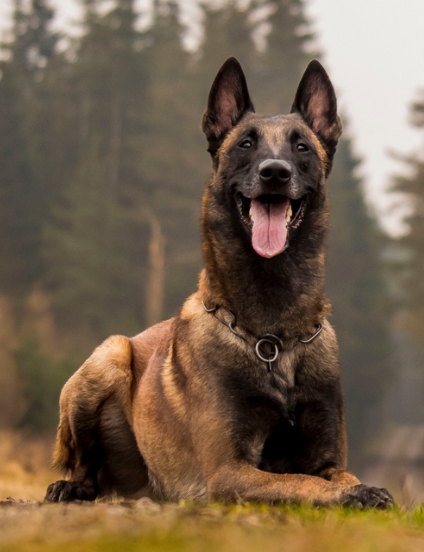
The Belgian Malinois is a well-proportioned, elegant, and athletic dog with a proud head and neck carriage. Strong, agile, and well-muscled, they project an alert and lively demeanor, reflecting their herding heritage. Their build is robust, suited to Belgium’s climate, and they stand squarely on all fours, conveying depth and solidity without bulkiness. Masculinity in males and femininity in females should be clearly apparent, with both sexes judged equally.
Size, Proportion, and Substance: Males measure 24-26 inches tall at the withers, and females 22-24 inches. Deviations outside these ranges are disqualifications. Length (from breastbone to rump) equals height, creating a square silhouette when viewed from the side. Bone structure is moderate, balanced with the dog’s height, avoiding both spindly/leggy and bulky appearances. The topline, front, and back legs should contribute to this square impression.
Head: The head is carried high, long (but not excessively so), rectilinear, and clean-cut. The eyes are medium-sized, almond-shaped, obliquely set, and brown (preferably dark brown) with black-rimmed eyelids, radiating attentiveness and readiness. Light eyes are a fault. The ears are rather small, triangular, high-set, stiff, and pointed, with a well-cupped outer ear. They are carried upright and vertically when alert. Hanging or semi-prick ears are disqualifications.
More Belgian Malinois Dog Breed Information…
Skull: The skull and muzzle are roughly equal in length, with a possible slight muzzle bias. The skull is of medium width, flat between the ears (not rounded), with a barely noticeable frontal groove. In profile, the head planes are parallel. The occipital crest, brow ridges, and zygomatic arches are not prominent. The stop is moderate. The nose is black. The muzzle is medium length, well-chiseled beneath the eyes, and tapers gradually to the nose like an elongated wedge. The mouth is well-split (corners of the lips pulled back when open), with thin, tight, black-pigmented lips.
Teeth: The Malinois has a full set of strong, white, evenly set teeth meeting in a scissors or level bite. Overshot and undershot bites are faults. An undershot bite with two or more upper incisors losing contact with two or more lower incisors is a disqualification. Complete dentition is preferred; missing teeth are faulted.
Neck, Topline, and Body: The neck is slightly elongated, muscular, and gradually widens towards the shoulders. It is slightly arched, allowing for the characteristically proud head carriage, and free of dewlap. The withers are well-defined, and the back is firm. The loin is strong, short, and well-muscled. The croup slopes very slightly. The underline curves gently upward towards the abdomen, which is neither overly tucked nor pendulous. The chest is moderately proportioned (neither broad nor narrow) and deep, reaching to the elbows. The body conveys an impression of power without being bulky, maintaining balance with the dog’s overall proportions. The tail is strong at the base, extends to the hock, and hangs naturally at rest. It curves upward when the dog is in motion but should not exceed horizontal or form a hook or deviation. Cropped or docked tails are disqualifications.
Forequarters: The forequarters are muscular but not overly bulky. The shoulder blades are long and sloping, lying close to the body, and angled appropriately with the upper arm for efficient movement. The legs are straight, strong, and parallel, with solid (but not heavy) bone that is more oval than round. Musculature is lean and powerful. The pasterns are short, strong, and slightly sloped. Dewclaws may be removed. The feet are cat-like, with well-cushioned pads and close-knit, arched toes. Nails are strong and black, though white tips are acceptable on white toes.
“Belgian Malinois are extraordinary working dogs, Driven, loyal, and intelligent. At Petworks, we recognize that this breed thrives with purpose and consistent engagement, making them ideal partners for experienced dog parents who value dedication and high performance in a canine companion.” – Kevin Kinyon, Co-Founder, Petworks.
More About The Belgian Malinois Dog Breed
Hindquarters: The hindquarters are powerful without heaviness, angulated in balance with the forequarters. The upper and lower thigh bones roughly parallel the shoulder blade and upper arm, respectively. The legs are parallel. Thighs are well-muscled. Hocks are short, strong, parallel, and moderately angulated. Metatarsi are strong and short. Dewclaws, if present, may be removed. The hind feet are slightly oval, with arched, compact toes and thick, well-padded pads. Nails are dark and strong, with white tips acceptable on white toes.
Coat: The coat is relatively short, straight, and harsh enough to be weather-resistant, with a dense undercoat. It is very short on the head, ears, and lower legs, becoming slightly longer around the neck (forming a collarette), tail, and backs of the thighs. The coat should lie close to the body, not standing out or hanging down. Insufficient undercoat is a fault. Hair that is too long, silky, or wiry is also a fault. The Belgian Malinois is a natural breed and requires minimal grooming.
Color: The ideal color ranges from rich fawn to mahogany, with black-tipped hairs creating an overlay effect. The blackening should not appear patched or brindled. The underparts, tail, and breeches are a lighter fawn. A washed-out fawn body color is a fault. The mask is pronounced, ideally encompassing the upper and lower lips, corners of the lips, and eyelids in a single black zone. The mask and ears appear black. White toe tips are permissible, as is a small white spot on the breastbone (not extending to the neck). Other white markings are faulted. Any color or color combination not described in the standard is a disqualification.
Gait: Movement is smooth, free, easy, and seemingly tireless, emphasizing efficiency rather than a driving action. At faster gaits, the Belgian Malinois single tracks, with both front and rear legs converging toward the center line of gravity. The topline remains firm, level, and parallel to the line of motion, with no crabbing. The breed has a tendency to move in a circle rather than a straight line.
Belgian Malinois Temperament
Temperament: A proper temperament is crucial to the Belgian Malinois’s working ability. They are alert, intelligent, inquisitive, and confident, displaying neither fear nor aggression. Energetic and ready for action, they are also highly responsive to their owner’s commands. Their lively nature is evident in their proud bearing and bright, attentive eyes. The Belgian Malinois excels as a watchdog, vigilant yet responsive, balancing the qualities needed in a herding dog, protector, and reliable working companion. They are deeply loyal to their family but can be reserved with strangers.
Why Belgian Malinois Make Great Family Pets
While the Belgian Malinois is best suited for active and experienced dog owners, they can be fantastic family pets in the right environment. Their loyal and protective nature makes them excellent guardians, and their intelligence allows them to integrate well into a structured household. Active families who stay committed to consistent training and engagement can meet a Belgian Malinois’ needs by providing ample exercise, mental stimulation, and socialization to prevent destructive behaviors.
About Petworks
 In 2021, Dr. Marty Goldstein DVM joined the pet care platform Petworks as an advisor in its Animal Nutrition care division. Dr Marty Nature’s Blend is on a mission to help your pets live their healthiest lives possible. Dr. Marty’s pet nutrition expertise and guidance has helped Petworks evolve and become the preeminent animal and pet nutrition consultation service for pet parents in North America.
 In 2022, Blue Buffalo Founder Bill Bishop Jr. joined Petworks as Senior Advisor in our Animal Nutrition Care Division. Bill brings his extensive expertise in pet food innovation and business leadership. His guidance helps Petworks enhance our pet nutrition service offerings, helping to ensure that pet parents throughout the world receive trusted, science-backed nutritional support for their dogs, cats, and animals.
About The Author
 Petworks Co-Founder Kevin Kinyon is a life-long animal lover who works tirelessly to improve the lives of pets and their parents. Human and animal qualities he values most are integrity, humor, and empathy.

 petworks tm