A puppy who won’t stop scratching, has recurring ear infections, or keeps having loose stools isn’t always dealing with a stomach bug or a bad flea season. Sometimes the culprit is sitting right in the food bowl. Food allergies in puppies are more common than most new pet parents expect, and catching the pattern early can spare a puppy months of discomfort.
Quick Answer: Puppy food allergies most often show up as chronic itching, ear infections, paw licking, or digestive upset, typically triggered by common proteins like chicken, beef, dairy, or eggs. The only reliable way to confirm a food allergy is a veterinary-supervised elimination diet trial lasting 8 to 12 weeks. Diet changes and continued scratching without improvement are signs it’s time to loop in a vet or veterinary dermatologist.
PetWorks is a nationwide pet care services marketplace connecting pet parents with certified puppy nutritionists who can help build and manage an elimination diet plan from home.
Food Allergy vs. Food Intolerance: What’s the Difference
These two get mixed up constantly, but they’re not the same thing.
A food allergy is an immune system response. The body treats a specific protein as a threat and reacts, usually through the skin.
A food intolerance is a digestive issue, not an immune one. It’s more like sensitivity to an ingredient that causes gas, loose stool, or vomiting without the itching and skin flare-ups.
Both can look similar day to day, but true allergies tend to show up as skin and ear symptoms first, while intolerances tend to stay mostly digestive.
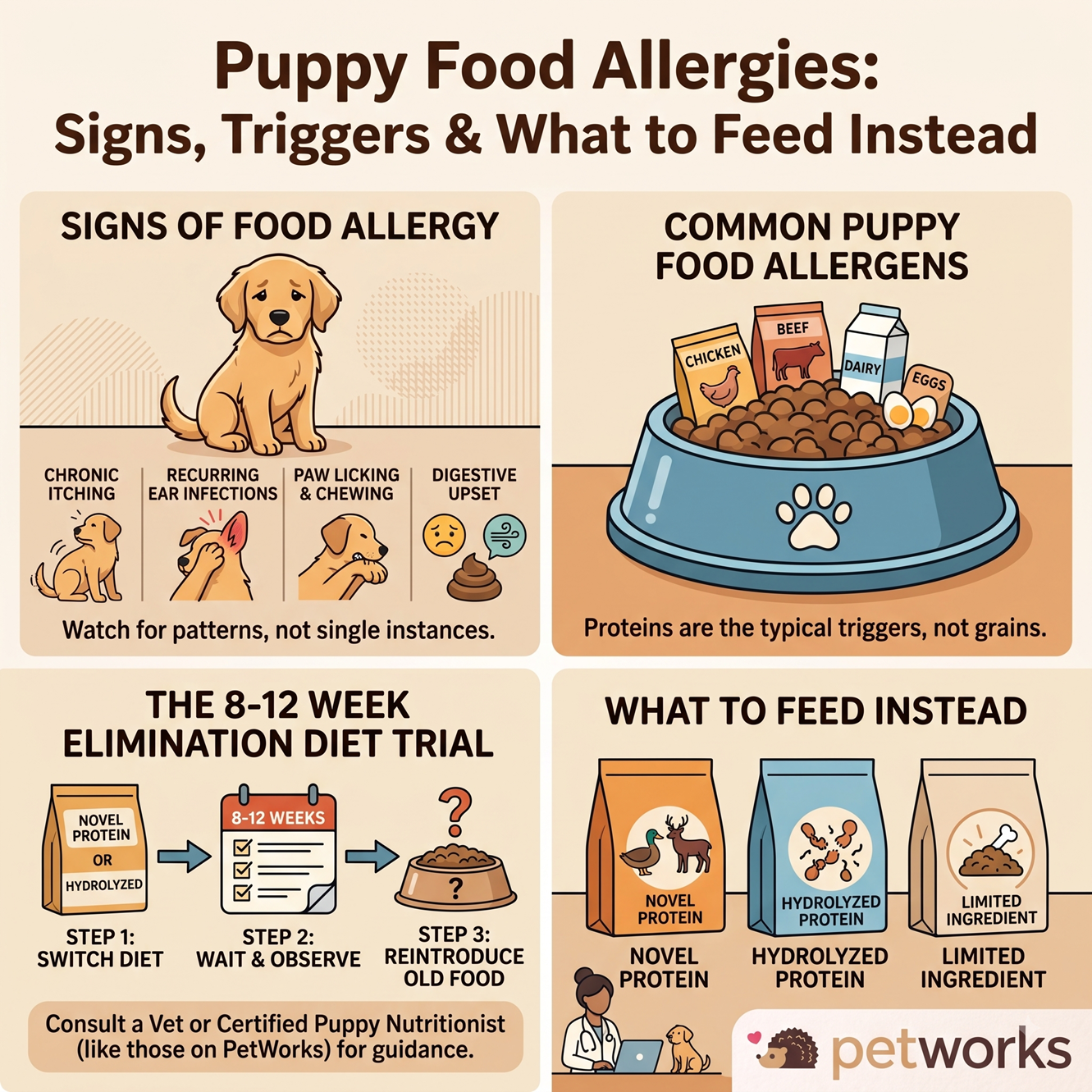
Signs a Puppy May Have a Food Allergy
Watch for a pattern of these showing up together, not just once:
- Persistent itching, especially around the ears, paws, and belly
- Recurring ear infections
- Chronic paw licking or chewing
- Hair loss or hot spots
- Chronic loose stool or vomiting unrelated to diet changes
- Skin infections that keep coming back even after treatment
A single itchy day doesn’t mean much. A puppy who is chronically uncomfortable in the same spots, week after week, is the pattern worth paying attention to.
“Food allergies are one of the most overlooked reasons a puppy just doesn’t feel right. Pet parents chase every other explanation first: fleas, stress, a bug. But the gut and the skin are deeply connected, and what goes into the bowl often shows up on the coat. An elimination diet isn’t a quick fix, but it’s the most honest way to actually find the answer instead of guessing.” – Dr. Marty Goldstein, DVM
The Most Common Puppy Food Allergens
Puppies aren’t usually allergic to grain or “fillers,” despite what pet food marketing often implies. The most common triggers are actually protein sources:
- Chicken
- Beef
- Dairy
- Eggs
- Wheat
- Soy
A puppy can be allergic to more than one of these at once, which is part of why identifying the exact trigger takes a structured process rather than guesswork.
Food Allergy vs. Environmental Allergy: Quick Reference
| Signal | Food Allergy | Environmental Allergy |
|---|---|---|
| Seasonality | Occurs year-round | Often seasonal (pollen, grass) |
| Onset | Can appear at any age, even on food eaten for months | Often develops later, 1+ years old |
| Common signs | Ears, paws, belly, digestive upset | Ears, paws, face, sneezing |
| Response to diet change | Improves with elimination diet | No change with diet alone |
| Diagnosis method | Elimination diet trial | Skin or blood testing, vet exam |
If symptoms persist regardless of the season, food is more likely to be involved.
How Vets Diagnose a True Food Allergy
There’s no reliable blood or skin test for food allergies in dogs. According to the MSD Veterinary Manual, a dietary elimination trial followed by a controlled food challenge is the only reliable way to confirm a food allergy. The accepted method typically works like this:
- Switch to a novel protein or hydrolyzed protein diet. This means a protein the puppy has never eaten before, or one broken down so small the immune system doesn’t recognize it as a threat.
- Feed only that diet for 8 to 12 weeks. No treats, no table scraps, no flavored medications during the trial. Even small amounts of the old food can throw off the results.
- Track symptoms closely. Digestive symptoms often improve within 1 to 3 weeks. Skin and ear symptoms can take up to 12 weeks to fully resolve.
- Reintroduce the original food. If symptoms flare back up, that confirms a food allergy and helps identify the trigger.
This process takes patience, and it works best with a vet or a certified puppy nutritionist guiding it, since accidental exposure to the wrong ingredient can reset the whole trial.
What to Feed a Puppy With a Suspected Food Allergy
Once a trigger is identified, or while running an elimination trial, most vets recommend one of the following approaches:
Novel protein diets use a protein source the puppy hasn’t eaten before, like duck, venison, or rabbit, since a new protein is far less likely to trigger a reaction.
Hydrolyzed protein diets break proteins down into pieces too small for the immune system to recognize, which is often the gold standard for elimination trials in more sensitive puppies.
Limited ingredient diets reduce the number of possible allergens in the bowl, making it easier to isolate which ingredient is actually causing the reaction.
Home-cooked diets are sometimes used for particularly sensitive puppies, but they should always be formulated with a certified nutritionist. An unbalanced homemade diet can create new health problems while solving the allergy issue.
When to See a Vet or Veterinary Dermatologist
A puppy showing repeated signs of food allergy shouldn’t be self-diagnosed and switched from food to food without guidance. Frequent food-hopping can actually make it harder to identify the real trigger later, since it muddies which ingredient caused which reaction. See a vet if a puppy has:
- Symptoms lasting more than two weeks
- Recurring skin or ear infections
- Blood in the stool or persistent vomiting
- Hair loss or open sores from scratching
A vet can rule out fleas, mites, and environmental allergies first, since those are far more common than true food allergies and can look identical from the outside.
The Bottom Line
Chronic itching, ear infections, or stomach upset in a puppy is worth investigating rather than waiting out. Food allergies are manageable once the trigger is identified, and a structured elimination diet under veterinary guidance remains the most reliable way to get there. PetWorks connects pet parents with certified canine nutritionists who can build a personalized elimination diet plan and support a puppy through the full trial process.
Frequently Asked Questions
Can puppies develop food allergies suddenly, even to food they’ve eaten for months? Yes. Food allergies typically develop after repeated exposure to a protein, so a puppy can react to a food they’ve eaten safely for weeks or months before symptoms appear.
Are grain-free diets better for puppies with allergies? Not necessarily. True grain allergies are uncommon in dogs. Most food allergies are triggered by protein sources like chicken or beef, not grains, so grain-free alone rarely solves the problem.
How long does an elimination diet trial take to work? Digestive symptoms often improve within 1 to 3 weeks. Skin and ear symptoms can take up to 12 weeks to fully clear, so the full trial typically runs 8 to 12 weeks.
Can I do an elimination diet trial without a vet? It’s possible, but it’s easy to accidentally introduce the wrong ingredient or misread the results without guidance. Working with a vet or certified nutritionist gives the trial a much better chance of actually identifying the trigger.
Is it normal for puppies to outgrow food allergies? Puppies don’t typically outgrow true food allergies, though some intolerances can improve as the digestive system matures. Confirmed allergies usually require an ongoing modified diet.
About PetWorks
 In 2021, Dr. Marty Goldstein DVM joined the pet care platform PetWorks as an advisor in its Animal Nutrition care division. Dr Marty Nature’s Blend is on a mission to help your pets live their healthiest lives possible. Dr. Marty’s expertise in pet nutrition has helped PetWorks grow. His guidance has helped us become North America’s leading animal and pet nutrition consultation service for pet parents.
 In 2022, Blue Buffalo Founder Bill Bishop Jr. joined PetWorks as Senior Advisor in our Animal Nutrition Care Division. Bill brings his extensive expertise in pet food innovation and business leadership. His guidance helps PetWorks enhance our pet nutrition services. It also helps ensure that pet parents around the world receive trusted, science-backed nutritional support for their dogs, cats, and other animals.
About The Author
 PetWorks Co-Founder Kevin Kinyon is a life-long animal lover who works tirelessly to improve the lives of pets and their parents. Human and animal qualities he values most are integrity, humor, and empathy.

 petworks tm