
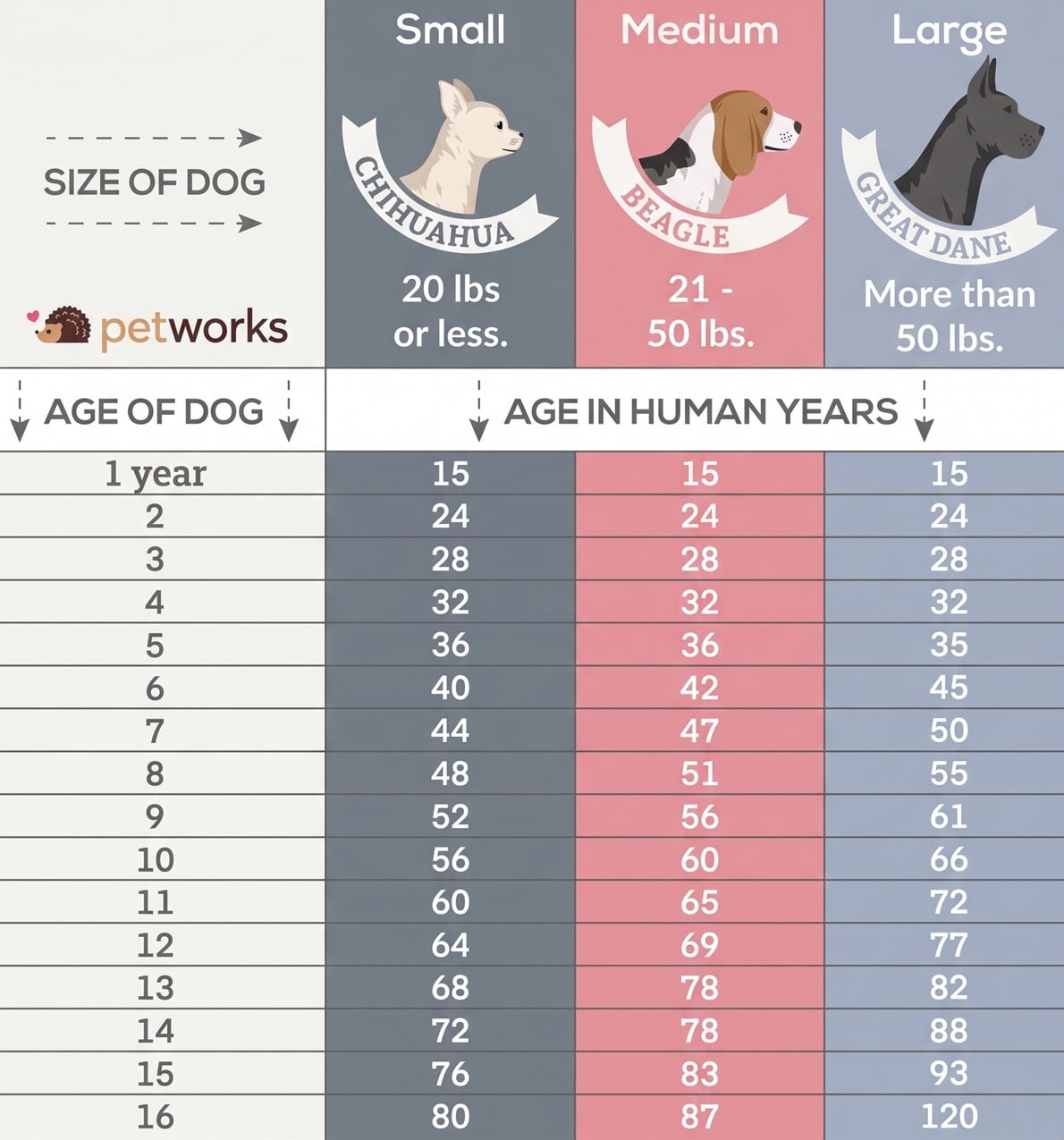
How to Compare Dog Years to Human Years: A Guide for Dog Owners. For generations, dog owners have been told that one dog year equals seven human years, but this simplified formula doesn’t accurately reflect a dog’s aging process. Dogs age at different rates depending on their breed, size, and genetics. Understanding how dog years compare to people years can help pet parents provide the best care for their furry companions at every life stage.
The Myth of the 7-to-1 Ratio
The traditional belief that one dog year equals seven human years is based on rough estimates, not scientific research. The misconception likely originated from the average human lifespan of around 70 years compared to a dog’s average lifespan of 10 years. However, this formula fails to account for the varying growth rates of different dog breeds and sizes.
How Dogs Age
Dogs mature much faster in their early years compared to humans. For example, a one-year-old dog is similar in development to a human teenager rather than a seven-year-old child. The rate of aging slows down as dogs grow older, but their aging trajectory varies based on size and breed. Small breeds generally live longer and age more gradually, while large breeds have shorter lifespans and age more rapidly.
A More Accurate Dog-to-Human Age Comparison
Veterinarians and researchers have developed more precise methods to compare dog years to human years. One commonly used approach is as follows:
- First Year: A dog’s first year of life equates to approximately 15 human years.
- Second Year: By the end of a dog’s second year, they are roughly equivalent to a 24-year-old human.
- Each Additional Year: After the second year, aging depends on the dog’s size:
- Small dogs (under 20 lbs): 4 human years per dog year.
- Medium dogs (21-50 lbs): 5 human years per dog year.
- Large dogs (51-90 lbs): 6 human years per dog year.
- Giant dogs (over 90 lbs): 7-9 human years per dog year.
Breed and Lifespan Considerations
Different breeds have distinct lifespans and aging rates. Toy breeds such as Chihuahuas and Dachshunds often live 15-20 years, whereas larger breeds like Great Danes and Saint Bernard’s may only live 7-10 years. Mixed-breed dogs often enjoy longer lifespans due to genetic diversity. Knowing your dog’s breed can help estimate its expected lifespan and aging process.
 How Aging Affects Dog Health
As dogs age, they experience changes similar to humans. Understanding your dog’s age in human years can help identify age-related health concerns and adjust their care accordingly.
- Young Dogs (0-2 Human Years): These years correspond to rapid growth, teething, and learning. Proper nutrition and training are essential.
- Adult Dogs (25-50 Human Years): Dogs in this range need regular exercise, balanced nutrition, and routine vet checkups to maintain health.
- Senior Dogs (50+ Human Years): Older dogs require more frequent veterinary visits, joint care, and dietary adjustments to manage aging-related issues such as arthritis and cognitive decline.
 “Part of the reason [the ‘1 dog year = 7 human years’ rule] is flawed is that a fixed ratio doesn’t account for the size differences among dogs; typically, smaller breed dogs live longer than larger breed dogs.” – Dr. Wendy Hauser, D.V.M., founder of Peak Veterinary Consulting and ASPCA Pet Health Insurance advisor.
Tips for Supporting Your Dog at Every Life Stage
- Puppyhood (0-2 Human Years)
- Provide a well-balanced diet for growth and development.
- Begin socialization and training early.
- Schedule vaccinations and preventive care with a vet.
- Adulthood (25-50 Human Years)
- Maintain an active lifestyle with regular walks and playtime.
- Feed a diet appropriate for your dog’s breed and size.
- Keep up with annual vet visits to monitor overall health.
- Senior Years (50+ Human Years)
- Watch for signs of joint pain, vision loss, or cognitive decline.
- Adjust diet to lower calorie intake and include joint supplements if needed.
- Provide a comfortable resting area to support aging joints.
- Schedule bi-annual vet visits and canine behaviorists for early detection of health problems.

Are you finding this article useful? Would you like 100% free access to more articles like these, and free access to over 5,000 vetted pet care service professionals throughout the United States? Sign up here for a free Petworks account, and we’ll email you a 10% discount code, good towards your first pet care services booking on PetWorks!
🐶 FAQs
Is 1 dog year really equal to 7 human years?
No. The “7-year rule” is outdated and inaccurate. Modern research shows dogs age rapidly early in life and differently based on size and breed.
How old is a 1-year-old dog in human years?
A 1-year-old dog is roughly equivalent to a 15-year-old human.
How old is a 2-year-old dog in human years?
A 2-year-old dog is about 24 human years.
Do small dogs age differently than large dogs?
Yes. Small dogs generally live longer and age more slowly than large or giant breeds.
Why do dogs age so fast in the first two years?
Dogs reach physical and sexual maturity much faster than humans, which is why their early aging is accelerated.
How can I calculate my dog’s age more accurately?
After age two, many vets estimate aging by adding:
-
4–5 human years per dog year for small dogs
-
6–7 human years per dog year for large dogs
Are dog age calculators accurate?
They provide estimates, not exact ages. The most accurate assessments consider breed, size, and overall health.
Does breed affect how dogs age?
Yes. Larger breeds typically age faster and have shorter lifespans than smaller breeds.
Why does knowing my dog’s human age matter?
Understanding your dog’s life stage helps with nutrition, exercise, training, and preventative veterinary care.
Dog Age Calculator
Comparing dog years to human years is more complex than the traditional 7-to-1 ratio suggests. A dog’s size, breed, and genetics all influence their aging process. Understanding this can help pet parents provide age-appropriate care, ensuring their furry friends live long, healthy, and happy lives. By recognizing the true aging process, you can better support your dog’s needs at every life stage.
About PetWorks
 Marty Goldstein DVM joined the pet care platform PetWorks as an advisor in its Animal Nutrition care division. Dr Marty Nature’s Blend is on a mission to help your pets live their healthiest lives possible. Dr. Marty’s pet nutrition expertise and guidance has helped PetWorks evolve and become the preeminent animal and pet nutrition consultation service for pet parents in North America.
 In 2022, Blue Buffalo Founder Bill Bishop Jr. joined PetWorks as Senior Advisor in our Animal Nutrition Care Division. Bill brings his extensive expertise in pet food innovation and business leadership. His guidance helps PetWorks enhance our pet nutrition service offerings, helping to ensure that pet parents throughout the world receive trusted, science-backed nutritional support for their dogs, cats, and animals.
About The Author
 PetWorks Co-Founder Kevin Kinyon is a life-long animal lover who works tirelessly to improve the lives of pets and their parents. Human and animal qualities he values most are integrity, humor, and empathy.

 petworks tm









Thank you for your articles. I find them very helpful.
Useful article. Thank you PetWorks.