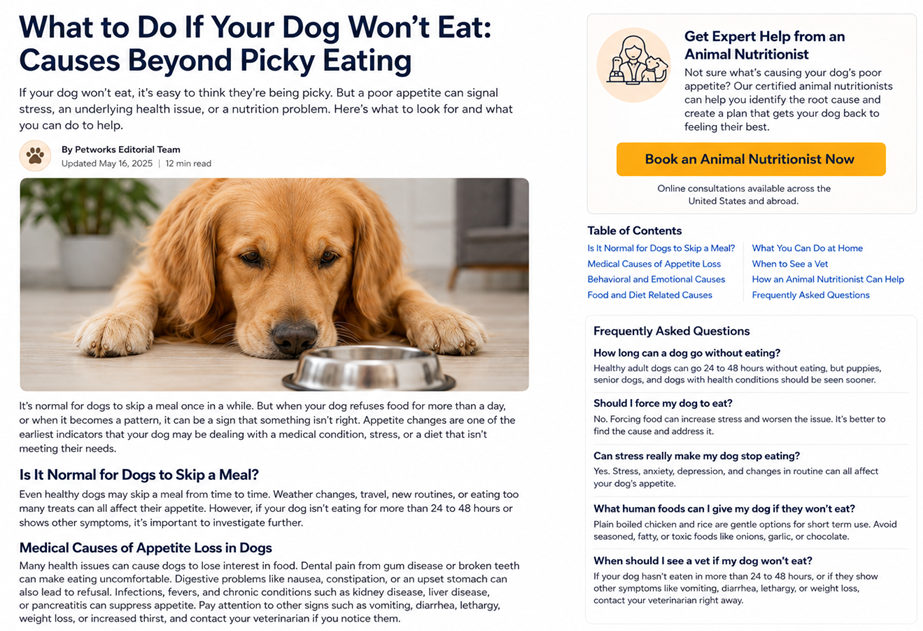
When a dog refuses food, many pet parents immediately assume it is behavioral pickiness. In reality, a loss of appetite is often a sign that something deeper is happening. It can be related to stress, environmental changes, feeding habits, or underlying medical conditions. Understanding the real cause behind a dog not eating is important because appetite is one of the earliest indicators of health changes. Acting early can help prevent more serious issues from developing.
When a Dog Skips Meals: Normal vs. Concerning Behavior
It is not unusual for dogs to occasionally skip a meal. A short pause in eating can happen for simple reasons such as a change in routine, warmer weather, or recent treat intake that reduces hunger at mealtime.
If your dog is still active, drinking water normally, and behaving like their usual self, a single missed meal is usually not alarming. However, when refusal to eat continues beyond 24 to 48 hours, it becomes important to look deeper into possible causes. Trusted veterinary resources such as the Cornell Veterinary Nutrition Service provide further guidance on diet-related health concerns and appetite changes.
Medical Causes of Appetite Loss in Dogs
One of the most important things to rule out when a dog stops eating is an underlying medical issue. Dental disease is a common but often overlooked cause. Pain from inflamed gums, infections, or broken teeth can make chewing uncomfortable, even if the dog still approaches food.
Digestive problems can also quickly affect appetite. Nausea, constipation, or gastrointestinal inflammation may cause a dog to avoid food entirely or show subtle signs like lip licking or grass eating. In more serious cases, infections or fever can suppress appetite as the body focuses on recovery.
Chronic health conditions such as kidney disease, liver disease, or pancreatitis may also lead to gradual or sudden changes in eating behavior. These conditions often appear alongside other symptoms such as weight loss, increased thirst, or low energy.
Emotional and Behavioral Reasons Dogs Stop Eating
Dogs are highly sensitive to their environment and emotional state. Stress is one of the most common non-medical reasons for appetite changes. Changes such as moving homes, new pets, separation anxiety, or loud household disruptions can all reduce a dog’s interest in food.
Some dogs also experience temporary appetite loss due to boredom or lack of stimulation. In these cases, eating may not feel rewarding enough compared to other environmental distractions.
There is also a behavioral component in some cases. Dogs that are frequently offered alternative foods or treats after refusing meals may learn to wait for something better. Over time, this can create a pattern that looks like picky eating but is actually learned behavior.
Food-Related Reasons a Dog May Refuse to Eat
Sometimes the issue is not medical or behavioral but directly related to the food itself. Dogs may refuse food that has become stale, spoiled, or improperly stored. Even small changes in texture, temperature, or brand formulation can cause hesitation, especially in sensitive eaters.
Dogs also have strong scent memory. If they previously felt sick after eating a certain food, they may develop an aversion to it. In addition, excessive treat intake between meals can reduce normal hunger and disrupt regular eating patterns.

Are you finding this article useful? Would you like 100% free access to more articles like these, and free access to over 5,000 vetted pet care service professionals throughout the United States? Sign up here for a free PetWorks account, and we’ll email you a 10% discount code, good towards your first pet care services booking on PetWorks!
When You Should Contact a Veterinarian
A veterinarian should be consulted if your dog refuses food for more than 24 to 48 hours, or if appetite loss is paired with symptoms such as vomiting, diarrhea, weakness, or noticeable changes in drinking habits. Weight loss or refusal to eat both meals and treats is also a clear warning sign.
Puppies, senior dogs, and dogs with existing health conditions should always be evaluated sooner rather than later, even if symptoms seem mild.
For cases where appetite issues are ongoing or unclear, pet parents can also consult an animal nutrition specialist through services like PetWorks Dog Nutritionist Consultations. These professionals can help evaluate diet composition, feeding behavior, and nutritional imbalances that may contribute to eating problems.
Safe Things You Can Try at Home
If your dog is otherwise acting normal, there are a few safe steps you can take to encourage eating. Warming food slightly can increase aroma and make it more appealing. Offering a simple bland diet such as boiled chicken and rice for a short period may also help reset appetite.
It is also important to reduce unnecessary treats between meals and maintain a consistent feeding schedule. Creating a calm feeding environment without pressure or distractions can make a meaningful difference. In some cases, hand feeding temporarily may help if anxiety or stress is involved.
Avoid frequently switching foods, as this can worsen digestive sensitivity and reinforce picky eating patterns.
The Bigger Picture: Appetite as a Health Indicator
A dog’s appetite is one of the most sensitive indicators of overall health and well-being. While occasional skipped meals are not unusual, persistent refusal to eat should always be taken seriously. The cause may be physical, emotional, or dietary, but in all cases, early attention leads to better outcomes.
FAQ: Dog Won’t Eat Causes
Why is my dog not eating but acting normal?
This often happens due to mild stress, recent treat intake, heat, or a temporary change in routine. If it continues beyond a couple of days, it should be evaluated.
How long can a dog go without eating?
Most healthy adult dogs can go about 24 to 48 hours without food, but longer than this increases the risk of dehydration, nutrient imbalance, or underlying illness going unnoticed.
What are the most common reasons a dog stops eating?
The most common causes include dental pain, digestive upset, stress or anxiety, recent diet changes, and learned food refusal behaviors.
Should I be worried if my dog refuses food but drinks water?
Drinking water is a good sign, but continued refusal of food still warrants monitoring. If it lasts more than 48 hours or is paired with other symptoms, a vet visit is recommended.
Can stress really stop a dog from eating?
Yes, emotional stress is a major factor in appetite loss. Changes in environment, routine, or household dynamics can significantly impact eating behavior.
About PetWorks
 In 2021, Dr. Marty Goldstein DVM joined the pet care platform PetWorks as an advisor in its Animal Nutrition care division. Dr Marty Nature’s Blend is on a mission to help your pets live their healthiest lives possible. Dr. Marty’s pet nutrition expertise and guidance has helped PetWorks evolve and become the preeminent animal and pet nutrition consultation service for pet parents in North America.
 In 2022, Blue Buffalo Founder Bill Bishop Jr. joined PetWorks as Senior Advisor in our Animal Nutrition Care Division. Bill brings his extensive expertise in pet food innovation and business leadership. His guidance helps PetWorks enhance our pet nutrition service offerings, helping to ensure that pet parents throughout the world receive trusted, science-backed nutritional support for their dogs, cats, and animals.
About The Author
 PetWorks Co-Founder Kevin Kinyon is a life-long animal lover who works tirelessly to improve the lives of pets and their parents. Human and animal qualities he values most are integrity, humor, and empathy.

 petworks tm