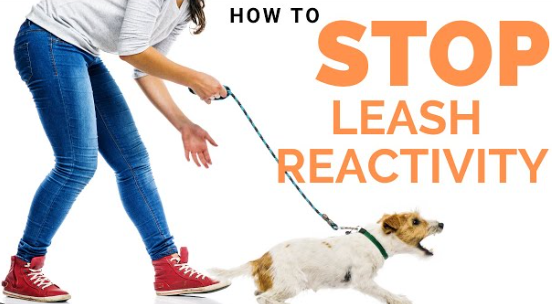
You’re on a peaceful morning walk when another dog rounds the corner — and your normally sweet pup erupts into a frenzy of barking, lunging, and pulling. It’s embarrassing, stressful, and confusing. If this sounds familiar, your dog may be dealing with leash reactivity. Leash reactivity is one of the most common behavior challenges dog owners face, yet it’s widely misunderstood. Many people mistake it for aggression, dominance, or poor breeding — but in most cases, it’s none of those things. The good news is that with the right understanding and consistent training, leash reactivity can be significantly improved, and often resolved entirely.
What Is Leash Reactivity?
Leash reactivity refers to an over-the-top response to a trigger — usually another dog, a person, a cyclist, or a car — that only happens when a dog is on leash. The reaction typically looks like barking, growling, lunging, snapping, or spinning. Off-leash, the same dog might be perfectly friendly and relaxed around the very same triggers.
That distinction is key to understanding what’s really happening. When a dog is tethered and cannot flee, escape, or make a choice about how to respond to something that feels threatening or overwhelming, they often escalate their behavior in an attempt to make the scary or exciting thing go away. It’s not about bad manners — it’s about frustration, fear, or both.
What Causes Leash Reactivity?
There’s rarely one single cause. Most leash-reactive dogs fall into one of a few categories:
- Fear-based reactivity: The dog is frightened by the trigger and reacts to create distance. This is the most common type.
- Frustration-based reactivity: The dog is overly excited and desperate to greet but can’t reach the trigger. The frustration boils over into frantic behavior.
- Redirected arousal: The dog is highly stimulated and, unable to direct that energy at the trigger, redirects it toward the leash, handler, or environment.
- Barrier frustration: Similar to fence reactivity, the leash acts as a barrier the dog resents. Some dogs that are perfectly calm off-leash become highly reactive simply because they’re attached to something.
Contributing factors can include limited socialization as a puppy, a past negative experience with another dog or person, genetics, or a history of being inadvertently rewarded for the behavior — for example, the reactive outburst “worked” because the trigger went away.
Common Misconceptions
Perhaps the biggest myth is that leash-reactive dogs are aggressive or dangerous. While some reactive dogs may have underlying aggression, the vast majority are simply overwhelmed. Treating a fearful or frustrated dog as though they’re dangerous can actually make things worse by increasing stress and eroding trust.
Another common mistake is assuming the dog is “dominant” or “trying to be the boss.” Modern animal behavior science has largely moved away from dominance-based explanations for reactive behavior. Punishing a dog for reacting — with leash corrections, prong collars, or shouting — may suppress the visible behavior in the short term, but it often intensifies the underlying anxiety and can create a dog who bites without warning because their warning signals have been suppressed.
How to Help a Leash-Reactive Dog
1. Identify Your Dog’s Threshold
The threshold is the distance at which your dog can notice a trigger without reacting. Below the threshold, your dog is calm enough to think and learn. Above it, they’re in full reactive mode and no real learning can happen. Your first job is to figure out where that line is — and stay on the right side of it during training sessions.
For some dogs, that might mean 50 feet from another dog. For others, it might be 10 feet or less. There’s no shame in starting far away. Progress happens gradually.

Are you finding this article useful? Would you like 100% free access to more articles like these, and free access to over 5,000 vetted pet care service professionals throughout the United States? Sign up here for a free PetWorks account, and we’ll email you a 10% discount code, good towards your first pet care services booking on PetWorks!
2. Use Counter-Conditioning and Desensitization (CC&D)
Counter-conditioning means changing your dog’s emotional response to a trigger. The goal is to teach your dog that the thing they currently find scary or frustrating actually predicts something wonderful — usually a very high-value treat.
Here’s how it works in practice: find a spot where your dog can see the trigger at a safe distance. The moment your dog notices the trigger — but before they react — start feeding high-value treats rapidly. When the trigger disappears from view, the treats stop. Repeat. Over time, your dog begins to associate the appearance of the trigger with good things, and their emotional response shifts from alarm to anticipation.
Desensitization means gradually decreasing the distance to the trigger as your dog becomes more comfortable. The two techniques work hand-in-hand.
3. Teach an Incompatible Behavior
While CC&D works on your dog’s emotions, it also helps to give them something specific to do when they spot a trigger. A “look at me” cue — where the dog makes eye contact with you instead of fixating on the trigger — is a popular choice. A hand touch, a sit, or simply turning and walking in the opposite direction all work well too.
The key is to teach these behaviors thoroughly in calm, neutral situations before ever expecting them under pressure.
4. Manage the Environment
Management isn’t training, but it’s essential. Every time your dog has a full reactive episode, it reinforces the behavior and makes change harder. Do what you can to prevent it: walk at quieter times of day, cross the street when you see a trigger approaching, use a front-clip harness for better control, or change your route to avoid known hotspots.
Think of management as protecting the training investment you’re making.
5. Work With a Professional Trainer
Leash reactivity can absolutely be improved through consistent owner-led training, but working with a certified professional dog trainer or veterinary behaviorist can dramatically accelerate progress — especially if your dog’s reactivity is severe or has been going on for a long time. A skilled trainer will assess your specific dog, identify the root cause of the reactivity, and build a tailored behavior modification plan.
Look for trainers who use force-free or positive reinforcement-based methods and have experience with reactive dogs specifically. Certifications from organizations like the CCPDT (Certified Council for Professional Dog Trainers) or IAABC (International Association of Animal Behavior Consultants) are a good indicator of quality.
 “Reactive dogs are not necessarily aggressive dogs, but reactivity can turn into aggression, so your attention to training becomes extremely important.” – Cornell University College of Veterinary Medicine
What to Expect: Progress Takes Time
One of the hardest things for owners of reactive dogs to accept is that improvement is rarely linear. Some days will feel like giant leaps forward. Others will feel like you’re back at square one. That’s normal.
Most dogs with mild to moderate leash reactivity show meaningful improvement within a few months of consistent, positive training. More severe cases can take six months to a year or longer. The goal isn’t necessarily perfection — it’s a dog who can move through the world without being overwhelmed, and a walk that’s enjoyable for both of you.
Frequently Asked Questions
Can leash reactivity be cured? In many cases, yes — or at least reduced to the point where it no longer disrupts daily life. Mild to moderate reactivity often improves significantly with consistent counter-conditioning and desensitization. Severe cases may always require some management, but even those dogs can make dramatic progress with the right training approach.
Is my leash-reactive dog dangerous? Not necessarily. Most leash-reactive dogs are reacting out of fear or frustration, not true aggression. That said, reactivity should always be taken seriously and addressed with proper training. If your dog has made contact or bitten, consult a veterinary behaviorist rather than a general trainer.
What’s the best equipment for a leash-reactive dog? A front-clip harness (such as the Freedom Harness or Easy Walk) is widely recommended as it reduces pulling and gives you better directional control without causing pain or discomfort. Avoid retractable leashes, which give unpredictable amounts of slack and can trigger reactive episodes. Some dogs also do well with a head halter, though these require a proper introduction period.
More FAQs...
My dog is fine off-leash. Why is he reactive on leash? This is extremely common and actually a good sign — it usually means the reactivity is driven by frustration or the feeling of being trapped rather than genuine aggression toward other dogs. Dogs who are social and relaxed off-leash often respond very well to training because the underlying relationship with other dogs is positive.
How long does it take to train a reactive dog? It varies widely depending on the severity of the reactivity, the dog’s history, consistency of training, and the individual dog. Many owners see noticeable improvement within 6–12 weeks of regular, structured training sessions. More entrenched cases can take six months to a year. Patience and consistency matter far more than speed.
Should I let my reactive dog meet other dogs on leash? Generally, no — at least not during the training process. On-leash greetings are awkward and stressful for most dogs due to the tension of the leash and the inability to move naturally. They can actually worsen reactivity. If socialization is a goal, controlled off-leash introductions in a safe, neutral space are a much better option.
You’re Not Alone
Leash reactivity can feel isolating. It can make walks dreadful, social outings stressful, and leave you wondering if something is deeply wrong with your dog. But reactive dogs are not broken dogs. They’re dogs who need a little extra support to feel safe and confident in the world.
With patience, consistency, and the right guidance, most leash-reactive dogs make remarkable progress. And that morning walk you’ve been dreading? It can become something you both look forward to.
About PetWorks
 In 2021, Dr. Marty Goldstein DVM joined the pet care platform PetWorks as an advisor in its Animal Nutrition care division. Dr Marty Nature’s Blend is on a mission to help your pets live their healthiest lives possible. Dr. Marty’s pet nutrition expertise and guidance has helped PetWorks evolve and become the preeminent animal and pet nutrition consultation service for pet parents in North America.
 In 2022, Blue Buffalo Founder Bill Bishop Jr. joined PetWorks as Senior Advisor in our Animal Nutrition Care Division. Bill brings his extensive expertise in pet food innovation and business leadership. His guidance helps PetWorks enhance our pet nutrition service offerings, helping to ensure that pet parents throughout the world receive trusted, science-backed nutritional support for their dogs, cats, and animals.
About The Author
 PetWorks Co-Founder Kevin Kinyon is a life-long animal lover who works tirelessly to improve the lives of pets and their parents. Human and animal qualities he values most are integrity, humor, and empathy.

 petworks tm