
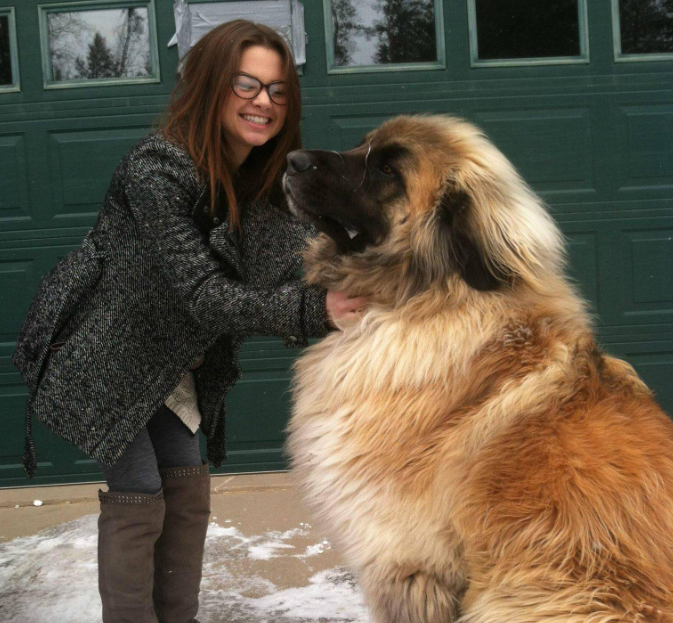
Leonberger temperament and the best health and wellness care for the Leonberger Dog Breed. The Leonberger is a majestic, gentle giant known for its striking appearance, affectionate nature, and versatility. As a large and powerful breed, Leonbergers require specialized care to ensure they remain healthy and happy throughout their lives. This article explores their history, nutrition, training, veterinary care, fun facts, and why they make exceptional family pets.
History of the Leonberger Breed
The Leonberger originated in Germany in the mid-19th century. Heinrich Essig, a dog breeder from the town of Leonberg, sought to create a breed that resembled a lion…the town’s emblem. By crossing Saint Bernards, Newfoundlands, and Pyrenean Mountain Dogs, he developed the Leonberger. Initially used as a working dog for farms, draft work, and water rescue, the breed gained popularity across Europe. Today, Leonbergers serve as therapy dogs, search-and-rescue animals, and beloved family companions.
 Nutrition for a Healthy Leonberger
Leonbergers require a balanced diet to maintain their muscular build and overall health. High-quality protein sources, such as chicken, beef, and fish, help support muscle maintenance, while healthy fats provide essential energy. Complex carbohydrates from vegetables and whole grains aid digestion and sustained energy levels.
Large-breed formulas that include glucosamine and chondroitin are beneficial for their joints, reducing the risk of hip and elbow dysplasia. Owners should feed them two to three smaller meals daily instead of one large meal to minimize the risk of bloat, a condition common in large breeds. Fresh water should always be available, and treats should be given in moderation to prevent obesity. Book a session with a dog nutritionist to get the optimum diet plan for your Leonberger.
Training and Socialization
Leonbergers are highly intelligent and eager to please, making them relatively easy to train. Early socialization and obedience training are essential to prevent undesirable behaviors. Positive reinforcement methods, such as praise and treats, work best with this sensitive breed.
Due to their size, leash training is crucial from a young age to prevent pulling. They respond well to consistency and patience, excelling in activities like agility, obedience trials, and water rescues. Exposing them to various environments, people, and other animals helps build confidence and good manners, ensuring they grow into well-adjusted adults.
 Essential Leonberger Veterinary Care
Regular veterinary check-ups are vital to a Leonberger’s well-being. Because they are prone to genetic conditions like hip and elbow dysplasia, heart disease, and progressive retinal atrophy, early screening and preventive care can help manage potential issues.
Owners should maintain a strict vaccination schedule to protect against common canine diseases. Routine parasite prevention, including flea, tick, and heartworm treatments, is necessary for optimal health. Since Leonbergers have dense coats, regular grooming helps prevent skin infections and mats, especially around their ears and neck.
Fun Facts About Leonbergers
Water Lovers: Leonbergers have webbed feet, making them excellent swimmers. They are often used in water rescue operations.
Therapy Dogs: Their gentle temperament and affectionate nature make them ideal therapy dogs in hospitals and nursing homes.
Loyal Protectors: Despite their friendly demeanor, Leonbergers are naturally protective and make excellent watchdogs.
Celebrity Fans: Famous owners of Leonbergers include King Edward VII of England and Napoleon III of France.
Thick Double Coat: Their luxurious coats require frequent brushing, but they are surprisingly low shedders compared to other long-haired breeds.
Why The Leonberger Breed Makes Great Family Pets
Leonbergers are affectionate, patient, and excellent with children, making them wonderful family companions. Their calm demeanor allows them to integrate well into households with other pets. Despite their large size, they are known for their gentle approach and strong bonds with their owners.
They thrive in active households where they receive plenty of exercise, mental stimulation, and companionship. Their natural intelligence, combined with their desire to please, makes them easy to train and adaptable to various lifestyles. With proper care, Leonbergers provide unwavering loyalty, love, and companionship for many years.
Leonberger Temperament
The Leonberger is known for its gentle, calm, and friendly temperament, making it an ideal companion for families and individuals alike. Despite their large size, Leonbergers are often described as “gentle giants” because of their patient and affectionate nature. They are loyal, devoted, and deeply attached to their families, often forming strong bonds with children and other pets. Their temperament is typically balanced, combining confidence with a calm demeanor, which allows them to handle new experiences and environments without excessive fear or aggression.
Socialization plays a crucial role in shaping a Leonberger’s behavior. Early exposure to different people, animals, and environments helps them develop the adaptability and sociability they are known for. These dogs are intelligent and eager to please, which makes training relatively straightforward when approached with positive reinforcement techniques. However, their size and strength mean that consistent guidance and gentle leadership are essential from an early age.
Leonberger Temperament Helps Them Love Home
Leonbergers thrive in homes where they receive attention, mental stimulation, and regular exercise. While they are calm indoors, they enjoy outdoor activities and swimming, which aligns with their natural instincts. Overall, the Leonberger temperament combines gentleness, loyalty, and intelligence, creating a loving, dependable, and protective companion for the right family.

Are you finding this article useful? Would you like 100% free access to more articles like these, and free access to over 5,000 vetted pet care service professionals throughout the United States? Sign up here for a free Petworks account, and we’ll email you a 10% discount code, good towards your first pet care services booking on Petworks!
Leonberger Breed Appearance Details
Size, Proportion, and Substance: Males stand 28 to 31½ inches (30 inches preferred) and females 25½ to 29½ inches (27½ inches preferred) at the withers. Weight is proportionate to size and structure. Slight deviations above the standard are acceptable if balance, proportion, and substance are present. The body’s length is slightly greater than its height (9:10 ratio). Chest depth is 50% of the height, with the brisket reaching the elbow. Balanced angulation in both front and rear quarters is crucial. Strong bone proportionate to body size and well-developed musculature are essential.
Head: The rectangular head is deeper than broad, with equal muzzle and backskull lengths and minimal cheek development. Males exhibit a strong, masculine head, while females display femininity. A full black mask extending over the eyes from the nose is ideal, though a lesser mask is acceptable. The dog displays a good-natured, soft, and intelligent expression. Owners prefer dark brown eyes; they measure medium, range from oval to almond-shaped, and sit neither deep-set nor protruding, with eyelids that fit closely. The dog carries its ears level with the top of the skull and slightly forward when alert. They are medium-sized, triangular, fleshy, and hang close to the head, with tips reaching the corners of the mouth. The backskull arches slightly, extends slightly longer than it is wide, and broadens only a little more at the back than at the eyes.
Stop, Muzzle, and Planes: The stop is clearly defined and moderate. The muzzle has a broad, even width (never pointed), a level or slightly arched (Roman) nasal bridge (never dipped), and a broad, strong jaw between the canines. The muzzle and backskull planes are parallel when viewed from the side.
And More…
Nose, Lips, and Teeth: The nose is large, always black, with well-defined nostrils. Lips are tight, with closed, dry corners and black outer edges (some depigmentation due to age is acceptable). A complete set of 42 teeth (20 upper, 22 lower) with a strong scissors bite (lower incisors touching the inside of the upper incisors) is required; a level bite is acceptable.
Serious Faults and Disqualifications: Drooling or a wet mouth is a serious fault. A complete lack of mask, or more than one missing tooth (excluding M3s), are disqualifications.
Neck, Topline, and Body: The muscular neck, free of dewlap, is well-set on the shoulders and blends smoothly into the withers, providing sufficient length for a proud head carriage. The topline features withers set above a firm, level back flowing into a gently sloping croup (rump not higher than the withers). The chest is broad, roomy, and deep, reaching at least to the elbows, with a pronounced prosternum. Ribs are well-sprung and oval. The underline has only a slight tuck-up. The loin is broad, compact, strong, and well-muscled. The croup is broad, relatively long, gently sloped, and flows smoothly into the tail’s root.
Tail: The tail hangs straight down in repose, with the last vertebra reaching to or below the hock. In motion, it’s carried no higher than the back level, with a slight upward curve at the end permitted. An exuberant tail carriage is acceptable.
Forequarters: The shoulders are well laid back and muscular, meeting the upper arm at a slightly greater than right angle, with both being approximately equal in length. Elbows are close to the body, neither turned in nor out. Forelegs possess substantial bone, are muscular, straight, and parallel. Pasterns are strong, firm, and straight when viewed from the front, slightly sloping from the side. Dewclaws are usually present. Feet point straight ahead (neither in nor out), are rounded and tight, with well-arched toes (cat feet).
And Lastly…
Hindquarters: The rear assembly is powerful, muscular, and possesses substantial bone, with angulation balanced with the forequarters. Viewed from behind, the legs are straight and parallel, with stifles and paws turned neither in nor out, and spaced wide enough to complement a well-proportioned body. The upper and lower thighs are of equal length, slanted, and strongly muscled. Stifles have a clearly defined angle. Hocks have substantial bone and a distinct angle between the lower thigh and rear pastern, and are well let down. Rear dewclaws may be present. Feet point straight ahead (neither in nor out) and may be slightly elongated, with arched toes.
Coat: Leonbergers have a medium to long, water-resistant, double coat on the body, with short, fine hair on the muzzle and front of the limbs. The outer coat ranges from medium-soft to coarse, lies flat, and is straight, with some generalized wave permissible. Mature males exhibit a mane extending over the neck and chest, and their coats are typically longer than females’. The undercoat is soft and dense, though it may be less so in warmer weather or climates. Despite the double coat, the body’s outline remains clearly visible. Leonbergers have feathering on the ears and ample feathering on the fore and rear legs. The tail is very well furnished. Leonbergers are to be presented naturally, with no sculpting, scissoring, trimming of whiskers, or any other alterations, except for neatening of the feet. A parted or curly coat is a fault.
Caring For Leonbergers
Caring for a Leonberger requires commitment, but their loving nature and impressive capabilities make them worth the effort. By providing proper nutrition, consistent training, regular veterinary care, and adequate exercise, owners can ensure their Leonberger lives a healthy, fulfilling life. Whether as a working dog, therapy companion, or family pet, the Leonberger continues to be a cherished breed known for its grace, intelligence, and devotion.
About Petworks
 In 2021, Dr. Marty Goldstein DVM joined the pet care platform Petworks as an advisor in its Animal Nutrition care division. Dr Marty Nature’s Blend is on a mission to help your pets live their healthiest lives possible. Dr. Marty’s pet nutrition expertise and guidance has helped Petworks evolve and become the preeminent animal and pet nutrition consultation service for pet parents in North America.
 In 2022, Blue Buffalo Founder Bill Bishop Jr. joined Petworks as Senior Advisor in our Animal Nutrition Care Division. Bill brings his extensive expertise in pet food innovation and business leadership. His guidance helps Petworks enhance our pet nutrition service offerings, helping to ensure that pet parents throughout the world receive trusted, science-backed nutritional support for their dogs, cats, and animals.
About The Author
 Petworks Co-Founder Kevin Kinyon is a life-long animal lover who works tirelessly to improve the lives of pets and their parents. Human and animal qualities he values most are integrity, humor, and empathy.

 petworks tm








Love this article!