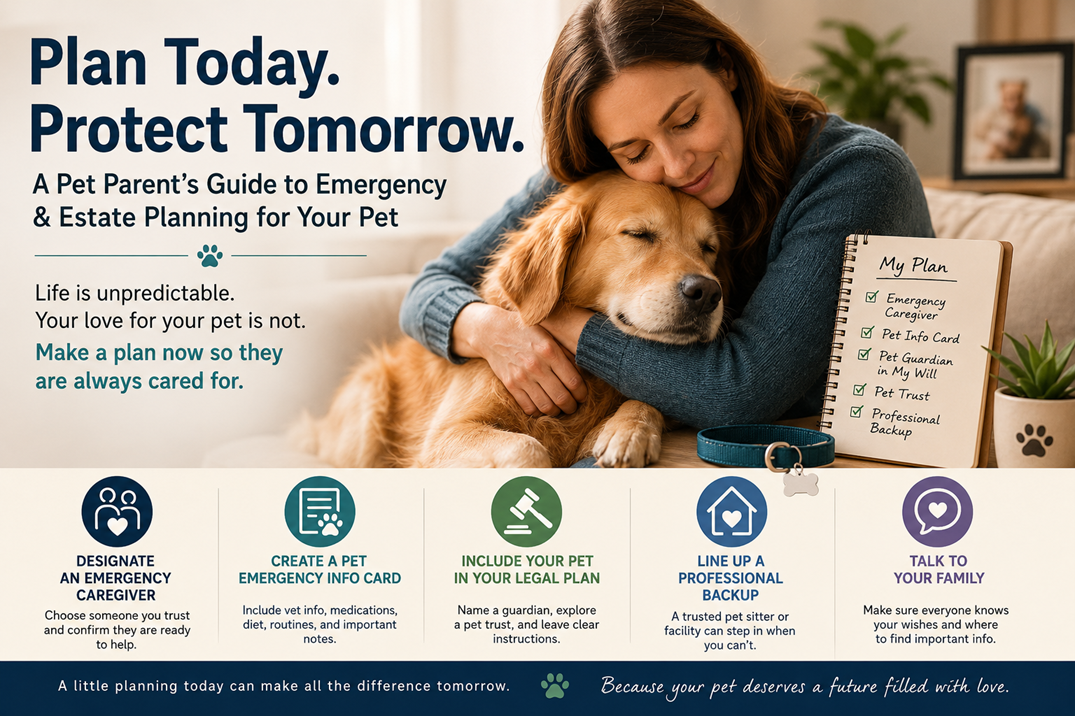
What happens to my pet if I die? For most pet parents, the bond with their animal is as real and deep as any family relationship. You arrange their meals, their checkups, their walks, their comfort. You are the center of their world. But here is a question most pet owners never think to ask: What would happen to your pet if you were suddenly unable to care for them? Not someday. Tomorrow.
Whether due to a medical emergency, an accident, a hospitalization, or death, the reality is that millions of pets end up in shelters every year because their owners had no plan in place. This guide walks you through exactly what you need to do and how to do it. It ensures you protect your pet no matter what happens.
Why This Matters More Than You Think
According to the American Pet Products Association, roughly 70% of U.S. households own at least one pet. Yet surveys consistently show that fewer than 1 in 4 pet owners have made any formal arrangements for their animal’s care in an emergency or after death.
Pets are legally considered personal property in most U.S. states, which means that without instructions, a court or family member decides what happens to them. And they may not choose what you would choose.
The result is often devastating: pets surrendered to shelters, separated from familiar people, or placed in homes that don’t suit their needs or temperament. This is entirely preventable with a little planning. So, what happens to my pet if I die?
Step 1: Designate an Emergency Caregiver
The single most important thing you can do today, before anything else, is identify at least one person who is willing and able to care for your pet in an emergency.
This person should:
- Know your pet personally and have a positive relationship with them
- Be willing to take on temporary or permanent care if needed
- Know where your pet’s food, medications, and supplies are kept
- Have a spare key to your home or know how to access it
- Be listed in your phone contacts as “[Pet Name] Emergency Contact”
Have an honest conversation with this person. Do not assume. Confirm that they are genuinely willing to step in, and make sure they have your vet’s contact information, your pet’s medical history, and any behavioral notes that would help them provide good care.
Ideally, designate a backup caregiver as well. Someone who can step in if your first choice is unavailable.
Step 2: Create a Pet Emergency Information Card
Write up a one-page document, or even a laminated card, that covers the essentials. Keep one copy with your pet’s supplies, give one to your emergency caregiver, and consider leaving one with a neighbor.
Your Pet Emergency Information Card should include:
- Pet’s name, species, breed, age, and weight
- Veterinarian name, clinic, and phone number
- Any medications, dosages, and schedules
- Dietary needs, allergies, or feeding schedule
- Behavioral notes (fearful of strangers? reactive to other dogs? shy at first?)
- Where supplies are kept
- Pet insurance information, if applicable
- Your emergency caregiver’s name and contact
This document takes about 20 minutes to create and could make an enormous difference in a crisis.
Step 3: Include Your Pet in Your Legal Documents
For long-term protection, your pet needs to be part of your estate planning. There are several ways to do this, and you do not need an expensive attorney to get started…though consulting one for formal documents is always worthwhile.
Name a Pet Guardian in Your Will. Just as you would name a guardian for a child, you can name a pet guardian in your will: someone who legally takes ownership of your pet after your death. Without this, the decision falls to a probate court or to family members who may not know your wishes. Be specific: name the person, name the pet, and include a brief description of the care standards you expect.
Set Up a Pet Trust. A pet trust is a legal arrangement that sets aside funds specifically for your pet’s care, managed by a trustee. It is the most legally robust option available, and all 50 U.S. states now recognize pet trusts as legally enforceable. A pet trust can specify how much money is available, what standard of care is expected, and what happens to remaining funds when your pet passes.
Leave a Letter of Instruction. Even if you do not formalize a trust, a detailed letter of instruction alongside your will gives your executor and pet guardian invaluable guidance. Include your pet’s personality, their routines, what makes them comfortable, and any health considerations. This is not a legal document — but it communicates what a legal document cannot: who your pet really is.

Are you finding this article useful? Would you like 100% free access to more articles like these, and free access to over 5,000 vetted pet care service professionals throughout the United States? Sign up here for a free PetWorks account, and we’ll email you a 10% discount code, good towards your first pet care services booking on PetWorks!
Step 4: Line Up a Professional Backup
If your emergency caregiver is temporarily unavailable…traveling, ill, or overwhelmed – having a trusted professional pet sitter or boarding facility already identified can prevent a crisis from becoming a catastrophe.
The time to find that professional is now, not during an emergency. A reputable pet sitter will already know your pet, have your vet’s information on file, and understand your animal’s routine. That relationship is built over time.
PetWorks connects pet parents with vetted, professional pet care providers – including in-home pet sitters, dog walkers, boarding professionals, and mobile vets, so that someone qualified is always within reach.
Step 5: Talk to Your Family
Inform the people in your life about your designated pet guardian. Tell them exactly where you keep your Pet Emergency Information Card. Share your veterinarian’s contact information with them as well. Finally, clearly explain any specific wishes you have for your pet’s care.
You don’t need a formal meeting. A simple conversation, followed by a shared document or email, is enough to ensure everyone is on the same page.
A Note for Seniors and Solo Pet Parents
If you live alone or are older, this planning is especially important. Seniors are among the most devoted pet owners in the country…and often, a pet is a primary source of daily companionship and purpose. That relationship deserves to be protected.
Consider connecting with a local pet bereavement or elder care organization, registering with a pet protection registry through your local humane society, or speaking with your doctor about including pet care instructions in your advance healthcare directive. Some areas offer programs that ensure elderly pet owners’ animals receive care if the owner is hospitalized or moves into a care facility.
What Happens To My Pet If I Die? – A Quick-Start Checklist
- Identify and confirm an emergency caregiver for your pet
- Identify a backup caregiver
- Create a Pet Emergency Information Card
- Give your caregiver a copy and a spare key
- Name a pet guardian in your will
- Explore setting up a pet trust
- Write a letter of instruction about your pet’s personality and needs
- Identify a professional pet sitter or boarding backup
- Have a conversation with your family about your wishes
The Bottom Line
Your pet depends on you completely. Honor that trust, even in your absence. You do not need to make pet estate planning complicated or expensive. A few hours of thoughtful preparation can mean the difference between your animal ending up in a shelter and ending up in a loving home, cared for exactly as you would want.
Start with one step today. Your pet will never know you did it. But it may be the most loving thing you ever do for them.
What Happens To My Pet If I Die? – Frequently Asked Questions
What happens to a pet when the owner dies? If no plan is in place, a pet becomes part of the deceased owner’s estate and is treated as personal property. A family member or executor decides what to do with the animal — which may mean rehoming, surrendering to a shelter, or in the worst cases, euthanasia. Having a named pet guardian in your will and a pet trust in place ensures your animal goes to the right person under the right conditions.
What is a pet trust and how does it work? A pet trust is a legally enforceable arrangement that sets aside money specifically for your pet’s care after you pass away or become incapacitated. A trustee manages the funds and ensures they are used according to your instructions – covering food, veterinary care, grooming, and other needs. All 50 U.S. states recognize pet trusts as valid legal documents.
Can I leave money to my pet in my will? Legally, you cannot leave money directly to a pet. Animals are considered property under U.S. law and cannot own assets. However, you can leave money to a designated pet guardian. Another option is to set up a pet trust to fund your pet’s care. A pet trust is the most reliable way to ensure those funds are used specifically for your animal.
Who should I name as my pet’s guardian? Choose someone who already knows and has a relationship with your pet, has the lifestyle and space to care for them, and has explicitly agreed to take on the responsibility. Avoid assuming a family member will step up – always have a direct conversation and get confirmation. Name a backup guardian as well in case your first choice is unable to fulfill the role.
Pet Emergency Information Card
What is a pet emergency information card? A pet emergency information card is a simple document…one page or less, that contains everything a caregiver would need to look after your pet in a crisis. It typically includes your pet’s name, breed, age, vet contact, medications, feeding schedule, behavioral notes, and your emergency caregiver’s contact information. Keep a copy at home, with your emergency caregiver, and with a trusted neighbor.
What should I do if I am a senior living alone with a pet? Senior pet parents who live alone should first designate both a primary and a backup emergency caregiver. It is also important to create and share a pet emergency information card with trusted contacts. You should speak with your doctor about adding specific pet care instructions to your advance healthcare directive. Finally, look into local programs through humane societies or elder care organizations. These groups often provide essential support for pet owners who are hospitalized or moving into assisted living.
Can a pet sitter be part of my emergency pet care plan? Yes. And it is a smart layer of protection. Furthermore, a professional pet sitter who already knows your animal can step in immediately during a short-term emergency. By doing so, they bridge the gap until a long-term guardian can take over. Establishing that relationship before a crisis also means your pet is already comfortable with someone qualified to care for them.
How do I find a trusted pet care professional for my emergency plan? PetWorks connects pet parents with vetted, professional pet sitters, dog walkers, mobile vets, and other pet care specialists. Building that relationship now…before you need it – is one of the most practical steps you can take to protect your pet’s future. Find a pet care professional near you and get free quotes at PetWorks.com.
About PetWorks
 In 2021, Dr. Marty Goldstein DVM joined the pet care platform PetWorks as an advisor in its Animal Nutrition care division. Dr Marty Nature’s Blend is on a mission to help your pets live their healthiest lives possible. Dr. Marty’s pet nutrition expertise and guidance has helped PetWorks evolve and become the preeminent animal and pet nutrition consultation service for pet parents in North America.
 In 2022, Blue Buffalo Founder Bill Bishop Jr. joined PetWorks as Senior Advisor in our Animal Nutrition Care Division. Bill brings his extensive expertise in pet food innovation and business leadership. His guidance helps PetWorks enhance our pet nutrition service offerings, helping to ensure that pet parents throughout the world receive trusted, science-backed nutritional support for their dogs, cats, and animals.
About The Author
 PetWorks Co-Founder Kevin Kinyon is a life-long animal lover who works tirelessly to improve the lives of pets and their parents. Human and animal qualities he values most are integrity, humor, and empathy.

 petworks tm