
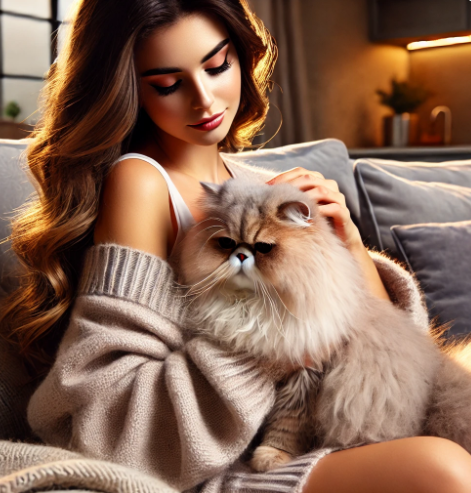
Why Do Cats Purr? Understanding the Science, Mechanics, and Meaning for Cat Moms. Cats are, of course, mysterious creatures, and one of their most intriguing behaviors is purring. This soft, rhythmic sound has fascinated cat parents for centuries. While purring is often associated with a contented feline curled up in a warm lap, the reasons behind this vocalization are far more complex. Understanding why and how cats purr, as well as what it means for cat moms, can deepen the bond between pet parents and their furry companions.
Why Do Cats Purr?
Purring is often perceived as a sign of happiness, but it serves multiple purposes beyond mere contentment. Cats purr in various situations, including when they are relaxed, seeking comfort, in pain, or even frightened. Here are the primary reasons why cats purr:
1. Expressing Contentment
The most common reason cats purr is to indicate relaxation and happiness. When a cat is sitting on a cat mom’s lap, kneading a soft blanket, or receiving gentle strokes, the purring sound is a clear signal that they feel safe and at ease.
 “That purring is a way for the cat to communicate that they’re liking what you’re doing.” – Dr. Kara Nelsen, a veterinarian in Minneapolis
2. Self-Healing Mechanism
Purring has been linked to healing and pain relief. The frequency of a cat’s purr (between 25 and 150 Hz) has been shown to promote tissue regeneration and bone healing. Cats often purr when they are recovering from an injury or feeling unwell, which suggests that this behavior may help them heal faster.
3. Communication With Humans and Other Cats
Kittens start purring within a few days of birth to communicate with their mother. This early purring signals their well-being and helps them bond with their mom. In a similar way, cats use purring to communicate with their human caregivers. When a cat purrs and rubs against a cat mom, it’s a way of seeking attention, affection, or food.
4. Stress and Anxiety Relief
Cats may also purr when they are feeling anxious or scared. Purring is a self-soothing mechanism that helps them cope with stress. If a cat is at the veterinarian’s office or in an unfamiliar environment, purring can serve as a way to calm themselves.
5. A Request for Care or Assistance
Cats sometimes purr with a slightly different frequency when they are asking for something, such as food or comfort. Cat behaviorists have found that this specific type of purring, known as the “solicitation purr,” is more urgent and insistent, often resembling a baby’s cry to grab a human’s attention.

Are you finding this article useful? Would you like 100% free access to more articles like these, and free access to over 5,000 vetted pet care service professionals throughout the United States? Sign up here for a free Petworks account, and we’ll email you a 10% discount code, good towards your first pet care services booking on Petworks!
Further Deets on Cat Purring…
1. Contentment Purr
-
When it occurs: While being petted, resting on a lap, or after eating.
-
Purpose: Shows happiness, comfort, and relaxation.
-
Sound: Steady, soft, low-frequency rumble.
-
Expert insight: Dr. Karen Overall, DVM and veterinary behaviorist, notes, “A content purr is a sign that the cat feels safe and relaxed.”
2. Solicitation or “Hunger” Purr
-
When it occurs: Near food bowls, at mealtime, or when seeking attention from humans.
-
Purpose: Requests something, usually food or care.
-
Sound: Slightly higher-pitched, sometimes mixed with a meow-like chirp.
-
Fun fact: Studies show this purr can trigger nurturing responses in humans more effectively than a contentment purr.
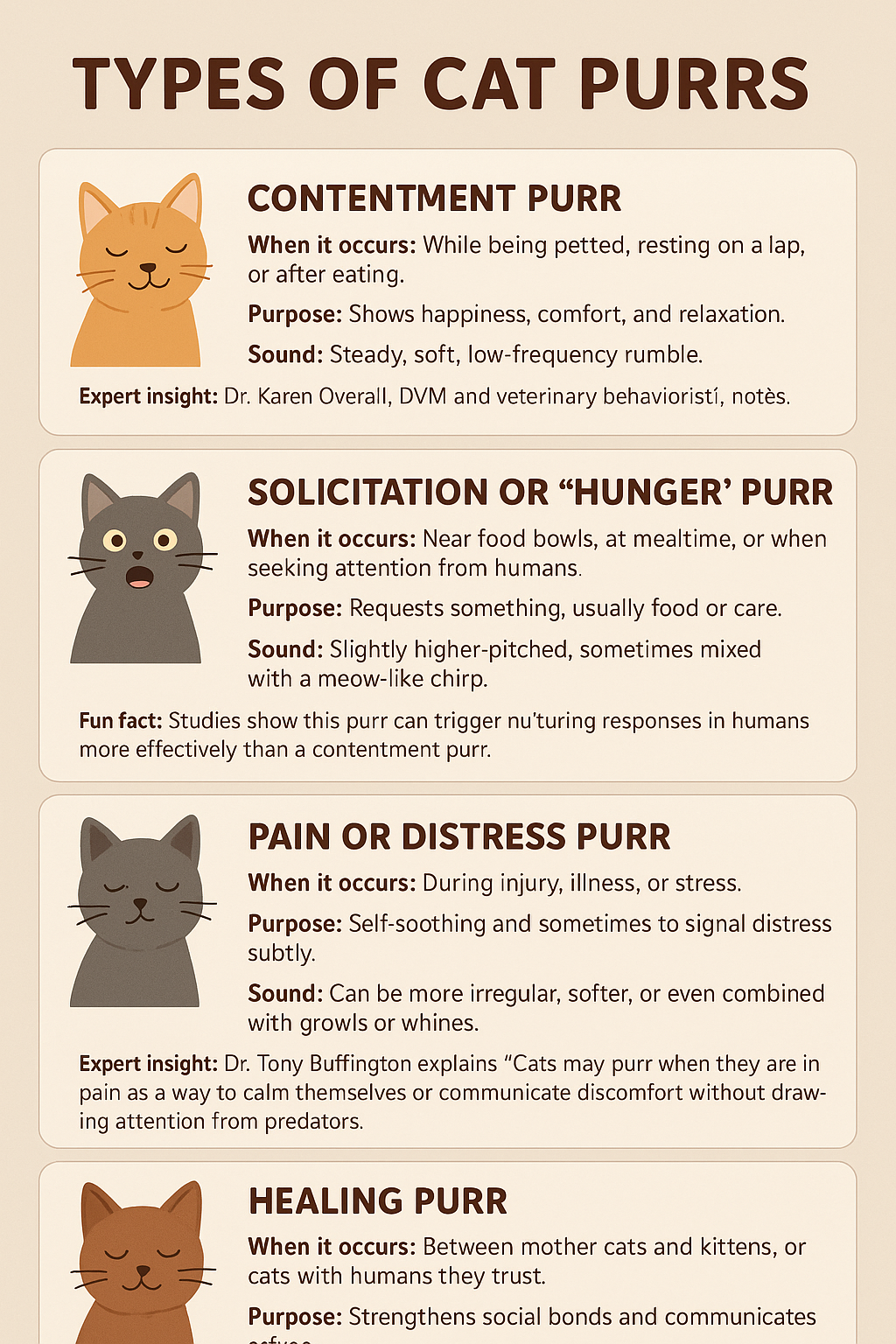
3. Pain or Distress Purr
-
When it occurs: During injury, illness, or stress.
-
Purpose: Self-soothing and sometimes to signal distress subtly.
-
Sound: Can be more irregular, softer, or even combined with growls or whines.
-
Expert insight: Dr. Tony Buffington explains, “Cats may purr when they are in pain as a way to calm themselves or communicate discomfort without drawing attention from predators.”
4. Healing Purr
-
When it occurs: During rest or recovery from injury.
-
Purpose: Believed to stimulate tissue regeneration, bone growth, and pain relief.
-
Frequency: Often around 25–150 Hz, which research suggests can promote healing.
-
Expert insight: Dr. Elizabeth Von Muggenthaler states, “Purring frequencies correspond to sound frequencies that are medically beneficial to bones and soft tissues.”
5. Bonding Purr
-
When it occurs: Between mother cats and kittens, or cats with humans they trust.
-
Purpose: Strengthens social bonds and communicates safety.
-
Sound: Gentle, rhythmic, often combined with kneading or rubbing.
-
Expert insight: This type of purr is thought to foster trust and reinforce social connection.
How Do Cats Do It?
The mechanics behind purring have long puzzled scientists, but research has provided insights into how cats produce this unique sound. Unlike other vocalizations, purring is continuous and can occur during both inhalation and exhalation.
1. The Role of the Larynx and Diaphragm
Purring originates in the larynx (voice box). When a cat purrs, the brain sends rhythmic signals to the muscles in the larynx, causing them to twitch rapidly. These vibrations create a consistent sound pattern as air passes over the vibrating vocal cords. The diaphragm also plays a role by helping to regulate airflow, ensuring the purr remains steady.
“It’s naive to think that cats can only purr for one reason. It’s like thinking that people can only laugh for one reason.” – Dr. Tony Buffington retired DVM from Ohio State University.
2. The Neural Connection
Research suggests that the process is controlled by a neural oscillator in the cat’s brain. This oscillator signals the laryngeal muscles to contract and relax repeatedly, producing the signature humming sound. Unlike other vocalizations, purring doesn’t require active effort from the cat and can continue automatically as long as the cat remains in a relaxed or self-soothing state.
 What It Means for Cat Moms
For cat moms, purring is an important form of communication that can provide insight into a cat’s emotional and physical state. Recognizing the different types of purring and their meanings can help cat parents respond to their feline friend’s needs more effectively.
1. Strengthening the Human-Cat Bond
A cat’s purr is a sign of trust and affection. When a feline purrs while being petted or held, it signals a strong bond between the kitty kat and its human. This positive reinforcement can make interactions more rewarding for both the cat and its owner.
2. Recognizing When a Cat Needs Comfort
If a cat is purring while appearing tense, hiding, or showing signs of distress, this could indicate that they are using purring as a coping mechanism. Cat moms should observe other body language cues, such as flattened ears, dilated pupils, or a tucked tail, to determine whether their cat is feeling stressed or unwell.
3. Understanding the Healing Power of Purring
Many cat moms find comfort in their cat’s purring, especially during stressful times. These soothing vibrations can have a calming effect on humans, lowering blood pressure and reducing anxiety. Studies suggest that spending time with a purring cat can release endorphins and help improve overall well-being.
4. Identifying a Solicitation Purr
Cat moms who notice their feline purring more insistently around mealtime or when seeking attention should recognize this as a solicitation purr. Understanding this distinction can help cat parents provide care without reinforcing demanding behavior excessively.
Purring is one of the most fascinating and multi-purpose behaviors in cats. Whether expressing happiness, seeking comfort, aiding in self-healing, or communicating with their human caregivers, purring is a vital part of a cat’s emotional and physical well-being. For kitty moms, paying close attention to the different types of these calming sounds can enhance the human-feline relationship, ensuring their cat remains happy, healthy, and well cared for. By responding to a cat’s sounds cues with love, patience, and understanding, kitty parents can foster an even deeper connection with their furry companions.
About Petworks
 In 2021, Dr. Marty Goldstein DVM joined the pet care platform Petworks as an advisor in its Animal Nutrition care division. Dr Marty Nature’s Blend is on a mission to help your pets live their healthiest lives possible. Dr. Marty’s pet nutrition expertise and guidance has helped Petworks evolve and become the preeminent animal and pet nutrition consultation service for pet parents in North America.
 In 2022, Blue Buffalo Founder Bill Bishop Jr. joined Petworks as Senior Advisor in our Animal Nutrition Care Division. Bill brings his extensive expertise in pet food innovation and business leadership. His guidance helps Petworks enhance our pet nutrition service offerings, helping to ensure that pet parents throughout the world receive trusted, science-backed nutritional support for their dogs, cats, and animals.
About The Author
 Petworks Co-Founder Kevin Kinyon is a life-long animal lover who works tirelessly to improve the lives of pets and their parents. Human and animal qualities he values most are integrity, humor, and empathy.

 petworks tm









Aw, this was a very nice post about Why Do Cats Purr.
We totally agree. It’s so interesting, right?
Sweet blog! I found it while surfing around on Yahoo News. And now I know why Cats Purr.
You can search for any pet care service you need, and get free quotes from our pros, by going here : https://www.petworks.com/request_quote . Glad you liked our article about why cats purr. Interesting, right?