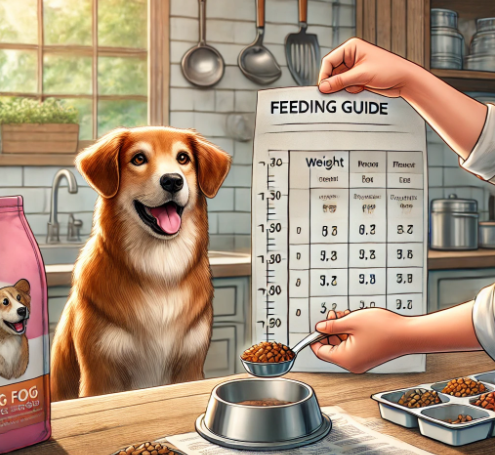
Feeding your dog the right amount of food is so very important for their health and well-being. Overfeeding can lead to obesity and related health issues, while underfeeding can cause nutritional deficiencies. The amount of food your dog needs depends on several factors, including their weight, age, activity level, and the type of food you provide. This guide will help you determine the correct portion size for your furry friend.
Factors to Consider
- Weight and Size
Larger dogs require more calories than smaller dogs. A Great Dane, for example, will need more food than a Chihuahua. Always consider your dog’s weight when determining portion sizes. - Activity Level
Active dogs burn more calories than those with a sedentary lifestyle. Working dogs or those who engage in regular exercise need more food than couch-potato companions. - Age
Puppies have different nutritional needs than adult or senior dogs. Puppies require food designed for growth and development, while seniors may need fewer calories and food formulated for aging bodies. - Food Type
Dry kibble, wet food, and raw diets vary in calorie content. Always check the packaging for feeding guidelines specific to the brand and type of food. - Health Status
Dogs with medical conditions may have unique dietary needs. Consult your veterinarian if your dog has health concerns, such as diabetes or obesity. You can also seek online consultations from certified dog nutritionists.
The best way to determine how much to feed your dog is to refer to the feeding guidelines provided by the dog food manufacturer. These guidelines are typically based on the weight of your dog and assume average activity levels. Below is a general chart to help guide you:
Dog Feeding Chart
| Dog Weight (lbs) | Dry Food (Cups/Day) | Wet Food (Cans/Day) |
|---|---|---|
| 5–10 | 1/2 – 3/4 | 1/3 – 1/2 |
| 10–20 | 3/4 – 1 1/2 | 1/2 – 1 |
| 20–30 | 1 1/2 – 2 | 1 – 1 1/2 |
| 30–50 | 2 – 3 | 1 1/2 – 2 |
| 50–75 | 3 – 4 | 2 – 3 |
| 75–100 | 4 – 5 | 3 – 4 |
Note: Adjust portions based on your dog’s activity level and consult your veterinarian for specific recommendations.

Are you finding this article useful? Would you like 100% free access to more articles like these, and free access to over 5,000 vetted pet care service professionals throughout the United States? Sign up here for a free Petworks account, and we’ll email you a 10% discount code, good towards your first pet care services booking on Petworks!
Tips for Accurate Feeding
- Use a Measuring Cup
Always use a measuring cup to ensure accuracy. Guessing can lead to overfeeding or underfeeding. - Follow a Schedule
Feed your dog at the same time every day. Most dogs do well with two meals a day—once in the morning and once in the evening. - Monitor Body Condition
Keep an eye on your dog’s weight and body condition. You should be able to feel their ribs without excess fat covering and see a visible waistline. - Gradual Adjustments
If you need to change your dog’s portion size, do so gradually to avoid upsetting their digestive system. - Account for Treats
Treats should make up no more than 10% of your dog’s daily caloric intake. Reduce meal portions slightly to account for extra calories from treats.
Special Considerations
- Puppies: Feed them puppy-specific food 3–4 times a day until they are six months old. Refer to your vet for precise portion sizes.
- Senior Dogs: These dogs may require fewer calories. Switch to senior-specific food and consult your vet for advice.
- Overweight Dogs: Reduce portion sizes or switch to weight management food. Increase physical activity and consult your vet for a tailored plan.
- Underweight Dogs: Increase meal portions and ensure your dog is receiving high-quality, nutrient-dense food. Rule out underlying health issues with your vet.
 When to Consult a Veterinarian
If you’re unsure about your dog’s ideal weight or how much food to provide, consult a veterinarian. They can calculate your dog’s caloric needs based on their weight, breed, and activity level. Additionally, they can guide you on the best type of food to meet your dog’s specific health requirements.
 “Many veterinary nutritionists recommend limiting your dog’s calories from treats to 10% of their total diet, especially if you are working on a weight-loss program.” – Dr. Joseph J. Wakshlag, Section Chief & Professor of Clinical Nutrition at Cornell.
So How Much Food Should I Feed My Dog?
Feeding your dog the correct amount of food is essential to maintaining their health and happiness. Use the feeding chart above as a guideline, but always consider your dog’s unique needs. Regular check-ups with your vet and careful observation of your dog’s body condition will ensure they are receiving the proper nutrition. By taking these steps, you can help your dog live a long and healthy life.
About Petworks
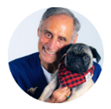 In 2021, Dr. Marty Goldstein DVM joined the pet care platform Petworks as an advisor in its Animal Nutrition care division. Dr Marty Nature’s Blend is on a mission to help your pets live their healthiest lives possible. Dr. Marty’s pet nutrition expertise and guidance has helped Petworks evolve and become the preeminent animal and pet nutrition consultation service for pet parents in North America.
 In 2022, Blue Buffalo Founder Bill Bishop Jr. joined Petworks as Senior Advisor in our Animal Nutrition Care Division. Bill brings his extensive expertise in pet food innovation and business leadership. His guidance helps Petworks enhance our pet nutrition service offerings, helping to ensure that pet parents throughout the world receive trusted, science-backed nutritional support for their dogs, cats, and animals.
About The Author
 Petworks Co-Founder Kevin Kinyon is a life-long animal lover who works tirelessly to improve the lives of pets and their parents. Human and animal qualities he values most are integrity, humor, and empathy.

 petworks tm