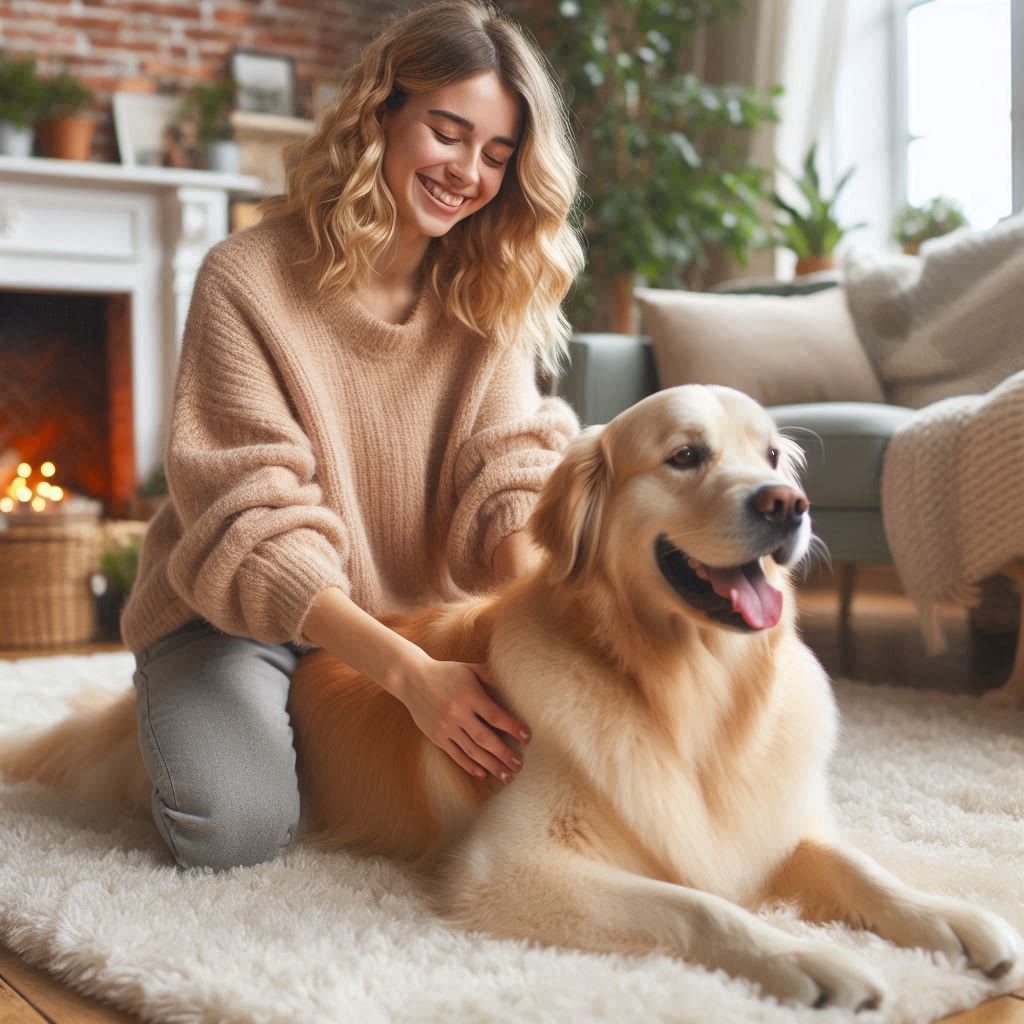
Information about the many benefits of small animal massage and acupressure is plentiful and easy to find online. What I’d like to do here is take that information one step further and add an educational element. I’m going to provide some safe massage and acupressure techniques that you can try, starting today, on your own dog (or cat). The techniques covered here can help address some of the most common complaints among pet parents: anxiety, digestive issues, mobility issues, and pain.
 It is important to note that there are a few contraindications for massage, such as certain heart-related conditions, certain cancers, infectious diseases, open wounds, undiagnosed lumps, and fever. If you’re at all uncertain, it’s best to check with your veterinarian if massage and acupressure are safe for your dog at this time. However, most dogs can benefit from maintenance / preventative massage, from healthy working and companion animals to senior and geriatric animals.
Dog Massage
In the case of injury or illness, dog massage therapy can be an excellent tool during the rehabilitation process, after speaking with your veterinarian of course. There are no specific time limits nor an exact, single way of doing any of the following techniques. Don’t be afraid to improvise around the recommendations below.
The most important thing you can do is be calm and present, especially mentally, with your dog during this time and space you’ve carved out for the two of you, whether that’s for five minutes or an hour. Pay close attention to how your dog is reacting to your touch throughout your time together. Signs of relaxation include soft or sleepy eyes, deep breaths or sighs, lying down or rolling over, some but not excessive yawning, and licking you. It is also normal for dogs to get up, shake and reposition themselves during a massage / acupressure session. With time and regular practice, you’ll learn what your dog really likes, how long he or she likes to be massaged, and how he or she expresses that.

Are you finding this article useful? Would you like 100% free access to more articles like these, and free access to over 5,000 vetted pet care service professionals throughout the United States? Sign up here for a free Petworks account, and we’ll email you a 10% discount code, good towards your first pet care services booking on Petworks!
Anxiety / Digestive Issues
Dogs can exhibit signs of anxiety before, during and / or after a major life change, such as loss of another family dog or bringing home a newborn baby. In addition, injuries or natural aging can cause sensory impairments which can create feelings of vulnerability and anxiety in a dog and lead to negative postural habits or patterns of holding tension in the body. Mental health and digestion work hand in hand physiologically, so it’s not coincidental that digestive issues often accompany a stressed mind and vice versa. The connection is the parasympathetic nervous system, which governs the rest and digest functions of the body. Breathing and heart rates are directly affected and slowed. As such, many of the massage techniques and acupressure points that address anxiety can also positively impact the digestive system. Massage therapy in general relaxes the body and mind, but we can also target the parasympathetic nervous system and key nerves by focusing our touch on certain areas of the body.
1. We’ll start with the stroke called effleurage, and we’ll use this stroke on the entire body. With a flat hand and gentle pressure, smoothly and slowly glide in the direction of the hair, akin to petting. Cover as much of the body as you can reach and as the dog allows.
2. Next, we’ll transition to either linear or circular friction. It doesn’t matter which you start with, and it’s also all right to go back and forth between the two. For linear friction, using your finger pad(s) or thumb pad and gentle pressure, smoothly and slowly draw lines on your dog’s body. This is called a friction stroke for a reason, so don’t be afraid to create and feel a little friction between your finger(s) and your dog’s body. For circular friction, everything is the same except you’re drawing small circles. Use these strokes on the top of the head, around the ears, back of the neck, upper back, and lower back. There are also a number of acupoints located in these areas that are commonly used to induce a calming effect, so the benefit of massaging in these areas is twofold.
Mobility Issues / Pain
Mobility issues and pain are common complaints from dog parents. Our selective breeding of dogs for particular phenotypical traits has led to less-than-ideal conformations, or builds, in dogs. Asymmetries in the body, overuse, chronic stress, injuries, and natural aging are a few more examples of possible causes of mobility issues and pain in your dog’s body.
1. Once again, we’ll begin with the stroke called effleurage. The reason we typically use this stroke to initiate touch is it’s very effective at warming the tissues under our hands, increasing cell membrane permeability, and thus improving fluid flow throughout the body. It’s a gentle way to wake up the body whilst calming the nerves and the mind. Again, use this stroke on the entire body. With a flat hand and gentle pressure, smoothly and slowly glide in the direction of the hair, akin to petting. Cover as much of the body as you can reach and as the dog allows.
2. Next, we’ll transition to rubbing all four limbs to build up even more heat in the tissues and introduce some mobility. Depending on the size of your dog, use your entire flat hand or just a finger. With gentle pressure, rapidly rub back and forth over a few inch area for a few seconds or so, covering the entirety of each limb. Don’t forget the paws, as your dog allows. There are many influential acupoints located in the extremities.
3. Now that the limbs are all warmed up, we’ll do some gentle traction to encourage space, mobility and joint lubrication. With one hand stabilizing above or below one joint at a time, lightly wrap your other hand around the same limb on the opposite side of the joint and very slowly pull away from the stationary hand with gentle friction.
4. Lastly, we’ll do some circular friction along the bones in the limbs. You’ll notice the bones are not entirely smooth but rather have many hills and valleys, bumps and crevices. Many bony landmarks serve as muscle attachment sites, so we’re going to spend some time massaging these areas to continue to warm the tissues, mobilize structures and engage the nervous system. Using a finger pad(s) or thumb pad and gentle pressure, smoothly and slowly move in a circular motion along the bones, all their sides, tracing any hills and valleys, bumps and crevices.
Dog Massage Works
End by giving your dog some nice full-body pets, love, belly rubs, and maybe a treat or two! It takes some time for the benefits of massage and acupressure to accumulate and for the body to rebalance itself. Commit to adding some of these techniques to your daily life and routine, and you’ll see improvements in your dog’s overall wellbeing and the bond between the two of you.
About The Author
Jeni Ray is a Small Animal Massage and Acupressure Practitioner who is pursuing a canine hydrotherapy certification and veterinary technician licensure. She owns a small business providing canine massage and other holistic modalities on the Olympic Peninsula. She enjoys getting outside and spending time with her three dogs.
About Petworks
 In 2021, Dr. Marty Goldstein DVM joined the pet care platform Petworks as an advisor in its Animal Nutrition care division. Dr Marty Nature’s Blend is on a mission to help your pets live their healthiest lives possible. Dr. Marty’s pet nutrition expertise and guidance has helped Petworks evolve and become the preeminent animal and pet nutrition consultation service for pet parents in North America.
 In 2022, Blue Buffalo Founder Bill Bishop Jr. joined Petworks as Senior Advisor in our Animal Nutrition Care Division. Bill brings his extensive expertise in pet food innovation and business leadership. His guidance helps Petworks enhance our pet nutrition service offerings, helping to ensure that pet parents throughout the world receive trusted, science-backed nutritional support for their dogs, cats, and animals.
 Petworks Co-Founder Kevin Kinyon is a life-long animal lover who works tirelessly to improve the lives of pets and their parents. Human and animal qualities he values most are integrity, humor, and empathy.

 petworks tm