
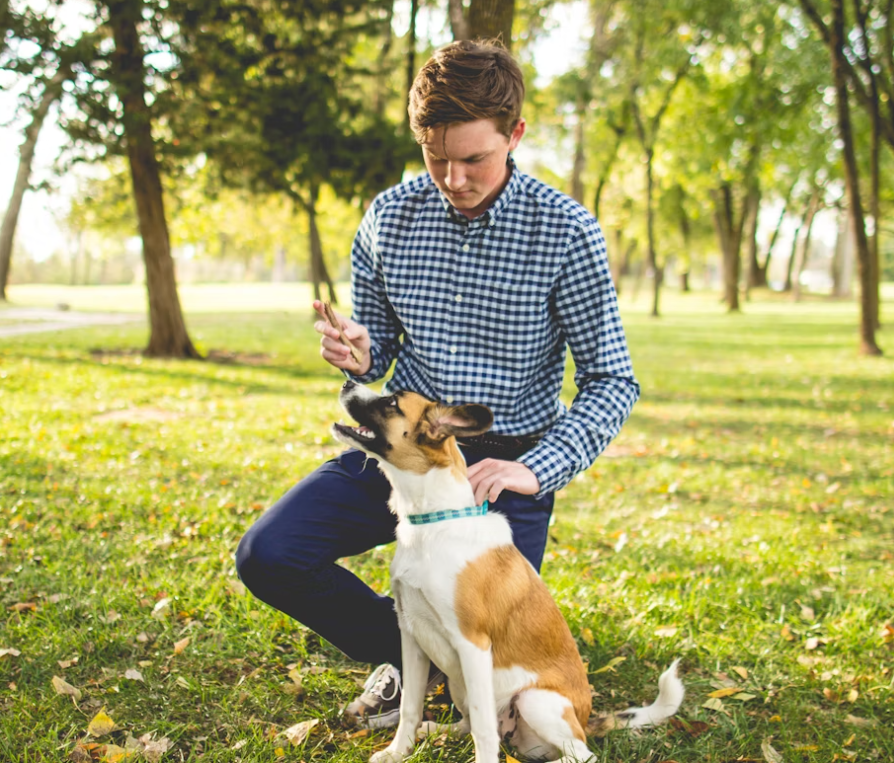
Training your dog to respond to hand signals is not only possible; moreover, it’s an incredibly effective way to communicate with your canine companion. Hand signal training can help improve obedience, strengthen your bond, and even assist dogs with hearing impairments. In this article, we’ll explore how hand signal training works, step-by-step methods to teach your dog, common challenges, and tips for success.
Why Train Your Dog to Respond to Hand Signals?
Dogs are highly perceptive to visual cues, sometimes even more so than verbal commands. Training your dog to recognize hand signals can:
-
Enhance Communication – Hand signals provide an additional layer of communication that can reinforce verbal commands or replace them entirely.
-
Assist Hearing-Impaired Dogs – Dogs that are deaf or hard of hearing can learn hand signals instead of verbal commands.
-
Improve Obedience – Using clear, consistent gestures can make training faster and more effective.
-
Strengthen Your Bond – Training is a positive interaction that builds trust between you and your dog.
Hand Signals vs. Verbal Commands
While verbal commands are common, hand signals offer unique advantages:
| Aspect | Verbal Commands | Hand Signals |
|---|---|---|
| Visibility | Can be used at a distance if the dog can hear | Useful in noisy environments or for hearing-impaired dogs |
| Precision | Depends on tone and consistency | Clear gestures are harder for dogs to misinterpret |
| Reinforcement | Supports verbal learning | Can complement verbal commands for stronger results |
For maximum effectiveness, many dog trainers recommend pairing verbal commands with hand signals during the initial learning phase. Over time, you can phase out verbal cues if desired.
How to Train Your Dog to Respond to Hand Signals
1. Choose Clear and Consistent Gestures
Consistency is key. Decide on a simple, distinct gesture for each command. For example:
-
Sit: Open palm moving downward
-
Stay: Flat hand held up
-
Come: Arm extended outward with a sweeping motion
-
Down: Hand moving from chest level toward the ground
Avoid gestures that are too similar, as dogs may confuse commands.
2. Pair Hand Signals With Verbal Commands
Start by performing the hand gesture while giving the verbal command. Reward your dog immediately when they follow the instruction correctly. Use small, tasty treats or their favorite toy to reinforce learning.
3. Reward and Reinforce
Positive reinforcement is crucial. Each time your dog successfully responds to a hand signal, reward them immediately with:
-
Treats – Small, soft treats that your dog enjoys.
-
Praise – Enthusiastic verbal praise or petting.
-
Play – A short game or favorite toy can also reinforce positive behavior.
Consistency in rewarding correct behavior accelerates learning.
4. Practice Short Training Sessions
Dogs learn best in short, frequent sessions rather than long, exhausting ones. Aim for 5–10 minutes, 2–3 times per day. End each session on a positive note, even if progress is small.
5. Gradually Phase Out Verbal Commands
Once your dog consistently responds to hand signals, start reducing verbal cues. The goal is for the dog to obey the visual gesture alone. Continue reinforcing with treats and praise to maintain motivation.
6. Practice in Different Environments
Dogs may respond well in familiar settings but struggle in new ones. Practice hand signal training in:
-
Your living room
-
Backyard
-
Nearby park
-
On walks
This helps your dog generalize the behavior and obey commands in any environment.

Are you finding this article useful? Would you like 100% free access to more articles like these, and free access to over 5,000 vetted pet care service professionals throughout the United States? Sign up here for a free Petworks account, and we’ll email you a 10% discount code, good towards your first pet care services booking on Petworks!
Common Challenges and How to Overcome Them
My Dog Ignores Hand Signals
-
Solution: Ensure gestures are distinct and visible. Start closer to your dog before increasing distance. Pair with treats until response improves.
Our Pup Confuses Hand Signals With Other Commands
-
Solution: Avoid using gestures that resemble each other. Teach one hand signal at a time and master it before introducing another.
My Dog Loses Interest
-
Solution: Keep sessions short and fun. Use high-value treats and toys to maintain engagement.
Tips From The Experts
 “Hand signals can be a great source of mental stimulation for your dog. They provide a new and fun way for your dog to learn, whether they are deaf or not.” – Dr. Julie Buzby, Integrative Veterinarian
“It is vital to always use the same verbal cue and hand command together each time they are used to avoid confusion.” – Jenna Geldreich, Certified Dog Trainer
Frequently Asked Questions
Q: Can all dogs learn hand signals?
Yes! Most dogs, regardless of breed, can learn hand signals. Patience, repetition, and rewards are essential for success.
Q: How long does it take for a dog to respond reliably to hand signals?
Training time varies by dog, breed, and consistency of practice. Many dogs can learn basic signals in 1–3 weeks with daily short sessions.
Q: Can hand signals replace verbal commands entirely?
Absolutely. Dogs can be trained to respond solely to hand signals, though pairing verbal commands initially often speeds learning.
Q: Are hand signals useful for older dogs?
Yes. Older dogs can learn new visual cues, especially if they have hearing difficulties or benefit from additional communication methods.
Q: Do I need special tools for hand signal training?
No special tools are required. High-value treats, patience, and clear gestures are usually sufficient. Clickers or target sticks can be helpful but are optional.
Benefits Beyond Obedience
Hand signal training isn’t just about commands. It also provides:
-
Mental stimulation – Dogs must process and interpret visual cues, keeping their minds active.
-
Better control in public spaces – Hand signals allow you to guide your dog discreetly in crowded areas.
-
Enhanced safety – Visual cues can prevent accidents if your dog doesn’t respond to verbal commands in noisy environments.
Training your dog to respond to hand signals is a fun, effective way to improve obedience, communication, and overall mental stimulation. With consistency, positive reinforcement, and short, focused training sessions, nearly any dog can master basic hand gestures. Whether your goal is to help a hearing-impaired dog, strengthen your bond, or simply expand your dog’s obedience skills, hand signal training is a valuable tool every pet parent should try.
Start today, be patient, and watch your dog flourish in understanding and responsiveness.
About Petworks
 In 2021, Dr. Marty Goldstein DVM joined the pet care platform Petworks as an advisor in its Animal Nutrition care division. Dr Marty Nature’s Blend is on a mission to help your pets live their healthiest lives possible. Dr. Marty’s pet nutrition expertise and guidance has helped Petworks evolve and become the preeminent animal and pet nutrition consultation service for pet parents in North America.
 In 2022, Blue Buffalo Founder Bill Bishop Jr. joined Petworks as Senior Advisor in our Animal Nutrition Care Division. Bill brings his extensive expertise in pet food innovation and business leadership. His guidance helps Petworks enhance our pet nutrition service offerings, helping to ensure that pet parents throughout the world receive trusted, science-backed nutritional support for their dogs, cats, and animals.
About The Author
 Petworks Co-Founder Kevin Kinyon is a life-long animal lover who works tirelessly to improve the lives of pets and their parents. Human and animal qualities he values most are integrity, humor, and empathy.

 petworks tm









Thank you to Petworks for this great article about hand signal dog training.