
Cats are often seen as independent and low-maintenance companions, but their health depends on much more than a full food bowl and a clean litter box. Cat preventative care is one of the most important ways to keep your feline happy, healthy, and by your side for as many years as possible. Preventive care means taking steps to avoid health problems, catch illnesses early, and support your cat’s physical and emotional well-being before issues become severe.
This guide explains why preventive care matters, what to include in your cat’s wellness routine, and how to work with veterinary professionals to give your cat the healthiest life possible.
Why Cat Preventative Care Matters
Many cats are experts at hiding pain or illness, which means health issues often go unnoticed until they become advanced. By the time symptoms are obvious, treatment can be more complicated and costly. Preventive care helps you catch problems early — or avoid them entirely.
Benefits of regular cat preventative care include:
-
Early detection of disease: Conditions like kidney disease, diabetes, and hyperthyroidism are more manageable when caught early.
-
Lower veterinary costs over time: Routine care is often less expensive than emergency treatment.
-
Improved quality of life: A healthy cat is more active, playful, and content.
-
Longer lifespan: Preventive care increases your cat’s chance of living a longer, healthier life.
Annual and Semi-Annual Veterinary Visits
Routine veterinary visits are the foundation of cat preventative care. Most adult cats should have at least one wellness exam per year. Senior cats (ages 10 and older) often benefit from checkups every six months.
During these visits, a veterinarian will:
-
Perform a full physical exam, checking weight, heart, lungs, teeth, eyes, and coat condition.
-
Screen for common health concerns such as parasites, dental disease, and lumps.
-
Discuss behavioral or dietary concerns.
-
Recommend bloodwork or urinalysis for early disease detection.
Regular checkups also help your cat become more comfortable with the vet, reducing stress for future visits.

Are you finding this article useful? Would you like 100% free access to more articles like these, and free access to over 5,000 vetted pet care service professionals throughout the United States? Sign up here for a free Petworks account, and we’ll email you a 10% discount code, good towards your first pet care services booking on Petworks!
Vaccinations: Protecting Your Cat from Disease
 Vaccines are a vital part of cat preventative care, even for strictly indoor cats. Some diseases can be carried in on clothing or transmitted through open windows.
Core vaccines recommended by most veterinarians include:
-
Rabies: Required by law in most areas. Protects against a fatal virus.
-
FVRCP: Protects against feline viral rhinotracheitis, calicivirus, and panleukopenia.
Depending on your cat’s lifestyle, your vet may also recommend the FeLV (feline leukemia virus) vaccine, particularly if your cat goes outdoors or lives with other cats. Keeping up with boosters as recommended by your vet is crucial for ongoing protection.
Parasite Prevention
Fleas, ticks, and intestinal worms are not just nuisances — they can lead to serious health issues. Cats can contract parasites even indoors, as fleas can hitch a ride on shoes or other pets.
Ask your veterinarian about year-round parasite prevention, including:
-
Monthly flea and tick preventives to avoid infestations.
-
Deworming as needed based on fecal test results.
-
Heartworm prevention if recommended in your area — yes, cats can get heartworm disease.
Preventive medication is much easier and safer than treating a full-blown infestation or parasite-related illness.
Dental Health for Cats
Dental disease is one of the most common — and most overlooked — feline health issues. Plaque buildup leads to gingivitis, tooth loss, and even systemic infections.
Include dental care in your cat preventative care plan by:
-
Scheduling regular veterinary dental exams.
-
Considering professional cleanings when recommended.
-
Brushing your cat’s teeth at home with vet-approved toothpaste.
-
Offering dental treats or toys designed to reduce tartar.
Maintaining oral health not only keeps your cat’s breath fresh but also prevents pain and infections.
Nutrition and Weight Management
A balanced diet is key to preventing obesity, diabetes, and digestive issues. Work with a veterinarian or a certified animal nutritionist to determine the right food and portion sizes for your cat’s age, weight, and activity level.
Tips for optimal feline nutrition:
-
Feed high-quality food with real protein as the first ingredient.
-
Avoid overfeeding — obesity is one of the most common preventable health problems in cats.
-
Encourage hydration with a water fountain or wet food to support kidney and urinary tract health.
-
Adjust portions as your cat ages or activity levels change.
Proactive nutrition choices can prevent costly health issues later in life.
Mental Stimulation and Stress Reduction
Preventive care isn’t just about physical health…emotional well-being matters too. Stress can lead to behavioral issues, overgrooming, or even urinary tract problems.
Support your cat’s mental health by:
-
Providing vertical spaces like cat trees or shelves.
-
Offering interactive toys and puzzle feeders for enrichment.
-
Scheduling daily playtime for exercise and bonding.
-
Using pheromone diffusers to calm anxious cats.
A mentally stimulated cat is a happier, healthier cat.
Spay and Neuter Benefits
If your cat isn’t already spayed or neutered, consider it an essential part of cat preventative care. These procedures reduce the risk of certain cancers, prevent unwanted litters, and can improve behavior by reducing spraying and aggression.
Early Detection: Know the Warning Signs
Even with routine vet visits, you are your cat’s first line of defense. Keep an eye out for subtle changes in behavior, appetite, or litter box habits. Early detection can make a significant difference.
Contact your veterinarian if you notice:
-
Unexplained weight loss or gain
-
Changes in appetite or thirst
-
Vomiting or diarrhea
-
Difficulty urinating or blood in urine
-
Lethargy or hiding
-
Persistent coughing or sneezing
Trust your instincts — if something seems off, it’s worth getting checked.
Partnering with Cat Care Professionals
Cat preventative care is easiest when you have the right team supporting you. Platforms like Petworks make it simple to connect with veterinarians, nutritionists, feline behaviorists, and holistic pet care providers who can help you stay proactive about your cat’s health.
Booking regular consultations ensures you’re staying on top of your cat’s wellness needs and catching any potential issues early.
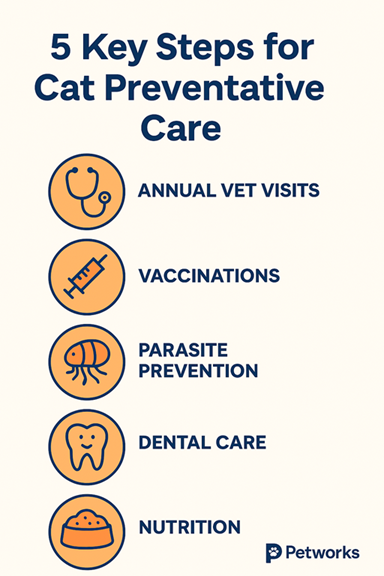
Cat preventative care is one of the most loving things you can do for your feline companion. By scheduling routine veterinary exams, keeping up with vaccines and parasite prevention, providing proper nutrition, and monitoring behavior, you can help your cat avoid illness and enjoy a long, healthy life.
Being proactive means fewer emergencies, less stress, and more quality time with your furry friend — which is what every pet parent wants.
About Petworks
 In 2021, Dr. Marty Goldstein DVM joined the pet care platform Petworks as an advisor in its Animal Nutrition care division. Dr Marty Nature’s Blend is on a mission to help your pets live their healthiest lives possible. Dr. Marty’s pet nutrition expertise and guidance has helped Petworks evolve and become the preeminent animal and pet nutrition consultation service for pet parents in North America.
 In 2022, Blue Buffalo Founder Bill Bishop Jr. joined Petworks as Senior Advisor in our Animal Nutrition Care Division. Bill brings his extensive expertise in pet food innovation and business leadership. His guidance helps Petworks enhance our pet nutrition service offerings, helping to ensure that pet parents throughout the world receive trusted, science-backed nutritional support for their dogs, cats, and animals.
About The Author
 Petworks Co-Founder Kevin Kinyon is a life-long animal lover who works tirelessly to improve the lives of pets and their parents. Human and animal qualities he values most are integrity, humor, and empathy.

 petworks tm