Pet Transport Services in Eugene, OR USDA-Registered Ground & Air Pros
-
-
 Kara Holland
- DayKara Pet Care and Transport - Newberg, OR
-
 USDA
REGISTERED
USDA
REGISTERED
- Newberg, OR - As a dedicated veterinary technician with over 34 years of experience since 1989, I am passionate about providing exceptional pet care tailored to your furry, feathered, and...
-
-
- Online Sessions
- Request Quote
-

-
Lisa Gersten
- Experienced Traveler With Pet Companions - Flight Nanny - Sherwood, OR
-
 INSTANT
CHECKOUT
INSTANT
CHECKOUT
 RAPID
RESPONDER
RAPID
RESPONDER
- Sherwood, OR - With a decade of experience as a dedicated flight nanny, I specialize in ensuring that your furry friends travel safely and comfortably, whether it's across the country...
-
-
- Book Now
-
 10BOOKINGS
 -
Kathy Kleczek
- Nanny Pawpinz - Heart and Skill Flight Nanny Services - Portland, OR
-
 PETWORKS
PICK
INSTANT
CHECKOUT
RAPID
RESPONDER
USDA
REGISTERED
PETWORKS
PICK
INSTANT
CHECKOUT
RAPID
RESPONDER
USDA
REGISTERED
 BBB
ACCREDITED
BBB
ACCREDITED
- Portland, OR - Kathy is Nanny Pawpinz LLC managing director. She is happiest when she is out and about, bringing the joy of uniting a pet with their fur-ever family....
-
 (1 review)
 -
- Licensed
- Insured
- BBB Accredited
- Online Sessions
- Book Now
-

-
Averie Haney
- Professional Flight Nanny Service - Portland, OR
-
INSTANT
CHECKOUT
- Portland, OR - As a certified Flight Nanny with extensive experience in pet travel, I am dedicated to ensuring that your beloved furry companions reach their destinations safely and comfortably....
-
-
- Book Now
-

-
Laura DuBois
- Private Dog Transport Service - Hillsboro, OR
-
INSTANT
CHECKOUT
RAPID
RESPONDER
 RED CROSS
CERTIFIED
USDA
REGISTERED
RED CROSS
CERTIFIED
USDA
REGISTERED
- Hillsboro, OR - At B&L Canine Transportation, your pet's safety and comfort are our top priorities. We specialize in stress-free, private transportation for dogs - no crowded vans, no unfamiliar...
-
-
- Book Now
-
-
Joshua Smith
- ❤️ Loving Pet Transport ❤️ - Vancouver, WA
- Vancouver, WA - Does your pet need a ride? Hi there! My name is Joshua. I absolutely LOVE working with animals and I will gladly pamper your pet every mile...
-
-
- Online Sessions
- Request Quote
-
-
Shannon Oliver
- Pets Across America, LLC - Pet Transportation Service - Battle Ground, WA
-
INSTANT
CHECKOUT
USDA
REGISTERED
- Battle Ground, WA - Pets Across America, LLC specializes in private and semiprivate pet transportation. We are a small family owned and operated pet transport company that provides loving care...
-
-
- Licensed
- Certified
- Insured
- Book Now
-

-
Melinda Sleight
- Melinda Sleight - Professional Pet Transporter - Battle Ground, WA
-
USDA
REGISTERED
- Battle Ground, WA - I have been transporting for many years now transporting rabbits guinea pigs and dogs. I am USDA certified. I take pride in caring for animals and...
-
-
- Insured
- Request Quote
-

-
Dawn Boles
- West Coast Pet Transportation - Seattle, WA
-
RAPID
RESPONDER
USDA
REGISTERED
- Seattle, WA - My primary office is in Ann Arbor, Michigan. My favorite deliveries have been taking dogs and cats across the USA. It is heartwarming to see families united...
-
-
- Certified
- Insured
- Request Quote
-

-
Sean Michael
- Compassionate Pet Transportation Services - Seattle, WA
-
INSTANT
CHECKOUT
RAPID
RESPONDER
- Seattle, WA - When it comes to transporting your beloved pets, you want a service that combines reliability, comfort, and genuine care. Our dedicated pet transportation services are designed with...
-
-
- Insured
- Online Sessions
- Book Now
-
 1BOOKINGS
 -
JC Connolly
- Fluff Fetchers Pet Transportation - Seattle, WA
-
RAPID
RESPONDER
- Seattle, WA - **Fluff Fetchers Pet Transportation Services** Loving care while in the air! Embark on a stress-free journey for your furry friends with Fluff Fetchers! ✨ Whether it's a...
-
-
- Request Quote
-
-
Crystal Lee
- Farmer's Daughter Flight Nanny Service - Walla Walla, WA
-
USDA
REGISTERED
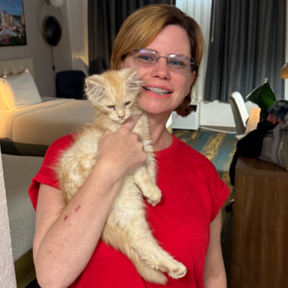
- Walla Walla, WA - As a dedicated flight nanny with over 25 years of travel experience and 40 years in animal care, I take pride in offering exceptional pet transport...
-
-
- Licensed
- Online Sessions
- Request Quote
-

-
Breanna Dacanay
- Washington State Pet Transport - Oak Harbor, WA
-
INSTANT
CHECKOUT
- Oak Harbor, WA - Welcome to Washington State Pet Transport! Our company is dedicated to providing safe, reliable, and comfortable transportation for your beloved pets within the beautiful state of...
-
-
- Online Sessions
- Book Now
-

-
Traci Davis
- Elevate To The Best In Pet Transport - Nampa, ID
-
USDA
REGISTERED
- Nampa, ID - We are very knowledgeable handlers with experience from very large breeds (we had a Saint Bernard) to small mini breeds. We have also had many cats over...
-
-
- Request Quote
-
-
Deanna Dillard
- FurPanion Pet Transport | In-Cabin Flight Nanny Services - Sparks, NV
-
RED CROSS
CERTIFIED
USDA
REGISTERED
- Sparks, NV - At FurPanion Transport LLC, your pet isn’t just being transported — they’re traveling with a trusted friend. Based in Reno, NV, I provide nationwide in-cabin pet transport,...
-
-
- Certified
- Request Quote
-
 10BOOKINGS
 -
Jani Martin
- EQ Pet Travel - Pet Transportation Service - Spokane, WA
-
PETWORKS
PICK
INSTANT
CHECKOUT
RAPID
RESPONDER
RED CROSS
CERTIFIED
USDA
REGISTERED
- Spokane, WA - Ground and air transport. In cabin flight nanny services. Export prep Serving the Pacific Northwest and nationwide. Commercial transport to and from Canada, even during Covid shut...
-
(4 reviews)
-
- Licensed
- Certified
- Insured
- Book Now
-

-
Christina Bunnell
- Christina Bunnell Pet Transport - Sacramento, CA
-
INSTANT
CHECKOUT
RAPID
RESPONDER
RED CROSS
CERTIFIED
USDA
REGISTERED
 AKC CGC
EVALUATOR
AKC CGC
EVALUATOR
 ABCDT
CERTIFIED
ABCDT
CERTIFIED
- Sacramento, CA - As a dedicated pet transport professional with over 17 years of experience, I understand the significant responsibility involved in safely and comfortably relocating your beloved furry family...
-
-
- Certified
- Online Sessions
- Book Now
-

- Dee Kee
- Love Your Pet - Flight Nanny Service - Sacramento, CA
-
USDA
REGISTERED
- Sacramento, CA - As a passionate pet professional with extensive experience in animal care, I am dedicated to ensuring that your beloved pets receive the highest level of attention and...
-
-
- Request Quote
-
-
Samantha Lindquist
- ✈️ Flight Nanny – Experienced Animal Care Companion - Sacramento, CA
-
RAPID
RESPONDER
- Sacramento, CA - As a Flight Nanny and Skilled Animal Handler, I specialize in providing safe, compassionate, and stress-free travel experiences for pets. Whether you're sending a new puppy to...
-
-
- Request Quote
more info
✈️🚗 Pet Transport in Eugene, OR: Safe, Reliable Travel for Your Pet
Pet transport is the professional movement of your pet from one location to another - whether across the Willamette Valley, northbound to Portland, or coast to coast. PetWorks connects you with USDA-registered, verified pet transport professionals serving Eugene and the greater Lane County area - door-to-door ground and air transport for dogs, cats, and pets of all kinds. Whether you need a regional trip or a cross-country journey, browse verified professionals, compare services, and get free quotes to find the right transporter for your pet. Safe, reliable pet travel, handled by professionals you can trust.
What Does Pet Transport Cost in Eugene, OR in 2026?
Pricing varies based on distance, mode of travel, and service level. As a general guide: local ground transport typically ranges from $100–$350; long-distance ground transport from $350–$1,200+; shared ground rides from $0.50–$1.00 per mile; private ground rides from $1.00–$3.00 per mile; and flight nanny services from $500–$1,500 domestically. Air cargo transport typically ranges from $300–$1,200 depending on pet size and carrier fees. Many PetWorks transporters serving Eugene offer free quotes so you can compare options before committing.
Certifications & Credentials to Look For
Not all pet transport providers are equal. When evaluating professionals on PetWorks, look for USDA APHIS registration - required for interstate and long-distance travel, as well as state and local business licensing, professional pet handling training, and liability insurance or bonding. Red Cross pet first aid and CPR certification is an additional mark of quality worth noting. These credentials signal that your provider meets the professional standards your pet's safety deserves.
Vet Documentation & Travel Requirements
Most regional and long-distance pet transport requires documentation. A Certificate of Veterinary Inspection (CVI) issued by a licensed vet within 10 days of travel is standard for interstate moves. Up-to-date vaccination records including rabies are typically required, and ISO-compliant microchipping is recommended. Your transport professional can advise on exactly what documentation is needed for travel to or from Eugene.
Eugene Area Logistics & Airport Transport
Eugene's airport situation is one of the most practically important things to understand before planning any flight-based pet transport from the area.
Eugene Airport (EUG), officially Mahlon Sweet Field, is a small regional airport located about 6 miles northwest of downtown. EUG serves a limited number of destinations - primarily Seattle, San Francisco, Los Angeles, Denver, Phoenix, and Las Vegas - through Alaska Airlines, United, and American. For in-cabin flight nanny services, EUG's compact size is an advantage: the facility is easy to navigate, check-in lines are manageable, and stress-related delays are far less common than at major hubs. However, EUG's route network is limited. If your pet's destination isn't served by a direct or one-stop connection from Eugene, your transporter may recommend departing from Portland instead.
Portland International Airport (PDX), located approximately 110 miles north of Eugene via I-5, is the Pacific Northwest's primary hub and dramatically expands route options for flight nanny and air cargo transport. PDX is served by most major carriers and offers direct or one-stop access to virtually any domestic destination, plus international routes. The tradeoff is the drive: Eugene to PDX is roughly 1 hour and 45 minutes to 2+ hours in good traffic, and I-5 through the Portland metro - particularly the I-205 and I-84 interchange, is prone to significant congestion during morning and afternoon peaks. If your itinerary requires PDX, schedule the drive with substantial buffer time and confirm your transporter is comfortable making the run. For pet owners in north Eugene or the River Road area, the PDX drive is more manageable; for those in south Eugene or Cottage Grove, it adds meaningful time and cost to the overall transport plan.
For ground transport, Eugene's geography is defined by two main corridors. I-5 is the primary north-south artery, connecting Eugene to Portland (111 miles north), Salem (63 miles north), and Medford/Ashland toward California to the south, making Eugene one of the key waypoints on the West Coast's main ground transport spine. OR-126 runs east toward Springfield and the Cascades, and west toward Florence and the Oregon Coast. For most local and regional ground transport, the Eugene metro is relatively compact and straightforward to navigate compared to larger metros...but I-5 through the downtown corridor and the interchange at Belt Line Road (OR-569) can back up during peak hours, and winter conditions on I-5 south toward Grants Pass and the Siskiyou Summit can create significant delays or closures, particularly between November and March. Any transporter routing through southern Oregon in winter should have a contingency plan for I-5 Siskiyou Summit closures.
What Makes Eugene Unique for Pet Transport
Eugene has several characteristics that make it distinct from most U.S. cities for pet transport planning.
The most significant ongoing demand driver is the University of Oregon. With roughly 22,000 students and a large faculty and staff population, Eugene experiences a highly predictable annual rhythm of inbound and outbound moves - particularly in late August/early September and May/June. Student and faculty relocations, including those involving pets, spike sharply at the end and beginning of academic years. If you're planning pet transport during these windows, book early: local transport availability tightens considerably as the university calendar turns. Graduate students and faculty relocating for research positions or tenure-track jobs are among the most frequent users of long-distance pet transport in the Eugene market, and experienced transporters are familiar with the documentation and timeline pressures of academic moves.
Eugene is also a city that attracts people specifically because of its natural surroundings, and this shapes the local transport market in a meaningful way. The city sits at the southern end of the Willamette Valley, with the Oregon Coast Range to the west, the Cascades to the east, and Crater Lake and the Siskiyous to the south. Inbound moves to Eugene from other parts of the country...particularly from California and the Midwest - are common, and many of these moves involve families bringing pets on long-haul ground transport through Oregon's mountain corridors. Transporters serving Eugene are accustomed to multi-day routes and Cascade pass logistics.
Wildfire smoke is a genuine and growing concern for pet transport planning in the Eugene area, particularly from July through October. The Willamette Valley regularly experiences periods of unhealthy air quality during regional fire events in the Oregon Cascades, southern Oregon, and northern California. Air quality can deteriorate rapidly — sometimes from acceptable to hazardous within 24 hours - and this is a real consideration for animals with respiratory sensitivities. Brachycephalic breeds (bulldogs, pugs, French bulldogs, Boston terriers) are at particular risk during smoke events. If you're scheduling transport in summer or early fall, ask your transporter about their protocols for smoke-related air quality events and whether they can adjust timing or routing if conditions deteriorate.
Winter weather on the Cascades-to-coast ground corridors is also worth planning around. While Eugene itself rarely sees heavy snow, I-5 through the Siskiyou Summit south of Ashland - a key artery for California-bound transport - closes periodically in winter due to ice and snow. OR-58 over Willamette Pass and US-20 over Santiam Pass can also be affected. Transporters making runs to Northern California, Nevada, or points south need to be familiar with ODOT road conditions and chain requirement rules. Always ask about winter routing experience when booking transport that crosses the Oregon Cascades between November and March.
Booking Tips & Red Flags
When comparing pet transport professionals in Eugene, always request a detailed quote covering pickup, any overnight stops, vet paperwork assistance, and drop-off — vague pricing is a warning sign. Ask how your transporter communicates during the journey and whether GPS tracking or scheduled check-ins are available. Avoid any provider without verifiable USDA registration, proper licensing, or insurance. On PetWorks, every listed professional has been reviewed for credibility so you can compare with confidence.
❤️ Your Pet Is Family. And This Is an Act of Trust.
Handing your pet over to someone else for a journey...whether it's a hop up to Portland or a multi-day haul to the opposite coast - is one of the harder things a pet parent does. Your dog doesn't understand what's happening. Your cat can't read the reassurances you whisper before closing the carrier. They just know you're not there. That moment of separation, however necessary, costs something emotionally — and the only thing that makes it bearable is knowing, truly knowing, that the person on the other end of that leash cares. Not just professionally. Actually cares. The best transporters in our network understand this without being told. They send the unprompted photo at a rest stop. They notice when an animal is anxious and adjust. They treat your pet not like cargo, but like the irreplaceable member of your family that they are — because they know that's exactly what you're trusting them to do.
Frequently Asked Questions
How much does pet transport cost in Eugene, OR in 2026? Costs range from $100 for shorter regional trips to $1,200+ for long-distance ground transport and up to $1,500 for domestic flight nanny services. The best way to get an accurate estimate is to request free quotes from verified professionals on PetWorks.
Do I need a vet health certificate for pet transport from Eugene? Yes. Most interstate and long-distance transport requires a Certificate of Veterinary Inspection issued within 10 days of travel, along with up-to-date vaccination records. Your transport professional can advise on requirements for your specific route.
What is USDA registration and why does it matter? USDA APHIS registration is a federal requirement for pet transport professionals operating across state lines. It ensures your transporter meets federal standards for the safe handling and movement of animals. Always verify your provider's USDA registration before booking.
Should I fly my pet out of Eugene Airport (EUG) or Portland (PDX)? It depends on your destination. EUG is convenient and low-stress, but its route network is limited. If your destination isn't well-served from Eugene, PDX is the better option - but factor in the 1 hour 45 minute to 2+ hour drive north on I-5 and Portland metro traffic. Discuss which airport best fits your itinerary with your transporter before booking.
What should I know about transporting pets during wildfire smoke season in Eugene? Wildfire smoke in the Willamette Valley can spike rapidly between July and October, creating unhealthy air quality for animals — particularly brachycephalic breeds. Ask your transporter about their protocols for smoke-related air quality events and whether timing or routing adjustments are possible if conditions deteriorate.
What are the winter transport risks for routes south of Eugene toward California? I-5 through the Siskiyou Summit (south of Ashland) closes periodically in winter due to ice and snow, and Cascade passes on OR-58 and US-20 can also be affected. Always ask transporters about their winter routing experience and contingency plans for mountain pass closures when booking November through March.
How does the University of Oregon calendar affect pet transport availability? Move-in and move-out seasons (late August/September and May/June) create a predictable spike in local transport demand. If your move coincides with the university calendar, book as early as possible - transporter availability in Eugene tightens significantly during these windows.
What's the difference between pet transport and pet relocation? Pet transport refers to the professional movement of your pet from one point to another — typically regional or long-distance ground or air travel. Pet relocation is a broader service that includes documentation management, customs handling, and end-to-end logistics for more complex moves, including international travel.
Does PetWorks serve the entire Eugene area? Yes. PetWorks connects pet owners with transport professionals serving Eugene and all of greater Lane County including Springfield, Corvallis, Albany, Lebanon, Cottage Grove, Florence, Roseburg, Newport, Coos Bay, and North Bend, as well as broader Oregon destinations and nationwide routes.
🦔 Book Pet Transport in Eugene, OR with Confidence
Whether you need a Willamette Valley run, an I-5 corridor haul to Portland or California, or a coast-to-coast journey, PetWorks connects you with USDA-registered, verified pet transport professionals serving Eugene and Lane County...so your pet arrives safely, comfortably, and on time. Browse professionals, compare services, and get free quotes today.

 petworks tm