You’ve decided to commission a pet portrait. Perhaps you’re going to choose an artist on the PetWorks pet care services marketplace. You’ll end up with a beautiful pet portrait, made by hand, from a real artist. Now comes the question that trips up almost every first-time buyer: which medium? Watercolor and oil painting are the two most popular choices, and they couldn’t be more different in feel, process, and result. This guide breaks down everything you need to know so you can choose with confidence. And end up with a portrait you’ll love for life.
First, a Quick Word on What Makes Each Medium Special
Both watercolor and oil painting are time-honored traditions with centuries of artistic history behind them. But they produce completely different visual results. And they suit different pets, personalities, and home aesthetics.
Watercolor uses pigment suspended in water, applied in translucent layers on paper. The result is soft, luminous, and often slightly impressionistic…light seems to glow through the paint rather than sit on top of it.
Oil painting uses pigment suspended in oil (typically linseed), applied to canvas. The result is rich, layered, and deeply textured. With the kind of presence and depth that has defined portraiture for centuries.
How They Actually Look: A Side-by-Side Comparison
| Watercolor | Oil Painting | |
| Texture & Finish | Soft, luminous, translucent | Rich, textured, dimensional |
| Style | Dreamy, impressionistic | Classic, formal, painterly |
| Turnaround | Typically 1–3 weeks | Typically 3–6 weeks |
| Price Range | $125–$350 | $250–$1,200+ |
| Best For | Light-colored pets, soft backgrounds | Dark or richly colored fur, formal portraits |
| Longevity | Very good with archival paper | Exceptional — can last centuries |
| Display | Framed under glass | Canvas or framed, no glass needed |
When Watercolor Is the Better Choice
Watercolor tends to work beautifully in certain situations. Consider it if:
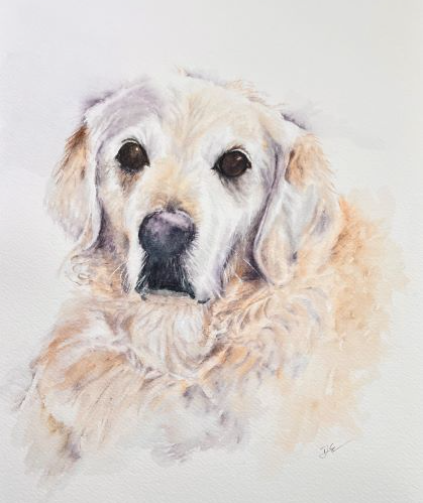
- Your pet has light or multi-tonal fur. Watercolor’s layered translucency captures subtle color variation exceptionally well. Golden retrievers, tabby cats, and merle-coated dogs are natural watercolor subjects.
- You want a softer, more painterly feel. Something that feels warm and personal rather than formal. Watercolor portraits tend to feel intimate and approachable.
- You’re working with a tighter budget or timeline. Watercolor portraits generally cost less and are completed faster than oils.
- You want something that works in a modern, casual, or eclectic home interior – watercolor has a freshness that suits a wide range of decor styles.
- You’re commissioning a memorial portrait and want something that feels tender and gentle rather than grand.
| 💡 Quick Tip
Watercolor works especially well for portraits with soft or no background – a plain white or wash-style background lets the pet’s expression take center stage. |
When Oil Painting Is the Better Choice
Oil is the classic portrait medium…and for good reason. It excels in specific circumstances:
- Your pet has dark, richly colored, or thick fur. Oil paint can build up depth and dimension that watercolor simply can’t match. Black labs, dark tabbies, and heavily patterned coats come alive in oils.
- You want a formal, heirloom-quality piece. Something with real presence on the wall, the kind of portrait you’d pass down. Oil paintings convey permanence.
- You’re decorating a traditional, classic, or statement interior – oil paintings command a room in a way watercolors don’t.
- You want longevity…properly cared for, oil paintings can last centuries. They’re archival in a way that few other mediums match.
- You’re open to a longer turnaround. Oil takes time to dry between layers, which means the process can’t be rushed. That patience is part of what makes the result exceptional.
| 💡 Quick Tip
Oil portraits on canvas don’t need to be displayed under glass — they can be hung directly on the wall, which often makes them easier to display in larger sizes. |
What About the Other Mediums?
Watercolor and oil are the most popular, but they’re not the only options available on PetWorks. A few others worth knowing:
Acrylic
Acrylic is versatile and fast-drying. It can mimic both watercolor and oil depending on how it’s applied. It’s a good middle ground if you want the richness of oil at a faster turnaround and lower price point. Many acrylic portraits have a crispness and vibrancy that’s distinctly modern.
Pencil & Charcoal
For a timeless, elegant look, graphite pencil and charcoal portraits are hard to beat. They’re often the most affordable option and can be stunningly lifelike. Particularly well-suited to black-and-white pets, or pet owners who love a classical, gallery-style aesthetic.
Pastel
Soft pastels produce portraits that feel somewhere between watercolor and oil – luminous and textured, with a velvety quality to the finished surface. They work beautifully for cats and animals with fine, soft fur.
Digital
Digital portraits are created on a tablet and delivered as a high-resolution file – perfect for printing at any size, using as a phone background, or having printed on canvas or merchandise. They tend to be faster and more affordable, and many digital artists are exceptional at capturing personality and expression.
Questions to Ask Before You Decide
If you’re still on the fence, these questions tend to clarify things quickly:
- Where will the portrait live? A formal living room or study might suit oil; a bedroom, nursery, or open-plan kitchen might feel more at home with watercolor.
- What’s your timeline? If you need the portrait within a few weeks, watercolor or acrylic is a safer bet than oil.
- What’s your budget? Watercolor and pencil portraits typically start around $125–$200. Oils often begin at $250 and can reach $1,000+ for large, detailed works.
- What does your reference photo look like? A beautifully lit, high-quality photo gives any artist more to work with. A slightly blurry or low-light photo may work better in a more impressionistic medium.
- Have you looked at the artist’s portfolio? This matters more than any other factor. An artist who specializes in watercolor will always outperform one who occasionally dabbles. Regardless of the medium.
How to Find the Right Artist for Your Chosen Medium
On PetWorks, you can filter artists by medium, browse full portfolios, read verified reviews from real pet owners, and message artists directly before committing. Every artist on PetWorks is vetted and reviewed. So you’re not guessing.
When you find an artist whose existing work genuinely excites you, reach out. Describe your pet, share your reference photos, mention your timeline and budget, and ask whether they provide a sketch or proof for approval. A good artist will welcome the conversation
| 🎨 Ready to Browse?
Explore top-rated watercolor and oil painting pet portrait artists at petworks.com/hire/pet-portrait-artists — filter by medium, read portfolios, and get a free quote today. |
The Bottom Line
There’s no wrong answer between watercolor and oil — only the answer that’s right for your pet, your home, and what you want to feel when you look at it every day.
Watercolor is soft, personal, and luminous — perfect for pets with light or varied coloring, buyers who want something warm and intimate, and anyone working within a tighter budget or timeline.
Oil painting is rich, dimensional, and built to last — the right choice when you want something formal, large-scale, or genuinely heirloom-quality.
Either way, a handcrafted pet portrait is one of the most meaningful things you can own. It’s not decor. It’s a record of a relationship.
FAQs
1. Is watercolor or oil painting better for a pet portrait? Neither is objectively better. They suit different pets, styles, and budgets. Watercolor is softer, faster, and more affordable, making it ideal for light-colored pets and casual home aesthetics. Oil painting is richer, more dimensional, and longer-lasting, making it the better choice for formal or heirloom-quality portraits. The right answer depends on your pet, your home, and what you want to feel when you look at it.
2. How long does a watercolor pet portrait take? Most watercolor pet portraits are completed within 1–3 weeks, though timelines vary by artist and complexity. Watercolor dries quickly between layers, which means artists can work faster than with oil. Always confirm turnaround time with your artist before booking, especially if you have a gift deadline.
3. How long does an oil painting pet portrait take? Oil painting pet portraits typically take 3–6 weeks, and sometimes longer for large or highly detailed works. Oil paint dries slowly between layers, and rushing the process compromises the result. If you’re working toward a specific date : a birthday, holiday, or anniversary. Book well in advance.
4. Which pet portrait medium is most affordable? Watercolor and pencil portraits are generally the most affordable, with many starting around $125–$200 for a small piece. Oil paintings typically start around $250 and can reach $1,200 or more for large, complex works. Acrylic and digital portraits often fall in between. Price also varies by artist experience, size, and whether framing or shipping is included.
More FAQs
5. Can I get a watercolor pet portrait of a dark-colored pet? Yes, though it requires a skilled artist. Watercolor is a naturally light and translucent medium, which means dark tones require careful layering and technique. For pets with very dark or black fur, many artists recommend oil or acrylic instead — both handle deep, rich tones more naturally. If you have a dark-colored pet and prefer watercolor, look for an artist whose existing portfolio includes similar subjects.
6. What’s the difference between acrylic and oil pet portraits? Both are painted on canvas and can produce similar results, but acrylic dries much faster than oil, making it a good middle ground if you want painterly richness with a shorter turnaround. Oil paintings tend to have more depth and luminosity, and are generally considered the more archival of the two. Acrylic portraits are often slightly more affordable and can be completed in 2–4 weeks versus 3–6 for oils.
7. Do oil painting pet portraits need to be framed under glass? No — and that’s one of their practical advantages. Oil paintings on canvas are typically displayed without glass, either stretched on a frame or mounted in a traditional picture frame without a glazed front. Watercolor portraits on paper, by contrast, should be framed under UV-protective glass to prevent fading over time.
8. Which pet portrait style lasts the longest? Oil paintings are the most archival medium available — properly cared for, they can last centuries. Watercolor portraits on high-quality archival paper also hold up very well, especially when framed under UV-protective glass. Digital portraits delivered as high-resolution files don’t degrade at all, and can be reprinted at any time. All mediums available on PetWorks are created with quality materials. Longevity largely comes down to how the finished piece is displayed and cared for.
About The Author
 PetWorks Co-Founder Kevin Kinyon is a life-long animal lover who works tirelessly to improve the lives of pets and their parents. Human and animal qualities he values most are integrity, humor, and empathy.

 petworks tm