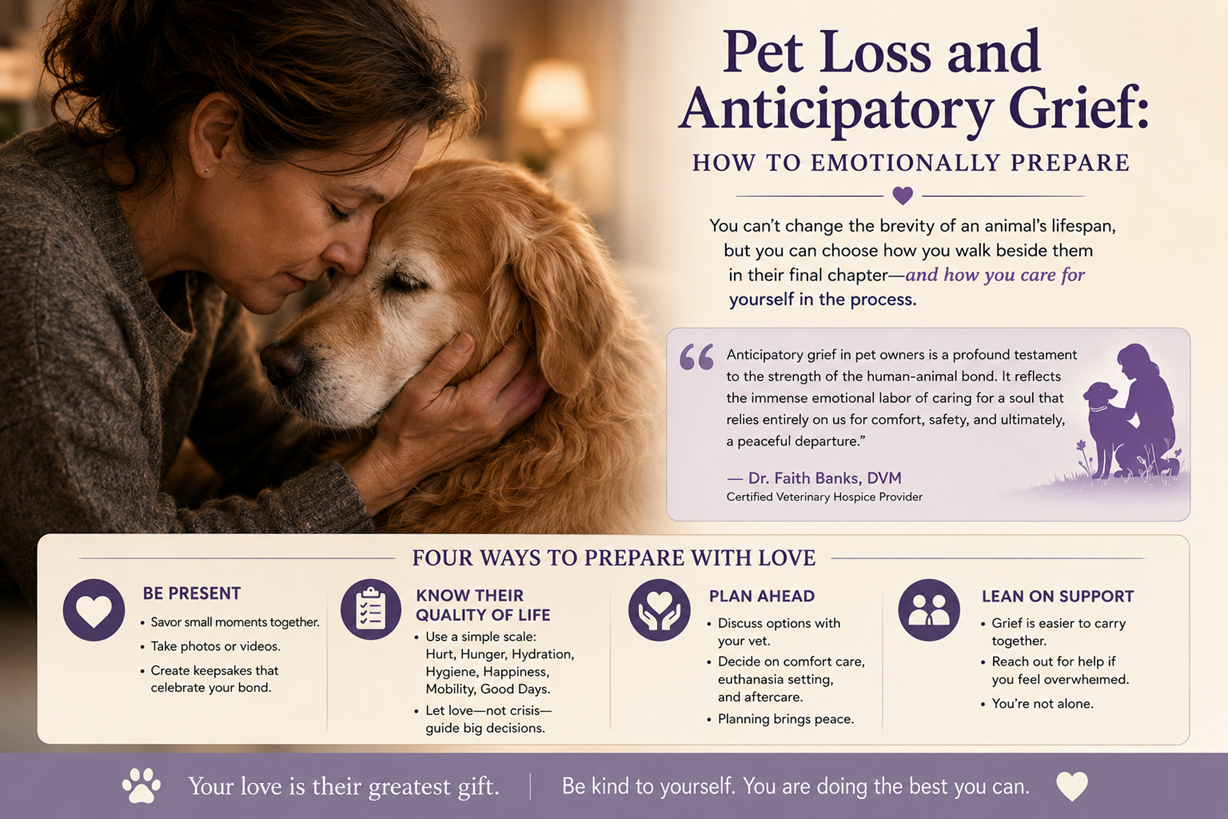
There is a specific, quiet moment that many seasoned pet parents recognize with a heavy heart. It is not the sudden panic of a medical emergency or the immediate shock of a terminal diagnosis. Instead, it is a subtle shift, a quiet realization that your companion has entered their final chapter. Perhaps it is the slow, deliberate way they stand up in the morning, or the dimming of that familiar sparkle in their eyes during an afternoon walk. Your pet is still here, breathing and resting beside you, yet something fundamental has changed. You have begun the process of letting go long before the final farewell takes place.
For experienced parents, this prolonged period is filled with a unique emotional challenge known as anticipatory grief pet parents face. While the general public understands the deep sadness that follows the death of an animal, the profound mourning that occurs while the pet is still alive is rarely discussed openly. This exploration examines what scientific research and psychological frameworks tell us about this pre-loss period, providing practical, structured guidance to help you navigate pet end-of-life planning with grace, clarity, and deep compassion.
Understanding Anticipatory Grief in Pet Parenting
Anticipatory grief is fundamentally different from conventional, post-loss grief. It is the emotional, psychological, and physiological response to an impending, certain loss. In human psychology, the foundational work on anticipatory mourning by Dr. Therese Rando outlines that this process is not merely a single emotion, but a complex series of phases. It involves balancing two opposing forces: the drive to remain intensely connected to the loved one in the present moment, and the simultaneous, painful internal preparation to detach and accept the reality of the future loss.
When applied to companion animals, anticipatory grief pet owners experience can feel exceptionally isolating. Society frequently treats pet loss as a secondary grief, an attitude known in sociology as disenfranchised grief. Because the animal is still physically present, owners often scold themselves for feeling despondent, wondering why they are crying over a pet that is currently resting on the couch. Dr. Rando’s research reassures us that this emotional response is entirely normal. It is an active psychological defense mechanism, a way for the mind to process the immense weight of the future in smaller, manageable increments.
What the Research Tells Us About the Human-Animal Bond
Over the last few decades, institutions like the Human-Animal Bond Research Institute (HABRI) and various anthrozoology journals have dedicated significant attention to the depth of human-pet relationships. The empirical evidence is clear: the psychological impact of losing a companion animal frequently mirrors, and in certain circumstances can exceed, the grief experienced after the death of a human relative. This is due to the nature of our daily interactions with pets. Our relationships with animals are free from the social complexities, conflicts, and ambivalence that often complicate human dynamics. A pet provides pure, unconditional acceptance, and their daily routine dictates the rhythm of our lives.
When a pet enters decline, that daily rhythm fractures. Research published in anthrozoology literature notes that a major driver of grieving a dying pet is the phenomenon of role strain and caregiver burden. As an owner, you transition from a partner in play to a nurse providing palliative care. This continuous vigilance, tracking medications, assessing mobility, and watching for signs of discomfort, creates chronic, low-grade stress. The research highlights that validating this caregiver burden is an essential step in managing your overall emotional well-being.
“Anticipatory grief in pet owners is a profound testament to the strength of the human-animal bond. It reflects the immense emotional labor of caring for a soul that relies entirely on us for comfort, safety, and ultimately, a peaceful departure. Recognizing this grief before the loss occurs is crucial for the health of both the owner and the animal.” — Dr. Faith Banks, DVM, Certified Veterinary Hospice Provider
The Compound Weight for Experienced Owners
Experienced pet owners carry a distinct emotional landscape. On one hand, having loved and lost animals in the past provides you with a realistic perspective on the natural life cycle. You understand the logistics of veterinary medicine, and you know that you can survive the devastating grief that follows. On the other hand, this familiarity can introduce a phenomenon known as compound or cumulative grief. The decline of a current pet can inadvertently tear open old, imperfectly healed wounds from previous losses, magnifying your current sadness.
Furthermore, experienced owners often suffer from premature detachment. Because you know exactly how painful the final days will be, your mind may attempt to protect itself by emotionally pulling away from your aging pet ahead of time. Recognizing this tendency is incredibly important. Identifying this self-protective withdrawal allows you to consciously pull yourself back into the present moment, ensuring that you remain fully engaged and supportive during your pet’s remaining time.

Are you finding this article useful? Would you like 100% free access to more articles like these, and free access to over 5,000 vetted pet care service professionals throughout the United States? Sign up here for a free PetWorks account, and we’ll email you a 10% discount code, good towards your first pet care services booking on PetWorks!
Practical Frameworks for Emotional Preparation
Preparing emotionally for the end of an animal’s life requires deliberate, conscious effort rather than passive waiting. One of the most effective strategies involves establishing micro-rituals while your pet is still alive. Rather than waiting until after their passing to create a memorial, focus on capturing their essence right now. This might mean taking a quiet moment each morning to sit together in the sun, creating ink prints of their paw, or taking videos that capture their specific quirks, like the soft sound of their sigh or the way they look up when they hear your voice.
Emotional preparation also requires direct, honest communication with the people who share your life. Family members frequently process anticipatory grief at vastly different speeds. While one person may want to discuss medical options openly, another might use denial as a shield against their pain. Initiating calm conversations about expectations, emotional boundaries, and individual fears before a health crisis occurs prevents interpersonal friction during a highly sensitive time, ensuring the entire household remains focused on providing a peaceful environment for the pet.
Logistical Planning as an Act of Comfort
Logistical choices and emotional well-being are deeply interconnected. Making major medical decisions in the middle of an emergency often leads to long-term regret and secondary guilt. True pet end-of-life planning involves assessing your animal’s wellness objectively. Veterinarians highly recommend utilizing structured, scientific evaluation tools, such as the HHHHHMM Quality of Life Scale developed by veterinary oncologist Dr. Alice Villalobos. This specific framework asks owners to score seven distinct categories on a scale of zero to ten: Hurt, Hunger, Hydration, Hygiene, Happiness, Mobility, and More Good Days Than Bad Days.
By translating your pet’s daily behavior into quantifiable metrics, you remove a significant amount of the painful subjectivity that clouds your judgment. It helps answer the agonizing question of whether you are keeping a pet alive for their comfort or for your own emotional reluctance to say goodbye. Discussing these specific metrics with your veterinary team enables you to create a clear blueprint for what an acceptable quality of life looks like, making the ultimate euthanasia decision dog cat parents face a compassionate response to data rather than a desperate crisis response.
Additionally, finalizing aftercare preferences well in advance offers immense peace of mind. Deciding whether you prefer a private cremation, a communal cremation, or a home burial, and determining whether you would like a peaceful in-home euthanasia or an appointment at a trusted veterinary clinic, allows you to control the environment. Ensuring that your pet’s final moments are quiet, familiar, and dignified transforms a clinical event into a profound act of love and respect.
When to Seek Professional Support
It is vital to recognize when the weight of caring for a declining pet begins to overwhelm your coping mechanisms. When grieving a dying pet begins to manifest as clinical insomnia, profound anxiety, or a complete inability to experience joy in the present moment, professional intervention can be incredibly beneficial. Seeking out specialized pet grief counselors who understand the unique dynamics of veterinary hospice care is a sign of strength, not a failure of resilience.
Many academic veterinary institutions provide excellent, complimentary resources for families navigating these difficult transitions. For example, the Ohio State University Veterinary Medical Center Honoring the Bond Program offers dedicated support lines, educational materials, and guidance tailored specifically to pet parents facing the complexities of end-of-life care and anticipatory mourning.
Reframing the End-of-Life Journey
Ultimately, leaning into the reality of your pet’s decline is not morbid or pessimistic. It is an extraordinary act of love. By choosing to accept the reality of the situation rather than turning away from it, you grant yourself the opportunity to make their remaining time incredibly intentional. The research consistently demonstrates that owners who actively engage in thorough pet end-of-life planning experience significantly less guilt, lower levels of complicated post-loss grief, and a more profound sense of enduring peace. You cannot change the brevity of an animal’s lifespan, but by understanding your own anticipatory grief, you can ensure that their final chapter is filled with comfort, presence, and dignity.
Anticipatory Grief Pet – Frequently Asked Questions
What does anticipatory grief pet care involve for parents?
Anticipatory grief pet care involves recognizing and processing the deep emotional mourning that occurs before a pet passes away. It includes managing the emotional and physical caregiver burden, tracking quality of life metrics, and making intentional medical and logistical plans before a crisis occurs to ensure a peaceful transition.
How do you use a pet quality of life scale to make decisions?
A pet quality of life scale, such as Dr. Alice Villalobos’s HHHHHMM Scale, tracks seven specific areas: hurt, hunger, hydration, hygiene, happiness, mobility, and the balance of good days over bad days. Scoring these areas regularly allows owners to objectively monitor their pet’s physical decline and make data-informed choices regarding veterinary care.
What should you consider for a euthanasia decision dog cat transition?
When facing a euthanasia decision dog cat transition, you should evaluate your pet’s objective comfort levels, explore aftercare options like home cremation or burial, and decide between a peaceful in-home veterinary service or an in-clinic appointment. Preparing these logistics early prevents stressful, reactive decision-making.
Why do experienced pet owners feel compound grief during pet end-of-life planning?
Experienced owners often experience compound grief because the current decline of an animal can reawaken unhealed pain from previous pet losses. This cumulative weight can lead to a natural but counterproductive emotional detachment, making professional support and intentional present-moment engagement highly recommended.
About The Author
 Petworks Co-Founder Kevin Kinyon is a life-long animal lover who works tirelessly to improve the lives of pets and their parents. Human and animal qualities he values most are integrity, humor, and empathy.

 petworks tm