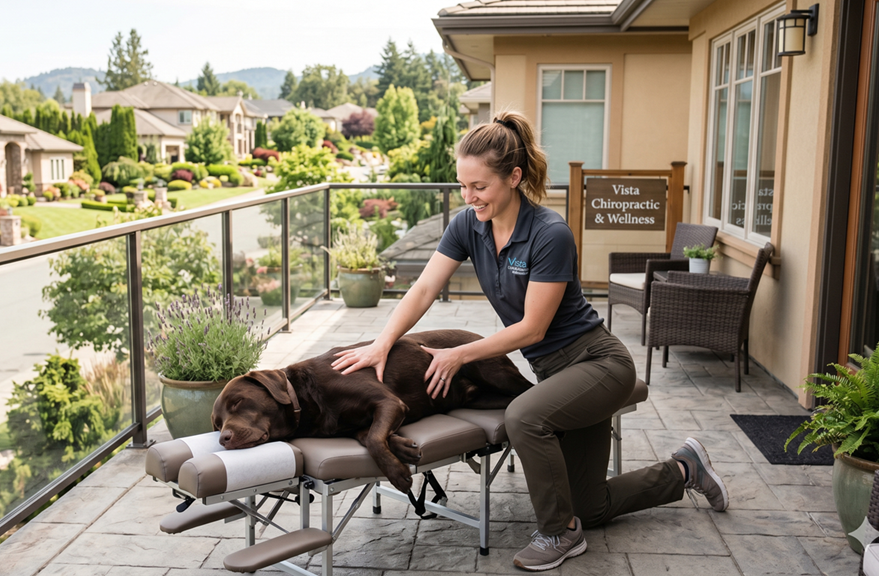
What is animal chiropractic care? Animal chiropractic care is a non-invasive therapy that focuses on improving spinal and joint mobility in animals. It is performed by certified animal chiropractors who use gentle, low-force adjustments to restore normal movement where restrictions are present. It is commonly used for dogs, cats, horses, and other companion animals.
🐾How does animal chiropractic care work?
Animal chiropractic care works by identifying restricted motion in the spine or joints and applying precise manual adjustments to restore normal mobility. A certified animal chiropractor evaluates gait, posture, and movement patterns before performing targeted, low-force corrections designed to improve biomechanical function.
What does an animal chiropractor do?
An animal chiropractor evaluates an animal’s musculoskeletal system, including the spine, joints, posture, and movement. They identify areas of restricted motion and apply controlled adjustments to improve mobility, comfort, and overall function. They may also observe the animal walking or moving to assess gait abnormalities.
What animals can receive chiropractic care?
Animal chiropractic care can be used for any animal with a spine. The most common patients are dogs, cats, and horses. Dogs and horses are most frequently treated for mobility and performance support, while cats are commonly treated for stiffness, aging-related changes, or reduced activity.
What does animal chiropractic care help with?
Animal chiropractic care is commonly used to support mobility and comfort in animals experiencing stiffness after rest, reduced flexibility, changes in gait, difficulty with stairs or jumping, or decreased performance in working or athletic animals. It is also used as part of preventive wellness care.
Is animal chiropractic care safe?
Yes. Animal chiropractic care is considered safe when performed by certified professionals trained through organizations such as the AVCA (American Veterinary Chiropractic Association) or IVCA (International Veterinary Chiropractic Association). These practitioners use low-force, controlled techniques and often coordinate with veterinarians when needed.
🦴What happens during an animal chiropractic session?
An animal chiropractic session begins with an evaluation of posture, movement, and joint function. The chiropractor observes how the animal walks and moves naturally, then applies gentle adjustments to areas of restricted motion. Sessions typically last 30 to 60 minutes depending on the animal’s needs.
How often should pets see an animal chiropractor?
The frequency of animal chiropractic care depends on the animal’s age, condition, and activity level. Some pets benefit from occasional maintenance visits, while others, such as senior pets or active working animals, may require regular care to support mobility and function.
How much does animal chiropractic care cost?
In the United States, animal chiropractic care typically costs $75 to $175 for an initial visit and $60 to $150 for follow-up sessions. Mobile or in-home visits may cost more depending on travel distance and provider structure. Wellness packages are sometimes available for ongoing care.
Is animal chiropractic care the same as veterinary care?
No. Animal chiropractic care is not a replacement for veterinary medicine. It is a complementary therapy that focuses on musculoskeletal function and mobility. Certified animal chiropractors often work alongside veterinarians as part of a broader care plan.
Do animal chiropractors offer mobile or in-home visits?
Yes. Many animal chiropractors offer mobile or in-home care. This allows the practitioner to observe the animal in its natural environment, including flooring, stairs, and daily movement patterns. Mobile care is especially common for senior pets, large animals, or anxious pets.
⚠️ Signs Your Pet May Need Animal Chiropractic Care
Pet owners often begin exploring animal chiropractic care after noticing subtle changes in how their pet moves or behaves. These changes may develop gradually and are easy to overlook at first, but they often reflect underlying mobility restrictions or compensation patterns in the body.
Common signs include stiffness after rest, hesitation when jumping onto furniture or climbing stairs, changes in gait or posture, reduced activity levels, or uneven weight distribution. Some pets may seem less enthusiastic about walks or play, while others may take longer to get up or settle into a comfortable position.
In more active or working animals, early signs may appear as decreased performance, reduced flexibility, or slower recovery after physical activity. These changes don’t always indicate pain, but they often suggest that the musculoskeletal system is not functioning as efficiently as it could be.
An evaluation by a certified animal chiropractor can help identify these patterns early and support improved movement before they progress into more noticeable limitations.
🩺 When to See a Veterinarian vs an Animal Chiropractor
Animal chiropractic care focuses on improving mobility, joint function, and spinal movement, but it is not a replacement for veterinary care. Understanding when to seek each type of support is an important part of responsible pet care.
If your pet shows signs of acute injury, severe pain, illness, neurological symptoms, or sudden changes in behavior, a veterinarian should always be the first point of contact. Veterinary evaluation is essential for diagnosing underlying medical conditions and determining whether additional treatment is needed.
Animal chiropractic care is typically used after or alongside veterinary assessment, especially for pets experiencing stiffness, mobility changes, or musculoskeletal imbalance. Many certified animal chiropractors work in coordination with veterinarians to ensure a safe, well-rounded approach to care.
For many pet parents, chiropractic care becomes part of an ongoing wellness plan that complements traditional veterinary medicine rather than replacing it.
📍How do I find a certified animal chiropractor near me?
Certified animal chiropractors are available throughout the United States. Pet owners should look for certifications such as AVCA or IVCA, which indicate advanced training in animal anatomy and chiropractic techniques. PetWorks connects pet parents with certified providers in cities nationwide.
About The Author
 PetWorks Co-Founder Kevin Kinyon is a life-long animal lover who works tirelessly to improve the lives of pets and their parents. Human and animal qualities he values most are integrity, humor, and empathy.

 petworks tm