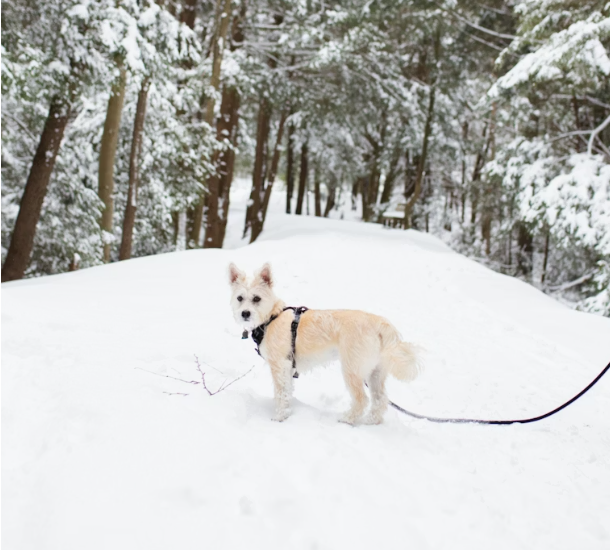
1. Dress Your Dog (and Yourself) for Winter Conditions
Not all dogs are built for cold weather. While breeds like Huskies and Malamutes thrive in low temperatures, short-haired, small, senior, and toy breeds can struggle in winter conditions.
How to protect your dog from the cold:
-
Dog coats or sweaters: Insulated, water-resistant jackets help retain body heat, especially for short-haired breeds.
-
Booties or paw wax: These protect paws from ice, snow, and chemical deicers.
-
Proper fit: Clothing should be snug but not restrictive—avoid chafing around legs and neck.
Don’t forget about yourself. Wearing weather-appropriate shoes with good traction helps prevent slips, keeping both you and your dog safe.
Expert insight:
“If it’s too cold for you to comfortably stand outside without gloves, it’s likely too cold for many dogs to be outside for extended periods,” says Dr. Marty Becker, DVM, a nationally recognized veterinarian and founder of Fear Free Pets.
2. Protect Your Dog’s Paws From Ice, Salt, and Chemicals
Winter sidewalks and roads are often treated with salt, ice melt, and chemicals that can irritate or even burn your dog’s paw pads. Ice buildup between toes can also cause cracking and discomfort.
Paw protection best practices:
-
Use dog booties for maximum protection.
-
Apply paw balm or wax before walks to create a protective barrier.
-
After each walk, wipe paws with a damp cloth to remove salt and chemicals.
-
Trim fur between paw pads to prevent snow clumps.
Watch for excessive licking or limping after walks—both can be signs of paw irritation.
3. Adjust Walk Length and Timing
Winter walks don’t need to be long to be effective. Cold air, wind chill, and icy conditions can make extended outings uncomfortable or unsafe.
Smart winter walking strategies:
-
Opt for shorter, more frequent walks instead of one long walk.
-
Walk during the warmest part of the day, usually late morning or early afternoon.
-
Avoid early morning or nighttime walks when ice is hardest to see.
-
Stick to cleared sidewalks and familiar routes.
Remember: exercise is important, but safety always comes first. When hiring a professional dog walker, always ask about safety precautions, particularly during cold dark winter days and evenings.
4. Be Visible and Stay Alert
Winter brings shorter days, reduced visibility, and slippery surfaces. Taking precautions can significantly reduce the risk of accidents.
Winter visibility tips:
-
Use reflective leashes, collars, or harnesses.
-
Attach LED safety lights to your dog’s collar.
-
Wear reflective or light-colored outerwear yourself.
-
Walk against traffic when possible and stay alert near intersections.
Also pay close attention to your dog’s behavior. Shivering, slowing down, lifting paws, or refusing to walk are signs it’s time to head home.

Are you finding this article useful? Would you like 100% free access to more articles like these, and free access to over 5,000 vetted pet care service professionals throughout the United States? Sign up here for a free Petworks account, and we’ll email you a 10% discount code, good towards your first pet care services booking on PetWorks!
5. Keep Your Dog Engaged and Comfortable After Walks
Winter walks can be mentally stimulating, but they also require recovery time—especially in cold conditions.
Post-walk care tips:
-
Dry your dog thoroughly, paying attention to paws, belly, and ears.
-
Check for cracked paw pads or redness.
-
Offer fresh water—dogs can become dehydrated in cold weather too.
-
Follow walks with indoor enrichment like puzzle toys or light training sessions.
“Winter walks aren’t just about physical exercise. They’re about maintaining routine and mental well-being. Even short outdoor walks, paired with indoor enrichment, can make a huge difference in your dog’s mood during colder months.”
Bonus Tip: Know When It’s Too Cold to Walk
As a general guideline:
-
Below 32°F (0°C): Monitor closely, especially for small or short-haired dogs.
-
Below 20°F (-6°C): Limit walks to brief bathroom breaks.
-
Below 0°F (-18°C): Most dogs should stay indoors except for very short outings.
Always factor in wind chill, moisture, and your dog’s age, size, and health.
Frequently Asked Questions (FAQ)
How cold is too cold to walk my dog?
It depends on your dog’s breed, size, coat, and health. Small, senior, and short-haired dogs may struggle below 32°F, while cold-weather breeds can tolerate much lower temperatures. When in doubt, keep walks short.
Do dogs really need coats in the winter?
Many do. Dogs with thin coats, low body fat, or medical conditions benefit greatly from insulated jackets during winter walks.
Are dog boots necessary?
They’re not mandatory, but they’re highly recommended in icy or salted areas. Boots prevent paw injuries, chemical burns, and ice buildup.
Can winter walks replace indoor exercise?
Winter walks are important, but they should be supplemented with indoor play, training, and enrichment—especially when outdoor time is limited by weather.
What should I do if my dog refuses to walk in the cold?
Don’t force it. Try shorter walks, protective gear, or indoor activities like fetch, tug, or nose work. Some dogs simply dislike cold weather. And that’s okay.
Final Thoughts
Walking your dog in the winter doesn’t have to be stressful or risky. With proper preparation, awareness, and flexibility, winter walks can remain a healthy and enjoyable part of your dog’s routine. Focus on comfort, safety, and engagement, and you’ll both get through the colder months happier—and healthier.
Whether it’s a brisk neighborhood stroll or a quick potty break, every step counts. 🐾
About PetWorks
 Marty Goldstein DVM joined the pet care platform PetWorks as an advisor in its Animal Nutrition care division. Dr Marty Nature’s Blend is on a mission to help your pets live their healthiest lives possible. Dr. Marty’s pet nutrition expertise and guidance has helped PetWorks evolve and become the preeminent animal and pet nutrition consultation service for pet parents in North America.
 In 2022, Blue Buffalo Founder Bill Bishop Jr. joined PetWorks as Senior Advisor in our Animal Nutrition Care Division. Bill brings his extensive expertise in pet food innovation and business leadership. His guidance helps PetWorks enhance our pet nutrition service offerings, helping to ensure that pet parents throughout the world receive trusted, science-backed nutritional support for their dogs, cats, and animals.
About The Author
 PetWorks Co-Founder Kevin Kinyon is a life-long animal lover who works tirelessly to improve the lives of pets and their parents. Human and animal qualities he values most are integrity, humor, and empathy. Kevin lives with two cats and two dogs, and is well-acquainted with walking his dogs during freezing cold winters!

 petworks tm