
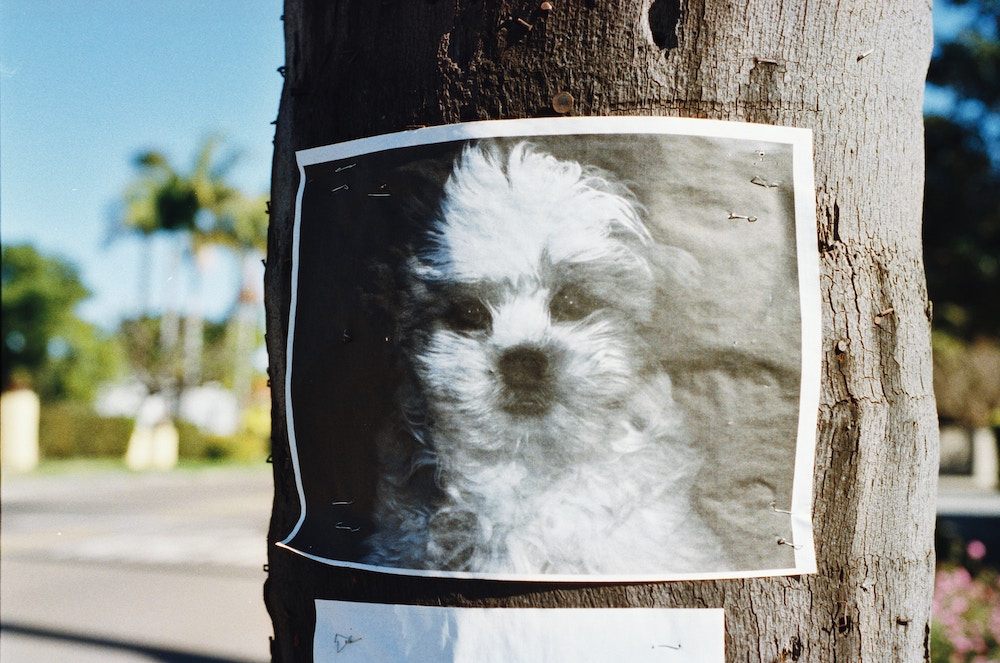
Missing Pet Finders. Few things are more harrowing than when your beloved pet goes missing. Thankfully, there are trained professionals like Bonnie Wagner-Westbrook, a Certified Missing Animal Responder/Pet Detective. Bonnie was kind enough to answer a few questions to better educate us on this potentially life saving pet service.
Being A Pet Detective
Petworks: Can you describe what it’s like to be a pet detective for those of us who aren’t familiar with the job?
Bonnie: The job of a missing-animal responder, pet detective, or missing pet finder, is multifaceted. Basically, we must do whatever it takes to help get a pet home. This could mean coaching a pet’s guardian through finding and capturing his or her own lost pet. It could mean doing the site work if a guardian cannot search and lure/capture a pet on her own. It could mean working with law enforcement or animal control (or with another missing-animal responder) to secure a pet. But equally important to this role is educating pet guardians on how to avoid losing a pet and, if necessary, what they need to do to search immediately and “smart,” because fast action improves the likelihood of bringing a pet home.
Petworks: How did you come to be a lost-pet responder? What kind of training does it require?
Bonnie: My first lost pet was my own black Lab, Widgie, when I was only five years old. She was my best friend, and it was terrifying, especially because of the weather: five to seven feet of snow and subzero temperatures in northern New York State. We spoke to everyone in our small town, residents and businesses, police, churches. We drove roadways every day. The only way my dog and her buddy Rusty, a neighbor’s Irish setter, could have been traveling was by roadways, which increased the possibility that they would be hit by a car or a snowplow. A gas station owner called after two weeks and said he had a Lab sitting by the fireplace at his station–it was our Widgie! Unfortunately, we found Rusty deceased in a snowbank, probably hit by a plow.
You Never Forget…
the feelings of loss and fear that you won’t see your pet again. Since then, fate has put me in the position to help many lost and found pets. About eight years ago, a beautiful Norwegian Forest cat named Jack went missing when his travel crate was improperly stacked on top of another crate by baggage handlers at JFK Airport and it fell to the ground, breaking open. Jack was missing for sixty-one days, until he fell through a damaged ceiling tile in the same terminal where he’d been lost. He was mostly starved and was terribly injured by the fall. He spent many days in critical care, until his guardian could not bear to see him suffering anymore.
Access…
To search for Jack had been limited, and the airline that owned the terminal had done nothing to help recover him. Around this time, I decided to retire from my university position and start my own business in organization development; it was also an ideal time to learn to properly search for lost pets, as well as continuing to work with TNR (trap-neuter-return) of feral cats in our community.
A Non-Profit
We formed the nonprofit organization Where Is Jack? (http://www.whereisjack.net) to educate the public and work with legislators on problems related to pets who fly on commercial airlines. We also respond to pets lost on airport properties, either by searching on-site or collaborating with people long-distance if we can’t respond in person. I’ve helped pets lost at Newark, JFK, Armstrong, Philadelphia, Seattle, and Atlanta airports (to name just a few), as well as on a military base. Clearance is critical, and getting permissions and escorts requires a great deal of time.
 Petworks: What tools or tactics do you use? Is it similar in any way to being a police detective? Do you look for clues or evidence? Do you work with other people?
Bonnie: About twenty years ago, a wonderful woman and true pioneer named Kat Albrecht-Thiessen, a former police detective, began to explore the use of trained trailing dogs to recover lost pets. She is the original “pet detective” (and is still being teased with Jim Carrey jokes). Her passion has grown into an international membership of pet detectives whom she has trained and who collaborate on cases: the Missing Animal Response Network (http://www.missinganimalresponse.com). Kat has also been instrumental in growing interest and expertise in specialized dog training (trailing and tracking).
Our Training…
Dictates analysis of the situation the pet was lost in, the personality and habits of the pet, geography, recent events, and how the pet guardian is coping (or not). Sometimes forensic work is required. When you have a good sense of the background, as well as events that transpired (like sightings of the lost pet), you can determine the best way to secure the pet, “luring” versus trapping. Kat began amassing research on lost-pet behaviors based on the collective wisdom of everyone doing this work over the years.
Our website is a wealth of important observations and tips. Of course, the more of this work you do, the better your skills get and the higher your success rates are. There are many people out there who say they do the work we do, but they are hobbyists. We must constantly battle people who think it’s a good idea to put out used litter boxes to find lost cats, or who believe it helps to chase lost dogs–litter boxes draw unaltered strays, dogs, and predators; chasing lost dogs unsettles them from any comfortable place they’ve found and forces them onto roadways, where they are struck by cars.
Lost Pet Specialization?
Petworks: Do you specialize in locating any particular types of pets?
Bonnie: We search for just about any type of pet. Some are especially tough, like birds, reptiles, or wildlife that have become pets, such as foxes. Fortunately, our training (and ability to collaborate with others) gives us the ability to handle nearly any situation.
 Petworks: Can you tell us about some of your cases? What was your most difficult case, and what was the most rewarding?
Bonnie: Two of my most interesting cases involved major motor-vehicle accidents. One pet guardian died as a result of her injuries, and another lost a leg. Both accidents happened in another part of the state, but I found wonderful local people, including rescues, animal control, and law enforcement, who formed ad hoc search groups to search for and market the lost pets. Their efforts with signage and flyers led to both cats being found.

Are you finding this article useful? Would you like 100% free access to more articles like these, and free access to over 5,000 vetted pet care service professionals throughout the United States? Sign up here for a free Petworks account, and we’ll email you a 10% discount code, good towards your first pet care services booking on Petworks!
How Much Does It Cost To Hire A Missing Pet Finder?
The cost of hiring a professional missing pet finder can vary significantly depending on your location, the services you need, and the urgency of the situation. Basic “alert” services that send notifications to neighbors and post on social media typically cost between $40 and $100. For professional trackers or pet detectives who provide local search and consulting services, fees usually range from $100 to $600, though they can be higher for more complex cases. Full on-site searches involving humane trapping, specialized equipment, or extended search efforts can cost $600 to $1,000 or more. Some pet finders charge hourly rates, which might start at around $65 per hour for one person and rise to $200–$400 per hour for two-person teams using scent dogs, drones, or other specialized tools.
Overall Costs Of Hiring A Missing Pet Finder
Several factors affect the overall cost. Your geographic location plays a big role, as hiring someone in a rural area may be less expensive than in a major metropolitan area, and travel time can add to the total fee. The type of search tools and personnel required—such as scent-tracking dogs, drones, or traps—will also raise the price, as will urgent or after-hours searches.
Costs can climb depending on the duration and scope of the search, including how large an area must be covered and how many days the search continues. Some professionals include materials like posters and online alerts in their base price, while others charge extra. Finally, the experience and reputation of the pet finder matter, seasoned professionals with proven track records usually charge more, but they may also improve your chances of finding your pet.
A Skittish Sheltie
In another case locally, a skittish Sheltie ran away from her home, which was located near every worst-case scenario for finding a lost dog: an immense forested park with waterways and predators, railroad tracks, highways, farm properties. The dog was seen early on, thanks to signage, then seemed to have disappeared. We had a trap set, in the event that she doubled back on her previous path. We set up feeding stations and transmitting trail cameras. She didn’t appear once on-cam. There were other brief sightings that went dark almost immediately.
Finally, after several weeks, we were notified of the last sighting–now much closer to her home. I asked her guardian to begin at the place where she was seen (a gentleman’s farm) and to walk a path back home with their other Sheltie while dropping hot dog chips every ten feet or so. The scent trail from the guardian, the other dog, and treats was exactly the right tack: The next-door neighbor saw the dog on her property shortly thereafter, then the dog went back into hiding. I asked her guardian to hang out in the garage that evening with their other dog and just talk in a normal voice to let the lost dog know it was safe to come home. The guardian went to bed at eleven p.m. and was awakened at two a.m. by barking and scratching at the front door. The lost dog was ready to come home!
I very much enjoy being able to share success stories and the “How did you do it(s)?” I also enjoy helping others learn. We just had a big break today, trapping a kitty who had been lost for weeks; the person who accomplished this was one of our ad hoc team members.
Success Rates
Petworks: What is your success rate with finding missing pets?
Bonnie: Success rates, of course, depend on circumstances. If you have a dedicated pet guardian who follows instructions and allows you to work based on your training, you can accomplish a lot. I’ve had excellent results even when a guardian cannot (or will not) participate, though the second case is much tougher. However, some cases are derailed by people not following instructions or even sabotaging your efforts. Factoring those out, I’d guesstimate a 95 percent success rate.
Petworks: What is your favorite aspect of the job?
Bonnie: I don’t have a trailing dog, but I do have colleagues with exquisite dogs, and I’ve been blessed to work with them on many occasions. I always enjoy working with a K9 team and watching the dialogue between the dog and his or her handler. The walk-up finds are thrilling and happen only about 5 percent of the time. The very first K9 trail I was involved with at an airport was at JFK and resulted in a walk-up find of a cat named Gyzmo. His crate was damaged in cargo management care, and he was lost for two weeks (I believe)–in a terrifying world for a pet!
Petworks: How do you feel about Ace Ventura: Pet Detective? (We had to ask!) 🙂
Bonnie: We’d love to get some royalties from Mr. Carrey to further our research and work! That movie is hysterical, I must say!
 Trained by K9 Pet Trackers/Missing Pet Partnership, Bonnie volunteers search tips and assistance to people who have lost their pets locally and she also consults on cases at a distance. She provides tips for flyer and poster creation, techniques for searching based on nature and location of loss and pet temperament, networking, notification of law enforcement, equipment suggestions and coaching for searchers.
About Petworks
 In 2021, Dr. Marty Goldstein DVM joined the pet care platform Petworks as an advisor in its Animal Nutrition care division. Dr Marty Nature’s Blend is on a mission to help your pets live their healthiest lives possible. Dr. Marty’s pet nutrition expertise and guidance has helped Petworks evolve and become the preeminent animal and pet nutrition consultation service for pet parents in North America.
 In 2022, Blue Buffalo Founder Bill Bishop Jr. joined Petworks as Senior Advisor in our Animal Nutrition Care Division. Bill brings his extensive expertise in pet food innovation and business leadership. His guidance helps Petworks enhance our pet nutrition service offerings, helping to ensure that pet parents throughout the world receive trusted, science-backed nutritional support for their dogs, cats, and animals.
 Petworks Co-Founder Kevin Kinyon is a life-long animal lover who works tirelessly to improve the lives of pets and their parents. Human and animal qualities he values most are integrity, humor, and empathy.

One Reply to “How Much Does It Cost To Hire A Missing Pet Finder?”
Comments are closed.